

Abrigo provides market-leading compliance, credit risk, and lending solutions to enable its customers to think bigger, allowing them to both manage risk and drive growth.
Ravi Nemalikanti, Chief Product and Technology Officer at Abrigo chats about some of the top threats impacting web-based banking models in this Global Fintech SeriesRavi Nemalikanti, Chief Product and Technology Officer at Abrigo chats about some of the top threats impacting web-based banking models in this Global Fintech Series
Global Fintech Interview With Ravi Nemalikanti, Chief Product and Technology Officer at Abrigo: Web-based Banking Models
For feedback or concerns regarding this content, please contact us at crypto.news@mexc.com
Ravi Nemalikanti, Chief Product and Technology Officer at Abrigo chats about some of the top threats impacting web-based banking models in this Global Fintech Series interview:
__________________
Take us through your time in tech and tell us about your role at Abrigo?
I am Abrigo’s Chief Product and Technology Officer, where I lead our technology strategy and set product and development priorities to drive innovation and strengthen the company’s competitive advantage. I’m honored to be the recipient of the 2024 Haas Technology Leadership Award for North America from Carlyle, which recognizes exceptional technology leadership.
Before joining Abrigo in 2022, I served as Chief Technology Officer for Digital Banking at NCR Corp., where I led the organization’s digital-first banking technology roadmap. Earlier in my career, I spent 14 years at Thomson Reuters in leadership roles spanning tax and accounting, global trade, and risk management.
I hold a bachelor’s degree in engineering from Andhra University in Andhra Pradesh, India, and an MBA from the University of Chicago Booth School of Business.
What are the core benefits of your latest ACH fraud detection solution, how does it serve end users?
Abrigo Fraud Detection with ACH delivers data-driven protection across both origination and receipt channels, allowing financial institutions to detect fraud in real time the moment an ACH file arrives. By combining configurable rules, behavioral analytics, and third-party verification, we help teams identify ACH fraud earlier and streamline investigations.
The solution is built to support compliance with the Nacha risk management framework, while enabling institutions to reduce losses, improve operational efficiency, and provide stronger protection for their customers. With this solution, institutions can detect ACH fraud in real time upon file arrival, configure rules to align with their unique risk profile, and comply with Nacha requirements with confidence.
What are some of the fraud detection features that most banks today don’t have enough of with their apps and web banking models and what thoughts would you share to help them fix this?
One of the biggest gaps I see in today’s app- and web-based banking models is that fraud detection is still too fragmented and too reactive. Banks have data, but it lives across multiple systems, which makes it hard to see risk clearly and act quickly. Similarly, many institutions don’t have a truly unified view of ACH activity. Ingesting ACH data from multiple systems into a single view dramatically improves detection accuracy and gives fraud teams the context they need to spot risk earlier. Patterns also get missed when solutions rely on static rules. Engines that use behavioral analytics to identify high-risk patterns like mule activity, unusual timing, and other anomalies see patterns immediately, not hours later.
Another major gap is flexibility. Fraud teams need self-service tools to activate best-practice rules or build and configure custom rules aligned to their institution’s unique risk profile. Waiting on technical resources slows decision-making and increases exposure.
Finally, we often see banks often fall short with verification. Integrating external account and customer verification helps confirm transactions sooner and significantly reduces false positives, which improves both efficiency and customer experience. My advice to banks is simple: move toward unified data, real-time intelligence, and configurable, customer-centric workflows. That’s how you get ahead of fraud instead of chasing it.
Read More on Fintech : Global Fintech Interview with Kristin Kanders, Head of Marketing & Engagement, Plynk App
Can you talk about some leading AI powered tools and features in fintech from around the world that are serving this purpose well?
Lending and financial crime are where banks feel the most friction, and they’re also the best starting points for AI to make a meaningful impact. Lending, for example, depending on the size and type of financial institution, a single origination flow might involve anywhere from two employees to more than ten across the bank or credit union. When you step back and look at the tasks those teams need to complete, a significant number of them are ideal targets for AI. From extracting data to drafting narratives and flagging discrepancies in documentation, AI can take on repetitive work and reduce errors, freeing relationship managers to focus on customers instead of paperwork.
The opportunity doesn’t end at origination. Loan administration is another area where the workload is heavy and often repetitive and manual. Covenant tracking, managing ticklers, and ensuring compliance deadlines are repetitive and asynchronous activities that AI can streamline. By monitoring documents and borrower performance data in real time, AI can surface exceptions earlier, automate reminders, and reduce the administrative burden on staff while also strengthening oversight.
In financial crime, adaptive models can scan transactions in real time, triage alerts faster, and reduce false positives. That gives analysts back hours of their day to focus on genuine risks instead of being buried in noise. The lesson from my experience is that AI delivers the most value when it augments human judgment rather than attempts to replace it, and when outputs are explainable to regulators, boards, and customers.
What are some of the most exciting fintech innovations you’d like to talk about more in this chat?
I’m seeing several innovations globally that are setting the bar for what’s possible:
One of the biggest challenges in unlocking the full potential of AI is the data fragmentation and legacy systems within the financial institutions. At a platform capability level, the OSI (Open Semantic Interchange) initiative by Snowflake is very interesting and may help accelerate adoption and innovation in the fintech space.
Technology that gives a proactive view into credit needs of a small business by connecting cash flow data, account activity, and external signals like seasonality or market trends. With that visibility, AI can anticipate when additional credit might be needed, surface tailored options, and even streamline the application process so the business has access to capital before the need becomes urgent.
Cash flow–based credit scoring that goes beyond FICO to incorporate richer signals, making credit more accessible to small businesses and underbanked populations.
Explainability engines that generate plain-language narratives for regulators and customers, critical in an industry where trust and accountability are non-negotiable.
Five thoughts around the future of fintech before we wrap up?
Generative AI is moving fintech from reactive to proactive operations. In lending, we will start to see agentic AI that does more than validate documents. Digital “Always-On” agents will anticipate where delays or risks might emerge in the loan pipeline and take action before they cause bottlenecks. That means flagging missing data, drafting follow-up communications, or even coordinating next steps across different teams. The outcome is that loans move faster with fewer handoffs.
In financial crime, AI agents will assemble investigative narratives automatically, connect anomalies across portfolios, and adapt as criminal tactics evolve. Instead of analysts spending hours piecing together the story, they will start with a complete AI-generated view that highlights the riskiest patterns and behaviors. The result is faster decisions, higher accuracy, and stronger compliance, all without increasing staff burden.
Catch more Fintech Insights : When DeFi Protocols Become Self-Evolving Organisms
[To share your insights with us, please write to psen@itechseries.com ]
- About Abrigo
- About Ravi Nemalikanti
About Abrigo
About Ravi Nemalikanti
Ravi Nemalikanti is Abrigo’s Chief Product and Technology Officer and is responsible for leading technology strategy and determining product and development priorities to drive innovation and increase the company’s competitive advantage. Ravi is the Winner of the 2024 Haas Technology Leadership Awardee for North America by Carlyle, an award given to celebrate an exceptional technology leader. Before joining Abrigo in 2022, Ravi was the CTO of Digital Banking at NCR Corp., where he led the organization’s digital-first banking technology roadmap. Earlier, he held leadership roles in Tax and accounting, Global Trade, and Risk Management during 14 years at Thomson Reuters. Ravi holds a bachelor’s degree in engineering from Andhra University in Andhra Pradesh, India, and an MBA from the University of Chicago’s Booth School of Business.
The post Global Fintech Interview With Ravi Nemalikanti, Chief Product and Technology Officer at Abrigo: Web-based Banking Models appeared first on GlobalFinTechSeries.
Market Opportunity
Overtake Price(TAKE)
$0.01902
$0.01902$0.01902
USD
Overtake (TAKE) Live Price Chart
Disclaimer: The articles reposted on this site are sourced from public platforms and are provided for informational purposes only. They do not necessarily reflect the views of MEXC. All rights remain with the original authors. If you believe any content infringes on third-party rights, please contact crypto.news@mexc.com for removal. MEXC makes no guarantees regarding the accuracy, completeness, or timeliness of the content and is not responsible for any actions taken based on the information provided. The content does not constitute financial, legal, or other professional advice, nor should it be considered a recommendation or endorsement by MEXC.
You May Also Like
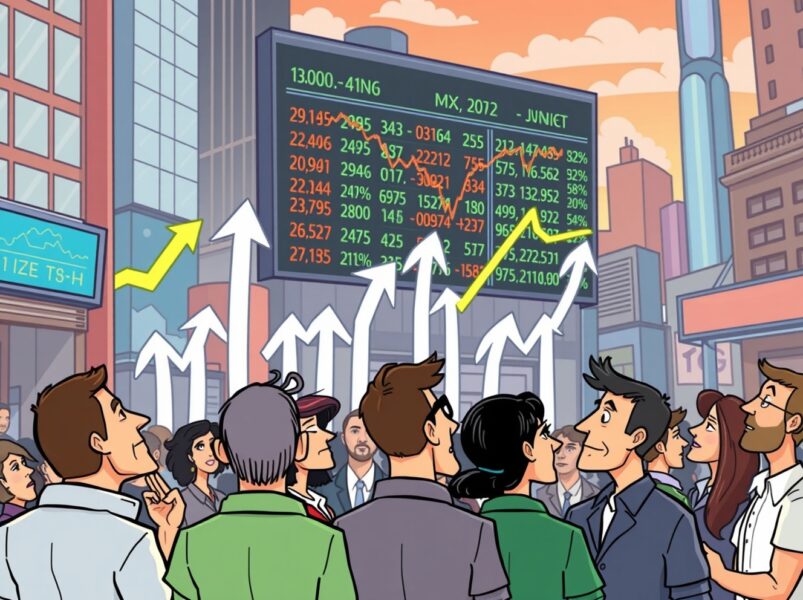
Crucial US Stock Market Update: What Wednesday’s Mixed Close Reveals
BitcoinWorld Crucial US Stock Market Update: What Wednesday’s Mixed Close Reveals The financial world often keeps us on our toes, and Wednesday was no exception. Investors watched closely as the US stock market concluded the day with a mixed performance across its major indexes. This snapshot offers a crucial glimpse into current investor sentiment and economic undercurrents, prompting many to ask: what exactly happened? Understanding the Latest US Stock Market Movements On Wednesday, the closing bell brought a varied picture for the US stock market. While some indexes celebrated gains, others registered slight declines, creating a truly mixed bag for investors. The Dow Jones Industrial Average showed resilience, climbing by a notable 0.57%. This positive movement suggests strength in some of the larger, more established companies. Conversely, the S&P 500, a broader benchmark often seen as a barometer for the overall market, experienced a modest dip of 0.1%. The technology-heavy Nasdaq Composite also saw a slight retreat, sliding by 0.33%. This particular index often reflects investor sentiment towards growth stocks and the tech sector. These divergent outcomes highlight the complex dynamics currently at play within the American economy. It’s not simply a matter of “up” or “down” for the entire US stock market; rather, it’s a nuanced landscape where different sectors and company types are responding to unique pressures and opportunities. Why Did the US Stock Market See Mixed Results? When the US stock market delivers a mixed performance, it often points to a tug-of-war between various economic factors. Several elements could have contributed to Wednesday’s varied closings. For instance, positive corporate earnings reports from certain industries might have bolstered the Dow. At the same time, concerns over inflation, interest rate policies by the Federal Reserve, or even global economic uncertainties could have pressured growth stocks, affecting the S&P 500 and Nasdaq. Key considerations often include: Economic Data: Recent reports on employment, manufacturing, or consumer spending can sway market sentiment. Corporate Announcements: Strong or weak earnings forecasts from influential companies can significantly impact their respective sectors. Interest Rate Expectations: The prospect of higher or lower interest rates directly influences borrowing costs for businesses and consumer spending, affecting future profitability. Geopolitical Events: Global tensions or trade policies can introduce uncertainty, causing investors to become more cautious. Understanding these underlying drivers is crucial for anyone trying to make sense of daily market fluctuations in the US stock market. Navigating Volatility in the US Stock Market A mixed close, while not a dramatic downturn, serves as a reminder that market volatility is a constant companion for investors. For those involved in the US stock market, particularly individuals managing their portfolios, these days underscore the importance of a well-thought-out strategy. It’s important not to react impulsively to daily movements. Instead, consider these actionable insights: Diversification: Spreading investments across different sectors and asset classes can help mitigate risk when one area underperforms. Long-Term Perspective: Focusing on long-term financial goals rather than short-term gains can help weather daily market swings. Stay Informed: Keeping abreast of economic news and company fundamentals provides context for market behavior. Consult Experts: Financial advisors can offer personalized guidance based on individual risk tolerance and objectives. Even small movements in major indexes can signal shifts that require attention, guiding future investment decisions within the dynamic US stock market. What’s Next for the US Stock Market? Looking ahead, investors will be keenly watching for further economic indicators and corporate announcements to gauge the direction of the US stock market. Upcoming inflation data, statements from the Federal Reserve, and quarterly earnings reports will likely provide more clarity. The interplay of these factors will continue to shape investor confidence and, consequently, the performance of the Dow, S&P 500, and Nasdaq. Remaining informed and adaptive will be key to understanding the market’s trajectory. Conclusion: Wednesday’s mixed close in the US stock market highlights the intricate balance of forces influencing financial markets. While the Dow showed strength, the S&P 500 and Nasdaq experienced slight declines, reflecting a nuanced economic landscape. This reminds us that understanding the ‘why’ behind these movements is as important as the movements themselves. As always, a thoughtful, informed approach remains the best strategy for navigating the complexities of the market. Frequently Asked Questions (FAQs) Q1: What does a “mixed close” mean for the US stock market? A1: A mixed close indicates that while some major stock indexes advanced, others declined. It suggests that different sectors or types of companies within the US stock market are experiencing varying influences, rather than a uniform market movement. Q2: Which major indexes were affected on Wednesday? A2: On Wednesday, the Dow Jones Industrial Average gained 0.57%, while the S&P 500 edged down 0.1%, and the Nasdaq Composite slid 0.33%, illustrating the mixed performance across the US stock market. Q3: What factors contribute to a mixed stock market performance? A3: Mixed performances in the US stock market can be influenced by various factors, including specific corporate earnings, economic data releases, shifts in interest rate expectations, and broader geopolitical events that affect different market segments uniquely. Q4: How should investors react to mixed market signals? A4: Investors are generally advised to maintain a long-term perspective, diversify their portfolios, stay informed about economic news, and avoid impulsive decisions. Consulting a financial advisor can also provide personalized guidance for navigating the US stock market. Q5: What indicators should investors watch for future US stock market trends? A5: Key indicators to watch include upcoming inflation reports, statements from the Federal Reserve regarding monetary policy, and quarterly corporate earnings reports. These will offer insights into the future direction of the US stock market. Did you find this analysis of the US stock market helpful? Share this article with your network on social media to help others understand the nuances of current financial trends! To learn more about the latest stock market trends, explore our article on key developments shaping the US stock market‘s future performance. This post Crucial US Stock Market Update: What Wednesday’s Mixed Close Reveals first appeared on BitcoinWorld.
Share
Coinstats2025/09/18 05:30

TRX Price Prediction: Testing $0.32-$0.35 Resistance Zone as Technical Momentum Builds
TRON (TRX) consolidates at $0.28 with neutral RSI signals. Technical analysis suggests potential breakout toward $0.32-$0.35 resistance zone amid mixed momentum
Share
BlockChain News2026/03/04 15:57

Pi Network DEX Launch Confirmed for March 12, 2026: A New Chapter for Picoin and Web3 Trading
Pi Network has officially confirmed the launch date of its decentralized exchange (DEX), scheduled for Marc
Share
Hokanews2026/03/04 15:52