

2026 All-Star MVP Odds: Best Picks to Predict Winner
Cryptsy - Latest Cryptocurrency News and Predictions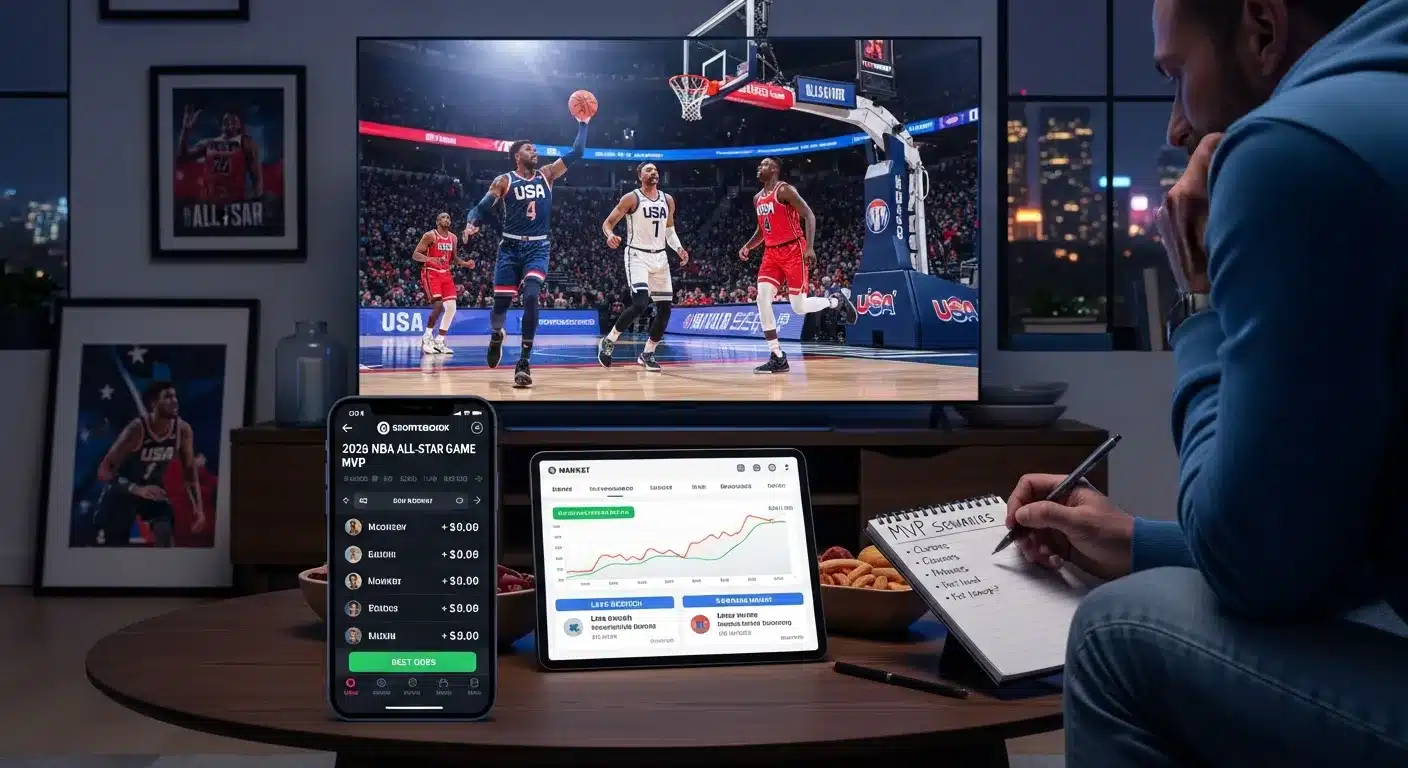
Cryptsy - Latest Cryptocurrency News and Predictions - Experts in Crypto Casinos
The NBA All-Star MVP market looks like a fun side bet. It’s not. It’s a tiny, fast-moving prediction market where one hot quarter, one injury scratch, or one “let’s get him the trophy” storyline can flip the whole board.
If you’re used to thinking like an investor, you’ll recognize the pattern: a noisy asset, limited liquidity, headline-driven swings, and a payoff that depends as much on structure as talent. The good news is you can still approach the 2026 NBA All-Star Game MVP race with a process instead of vibes. Below, you’ll see how the 2026 format changes incentives, how to read MVP odds like pricing (not prophecy), and which player profiles tend to win when defense is optional and highlights are the currency.
Key Takeaways
- The 2026 NBA All-Star Game MVP market is a volatile, low-liquidity pricing game where one hot stretch, a minutes limit, or a storyline can flip the odds fast.
- Price the 2026 NBA All-Star Game MVP by format and roles first—not “best player”—because World vs USA structure can concentrate touches on the World side while Team USA often spreads stats across stars.
- Treat MVP odds like a market by converting lines to implied probability, accounting for book hold, and using line movement to separate real news from highlight-driven noise.
- Prioritize MVP archetypes that win in exhibitions: instant-offense scorers who shoot early, thrive in transition and open threes, and are trusted to close the final competitive segment.
- Build a “best odds” portfolio across tiers (favorite, mid-tier role winner, and a fitting longshot) so you have multiple live outs instead of relying on one game script.
- Use a repeatable checklist—availability, starting/closing clues, early usage, and late lineup choices—to identify the best NBA All-Star MVP value before the market fully adjusts.
How The 2026 All-Star Format Shapes MVP Outcomes
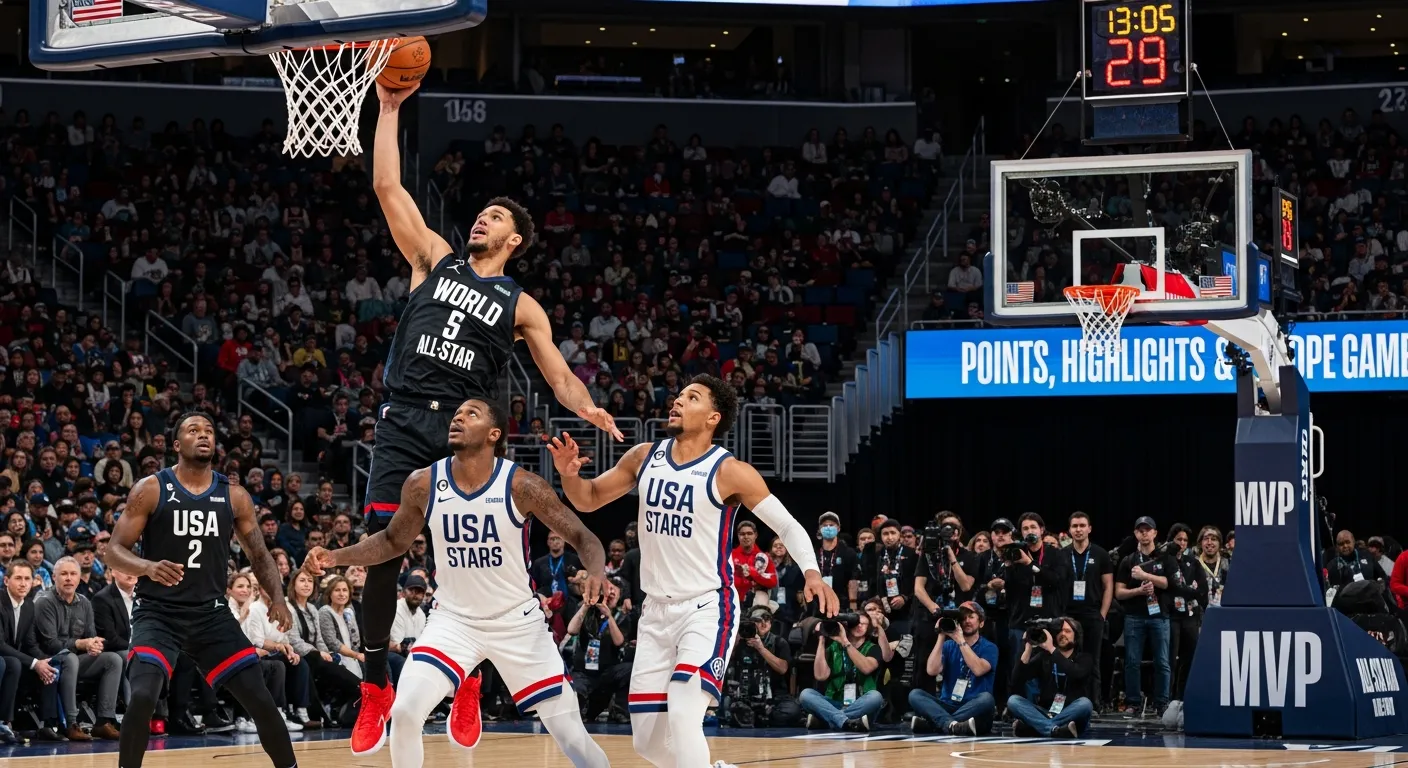
You can’t price the 2026 NBA All-Star Game MVP correctly if you treat it like a normal NBA game. The format is the product. It changes who plays together, how minutes get handed out, and what “winning” even looks like in the moment.
In my experience, the fastest way to lose on All-Star props is to start with “best player = best bet.” The smarter move is to start with “who benefits from the structure?”
Team Structure: World Vs USA Stars Vs USA Stripes
With a World vs USA split (and, on the USA side, a Stars vs Stripes wrinkle), you get two big effects.
First, the World team tends to have cleaner internal roles. International stars often slide into a more natural hierarchy because their games translate well into quick-hitting actions: early seals, trail threes, and straightforward pick-and-roll. When the ball doesn’t stick, the same two or three players can rack up efficient points without needing a dozen isolations.
Second, the USA pool usually has more overlap. When you stack elite wings and ball-dominant guards on the same floor, you can end up with “your turn, my turn” possessions. That’s fun, but it can spread the stat line thin, great for the show, not always great for MVP odds.
Game Flow Factors That Drive MVP Votes
MVP voters (whether media, fans, or a blended process) usually reward three things in All-Star settings: points, highlights, and a sense that the player “decided” the game.
So game flow matters. If the format creates mini-runs, short target-score finishes, or late-game bursts where coaches actually care for five minutes, the MVP is often the player who closes, not the player who scored a quiet 14 in the first half.
Also, pace is a feature, not a bug. When possessions pile up, the MVP can come from whoever gets the easiest shot diet, leaks in transition, wide-open threes, or uncontested rim attempts. That’s why a player’s role and teammates can matter as much as their raw talent.
How To Read MVP Odds Like A Market (Not A Guess)
You don’t need to be a professional bettor to read MVP odds like a market. You just need to stop thinking of odds as “who will win” and start treating them as “what price am I paying for a specific scenario?”
If you’re already watching crypto markets, you’ve got the right instincts. Thin order books, sudden news candles, and pricing that often moves faster than the underlying reality.
Implied Probability, Hold, And Line Movement
Odds are just probabilities with a fee baked in. Your job is to translate the price into what the market is implying, then decide if that implied probability is too high or too low.
The catch is hold. MVP markets can carry a chunky margin because they’re volatile and books know most people bet narratives. That means you can’t glance at a +300 and assume it’s “fair.” You want to compare across books when possible and focus on relative value: did a player drift because of real information, or because the market chased the last highlight clip?
Line movement tells you what kind of money is showing up. A slow, steady shortening can mean informed action or accumulating public interest. A sudden jump often points to a news catalyst, minutes restriction whispers, a confirmed starter, a player hinting he’ll “go for it,” that kind of thing.
Liquidity, Timing, And News Catalysts To Watch
Liquidity is thinner than people think. That’s why timing matters.
Earlier in the week, prices can be softer, but you’re taking on uncertainty: who plays, who’s banged up, who decides to treat it like a cardio session. Closer to tip, you’ll have more information, but you’ll pay for it because the market tightens around the obvious candidates.
The news catalysts worth watching are boring but profitable: availability confirmations, last-minute replacement announcements, and any talk of minute caps. Also watch for coach comments about starting lineups or “closing groups.” In All-Star games, closing is king.
If you want an investor-style workflow, this is where a site like Cryptsy fits naturally: you track catalysts, watch real-time updates, and keep your decision tied to data instead of the loudest take on your feed.
Best Odds Tiers For 2026 MVP Contenders
When you break the MVP board into tiers, you stop forcing a single “best bet” and start building a portfolio of outcomes. That’s closer to how you’d handle a volatile asset: you decide what you’re paying for upside, what you’re paying for stability, and what you’re paying for a cheap option that can hit if the right weird thing happens.
I’ve found that thinking in tiers also keeps you from overpaying for the most famous name.
Favorites: The Most Likely Winners And What Must Go Right
Favorites win when three boxes get checked: they’re featured early, they stay on the floor late, and their teammates don’t cannibalize the same stats.
The profile here is usually an alpha scorer who doesn’t need set plays, someone who can get to 30 on transition, pull-up threes, and casual drives. For a favorite to be a good price, you want a plausible path to being the closer. If the format encourages a competitive finish, favor the player you expect coaches to trust in the final stretch.
But don’t ignore the “too many mouths” problem. A favorite on a stacked roster can end up with 18 points and the best dunk of the night…and still lose to someone with 32 and a couple late threes.
Mid-Tier: High-Upside Picks With Clear Paths To A Big Night
Mid-tier is often where the best risk-adjusted value lives. These players can win without being the biggest name, as long as they have a clear role.
Think: the primary ball-handler on a unit that wants to run, or the wing who’s going to get fed for highlight finishes. In All-Star games, a guy who takes the most shots is always live. Mid-tier pricing can lag behind role clarity, especially if the public is still betting reputations.
This tier is also where you can benefit from team structure. If one side has a cleaner scoring hierarchy, the second-most-famous star on that team can be a better bet than the overall favorite on a crowded roster.
Longshots: The Profiles That Can Steal An MVP In An Exhibition Game
Longshots aren’t random. The ones worth a look tend to share a few traits: they’re willing shooters, they thrive in space, and they can pile points quickly without needing the ball for 12 seconds.
A longshot can also win on narrative. A first-time All-Star who comes out firing, a hometown favorite, or a player everyone wants to celebrate for a milestone season, those storylines can matter more here than in a playoff series.
The key is to be honest: you’re not betting that they’re “better.” You’re betting that the game script breaks their way.
Player Archetypes That Historically Win All-Star MVP
The All-Star MVP isn’t a “best player alive” award. It’s a one-night, stat-and-sizzle contest. If you want to predict it, you’re better off identifying archetypes than obsessing over exact season averages.
Usage And Shot Profile: Who Gets The Highlight Attempts
Winners usually take a lot of shots, and they’re the right kinds of shots.
Transition dunks, open threes, and quick pull-ups show up in bunches when defense is light. Players who hesitate or over-pass can look great on a real team but struggle to separate in an All-Star box score.
In my experience, the cleanest MVP candidates are “instant offense” guys, players who can go from 10 points to 22 points in what feels like two minutes because they hit two threes and get a leak-out dunk.
Minutes And Rotation Clues: Starters, Closers, And Hot-Hand Bias
Minutes are destiny. Not always, but often.
Starters get first crack at rhythm and early highlights. Closers get the final impression. And coaches, even in exhibitions, have a hot-hand bias. If a player hits three shots in a row, it’s amazing how quickly teammates decide he’s the offense.
So you’re watching for two things: who’s likely to play in the final competitive segment, and who can trigger that “keep feeding him” instinct.
Narratives And Voting Dynamics: Hometown, Milestones, And Storylines
Narratives can feel squishy, but they’re real. MVP voting in an All-Star environment is closer to award voting than game grading.
If the event has a hometown angle, that player gets louder cheers, more touches, and more camera time. If someone is chasing a feel-good moment, first appearance, comeback season, late-career salute, teammates will sometimes manufacture it. One thing I’ve learned the hard way: don’t bet against a room full of stars agreeing, silently, to make someone the story.
Team-Level Matchups And Mini-Final Scenarios
Even in a game with loose defense, team context matters. Who shares the floor, who runs with whom, and who becomes the default creator can decide the MVP before the fourth quarter even starts.
Which Team Has The Cleanest Scoring Hierarchy
You want a team where it’s obvious who takes the big shots.
When a roster has one clear engine, that player’s path to 25–35 points is simple. When a roster has four players who all “should” take 18 shots, nobody takes 18 shots. The MVP then becomes a coin flip between whoever hit their threes.
A clean hierarchy also means fewer wasted possessions. In All-Star settings, wasted possessions usually come from over-dribbling, not from good defense. The team that keeps it simple often produces the MVP.
How Pace, Spacing, And Rim Pressure Shift By Team
Pace creates volume. Spacing creates efficiency. Rim pressure creates free points.
If one side plays more like a track meet, their candidates get more attempts. If one side has more shooting, the paint is open and guards can get layups without a body attached. And if a team has two or three big athletes who run the floor, you can get a string of easy dunks that pad an MVP case fast.
This is also where matchups sneak in. A guard-heavy unit against a slower group can create endless transition chances. That’s not “analysis paralysis.” It’s the real lever behind those sudden 8-point bursts that decide the award.
Practical Prediction Framework You Can Reuse
If you want a repeatable way to attack the 2026 NBA All-Star Game MVP market, build a checklist you can run quickly, before the game and in the first few minutes after tip.
Pre-Game Checklist: Availability, Roles, And Injury Notes
Start with the boring stuff.
Confirm who’s actually available and whether anyone is carrying a minutes limit. All-Star weekends are full of “he’ll play” comments that turn into “he’ll be cautious” realities.
Then look at roles. Who starts? Who is likely to be the main ball-handler? Who benefits from teammates that like to pass? If you can identify the player most likely to take the first five shots for his team, you’re already ahead of most of the market.
Finally, be realistic about motivation. Some stars treat this like a brand moment. Others treat it like a mandatory appearance. You can often tell by pre-game interviews and warmup energy, subtle, but it adds up.
Live Signals: Early Usage, Defensive Intensity, And Closing Lineups
Once the game starts, you’re not looking for perfection. You’re looking for signals.
Early usage is the loudest one. If a player is hunting his shot immediately, calling for the ball, pushing pace, taking pull-up threes, he’s telling you what kind of night he wants.
Defensive intensity matters only at the end. If the game tightens and one player stays locked in, he’s more likely to close. And closers win MVPs.
Watch the lineups in the final stretch. If a star sits longer than expected, it’s hard to win the award without that last impression. If a player checks back in early for the “mini-final” feel, the market often hasn’t fully adjusted yet.
Bankroll And Risk Controls For Volatile Prop Markets
If you’re a finance-minded reader, you already know the lesson: volatility isn’t the enemy, but you can’t pretend it isn’t there.
All-Star MVP is volatile because it’s a single game with weird incentives. So treat it like a speculative position, not a core holding.
Position Sizing And Diversification Across Odds Tiers
Sizing matters more than being “right.”
A common approach is to spread exposure across tiers: one smaller position on a favorite you believe will close, one on a mid-tier player with a clear role, and one cheap longshot that matches the archetype. That way you’re not all-in on one script.
In my experience, the best feeling is not “I nailed the winner.” It’s “I had multiple live outs late.” That’s how you stay rational when the game turns into a three-point contest for six straight minutes.
Avoiding Common Traps: Overreacting To Headlines And Chasing Steam
Headlines move this market because the market is built to be moved.
Don’t chase a price that already collapsed unless you have new information, not just confirmation. And be careful with highlight-chasing. One viral dunk can shift public money even if the player has 8 points.
Also, don’t overreact to the first quarter. All-Star MVP is often decided late, when someone decides to take it personally for a few possessions. If you’re constantly buying after a run, you’re paying the worst price.
Treat it like any other risky market: decide your exposure, stick to it, and don’t let a loud timeline manage your bankroll.
2026 NBA All-Star Game MVP prediction
If you’re forcing me to plant a flag for a 2026 NBA All-Star Game MVP prediction without the final rosters and prices in front of us, I’d aim your attention at the most reliable All-Star MVP formula: an elite scorer who creates his own shot, loves the moment, and is likely to be on the floor when the game actually starts to matter.
Practically, that means your best “single-name” candidate is usually a high-volume perimeter star, someone comfortable taking eight threes and five pull-up jumpers without a second thought. That shot profile wins this award because it scales instantly in an exhibition setting.
I’d also keep one alternative ready: the primary creator on the team with the cleaner hierarchy (often the World side). If that team plays with even a little more structure, the lead engine can stack efficient points while the more crowded team spreads touches around.
So your prediction process should look like this: back the player most likely to close as your main read, and keep a secondary position on the lead ball-handler from the team that looks easiest to project. You’re not trying to be poetic. You’re trying to be paid.
2026 NBA All-Star Game Odds, Format, Predictions, & Picks
The phrase “best odds” can be misleading here because the best number isn’t always on the player you like the most. It’s on the player whose chances are being underpriced by the current format and expected minutes.
Assuming the 2026 format keeps the World vs USA framing and the USA’s internal split, here’s how I’d translate that into predictions and picks logic.
If the game has a competitive finish, price closers higher. If you expect a looser, highlight-only night, price pure scorers and leak-out merchants higher. That sounds obvious, but most bettors don’t actually adjust: they just bet their favorite star.
Your “picks” should come from three buckets: a favorite you believe will play the final stretch, a mid-tier player with a clear first-option role on his unit, and a longshot who can score in fast bursts. Then you wait for the market to give you a number you’re willing to pay.
One more thing: don’t ignore format-specific quirks like target scores or mini-games if they’re announced. Any rule that compresses endgame possessions increases the value of being on the closing lineup and decreases the value of a player who racks stats early but sits late.
Betting on the NBA?
If you’re betting on the NBA regularly, you’ll recognize that All-Star markets behave more like awards markets than game markets.
The edge usually comes from information and discipline, not from trying to “out-smart” a single matchup. Keep your workflow tight: monitor availability, understand roles, and know what price you’re willing to pay before you get tempted by a moving line.
And if you like the market side of this, watching prices react to news, tracking sentiment swings, keeping your own notes, tools that feel familiar to investors matter. That’s one reason I like having an information hub open while lines move. Cryptsy is built for real-time updates and analysis in crypto, but that same habit of tracking catalysts and staying data-led translates well when you’re looking at fast, headline-driven betting markets too.
Why Trust New York Post Betting
You shouldn’t trust a pick because it sounds confident. You should trust the process behind it.
New York Post Betting has earned attention by treating sports betting like a beat: pricing context, timely news, and opinion that’s tied to how markets actually move. That matters most in props like All-Star MVP, where public narratives can overwhelm the underlying probabilities.
From an investor’s point of view, the value is less about being entertained and more about getting a structured read: what changed, why the line moved, and whether the current number still makes sense. When you can separate “information” from “noise,” you’re already doing what most casual bettors won’t.
Conclusion
The 2026 NBA All-Star Game MVP market rewards the same mindset that works in any speculative corner of finance: respect volatility, price scenarios, and don’t confuse a big name with a good number.
If you keep it simple, format first, minutes second, shot profile third, you’ll make better decisions than someone chasing highlights and headlines. And you’ll feel calmer doing it, which is underrated.
Your goal isn’t to predict the future perfectly. It’s to consistently put your money behind outcomes that are mispriced, then let the chaos of All-Star night work in your favor.
Frequently Asked Questions
How does the 2026 NBA All-Star Game format affect 2026 NBA All-Star Game MVP odds?
The World vs USA setup (plus USA Stars vs Stripes) changes roles, minutes, and who closes. The World side often has a cleaner hierarchy, while the USA side can split touches across multiple alphas. Because MVP votes favor late impact, format-driven closing lineups can swing 2026 NBA All-Star Game MVP odds fast.
What’s the best way to read 2026 NBA All-Star Game MVP odds for prediction?
Treat 2026 NBA All-Star Game MVP odds like market pricing, not prophecy. Convert odds to implied probability, account for sportsbook hold, and track line movement for real catalysts (availability, minute caps, starters, closing groups). Compare prices across books and avoid paying up just because a highlight clip goes viral.
Which player archetypes usually win the 2026 NBA All-Star Game MVP?
All-Star MVPs typically fit an “instant offense” profile: high usage, willing shooter, and a shot diet built for exhibitions—transition dunks, open threes, quick pull-ups. Minutes matter too: starters get early rhythm, but closers get the final impression. Hot-hand bias can snowball into an MVP run.
When should you bet the 2026 NBA All-Star Game MVP market to get the best odds?
Earlier in the week can offer softer numbers, but you’re exposed to uncertainty about who plays and how hard they go. Closer to tip, information is clearer—confirmations, replacements, minute limits, starting and closing hints—but the market tightens around obvious candidates. Timing is a tradeoff between price and certainty.
How do you build a smart portfolio of 2026 NBA All-Star Game MVP bets across favorites, mid-tier, and longshots?
Use tiers instead of forcing one “best bet.” Take a smaller position on a favorite you expect to close, add a mid-tier player with a clear first-option role, and sprinkle a longshot who can score in fast bursts. This diversification gives you multiple live outs if the game script turns weird late.
Do injuries or minute restrictions really move NBA All-Star MVP odds that much?
Yes. All-Star MVP is a single-game, thin-liquidity market, so a late scratch, minutes cap, or unexpected replacement can reprice the entire board quickly. Since minutes and closing opportunities are “destiny” for MVP cases, any news that changes rotation expectations can matter more than raw talent.
The post 2026 All-Star MVP Odds: Best Picks to Predict Winner first appeared on Cryptsy - Latest Cryptocurrency News and Predictions and is written by Ethan Blackburn


You May Also Like

‘Iran Agreement Is in Final Shape’: Trump Signals De-escalation as Talks Conclude

Wall Street Closes Higher: S&P 500, Nasdaq, Dow Jones Rally

Mike Johnson shredded by analyst for 'dumb' move to kick politics' biggest hornet's nest



