BitcoinWorld HashFlare Co-Founders Sentence: US Prosecutors Launch Shocking Appeal The cryptocurrency world is buzzing with significant legal news: US prosecutors have launched a shocking appeal concerning the lenient HashFlare co-founders sentence. This development signals a strong stance against crypto wire fraud, particularly after a Seattle federal court credited the detention period of Ivan Turogin and Sergei Potapenko as time served, alongside a modest $25,000 fine and community service. This decision came despite prosecutors originally seeking a hefty 10-year sentence for the masterminds behind a massive crypto Ponzi scheme that defrauded hundreds of thousands of victims out of an astounding $570 million, as Cointelegraph reported. Understanding the HashFlare Co-Founders Sentence and the Appeal The HashFlare operation was not just a minor infraction; it was a colossal crypto Ponzi scheme. The co-founders, Ivan Turogin and Sergei Potapenko, allegedly promised investors lucrative returns from cryptocurrency mining operations that simply did not exist. Instead, they used new investor funds to pay off earlier investors, a classic Ponzi setup. The scale of the fraud is truly staggering: Victims: Hundreds of thousands of individuals were impacted. Total Losses: An estimated $570 million was defrauded. Scheme: Fictitious cloud mining services were promoted. Therefore, the initial HashFlare co-founders sentence of “time served” struck many as incredibly lenient, especially given the immense financial and emotional damage inflicted upon so many people. This stark contrast between the crime’s magnitude and the initial penalty is precisely what triggered the prosecutors’ appeal. The Controversial HashFlare Co-Founders Sentence: Time Served vs. Justice The term “time served” essentially means that the period the defendants spent in custody awaiting trial or sentencing is considered sufficient punishment. For Turogin and Potapenko, this meant they would not face additional prison time beyond what they had already endured. This outcome deeply concerned legal observers and victims alike. Prosecutors argued that a 10-year sentence was appropriate, reflecting the severity of the crypto wire fraud and the need for a deterrent. However, the Seattle federal court’s decision suggested a different interpretation of justice in this complex case. This disparity highlights a significant challenge within the legal system: how to adequately penalize sophisticated financial crimes, especially those involving emerging technologies like cryptocurrency. What Does This Appeal Mean for Future Crypto Fraud Cases? The US prosecutors’ appeal of the HashFlare co-founders sentence sends a clear message. It demonstrates a firm commitment to holding individuals accountable for large-scale cryptocurrency fraud. This move could set an important precedent for future cases, indicating that authorities are prepared to push for more substantial penalties, even if initial rulings are perceived as too lenient. Moreover, this appeal underscores the evolving landscape of crypto regulation and enforcement. As digital assets become more mainstream, the legal system is adapting to address the unique challenges posed by crypto-related crimes. Consequently, this case serves as a crucial benchmark for how serious the US government views such offenses. The Impact of the HashFlare Co-Founders Sentence on Victims For the hundreds of thousands of victims of the HashFlare scheme, the initial HashFlare co-founders sentence was undoubtedly disheartening. It might have felt like a profound injustice, diminishing the severity of their financial losses and the betrayal of trust. The appeal, however, offers a renewed sense of hope. While an appeal does not guarantee restitution, it does signify that the legal battle for justice is far from over. It provides a platform for the victims’ voices to be heard more forcefully and reinforces the idea that perpetrators of such massive fraud should face consequences that truly reflect the harm they caused. The pursuit of a more stringent HashFlare co-founders sentence is a step towards validating the suffering of those impacted. In conclusion, the US prosecutors’ appeal regarding the HashFlare co-founders sentence is a pivotal moment in the fight against crypto wire fraud. It underscores the legal system’s ongoing efforts to adapt to the complexities of digital asset crimes and to ensure that justice is served for victims of large-scale Ponzi schemes. This case will undoubtedly influence how future crypto fraud perpetrators are treated, signaling a tougher stance on accountability in the rapidly expanding cryptocurrency ecosystem. Frequently Asked Questions (FAQs) Q1: What was the HashFlare crypto Ponzi scheme? A1: HashFlare was a purported cloud mining operation that promised investors high returns from cryptocurrency mining. In reality, it operated as a Ponzi scheme, using funds from new investors to pay off earlier ones, rather than generating profits from actual mining. Q2: Who are Ivan Turogin and Sergei Potapenko? A2: Ivan Turogin and Sergei Potapenko are the co-founders of HashFlare, who were indicted on crypto wire fraud charges for their involvement in the $570 million Ponzi scheme. Q3: Why did US prosecutors appeal the HashFlare co-founders sentence? A3: Prosecutors appealed because they considered the initial sentence of “time served” to be too lenient. They had sought a 10-year prison sentence, believing the initial ruling did not adequately reflect the severity of the $570 million crypto wire fraud. Q4: What does “time served” mean in this context? A4: “Time served” means that the period the defendants, Turogin and Potapenko, had already spent in detention awaiting trial or sentencing was deemed sufficient punishment by the court, meaning they would not face additional incarceration. Q5: How many victims were affected by the HashFlare scheme? A5: The HashFlare Ponzi scheme defrauded hundreds of thousands of victims globally, resulting in total losses estimated at $570 million. Did this critical update on the HashFlare case shed light on the ongoing battle against crypto fraud? Share this article with your network to keep others informed about the evolving legal landscape in the cryptocurrency space! To learn more about the latest crypto fraud trends and legal developments, explore our article on key developments shaping cryptocurrency crime prevention and institutional adoption. This post HashFlare Co-Founders Sentence: US Prosecutors Launch Shocking Appeal first appeared on BitcoinWorld and is written by Editorial TeamBitcoinWorld HashFlare Co-Founders Sentence: US Prosecutors Launch Shocking Appeal The cryptocurrency world is buzzing with significant legal news: US prosecutors have launched a shocking appeal concerning the lenient HashFlare co-founders sentence. This development signals a strong stance against crypto wire fraud, particularly after a Seattle federal court credited the detention period of Ivan Turogin and Sergei Potapenko as time served, alongside a modest $25,000 fine and community service. This decision came despite prosecutors originally seeking a hefty 10-year sentence for the masterminds behind a massive crypto Ponzi scheme that defrauded hundreds of thousands of victims out of an astounding $570 million, as Cointelegraph reported. Understanding the HashFlare Co-Founders Sentence and the Appeal The HashFlare operation was not just a minor infraction; it was a colossal crypto Ponzi scheme. The co-founders, Ivan Turogin and Sergei Potapenko, allegedly promised investors lucrative returns from cryptocurrency mining operations that simply did not exist. Instead, they used new investor funds to pay off earlier investors, a classic Ponzi setup. The scale of the fraud is truly staggering: Victims: Hundreds of thousands of individuals were impacted. Total Losses: An estimated $570 million was defrauded. Scheme: Fictitious cloud mining services were promoted. Therefore, the initial HashFlare co-founders sentence of “time served” struck many as incredibly lenient, especially given the immense financial and emotional damage inflicted upon so many people. This stark contrast between the crime’s magnitude and the initial penalty is precisely what triggered the prosecutors’ appeal. The Controversial HashFlare Co-Founders Sentence: Time Served vs. Justice The term “time served” essentially means that the period the defendants spent in custody awaiting trial or sentencing is considered sufficient punishment. For Turogin and Potapenko, this meant they would not face additional prison time beyond what they had already endured. This outcome deeply concerned legal observers and victims alike. Prosecutors argued that a 10-year sentence was appropriate, reflecting the severity of the crypto wire fraud and the need for a deterrent. However, the Seattle federal court’s decision suggested a different interpretation of justice in this complex case. This disparity highlights a significant challenge within the legal system: how to adequately penalize sophisticated financial crimes, especially those involving emerging technologies like cryptocurrency. What Does This Appeal Mean for Future Crypto Fraud Cases? The US prosecutors’ appeal of the HashFlare co-founders sentence sends a clear message. It demonstrates a firm commitment to holding individuals accountable for large-scale cryptocurrency fraud. This move could set an important precedent for future cases, indicating that authorities are prepared to push for more substantial penalties, even if initial rulings are perceived as too lenient. Moreover, this appeal underscores the evolving landscape of crypto regulation and enforcement. As digital assets become more mainstream, the legal system is adapting to address the unique challenges posed by crypto-related crimes. Consequently, this case serves as a crucial benchmark for how serious the US government views such offenses. The Impact of the HashFlare Co-Founders Sentence on Victims For the hundreds of thousands of victims of the HashFlare scheme, the initial HashFlare co-founders sentence was undoubtedly disheartening. It might have felt like a profound injustice, diminishing the severity of their financial losses and the betrayal of trust. The appeal, however, offers a renewed sense of hope. While an appeal does not guarantee restitution, it does signify that the legal battle for justice is far from over. It provides a platform for the victims’ voices to be heard more forcefully and reinforces the idea that perpetrators of such massive fraud should face consequences that truly reflect the harm they caused. The pursuit of a more stringent HashFlare co-founders sentence is a step towards validating the suffering of those impacted. In conclusion, the US prosecutors’ appeal regarding the HashFlare co-founders sentence is a pivotal moment in the fight against crypto wire fraud. It underscores the legal system’s ongoing efforts to adapt to the complexities of digital asset crimes and to ensure that justice is served for victims of large-scale Ponzi schemes. This case will undoubtedly influence how future crypto fraud perpetrators are treated, signaling a tougher stance on accountability in the rapidly expanding cryptocurrency ecosystem. Frequently Asked Questions (FAQs) Q1: What was the HashFlare crypto Ponzi scheme? A1: HashFlare was a purported cloud mining operation that promised investors high returns from cryptocurrency mining. In reality, it operated as a Ponzi scheme, using funds from new investors to pay off earlier ones, rather than generating profits from actual mining. Q2: Who are Ivan Turogin and Sergei Potapenko? A2: Ivan Turogin and Sergei Potapenko are the co-founders of HashFlare, who were indicted on crypto wire fraud charges for their involvement in the $570 million Ponzi scheme. Q3: Why did US prosecutors appeal the HashFlare co-founders sentence? A3: Prosecutors appealed because they considered the initial sentence of “time served” to be too lenient. They had sought a 10-year prison sentence, believing the initial ruling did not adequately reflect the severity of the $570 million crypto wire fraud. Q4: What does “time served” mean in this context? A4: “Time served” means that the period the defendants, Turogin and Potapenko, had already spent in detention awaiting trial or sentencing was deemed sufficient punishment by the court, meaning they would not face additional incarceration. Q5: How many victims were affected by the HashFlare scheme? A5: The HashFlare Ponzi scheme defrauded hundreds of thousands of victims globally, resulting in total losses estimated at $570 million. Did this critical update on the HashFlare case shed light on the ongoing battle against crypto fraud? Share this article with your network to keep others informed about the evolving legal landscape in the cryptocurrency space! To learn more about the latest crypto fraud trends and legal developments, explore our article on key developments shaping cryptocurrency crime prevention and institutional adoption. This post HashFlare Co-Founders Sentence: US Prosecutors Launch Shocking Appeal first appeared on BitcoinWorld and is written by Editorial Team

HashFlare Co-Founders Sentence: US Prosecutors Launch Shocking Appeal

BitcoinWorld
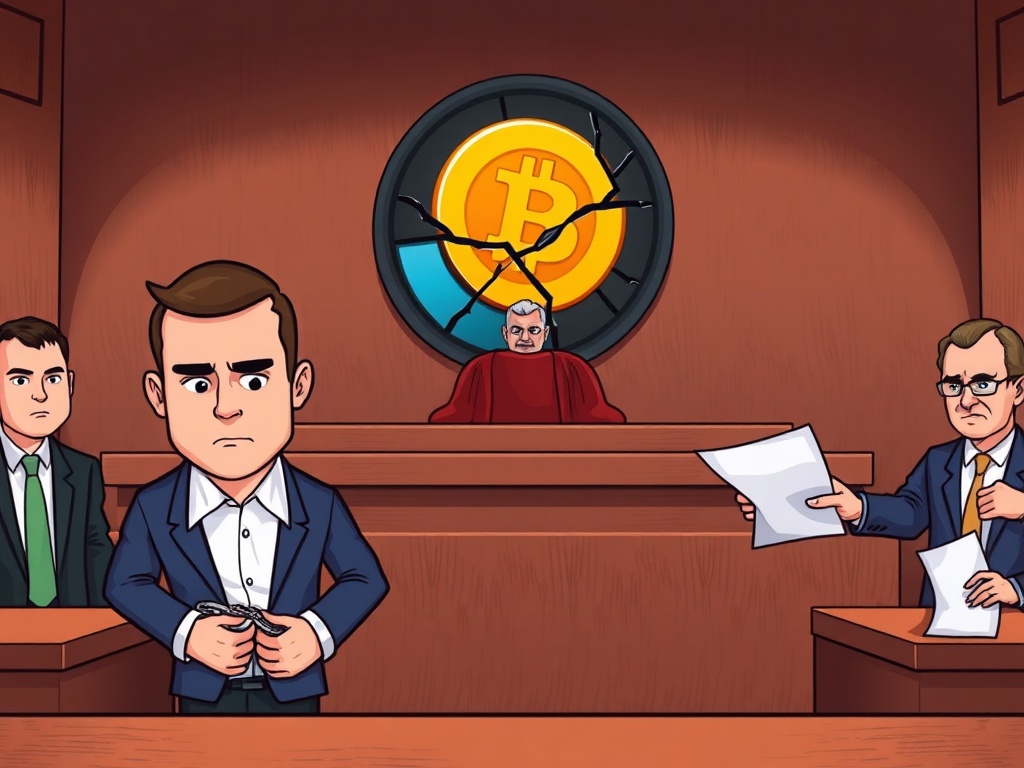
HashFlare Co-Founders Sentence: US Prosecutors Launch Shocking Appeal

The cryptocurrency world is buzzing with significant legal news: US prosecutors have launched a shocking appeal concerning the lenient HashFlare co-founders sentence. This development signals a strong stance against crypto wire fraud, particularly after a Seattle federal court credited the detention period of Ivan Turogin and Sergei Potapenko as time served, alongside a modest $25,000 fine and community service. This decision came despite prosecutors originally seeking a hefty 10-year sentence for the masterminds behind a massive crypto Ponzi scheme that defrauded hundreds of thousands of victims out of an astounding $570 million, as Cointelegraph reported.

Understanding the HashFlare Co-Founders Sentence and the Appeal

The HashFlare operation was not just a minor infraction; it was a colossal crypto Ponzi scheme. The co-founders, Ivan Turogin and Sergei Potapenko, allegedly promised investors lucrative returns from cryptocurrency mining operations that simply did not exist. Instead, they used new investor funds to pay off earlier investors, a classic Ponzi setup.

The scale of the fraud is truly staggering:

  • Victims: Hundreds of thousands of individuals were impacted.
  • Total Losses: An estimated $570 million was defrauded.
  • Scheme: Fictitious cloud mining services were promoted.

Therefore, the initial HashFlare co-founders sentence of “time served” struck many as incredibly lenient, especially given the immense financial and emotional damage inflicted upon so many people. This stark contrast between the crime’s magnitude and the initial penalty is precisely what triggered the prosecutors’ appeal.

The Controversial HashFlare Co-Founders Sentence: Time Served vs. Justice

The term “time served” essentially means that the period the defendants spent in custody awaiting trial or sentencing is considered sufficient punishment. For Turogin and Potapenko, this meant they would not face additional prison time beyond what they had already endured. This outcome deeply concerned legal observers and victims alike.

Prosecutors argued that a 10-year sentence was appropriate, reflecting the severity of the crypto wire fraud and the need for a deterrent. However, the Seattle federal court’s decision suggested a different interpretation of justice in this complex case. This disparity highlights a significant challenge within the legal system: how to adequately penalize sophisticated financial crimes, especially those involving emerging technologies like cryptocurrency.

What Does This Appeal Mean for Future Crypto Fraud Cases?

The US prosecutors’ appeal of the HashFlare co-founders sentence sends a clear message. It demonstrates a firm commitment to holding individuals accountable for large-scale cryptocurrency fraud. This move could set an important precedent for future cases, indicating that authorities are prepared to push for more substantial penalties, even if initial rulings are perceived as too lenient.

Moreover, this appeal underscores the evolving landscape of crypto regulation and enforcement. As digital assets become more mainstream, the legal system is adapting to address the unique challenges posed by crypto-related crimes. Consequently, this case serves as a crucial benchmark for how serious the US government views such offenses.

The Impact of the HashFlare Co-Founders Sentence on Victims

For the hundreds of thousands of victims of the HashFlare scheme, the initial HashFlare co-founders sentence was undoubtedly disheartening. It might have felt like a profound injustice, diminishing the severity of their financial losses and the betrayal of trust. The appeal, however, offers a renewed sense of hope.

While an appeal does not guarantee restitution, it does signify that the legal battle for justice is far from over. It provides a platform for the victims’ voices to be heard more forcefully and reinforces the idea that perpetrators of such massive fraud should face consequences that truly reflect the harm they caused. The pursuit of a more stringent HashFlare co-founders sentence is a step towards validating the suffering of those impacted.

In conclusion, the US prosecutors’ appeal regarding the HashFlare co-founders sentence is a pivotal moment in the fight against crypto wire fraud. It underscores the legal system’s ongoing efforts to adapt to the complexities of digital asset crimes and to ensure that justice is served for victims of large-scale Ponzi schemes. This case will undoubtedly influence how future crypto fraud perpetrators are treated, signaling a tougher stance on accountability in the rapidly expanding cryptocurrency ecosystem.

Frequently Asked Questions (FAQs)

Q1: What was the HashFlare crypto Ponzi scheme?
A1: HashFlare was a purported cloud mining operation that promised investors high returns from cryptocurrency mining. In reality, it operated as a Ponzi scheme, using funds from new investors to pay off earlier ones, rather than generating profits from actual mining.

Q2: Who are Ivan Turogin and Sergei Potapenko?
A2: Ivan Turogin and Sergei Potapenko are the co-founders of HashFlare, who were indicted on crypto wire fraud charges for their involvement in the $570 million Ponzi scheme.

Q3: Why did US prosecutors appeal the HashFlare co-founders sentence?
A3: Prosecutors appealed because they considered the initial sentence of “time served” to be too lenient. They had sought a 10-year prison sentence, believing the initial ruling did not adequately reflect the severity of the $570 million crypto wire fraud.

Q4: What does “time served” mean in this context?
A4: “Time served” means that the period the defendants, Turogin and Potapenko, had already spent in detention awaiting trial or sentencing was deemed sufficient punishment by the court, meaning they would not face additional incarceration.

Q5: How many victims were affected by the HashFlare scheme?
A5: The HashFlare Ponzi scheme defrauded hundreds of thousands of victims globally, resulting in total losses estimated at $570 million.

Did this critical update on the HashFlare case shed light on the ongoing battle against crypto fraud? Share this article with your network to keep others informed about the evolving legal landscape in the cryptocurrency space!

To learn more about the latest crypto fraud trends and legal developments, explore our article on key developments shaping cryptocurrency crime prevention and institutional adoption.

This post HashFlare Co-Founders Sentence: US Prosecutors Launch Shocking Appeal first appeared on BitcoinWorld and is written by Editorial Team


Market Opportunity
Brainedge Logo
Brainedge Price(LEARN)
$0.0091
$0.0091$0.0091
+0.11%
USD
Brainedge (LEARN) Live Price Chart
Disclaimer: The articles reposted on this site are sourced from public platforms and are provided for informational purposes only. They do not necessarily reflect the views of MEXC. All rights remain with the original authors. If you believe any content infringes on third-party rights, please contact service@support.mexc.com for removal. MEXC makes no guarantees regarding the accuracy, completeness, or timeliness of the content and is not responsible for any actions taken based on the information provided. The content does not constitute financial, legal, or other professional advice, nor should it be considered a recommendation or endorsement by MEXC.

You May Also Like

CME Group to launch options on XRP and SOL futures

CME Group to launch options on XRP and SOL futures

The post CME Group to launch options on XRP and SOL futures appeared on BitcoinEthereumNews.com. CME Group will offer options based on the derivative markets on Solana (SOL) and XRP. The new markets will open on October 13, after regulatory approval.  CME Group will expand its crypto products with options on the futures markets of Solana (SOL) and XRP. The futures market will start on October 13, after regulatory review and approval.  The options will allow the trading of MicroSol, XRP, and MicroXRP futures, with expiry dates available every business day, monthly, and quarterly. The new products will be added to the existing BTC and ETH options markets. ‘The launch of these options contracts builds on the significant growth and increasing liquidity we have seen across our suite of Solana and XRP futures,’ said Giovanni Vicioso, CME Group Global Head of Cryptocurrency Products. The options contracts will have two main sizes, tracking the futures contracts. The new market will be suitable for sophisticated institutional traders, as well as active individual traders. The addition of options markets singles out XRP and SOL as liquid enough to offer the potential to bet on a market direction.  The options on futures arrive a few months after the launch of SOL futures. Both SOL and XRP had peak volumes in August, though XRP activity has slowed down in September. XRP and SOL options to tap both institutions and active traders Crypto options are one of the indicators of market attitudes, with XRP and SOL receiving a new way to gauge sentiment. The contracts will be supported by the Cumberland team.  ‘As one of the biggest liquidity providers in the ecosystem, the Cumberland team is excited to support CME Group’s continued expansion of crypto offerings,’ said Roman Makarov, Head of Cumberland Options Trading at DRW. ‘The launch of options on Solana and XRP futures is the latest example of the…
Share
BitcoinEthereumNews2025/09/18 00:56
Adam Wainwright Takes The Mound Again Honor Darryl Kile

Adam Wainwright Takes The Mound Again Honor Darryl Kile

The post Adam Wainwright Takes The Mound Again Honor Darryl Kile appeared on BitcoinEthereumNews.com. Adam Wainwright of the St. Louis Cardinals in the dugout during the second inning against the Miami Marlins at Busch Stadium on July 18, 2023 in St. Louis, Missouri. (Photo by Brandon Sloter/Image Of Sport/Getty Images) Getty Images St. Louis Cardinals lifer Adam Wainwright is a pretty easygoing guy, and not unlikely to talk with you about baseball traditions and barbecue, or even share a joke. That personality came out last week during our Zoom call when I mentioned for the first time that I’m a Chicago Cubs fan. He responded to the mention of my fandom, “So far, I don’t think this interview is going very well.” Yet, Wainwright will return to Busch Stadium on September 19 on a more serious note, this time to honor another former Cardinal and friend, the late Darryl Kile. Wainwright will take the mound not as a starting pitcher, but to throw out the game’s ceremonial first pitch. Joining him on the mound will be Kile’s daughter, Sierra, as the two help launch a new program called Playing with Heart. “Darryl’s passing was a reminder that heart disease doesn’t discriminate, even against elite athletes in peak physical shape,” Wainwright said. “This program is about helping people recognize the risks, take action, and hopefully save lives.” Wainwright, who played for the St. Louis Cardinals as a starting pitcher from 2005 to 2023, aims to merge the essence of baseball tradition with a crucial message about heart health. Kile, a beloved pitcher for the Cardinals, tragically passed away in 2002 at the age of 33 as a result of early-onset heart disease. His sudden death shook the baseball world and left a lasting impact on teammates, fans, and especially his family. Now, more than two decades later, Sierra Kile is stepping forward with Wainwright to…
Share
BitcoinEthereumNews2025/09/18 02:08
XLM Price Prediction: Stellar Targets $0.26-$0.27 Range by February 2026

XLM Price Prediction: Stellar Targets $0.26-$0.27 Range by February 2026

The post XLM Price Prediction: Stellar Targets $0.26-$0.27 Range by February 2026 appeared on BitcoinEthereumNews.com. Zach Anderson Jan 14, 2026 13:31 XLM
Share
BitcoinEthereumNews2026/01/15 10:06