Highlights: Google Cloud has unveiled a blockchain project to support tokenized assets and settlements. The Universal Ledger supports cross-border payments and offers flexible smart contracts for institutions. Critics have questioned Google Cloud ledger design, as concerns over centralization challenge its neutral claims. Google Cloud, a suite of cloud computing services offered by Google, has launched the Universal Ledger (GCUL), a Layer-1 blockchain platform designed for financial institutions. The system enables tokenized assets, cross-border settlements, and Python-based smart contracts. It is currently active on a private testnet, signaling Google’s deeper entry into blockchain protocol development. Google Cloud has announced the launch of its L1 blockchain, GCUL, which simplifies cross-border payments and asset settlements through a distributed ledger. GCUL is currently in a private testnet phase and announced a partnership with CME earlier this year to pilot tokenized… pic.twitter.com/QbH9A2Q33m — Wu Blockchain (@WuBlockchain) August 27, 2025 The project first appeared in March during a pilot program with the leading derivatives marketplace, CME Group. At that time, Google did not identify the network as a Layer-1 platform. In a recent article, Rich Widmann—head of Web3 strategy at Google Cloud—explained the positioning of the project. Widmann explained that the Universal Ledger functions as a neutral infrastructure layer rather than a vertically integrated product. He stressed that it offers a shared foundation for banks, exchanges, and payment firms. “Our goal is to provide a neutral base layer that any financial institution can use to build reliable blockchain services,” he said. The move highlights Google Cloud’s broader push into digital assets. The company has already partnered with Coinbase for cloud payments and provided support for networks like Solana. Competition Emerges as Google Cloud Unveils L1 Blockchain Project The introduction of the Universal Ledger places Google Cloud in competition with other institutional blockchain providers. Ripple continues to expand XRPL, Circle is developing Arc to strengthen USDC’s role, and Stripe is building Tempo for faster payments. Google, on the other hand, promotes its network as a public infrastructure that any financial institution can use. Widmann highlighted three design principles. He stated that the system is simple, offering a unified API for multiple currencies and assets. He noted that it enables scalable payments and automation. Lastly, he pointed out that it is safe, with KYC-verified accounts and compliance-oriented fee models. Critics raise questions about the unveiling of the L1 blockchain by Google Cloud. According to observers, the system is currently functioning as a permissioned and completely private chain. They claimed that no ledger run by a single business can be neutral. Some users suggested that decentralization remains unresolved within Google’s framework. In response, Widmann stressed that competitors may avoid closed networks like Arc or Tempo, but any financial institution can build on the Universal Ledger. He noted that this openness creates opportunities for institutions that require neutral ground. CME Group’s earlier decision to test payments on the platform provided some industry validation. Widmann also suggested that companies such as Amazon or Microsoft could participate once the network matures. Reactions to Google’s Move into Blockchain Development The project has drawn mixed reactions across the blockchain sector. Eli Ben-Sasson of StarkWare and Jon Charbonneau of DBA both questioned whether corporate Layer-1 platforms can succeed in the long run. They compared Google’s effort to past projects like Meta’s Diem, which failed to achieve adoption. I think corporations doing L1s is ngmi. Including base. I know this is a contentious opinion. But reminding you I said the same about Diem (for those who remember it). — Eli Ben-Sasson | Starknet.io (@EliBenSasson) August 27, 2025 Traders and community members also criticized the design. One trader argued that a permissioned system operated by a U.S. corporation does not qualify as a blockchain. Another pointed out that without decentralization, the platform risks losing credibility. Despite the criticism, Google said the ledger offers near-instant settlement, lower fees, and around-the-clock availability. It also claimed that monthly invoiced fees reduce the volatility linked to traditional gas-based payments. The Universal Ledger remains in early testing. Google has not revealed a launch date, but further technical details are expected soon. eToro Platform Best Crypto Exchange Over 90 top cryptos to trade Regulated by top-tier entities User-friendly trading app 30+ million users 9.9 Visit eToro eToro is a multi-asset investment platform. The value of your investments may go up or down. Your capital is at risk. Don’t invest unless you’re prepared to lose all the money you invest. This is a high-risk investment, and you should not expect to be protected if something goes wrong. Highlights: Google Cloud has unveiled a blockchain project to support tokenized assets and settlements. The Universal Ledger supports cross-border payments and offers flexible smart contracts for institutions. Critics have questioned Google Cloud ledger design, as concerns over centralization challenge its neutral claims. Google Cloud, a suite of cloud computing services offered by Google, has launched the Universal Ledger (GCUL), a Layer-1 blockchain platform designed for financial institutions. The system enables tokenized assets, cross-border settlements, and Python-based smart contracts. It is currently active on a private testnet, signaling Google’s deeper entry into blockchain protocol development. Google Cloud has announced the launch of its L1 blockchain, GCUL, which simplifies cross-border payments and asset settlements through a distributed ledger. GCUL is currently in a private testnet phase and announced a partnership with CME earlier this year to pilot tokenized… pic.twitter.com/QbH9A2Q33m — Wu Blockchain (@WuBlockchain) August 27, 2025 The project first appeared in March during a pilot program with the leading derivatives marketplace, CME Group. At that time, Google did not identify the network as a Layer-1 platform. In a recent article, Rich Widmann—head of Web3 strategy at Google Cloud—explained the positioning of the project. Widmann explained that the Universal Ledger functions as a neutral infrastructure layer rather than a vertically integrated product. He stressed that it offers a shared foundation for banks, exchanges, and payment firms. “Our goal is to provide a neutral base layer that any financial institution can use to build reliable blockchain services,” he said. The move highlights Google Cloud’s broader push into digital assets. The company has already partnered with Coinbase for cloud payments and provided support for networks like Solana. Competition Emerges as Google Cloud Unveils L1 Blockchain Project The introduction of the Universal Ledger places Google Cloud in competition with other institutional blockchain providers. Ripple continues to expand XRPL, Circle is developing Arc to strengthen USDC’s role, and Stripe is building Tempo for faster payments. Google, on the other hand, promotes its network as a public infrastructure that any financial institution can use. Widmann highlighted three design principles. He stated that the system is simple, offering a unified API for multiple currencies and assets. He noted that it enables scalable payments and automation. Lastly, he pointed out that it is safe, with KYC-verified accounts and compliance-oriented fee models. Critics raise questions about the unveiling of the L1 blockchain by Google Cloud. According to observers, the system is currently functioning as a permissioned and completely private chain. They claimed that no ledger run by a single business can be neutral. Some users suggested that decentralization remains unresolved within Google’s framework. In response, Widmann stressed that competitors may avoid closed networks like Arc or Tempo, but any financial institution can build on the Universal Ledger. He noted that this openness creates opportunities for institutions that require neutral ground. CME Group’s earlier decision to test payments on the platform provided some industry validation. Widmann also suggested that companies such as Amazon or Microsoft could participate once the network matures. Reactions to Google’s Move into Blockchain Development The project has drawn mixed reactions across the blockchain sector. Eli Ben-Sasson of StarkWare and Jon Charbonneau of DBA both questioned whether corporate Layer-1 platforms can succeed in the long run. They compared Google’s effort to past projects like Meta’s Diem, which failed to achieve adoption. I think corporations doing L1s is ngmi. Including base. I know this is a contentious opinion. But reminding you I said the same about Diem (for those who remember it). — Eli Ben-Sasson | Starknet.io (@EliBenSasson) August 27, 2025 Traders and community members also criticized the design. One trader argued that a permissioned system operated by a U.S. corporation does not qualify as a blockchain. Another pointed out that without decentralization, the platform risks losing credibility. Despite the criticism, Google said the ledger offers near-instant settlement, lower fees, and around-the-clock availability. It also claimed that monthly invoiced fees reduce the volatility linked to traditional gas-based payments. The Universal Ledger remains in early testing. Google has not revealed a launch date, but further technical details are expected soon. eToro Platform Best Crypto Exchange Over 90 top cryptos to trade Regulated by top-tier entities User-friendly trading app 30+ million users 9.9 Visit eToro eToro is a multi-asset investment platform. The value of your investments may go up or down. Your capital is at risk. Don’t invest unless you’re prepared to lose all the money you invest. This is a high-risk investment, and you should not expect to be protected if something goes wrong.

Google Cloud Unveils L1 Blockchain Project Targeting Financial Institutions and Payments
Highlights:

  • Google Cloud has unveiled a blockchain project to support tokenized assets and settlements.
  • The Universal Ledger supports cross-border payments and offers flexible smart contracts for institutions.
  • Critics have questioned Google Cloud ledger design, as concerns over centralization challenge its neutral claims.

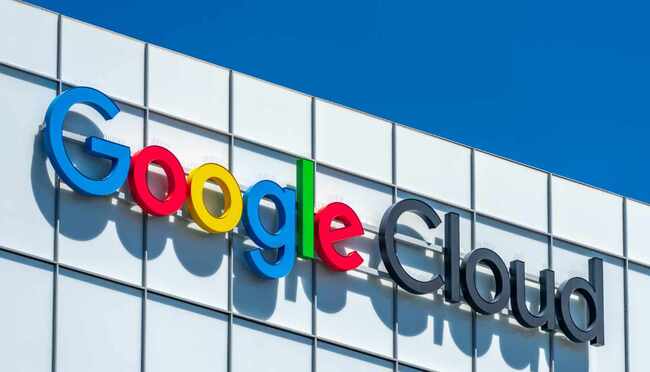
Google Cloud, a suite of cloud computing services offered by Google, has launched the Universal Ledger (GCUL), a Layer-1 blockchain platform designed for financial institutions. The system enables tokenized assets, cross-border settlements, and Python-based smart contracts. It is currently active on a private testnet, signaling Google’s deeper entry into blockchain protocol development.

The project first appeared in March during a pilot program with the leading derivatives marketplace, CME Group. At that time, Google did not identify the network as a Layer-1 platform. In a recent article, Rich Widmann—head of Web3 strategy at Google Cloud—explained the positioning of the project.

Widmann explained that the Universal Ledger functions as a neutral infrastructure layer rather than a vertically integrated product. He stressed that it offers a shared foundation for banks, exchanges, and payment firms. “Our goal is to provide a neutral base layer that any financial institution can use to build reliable blockchain services,” he said. The move highlights Google Cloud’s broader push into digital assets. The company has already partnered with Coinbase for cloud payments and provided support for networks like Solana.

Competition Emerges as Google Cloud Unveils L1 Blockchain Project

The introduction of the Universal Ledger places Google Cloud in competition with other institutional blockchain providers. Ripple continues to expand XRPL, Circle is developing Arc to strengthen USDC’s role, and Stripe is building Tempo for faster payments. Google, on the other hand, promotes its network as a public infrastructure that any financial institution can use.

Widmann highlighted three design principles. He stated that the system is simple, offering a unified API for multiple currencies and assets. He noted that it enables scalable payments and automation. Lastly, he pointed out that it is safe, with KYC-verified accounts and compliance-oriented fee models.

Critics raise questions about the unveiling of the L1 blockchain by Google Cloud. According to observers, the system is currently functioning as a permissioned and completely private chain. They claimed that no ledger run by a single business can be neutral. Some users suggested that decentralization remains unresolved within Google’s framework.

In response, Widmann stressed that competitors may avoid closed networks like Arc or Tempo, but any financial institution can build on the Universal Ledger. He noted that this openness creates opportunities for institutions that require neutral ground. CME Group’s earlier decision to test payments on the platform provided some industry validation. Widmann also suggested that companies such as Amazon or Microsoft could participate once the network matures.

Reactions to Google’s Move into Blockchain Development

The project has drawn mixed reactions across the blockchain sector. Eli Ben-Sasson of StarkWare and Jon Charbonneau of DBA both questioned whether corporate Layer-1 platforms can succeed in the long run. They compared Google’s effort to past projects like Meta’s Diem, which failed to achieve adoption.

Traders and community members also criticized the design. One trader argued that a permissioned system operated by a U.S. corporation does not qualify as a blockchain. Another pointed out that without decentralization, the platform risks losing credibility.

Despite the criticism, Google said the ledger offers near-instant settlement, lower fees, and around-the-clock availability. It also claimed that monthly invoiced fees reduce the volatility linked to traditional gas-based payments. The Universal Ledger remains in early testing. Google has not revealed a launch date, but further technical details are expected soon.

eToro Platform

Best Crypto Exchange

  • Over 90 top cryptos to trade
  • Regulated by top-tier entities
  • User-friendly trading app
  • 30+ million users
9.9

5 Stars

Visit eToro

eToro is a multi-asset investment platform. The value of your investments may go up or down. Your capital is at risk. Don’t invest unless you’re prepared to lose all the money you invest. This is a high-risk investment, and you should not expect to be protected if something goes wrong.


Market Opportunity
NEAR Logo
NEAR Price(NEAR)
$1.753
$1.753$1.753
-4.88%
USD
NEAR (NEAR) Live Price Chart
Disclaimer: The articles reposted on this site are sourced from public platforms and are provided for informational purposes only. They do not necessarily reflect the views of MEXC. All rights remain with the original authors. If you believe any content infringes on third-party rights, please contact service@support.mexc.com for removal. MEXC makes no guarantees regarding the accuracy, completeness, or timeliness of the content and is not responsible for any actions taken based on the information provided. The content does not constitute financial, legal, or other professional advice, nor should it be considered a recommendation or endorsement by MEXC.

You May Also Like

What John Harbaugh And Mike Tomlin’s Departures Mean For NFL Coaching

What John Harbaugh And Mike Tomlin’s Departures Mean For NFL Coaching

The post What John Harbaugh And Mike Tomlin’s Departures Mean For NFL Coaching appeared on BitcoinEthereumNews.com. Baltimore Ravens head coach John Harbaugh (L
Share
BitcoinEthereumNews2026/01/15 10:56
Twitter founder's "weekend experiment": Bitchat encryption software becomes a "communication Noah's Ark"

Twitter founder's "weekend experiment": Bitchat encryption software becomes a "communication Noah's Ark"

Author: Nancy, PANews In the crypto world, both assets and technologies are gradually taking center stage with greater practical significance. In the past few months
Share
PANews2026/01/15 11:00
Canada Canadian Portfolio Investment in Foreign Securities rose from previous $9.04B to $17.41B in July

Canada Canadian Portfolio Investment in Foreign Securities rose from previous $9.04B to $17.41B in July

The post Canada Canadian Portfolio Investment in Foreign Securities rose from previous $9.04B to $17.41B in July appeared on BitcoinEthereumNews.com. Information on these pages contains forward-looking statements that involve risks and uncertainties. Markets and instruments profiled on this page are for informational purposes only and should not in any way come across as a recommendation to buy or sell in these assets. You should do your own thorough research before making any investment decisions. FXStreet does not in any way guarantee that this information is free from mistakes, errors, or material misstatements. It also does not guarantee that this information is of a timely nature. Investing in Open Markets involves a great deal of risk, including the loss of all or a portion of your investment, as well as emotional distress. All risks, losses and costs associated with investing, including total loss of principal, are your responsibility. The views and opinions expressed in this article are those of the authors and do not necessarily reflect the official policy or position of FXStreet nor its advertisers. The author will not be held responsible for information that is found at the end of links posted on this page. If not otherwise explicitly mentioned in the body of the article, at the time of writing, the author has no position in any stock mentioned in this article and no business relationship with any company mentioned. The author has not received compensation for writing this article, other than from FXStreet. FXStreet and the author do not provide personalized recommendations. The author makes no representations as to the accuracy, completeness, or suitability of this information. FXStreet and the author will not be liable for any errors, omissions or any losses, injuries or damages arising from this information and its display or use. Errors and omissions excepted. The author and FXStreet are not registered investment advisors and nothing in this article is intended…
Share
BitcoinEthereumNews2025/09/18 02:38