

Oil Prices Rise as Iran Seizes Strait of Hormuz and Iraq Cuts Output
TLDR
- Brent crude rose 2.8% to $83.8 a barrel and WTI climbed 2.6% to $76.5 on Wednesday
- Iran’s Revolutionary Guard seized control of the Strait of Hormuz and warned ships of missile and drone risks
- Iraq halted oil production at some of its largest facilities, tightening global supply further
- Trump said the U.S. Navy may escort tankers through the Strait of Hormuz to keep energy flowing
- Oil has now risen for four straight days, hitting its highest level since January 2025
Oil prices climbed again on Wednesday as two major supply threats pushed Brent crude to its highest point since January 2025.
Brent futures rose 2.8% to $83.8 a barrel in early trading. U.S. West Texas Intermediate futures gained 2.6%, reaching $76.5 a barrel.
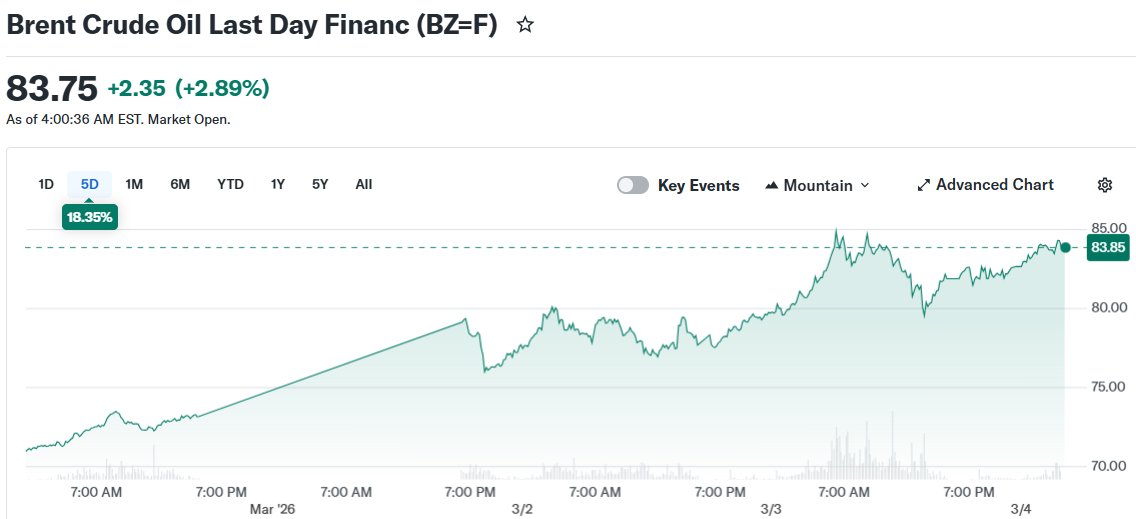 Brent Crude Oil Last Day Financ (BZ=F)
The rally extended a four-day run higher for oil prices. Both benchmarks are now trading near levels not seen in over a year.
The main trigger was Iran’s Islamic Revolutionary Guard Corps announcing it had taken control of the Strait of Hormuz. The Guard warned that ships passing through the waterway could be hit by missiles or drones.
The Strait of Hormuz is one of the world’s most important shipping routes. A large share of global crude oil exports passes through this narrow channel every day.
Any disruption to that route can quickly push oil prices higher. Analysts said prices could stay elevated if tanker traffic remains limited.
The Middle East conflict entered its fifth day on Wednesday. Iran also escalated attacks on U.S. military bases and embassies in the region.
Iraq Halts Output at Major Facilities
The second pressure on prices came from Iraq. Bloomberg reported that Iraq stopped oil production at some of its biggest facilities.
That move reduces the total amount of crude available to global markets. Combined with the Hormuz threat, traders pushed prices sharply higher.
Earlier in the week, prices had dipped briefly. Brent fell back to $78.40 a barrel after Trump posted on Truth Social about energy policy.
Trump also said the U.S. Navy may begin escorting oil tankers through the Strait of Hormuz if needed. That statement initially calmed some of the market’s concerns.
Prices Recover Despite Trump Statement
The calm proved short-lived. Prices moved back above $82 a barrel the same day and continued rising into Wednesday.
The Guard’s statement about missile risks to ships was cited by Deutsche Bank’s Reid as a key reason for the reversal.
Brent crude reached $83.60 per barrel on Wednesday, hovering near its highest level since early 2025. WTI climbed for a third straight session to $76.45.
The situation in the Strait of Hormuz remains the central concern for oil markets right now.
Iraq’s production halt at major facilities adds another layer of supply uncertainty to an already tight market.
The post Oil Prices Rise as Iran Seizes Strait of Hormuz and Iraq Cuts Output appeared first on CoinCentral.
You May Also Like

Trump demands Amazon, Google, and others sign energy pledges to prevent data centers from "siphoning off" residents' bills.

WTI Crude Oil Soars to $76.00, Nears Critical One-Year High Amid Alarming Middle East Escalation
