The post SEC Spent $53,000 After Gary Gensler’s Texts Vanished: Report appeared first on Coinpedia Fintech News Nearly a year’s worth of text messages from former U.S. Securities and Exchange Commission (SEC) Chair Gary Gensler were permanently deleted due to a string of technology and management failures inside the agency, according to a new report from the SEC’s Office of Inspector General (OIG). What Happened The watchdog report reveals that between October 18, 2022, and September 6, 2023, Gensler’s government-issued phone stopped syncing with the SEC’s device management system. The SEC’s Office of Information Technology (OIT) mistakenly classified the phone as inactive, triggering an automatic wipe. In an attempt to restore the device, staff performed a factory reset, which erased all text messages and operating logs. The OIG called this a series of “avoidable” mistakes made worse by the lack of backups. Why It Matters The deleted texts could have included federal records. Records of senior officials like Gensler are supposed to be permanently retained under government rules to ensure transparency and accountability. The loss may also impact responses to Freedom of Information Act (FOIA) requests. The report further noted that the SEC had to spend around $53,000 on a contractor’s after-action review, which itself was deemed unreliable. SEC’s Response Since the incident, the SEC has: Disabled text messaging across the agency, with limited exceptions. Reported the loss of Gensler’s texts to the National Archives and Records Administration (NARA). Promised to improve its device management and backup processes. Management agreed with all five of the OIG’s recommendations, including stricter oversight of system changes, regular device backups for top officials, and safeguards before any factory resets are carried out. Broader Implications The report showed that Gensler often used texts for routine scheduling, but investigators also found examples of mission-related communications with staff and other federal officials. This leaves uncertainty about the full scope of what was lost. The OIG concluded that “avoidable deficiencies and missed opportunities” by SEC’s technology office led to a failure in preserving records that are legally required to be maintained.The post SEC Spent $53,000 After Gary Gensler’s Texts Vanished: Report appeared first on Coinpedia Fintech News Nearly a year’s worth of text messages from former U.S. Securities and Exchange Commission (SEC) Chair Gary Gensler were permanently deleted due to a string of technology and management failures inside the agency, according to a new report from the SEC’s Office of Inspector General (OIG). What Happened The watchdog report reveals that between October 18, 2022, and September 6, 2023, Gensler’s government-issued phone stopped syncing with the SEC’s device management system. The SEC’s Office of Information Technology (OIT) mistakenly classified the phone as inactive, triggering an automatic wipe. In an attempt to restore the device, staff performed a factory reset, which erased all text messages and operating logs. The OIG called this a series of “avoidable” mistakes made worse by the lack of backups. Why It Matters The deleted texts could have included federal records. Records of senior officials like Gensler are supposed to be permanently retained under government rules to ensure transparency and accountability. The loss may also impact responses to Freedom of Information Act (FOIA) requests. The report further noted that the SEC had to spend around $53,000 on a contractor’s after-action review, which itself was deemed unreliable. SEC’s Response Since the incident, the SEC has: Disabled text messaging across the agency, with limited exceptions. Reported the loss of Gensler’s texts to the National Archives and Records Administration (NARA). Promised to improve its device management and backup processes. Management agreed with all five of the OIG’s recommendations, including stricter oversight of system changes, regular device backups for top officials, and safeguards before any factory resets are carried out. Broader Implications The report showed that Gensler often used texts for routine scheduling, but investigators also found examples of mission-related communications with staff and other federal officials. This leaves uncertainty about the full scope of what was lost. The OIG concluded that “avoidable deficiencies and missed opportunities” by SEC’s technology office led to a failure in preserving records that are legally required to be maintained.

SEC Spent $53,000 After Gary Gensler’s Texts Vanished: Report

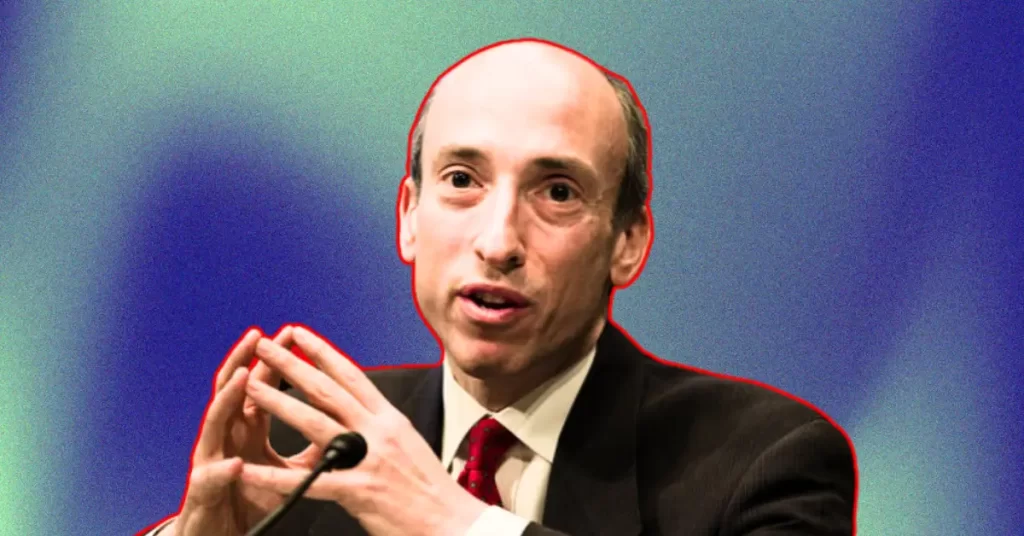
gensler

The post SEC Spent $53,000 After Gary Gensler’s Texts Vanished: Report appeared first on Coinpedia Fintech News

Nearly a year’s worth of text messages from former U.S. Securities and Exchange Commission (SEC) Chair Gary Gensler were permanently deleted due to a string of technology and management failures inside the agency, according to a new report from the SEC’s Office of Inspector General (OIG).

What Happened

The watchdog report reveals that between October 18, 2022, and September 6, 2023, Gensler’s government-issued phone stopped syncing with the SEC’s device management system. The SEC’s Office of Information Technology (OIT) mistakenly classified the phone as inactive, triggering an automatic wipe.

In an attempt to restore the device, staff performed a factory reset, which erased all text messages and operating logs. The OIG called this a series of “avoidable” mistakes made worse by the lack of backups.

Why It Matters

The deleted texts could have included federal records. Records of senior officials like Gensler are supposed to be permanently retained under government rules to ensure transparency and accountability. The loss may also impact responses to Freedom of Information Act (FOIA) requests.

The report further noted that the SEC had to spend around $53,000 on a contractor’s after-action review, which itself was deemed unreliable.

SEC’s Response

Since the incident, the SEC has:

  • Disabled text messaging across the agency, with limited exceptions.
  • Reported the loss of Gensler’s texts to the National Archives and Records Administration (NARA).
  • Promised to improve its device management and backup processes.

Management agreed with all five of the OIG’s recommendations, including stricter oversight of system changes, regular device backups for top officials, and safeguards before any factory resets are carried out.

Broader Implications

The report showed that Gensler often used texts for routine scheduling, but investigators also found examples of mission-related communications with staff and other federal officials. This leaves uncertainty about the full scope of what was lost.

The OIG concluded that “avoidable deficiencies and missed opportunities” by SEC’s technology office led to a failure in preserving records that are legally required to be maintained.


Market Opportunity
Union Logo
Union Price(U)
$0.00284
$0.00284$0.00284
+2.34%
USD
Union (U) Live Price Chart
Disclaimer: The articles reposted on this site are sourced from public platforms and are provided for informational purposes only. They do not necessarily reflect the views of MEXC. All rights remain with the original authors. If you believe any content infringes on third-party rights, please contact service@support.mexc.com for removal. MEXC makes no guarantees regarding the accuracy, completeness, or timeliness of the content and is not responsible for any actions taken based on the information provided. The content does not constitute financial, legal, or other professional advice, nor should it be considered a recommendation or endorsement by MEXC.

You May Also Like

Crypto Casino Luck.io Pays Influencers Up to $500K Monthly – But Why?

Crypto Casino Luck.io Pays Influencers Up to $500K Monthly – But Why?

Crypto casino Luck.io is reportedly paying influencers six figures a month to promote its services, a June 18 X post from popular crypto trader Jordan Fish, aka Cobie, shows. Crypto Influencers Reportedly Earning Six Figures Monthly According to a screenshot of messages between Cobie and an unidentified source embedded in the Wednesday post, the anonymous messenger confirmed that the crypto company pays influencers “around” $500,000 per month to promote the casino. They’re paying extremely well (6 fig per month) pic.twitter.com/AKRVKU9vp4 — Cobie (@cobie) June 18, 2025 However, not everyone was as convinced of the number’s accuracy. “That’s only for Faze Banks probably,” one user replied. “Other influencers are getting $20-40k per month. So, same as other online crypto casinos.” Cobie pushed back on the user’s claims by identifying the messenger as “a crypto person,” going on to state that he knew of “4 other crypto people” earning “above 200k” from Luck.io. Drake’s Massive Stake.com Deal Cobie’s post comes amid growing speculation over celebrity and influencer collaborations with crypto casinos globally. Aubrey Graham, better known as Toronto-based rapper Drake, is reported to make nearly $100 million every year from his partnership with cryptocurrency casino Stake.com. As part of his deal with the Curaçao-based digital casino, the “Nokia” rapper occasionally hosts live-stream gambling sessions for his more than 140 million Instagram followers. Founded by entrepreneurs Ed Craven and Bijan Therani in 2017, the organization allegedly raked in $2.6 billion in 2022. Stake.com has even solidified key partnerships with Alfa Romeo’s F1 team and Liverpool-based Everton Football Club. However, concerns remain over crypto casinos’ legality as a whole , given their massive accessibility and reach online. Earlier this year, Stake was slapped with litigation out of Illinois for supposedly running an illegal online casino stateside while causing “severe harm to vulnerable populations.” “Stake floods social media platforms with slick ads, influencer videos, and flashy visuals, making its games seem safe, fun, and harmless,” the lawsuit claims. “By masking its real-money gambling platform as just another “social casino,” Stake creates exactly the kind of dangerous environment that Illinois gambling laws were designed to stop.”
Share
CryptoNews2025/06/19 04:53
Brera Holdings Rebrands as Solmate, Raises $300 Million for SOL Treasury

Brera Holdings Rebrands as Solmate, Raises $300 Million for SOL Treasury

Detail: https://coincu.com/news/solmate-rebrand-300m-sol-treasury/
Share
Coinstats2025/09/19 03:40
Sui Mainnet Recovers After 6-Hour Network Stall: No Funds at Risk

Sui Mainnet Recovers After 6-Hour Network Stall: No Funds at Risk

On January 14, 2026, Sui Mainnet faced a significant disruption, leaving the network stalled for roughly six hours. The incident was caused by an internal divergence
Share
Tronweekly2026/01/17 09:30