Money Transfer Industry Statistics 2026: Global Surge Now

In an increasingly interconnected world, money transfers have become essential, enabling people to support families, make investments, and bridge financial gaps across borders. From international remittances sent home by migrant workers to digital peer-to-peer transactions, the money transfer industry is undergoing rapid change.
With digital platforms and fintech innovations reshaping the landscape, both consumers and businesses are gaining access to faster, more secure transfer options than ever before. Understanding the latest statistics and trends in this space can reveal where the industry is headed and how various stakeholders are adapting to meet evolving demands.
Editor’s Choice
- Worldwide remittance flows rose to approximately $132.18 billion.
- Remittances to LMICs are projected to hit $710 billion, growing by 2.8% year-over-year.
- The U.S. digital remittance market is growing at a CAGR of 15% from 2026 to 2033.
- India remains the top remittance recipient with $135.4 billion in inflows.
- The top 5 LMIC recipients are India ($135 billion), Mexico ($72 billion), China ($51 billion), the Philippines ($43 billion), and Pakistan ($35 billion).
Recent Developments
- 45% of consumers reported increasing their use of digital money transfer services.
- Digital Remittance Market valued at $33.41B, projected to hit $60.24B by 2030 at 15.9% CAGR.
- Blockchain and AI boost remittance security, with 98% of institutions using AI fraud detection.
- UPI expanded into 9+ countries, including the UAE, France, and ongoing talks for 7-8 more.
- Top reasons for sending money abroad: emergency medical needs (45%), basic necessities (43%), crisis support (29%).
Money Transfer Services Market Growth
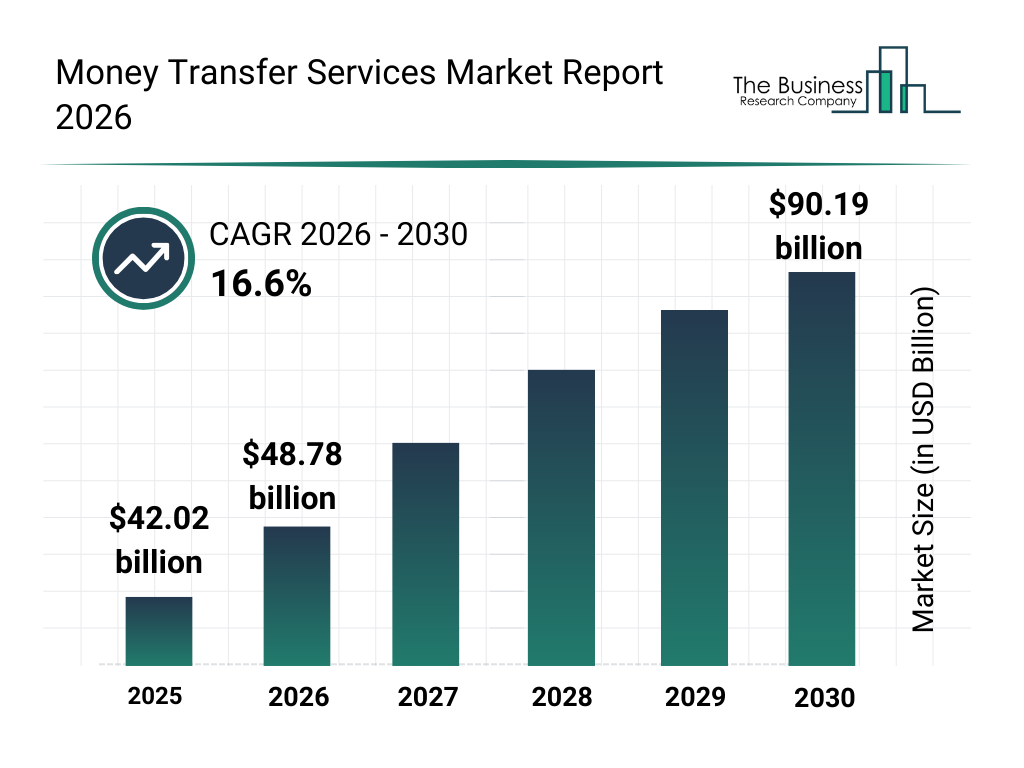
- The global money transfer services market will reach $48.78 billion in 2026, reflecting strong growth in digital and cross-border transfers.
- The market will grow to $56.88 billion by 2027.
- The industry will expand further to about $66.30 billion in 2028.
- Growing demand for fast digital payments will push the market to around $77.24 billion in 2029.
- The market will reach $90.19 billion by 2030, marking major sector expansion.
- Overall, the market will grow at a 16.6% CAGR from 2026 to 2030.
 (Reference: The Business Research Company)
Average Transaction Value per User
- The global average remittance transaction value per user is $600.
- In the United States, the average value per user rose to $720.
- Europe sees an average of $480 per user.
- Asia-Pacific region averages $330 per user.
- Africa maintains the lowest average at $60 per transaction.
- In Latin America, the per-user average reached $430.
- Digital remittance platforms average $9.45 per user.
Digital Remittance Market Share by Leading Companies
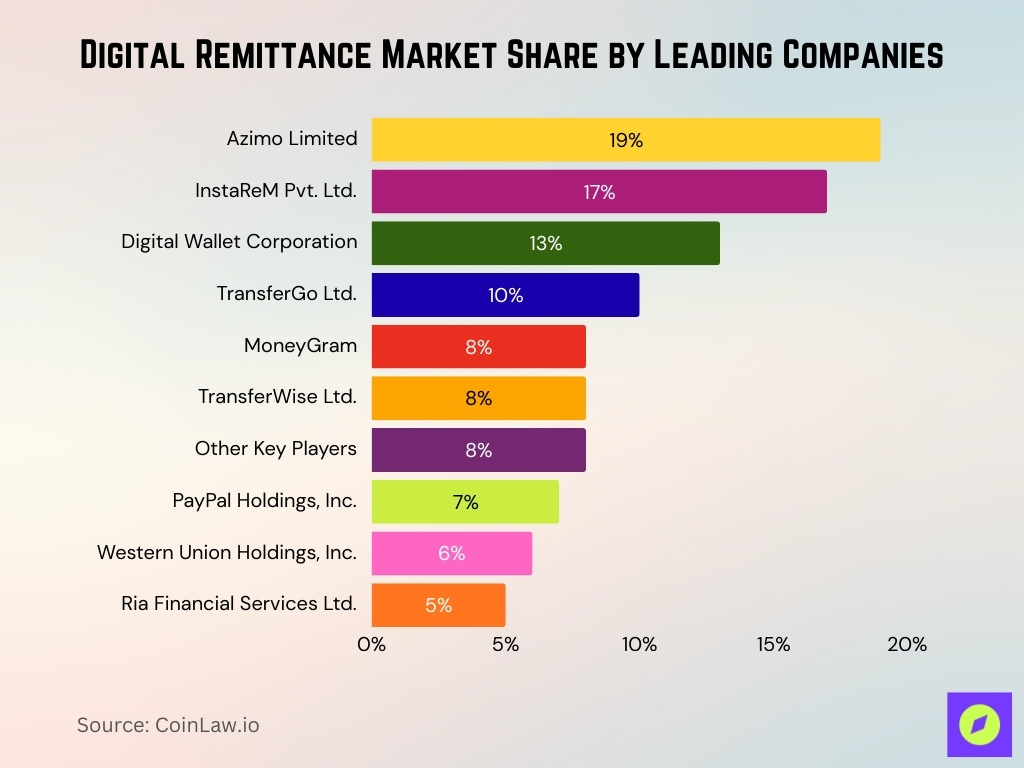
- Azimo Limited leads the digital remittance market with about 19% market share, making it one of the largest players in the industry.
- InstaReM Pvt. Ltd. holds around 17% of the global market, showing strong growth in cross-border digital transfers.
- Digital Wallet Corporation accounts for about 13% market share in the global remittance sector.
- TransferGo Ltd. controls nearly 10% of the market, driven by its digital money transfer services across multiple regions.
- MoneyGram holds approximately 8% market share, remaining a key global remittance provider.
- TransferWise Ltd. (Wise) also captures about 8% of the market, supported by its low-cost international transfers.
- Other key players together make up around 8% of the digital remittance market.
- PayPal Holdings, Inc. represents about 7% market share, supported by its global payment ecosystem.
- Western Union Holdings, Inc. holds nearly 6% of the market, continuing its strong presence in international remittances.
- Ria Financial Services Ltd. accounts for roughly 5% market share in the global digital remittance industry.
 (Reference: Market.us Scoop)
Digital Remittance Market Dynamics
- Over 55 new fintech players entered the remittance market in the last three years.
- AI and automation reduced transaction processing time by 22%.
- 75% of digital platforms now offer multi-currency wallets with 65% adoption growth.
- Blockchain platforms report transaction fees as low as 0.4%.
- 72% of users are willing to pay higher fees for instant transfers.
- Over 35 bank-fintech partnerships announced for channel integration.
Mode of Transfer Insights
- Mobile transfers account for 42% of remittances globally.
- Traditional cash-to-cash transfers represent 28% of all transactions, decreasing by 2.5% annually.
- Bank-to-bank transfers account for 24% of the global market.
- Mobile money solutions in Africa/South Asia grow at 16% annually.
- Online services like Wise/Revolut hold 12% market share.
- P2P apps facilitate over $220 million in US transactions daily.
- Crypto-based remittances account for 1.5% of the total market.
Top Countries for Inbound and Outbound Remittances
- India remains the top remittance destination with $135.4 billion in inflows.
- The United States continues as the largest sender with outbound flows exceeding $160 billion.
- China receives approximately $51 billion annually in remittances.
- Mexico holds third place globally, receiving about $72 billion.
- Nigeria leads Africa with around $27 billion in inflows.
- The Philippines receives around $43 billion, contributing over 10% to its GDP.
- Pakistan records about $35 billion in remittances, mainly from Gulf countries.
- Bangladesh receives more than $24 billion in remittances.
Impact of Fintech and Digital Wallets
- Fintech companies introduced over $160 billion in remittance transfers globally, growing at 22% annually.
- Digital wallets hold 32% of all digital remittance funds.
- M-Pesa processes over $1.2 billion daily in Africa.
- Blockchain technology reduces transfer costs by 52% on platforms like RippleNet.
- AI-powered chatbots are available on 72% of major remittance apps.
- Underbanked individuals form 42% of remittance users in developing nations.
- 82% of users prioritize security features like biometric verification.
Regional Breakdown of the Global Digital Remittance Market
- North America leads the global digital remittance market with a 31% share.
- APAC (Asia-Pacific) holds the largest share at 34.85%, signaling rapid adoption in the region.
- Europe accounts for approximately 24%, reflecting its mature digital finance infrastructure.
- South America contributes around 7% to the global market.
- MEA (Middle East and Africa) holds about 3.5% share, indicating room for growth and investment.
End-use Insights
- Household support comprises 65% of inbound remittances for daily needs and better living conditions.
- Education expenses account for 15% of remittance use, especially for schooling in regions like South Asia.
- Healthcare spending makes up 10%, improving access to medical care in underserved areas.
- Small business investments rose to 9%, driving local entrepreneurship and community growth.
- Savings and asset investments account for 7%, often going toward property or long-term goals.
- Agricultural spending holds steady at 3%, helping rural families buy seeds, tools, or livestock.
- Debt repayment uses have increased to 8%, easing financial pressure on low-income families.
Regulatory Landscape and Challenges
- Regulators have intensified AML rules, and over 90% of major digital remittance platforms now support stricter compliance checks.
- Mexico introduced a 1% tax on certain remittances from the U.S., which could generate about $10 billion between 2026 and 2034.
- Open banking and payment reforms in the U.S. and EU are expected to drive the remittance market to $270.81 billion by 2032, growing at a 9.4% CAGR.
- Governments in more than 80 countries have adopted or piloted digital ID systems linked to financial services.
- Data privacy laws like GDPR have pushed 65%+ of remittance platforms to upgrade security and data-handling protocols.
- Currency volatility continues to drive remittance cost fluctuations within a 3–5% fee range across many corridors.
- Global standardization efforts include €15,000 FATF thresholds for CDD and EU PSD3 rules, raising remittance capital requirements to €150,000.
Frequently Asked Questions (FAQs)
The online digital remittance channel held about a 71% share in 2025 and is expected to grow at around 17.48% CAGR.
The global cross-border payments market is estimated at $237.31 billion in 2026.
The cross-border payments market is projected to reach $364.76 billion by 2032 at a 7.37% CAGR.
Conclusion
As we look forward, the growth of digital remittances, the expansion of multi-currency wallets, and the adoption of crypto-based options are poised to drive the industry forward. In an increasingly globalized world, the ability to transfer money easily, quickly, and securely will remain essential, making it an exciting space to watch in the years ahead. The industry’s adaptability in embracing change and addressing user needs will be key to its sustained growth and impact across economies worldwide.
The post Money Transfer Industry Statistics 2026: Global Surge Now appeared first on CoinLaw.
You May Also Like

Markets await Fed’s first 2025 cut, experts bet “this bull market is not even close to over”

USDC Minted: 250 Million Dollar Stablecoin Injection Sparks Market Speculation