The post ADX breakup looms as Google faces U.S. court battle appeared on BitcoinEthereumNews.com. Google is fighting to prevent the breakup of its advertising business as a major U.S. antitrust trial gets underway in Alexandria, Virginia. The Department of Justice (DOJ) and several states are pushing for the tech giant to sell its ad exchange, AdX, arguing that it has abused its dominance in online advertising. This high-profile case is part of a broader U.S. crackdown on Big Tech. Similar legal battles are underway against Meta, Amazon, and Apple, making Google’s trial a key test of how far courts will go to reshape the online advertising landscape. DOJ pushes Google to sell AdX in court The DOJ claims Google exploits websites through its AdX platform by charging a 20% fee on every ad sale. Critics argue that this fee is excessive, giving it an unfair edge over competitors. The agency is pushing for the tech giant to sell AdX and make the ad auction system transparent. DOJ officials believe this would allow other companies to compete fairly, since Google controls nearly all ad auctions. Judge Leonie Brinkema, who presides over the trial, has already stated that Google holds illegal monopolies in online advertising. She will determine the remedies required, but the DOJ says the company should also sell its publisher ad server if its proposed reforms fail to boost competition within four years. The trial will feature testimonies from media industry figures affected by Google’s dominance. Representatives from DailyMail.com, Advance Local, and former News Corp leaders will describe how Google forced them to remain within its ad system. Witnesses say Google’s auction process gave its own advertisers the first and last opportunity to bid, leaving website owners with less revenue than they might have earned in a fair market. They will also explain how Google’s policies hindered publishers from cutting costs and blocked competition… The post ADX breakup looms as Google faces U.S. court battle appeared on BitcoinEthereumNews.com. Google is fighting to prevent the breakup of its advertising business as a major U.S. antitrust trial gets underway in Alexandria, Virginia. The Department of Justice (DOJ) and several states are pushing for the tech giant to sell its ad exchange, AdX, arguing that it has abused its dominance in online advertising. This high-profile case is part of a broader U.S. crackdown on Big Tech. Similar legal battles are underway against Meta, Amazon, and Apple, making Google’s trial a key test of how far courts will go to reshape the online advertising landscape. DOJ pushes Google to sell AdX in court The DOJ claims Google exploits websites through its AdX platform by charging a 20% fee on every ad sale. Critics argue that this fee is excessive, giving it an unfair edge over competitors. The agency is pushing for the tech giant to sell AdX and make the ad auction system transparent. DOJ officials believe this would allow other companies to compete fairly, since Google controls nearly all ad auctions. Judge Leonie Brinkema, who presides over the trial, has already stated that Google holds illegal monopolies in online advertising. She will determine the remedies required, but the DOJ says the company should also sell its publisher ad server if its proposed reforms fail to boost competition within four years. The trial will feature testimonies from media industry figures affected by Google’s dominance. Representatives from DailyMail.com, Advance Local, and former News Corp leaders will describe how Google forced them to remain within its ad system. Witnesses say Google’s auction process gave its own advertisers the first and last opportunity to bid, leaving website owners with less revenue than they might have earned in a fair market. They will also explain how Google’s policies hindered publishers from cutting costs and blocked competition…

ADX breakup looms as Google faces U.S. court battle

Google is fighting to prevent the breakup of its advertising business as a major U.S. antitrust trial gets underway in Alexandria, Virginia. The Department of Justice (DOJ) and several states are pushing for the tech giant to sell its ad exchange, AdX, arguing that it has abused its dominance in online advertising.

This high-profile case is part of a broader U.S. crackdown on Big Tech. Similar legal battles are underway against Meta, Amazon, and Apple, making Google’s trial a key test of how far courts will go to reshape the online advertising landscape.

DOJ pushes Google to sell AdX in court

The DOJ claims Google exploits websites through its AdX platform by charging a 20% fee on every ad sale. Critics argue that this fee is excessive, giving it an unfair edge over competitors.

The agency is pushing for the tech giant to sell AdX and make the ad auction system transparent. DOJ officials believe this would allow other companies to compete fairly, since Google controls nearly all ad auctions.

Judge Leonie Brinkema, who presides over the trial, has already stated that Google holds illegal monopolies in online advertising. She will determine the remedies required, but the DOJ says the company should also sell its publisher ad server if its proposed reforms fail to boost competition within four years.

The trial will feature testimonies from media industry figures affected by Google’s dominance. Representatives from DailyMail.com, Advance Local, and former News Corp leaders will describe how Google forced them to remain within its ad system. Witnesses say Google’s auction process gave its own advertisers the first and last opportunity to bid, leaving website owners with less revenue than they might have earned in a fair market.

They will also explain how Google’s policies hindered publishers from cutting costs and blocked competition from other ad tech companies. These accounts aim to show the real-world impact of Google’s control and support the DOJ’s argument that selling AdX and implementing these reforms would foster fairer competition in online advertising.

Google proposes policy changes to avoid breakup

In response, Google told the court that it does not want to be forced to sell AdX and that the court should take a careful approach before making any big decisions. The company referred to a recent case in Washington, D.C., where another judge looked at a similar antitrust case about Google Search and rejected most of the demands from the DOJ. 

Google says selling AdX could create long-lasting problems and confusion for advertisers who pay to show their ads. Additionally, it says it would be better for everyone if the rules and policies were changed rather than the entire business being broken up.

The court insists that changing the rules will help publishers and advertisers work more easily in the market and let other companies compete fairly. However, Google’s main goal is to keep the current system and avoid chaos for businesses that rely on its ad systems.

The Department of Justice argues that these changes are insufficient, as Google would still control the key parts of the ad system. During the trial, the court may also review internal Google studies and documents from a past European investigation into selling AdX.

These documents could show Google’s thoughts about selling AdX, its meaning, and why the firm chose not to sell it. Showing these documents in court may make things difficult for Google because it could prove that the company could have sold AdX but decided to keep it. 

If the court sides with the DOJ, this could be the biggest change to Google’s business since the company started. However, if the court asks the firm only to change policies, many people who worry about Big Tech may see it as another missed chance to reduce the power of very large companies. Either way, the outcome will show how far courts will go to make online advertising fair.

KEY Difference Wire helps crypto brands break through and dominate headlines fast

Source: https://www.cryptopolitan.com/doj-wants-google-to-sell-adx/
Market Opportunity
Union Logo
Union Price(U)
$0.0008
$0.0008$0.0008
-4.42%
USD
Union (U) Live Price Chart
Disclaimer: The articles reposted on this site are sourced from public platforms and are provided for informational purposes only. They do not necessarily reflect the views of MEXC. All rights remain with the original authors. If you believe any content infringes on third-party rights, please contact service@support.mexc.com for removal. MEXC makes no guarantees regarding the accuracy, completeness, or timeliness of the content and is not responsible for any actions taken based on the information provided. The content does not constitute financial, legal, or other professional advice, nor should it be considered a recommendation or endorsement by MEXC.

You May Also Like

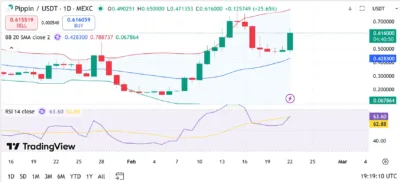
Pippin (PIPPIN) Price Prediction 2026–2030: Can PIPPIN Hit $0.70 Soon?

Pippin (PIPPIN) Price Prediction 2026–2030: Can PIPPIN Hit $0.70 Soon?

PIPPIN has surged sharply on the daily timeframe, printing a powerful bullish candle with over 25% gains. RSI is holding above 60, signaling strengthening momentum
Share
Coinstats2026/02/23 04:29
Will Cardano Reach $10 by 2030? Analysts Break Down ADA’s Growth Cycles

Will Cardano Reach $10 by 2030? Analysts Break Down ADA’s Growth Cycles

The post Will Cardano Reach $10 by 2030? Analysts Break Down ADA’s Growth Cycles appeared first on Coinpedia Fintech News Cardano (ADA) is trading at $0.9024 with a market cap of $32.91 billion. Experts say ADA has the potential to climb much higher, with some placing long-term targets as high as $10. The token continues to benefit from stronger visibility, rising liquidity, and increasing inflows from both institutional and retail markets. Can Cardano Hit $10 …
Share
CoinPedia2025/09/18 17:19
Crypto whale loses $6M to sneaky phishing scheme targeting staked Ethereum

Crypto whale loses $6M to sneaky phishing scheme targeting staked Ethereum

The post Crypto whale loses $6M to sneaky phishing scheme targeting staked Ethereum appeared on BitcoinEthereumNews.com. A crypto whale lost more than $6 million in staked Ethereum (stETH) and Aave-wrapped Bitcoin (aEthWBTC) after approving malicious signatures in a phishing scheme on Sept. 18, according to blockchain security firm Scam Sniffer. According to the firm, the attackers disguised their move as a routine wallet confirmation through “Permit” signatures, which tricked the victim into authorizing fund transfers without triggering obvious red flags. Yu Xian, founder of blockchain security company SlowMist, noted that the victim did not recognize the danger because the transaction required no gas fees. He wrote: “From the victim’s perspective, he just clicked a few times to confirm the wallet’s pop-up signature requests, didn’t spend a single penny of gas, and $6.28 million was gone.” How Permit exploits work Permit approvals were originally designed to simplify token transfers. Instead of submitting an on-chain approval and paying fees, a user can sign an off-chain message authorizing a spender. That efficiency, however, has created a new attack surface for malicious players. Once a user signs such a permit, attackers can combine two functions—Permit and TransferFrom—to drain assets directly. Because the authorization takes place off-chain, wallet dashboards show no unusual activity until the funds move. As a result, the assets are gone when the approval executes on-chain, and tokens are redirected to the attacker’s wallet. This loophole has made permit exploits increasingly attractive for malicious actors, who can siphon millions without needing complex hacks or high-cost gas wars. Phishing losses The latest theft highlights a wider trend of escalating phishing campaigns. Scam Sniffer reported that in August alone, attackers stole $12.17 million from more than 15,200 victims. That figure represented a 72% jump in losses compared with July. According to the firm, the most significant share of August’s damages came from three large accounts that accounted for nearly half…
Share
BitcoinEthereumNews2025/09/19 02:31