Nigel Farage has pledged to slash crypto taxes and establish a UK Bitcoin reserve if elected. Reform UK’s leader declared at the Digital Asset Summit in London on Monday that “when it comes to your industry, when it comes to growth in this industry, then I am your champion.” The proposed legislation would reduce the capital gains tax on crypto investments from 24% to a flat 10% and mandate that the Bank of England establish a Bitcoin reserve using approximately £5 billion worth of Bitcoin currently held from seized criminal assets. Reform has become the first major UK political party to accept crypto donations, currently receiving Bitcoin, Ethereum, Solana, and USD Coin through its website.Nigel Farage in Bitcoin ‘25 Conference | Source: The London Economic What Reform’s Crypto Bill Would Actually Do Farage’s platform mirrors the approach taken by U.S. President Donald Trump, who cultivated industry support before his 2024 election victory and has pursued a crypto-friendly agenda since taking office in January 2025. The Reform Party chief’s proposed bill would allow British taxpayers to pay taxes directly in Bitcoin, with funds either converted to pounds or directed to the reserve fund. Additionally, banks would be prohibited from denying or withdrawing services to customers based on lawful crypto-related activities, directly addressing industry concerns over “debanking.” Farage connected the debanking issue to his own experience, telling the conference crowd, “I went to 10 banks, all of whom refused me an account,” and adding, “No wonder so many people are going for Bitcoin—because they can’t close you down, and that is the ultimate freedom.” Meanwhile, Farage characterized the Bank of England’s plans for a central bank digital currency as “the ultimate authoritarian nightmare” and vowed to “stop it overnight” should Reform win the next election. He also targeted the Bank of England’s proposed stablecoin holding limits, capping personal holdings at £10,000 to £20,000 and business holdings at £10 million, calling the restrictions “frankly ridiculous.” According to Bloomberg, Farage claimed he had discussed the stablecoin caps directly with Andrew Bailey, the Governor of the Bank of England. The Reform leader stated that the UK government is falling behind international competitors and must act quickly to regulate the crypto industry to safeguard Britain’s position as a financial hub. Farage said “this whole area of digital assets and crypto just isn’t being talked about at all,” and pointed out that “we’ve got no regulated market.” He also said that if Reform wins the next election, his government would enact the Crypto Assets and Digital Finance Bill “very, very quickly.” Reform UK currently leads in numerous polling projections. However, Britain’s first-past-the-post electoral system presents a major structural challenge to translating that support into parliamentary seats, as demonstrated in the 2024 general election when Reform received 4.1 million votes but secured only five seats. The next UK general election is not expected until 2029, leaving four years for both political and market conditions to shift. Why Global Crypto Competition is Forcing UK Regulators to Act Britain’s regulatory environment now faces competitive pressure from the United States, where the Trump administration accelerated crypto-friendly policies, including the GENIUS Act for stablecoin oversight. The European Union has also instituted a unified regulatory framework for digital assets, creating incentives for UK policymakers to clarify their own approach to crypto regulation. Earlier this month, the Bank of England announced that it was considering exemption plans for its proposed stablecoin holding limits for crypto exchanges and other firms requiring large holdings for liquidity purposes. Most recently, Governor Andrew Bailey acknowledged that stablecoins could drive financial innovation and coexist with traditional banking systems. The Bank of England is also preparing to permit stablecoins as settlement assets in its Digital Securities Sandbox, a controlled environment for testing blockchain-based trading and issuance. The uncertain stance of the nation has prompted industry executives to warn that overly restrictive regulations in the UK will risk diverting business and talent to jurisdictions with more favorable crypto frameworks. As it stands now, the Financial Conduct Authority will complete its consultation on whether crypto firms should face the same regulatory standards as traditional financial institutions by year-end, with implementation expected to begin in January 2026Nigel Farage has pledged to slash crypto taxes and establish a UK Bitcoin reserve if elected. Reform UK’s leader declared at the Digital Asset Summit in London on Monday that “when it comes to your industry, when it comes to growth in this industry, then I am your champion.” The proposed legislation would reduce the capital gains tax on crypto investments from 24% to a flat 10% and mandate that the Bank of England establish a Bitcoin reserve using approximately £5 billion worth of Bitcoin currently held from seized criminal assets. Reform has become the first major UK political party to accept crypto donations, currently receiving Bitcoin, Ethereum, Solana, and USD Coin through its website.Nigel Farage in Bitcoin ‘25 Conference | Source: The London Economic What Reform’s Crypto Bill Would Actually Do Farage’s platform mirrors the approach taken by U.S. President Donald Trump, who cultivated industry support before his 2024 election victory and has pursued a crypto-friendly agenda since taking office in January 2025. The Reform Party chief’s proposed bill would allow British taxpayers to pay taxes directly in Bitcoin, with funds either converted to pounds or directed to the reserve fund. Additionally, banks would be prohibited from denying or withdrawing services to customers based on lawful crypto-related activities, directly addressing industry concerns over “debanking.” Farage connected the debanking issue to his own experience, telling the conference crowd, “I went to 10 banks, all of whom refused me an account,” and adding, “No wonder so many people are going for Bitcoin—because they can’t close you down, and that is the ultimate freedom.” Meanwhile, Farage characterized the Bank of England’s plans for a central bank digital currency as “the ultimate authoritarian nightmare” and vowed to “stop it overnight” should Reform win the next election. He also targeted the Bank of England’s proposed stablecoin holding limits, capping personal holdings at £10,000 to £20,000 and business holdings at £10 million, calling the restrictions “frankly ridiculous.” According to Bloomberg, Farage claimed he had discussed the stablecoin caps directly with Andrew Bailey, the Governor of the Bank of England. The Reform leader stated that the UK government is falling behind international competitors and must act quickly to regulate the crypto industry to safeguard Britain’s position as a financial hub. Farage said “this whole area of digital assets and crypto just isn’t being talked about at all,” and pointed out that “we’ve got no regulated market.” He also said that if Reform wins the next election, his government would enact the Crypto Assets and Digital Finance Bill “very, very quickly.” Reform UK currently leads in numerous polling projections. However, Britain’s first-past-the-post electoral system presents a major structural challenge to translating that support into parliamentary seats, as demonstrated in the 2024 general election when Reform received 4.1 million votes but secured only five seats. The next UK general election is not expected until 2029, leaving four years for both political and market conditions to shift. Why Global Crypto Competition is Forcing UK Regulators to Act Britain’s regulatory environment now faces competitive pressure from the United States, where the Trump administration accelerated crypto-friendly policies, including the GENIUS Act for stablecoin oversight. The European Union has also instituted a unified regulatory framework for digital assets, creating incentives for UK policymakers to clarify their own approach to crypto regulation. Earlier this month, the Bank of England announced that it was considering exemption plans for its proposed stablecoin holding limits for crypto exchanges and other firms requiring large holdings for liquidity purposes. Most recently, Governor Andrew Bailey acknowledged that stablecoins could drive financial innovation and coexist with traditional banking systems. The Bank of England is also preparing to permit stablecoins as settlement assets in its Digital Securities Sandbox, a controlled environment for testing blockchain-based trading and issuance. The uncertain stance of the nation has prompted industry executives to warn that overly restrictive regulations in the UK will risk diverting business and talent to jurisdictions with more favorable crypto frameworks. As it stands now, the Financial Conduct Authority will complete its consultation on whether crypto firms should face the same regulatory standards as traditional financial institutions by year-end, with implementation expected to begin in January 2026

Farage Pitches Himself as Crypto’s ‘Champion,’ Proposes UK Bitcoin Reserve and Tax Cuts

2025/10/14 03:52
4 min read

Nigel Farage has pledged to slash crypto taxes and establish a UK Bitcoin reserve if elected. Reform UK’s leader declared at the Digital Asset Summit in London on Monday that “when it comes to your industry, when it comes to growth in this industry, then I am your champion.”

The proposed legislation would reduce the capital gains tax on crypto investments from 24% to a flat 10% and mandate that the Bank of England establish a Bitcoin reserve using approximately £5 billion worth of Bitcoin currently held from seized criminal assets.

Reform has become the first major UK political party to accept crypto donations, currently receiving Bitcoin, Ethereum, Solana, and USD Coin through its website.
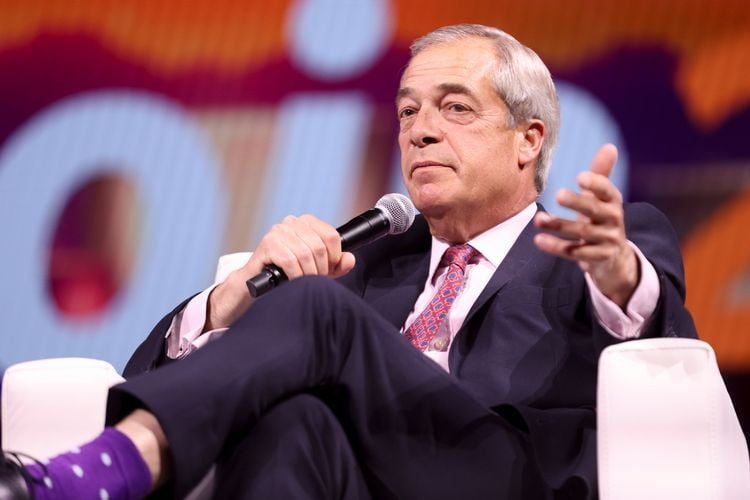
Farage Pitches Himself as Crypto's 'Champion,' Proposes UK Bitcoin Reserve and Tax CutsNigel Farage in Bitcoin ‘25 Conference | Source: The London Economic

What Reform’s Crypto Bill Would Actually Do

Farage’s platform mirrors the approach taken by U.S. President Donald Trump, who cultivated industry support before his 2024 election victory and has pursued a crypto-friendly agenda since taking office in January 2025.

The Reform Party chief’s proposed bill would allow British taxpayers to pay taxes directly in Bitcoin, with funds either converted to pounds or directed to the reserve fund.

Additionally, banks would be prohibited from denying or withdrawing services to customers based on lawful crypto-related activities, directly addressing industry concerns over “debanking.”

Farage connected the debanking issue to his own experience, telling the conference crowd, “I went to 10 banks, all of whom refused me an account,” and adding, “No wonder so many people are going for Bitcoin—because they can’t close you down, and that is the ultimate freedom.”

Meanwhile, Farage characterized the Bank of England’s plans for a central bank digital currency as “the ultimate authoritarian nightmare” and vowed to “stop it overnight” should Reform win the next election.

He also targeted the Bank of England’s proposed stablecoin holding limits, capping personal holdings at £10,000 to £20,000 and business holdings at £10 million, calling the restrictions “frankly ridiculous.”

According to Bloomberg, Farage claimed he had discussed the stablecoin caps directly with Andrew Bailey, the Governor of the Bank of England.

The Reform leader stated that the UK government is falling behind international competitors and must act quickly to regulate the crypto industry to safeguard Britain’s position as a financial hub.

Farage said “this whole area of digital assets and crypto just isn’t being talked about at all,” and pointed out that “we’ve got no regulated market.”

He also said that if Reform wins the next election, his government would enact the Crypto Assets and Digital Finance Bill “very, very quickly.”

Reform UK currently leads in numerous polling projections.

However, Britain’s first-past-the-post electoral system presents a major structural challenge to translating that support into parliamentary seats, as demonstrated in the 2024 general election when Reform received 4.1 million votes but secured only five seats.

The next UK general election is not expected until 2029, leaving four years for both political and market conditions to shift.

Why Global Crypto Competition is Forcing UK Regulators to Act

Britain’s regulatory environment now faces competitive pressure from the United States, where the Trump administration accelerated crypto-friendly policies, including the GENIUS Act for stablecoin oversight.

The European Union has also instituted a unified regulatory framework for digital assets, creating incentives for UK policymakers to clarify their own approach to crypto regulation.

Earlier this month, the Bank of England announced that it was considering exemption plans for its proposed stablecoin holding limits for crypto exchanges and other firms requiring large holdings for liquidity purposes.

Most recently, Governor Andrew Bailey acknowledged that stablecoins could drive financial innovation and coexist with traditional banking systems.

The Bank of England is also preparing to permit stablecoins as settlement assets in its Digital Securities Sandbox, a controlled environment for testing blockchain-based trading and issuance.

The uncertain stance of the nation has prompted industry executives to warn that overly restrictive regulations in the UK will risk diverting business and talent to jurisdictions with more favorable crypto frameworks.

As it stands now, the Financial Conduct Authority will complete its consultation on whether crypto firms should face the same regulatory standards as traditional financial institutions by year-end, with implementation expected to begin in January 2026.

Disclaimer: The articles reposted on this site are sourced from public platforms and are provided for informational purposes only. They do not necessarily reflect the views of MEXC. All rights remain with the original authors. If you believe any content infringes on third-party rights, please contact service@support.mexc.com for removal. MEXC makes no guarantees regarding the accuracy, completeness, or timeliness of the content and is not responsible for any actions taken based on the information provided. The content does not constitute financial, legal, or other professional advice, nor should it be considered a recommendation or endorsement by MEXC.

You May Also Like

CEO Sandeep Nailwal Shared Highlights About RWA on Polygon

CEO Sandeep Nailwal Shared Highlights About RWA on Polygon

The post CEO Sandeep Nailwal Shared Highlights About RWA on Polygon appeared on BitcoinEthereumNews.com. Polygon CEO Sandeep Nailwal highlighted Polygon’s lead in global bonds, Spiko US T-Bill, and Spiko Euro T-Bill. Polygon published an X post to share that its roadmap to GigaGas was still scaling. Sentiments around POL price were last seen to be bearish. Polygon CEO Sandeep Nailwal shared key pointers from the Dune and RWA.xyz report. These pertain to highlights about RWA on Polygon. Simultaneously, Polygon underlined its roadmap towards GigaGas. Sentiments around POL price were last seen fumbling under bearish emotions. Polygon CEO Sandeep Nailwal on Polygon RWA CEO Sandeep Nailwal highlighted three key points from the Dune and RWA.xyz report. The Chief Executive of Polygon maintained that Polygon PoS was hosting RWA TVL worth $1.13 billion across 269 assets plus 2,900 holders. Nailwal confirmed from the report that RWA was happening on Polygon. The Dune and https://t.co/W6WSFlHoQF report on RWA is out and it shows that RWA is happening on Polygon. Here are a few highlights: – Leading in Global Bonds: Polygon holds 62% share of tokenized global bonds (driven by Spiko’s euro MMF and Cashlink euro issues) – Spiko U.S.… — Sandeep | CEO, Polygon Foundation (※,※) (@sandeepnailwal) September 17, 2025 The X post published by Polygon CEO Sandeep Nailwal underlined that the ecosystem was leading in global bonds by holding a 62% share of tokenized global bonds. He further highlighted that Polygon was leading with Spiko US T-Bill at approximately 29% share of TVL along with Ethereum, adding that the ecosystem had more than 50% share in the number of holders. Finally, Sandeep highlighted from the report that there was a strong adoption for Spiko Euro T-Bill with 38% share of TVL. He added that 68% of returns were on Polygon across all the chains. Polygon Roadmap to GigaGas In a different update from Polygon, the community…
Share
BitcoinEthereumNews2025/09/18 01:10
Q4 2024 Growth Beats Expectations With 0.9% Surge

Q4 2024 Growth Beats Expectations With 0.9% Surge

The post Q4 2024 Growth Beats Expectations With 0.9% Surge appeared on BitcoinEthereumNews.com. New Zealand Retail Sales Soar: Q4 2024 Growth Beats Expectations
Share
BitcoinEthereumNews2026/02/23 07:03
Vitalik Buterin Explains How Crypto Can Protect Users When Perfect Security Remains Impossible

Vitalik Buterin Explains How Crypto Can Protect Users When Perfect Security Remains Impossible

Ethereum co-founder Vitalik Buterin has outlined a new framework for crypto security, offering practical strategies rooted in redundancy, multi-angle verification
Share
Coinstats2026/02/23 06:08