In the third quarter of 2025, Japan's GDP contracted by 0.4% quarter-on-quarter, marking the first contraction in six quarters. On the surface, this appears to be merely a fluctuation in the economic cycle; however, simultaneously, Japan's Financial Services Agency plans to reduce the tax rate on cryptocurrency profits from a maximum of 55% to 20%, a policy that has attracted global attention. These two seemingly independent news items actually intertwine to form a new logic surrounding Japan's economic and digital economy strategy. Japan's economic winter is coming. Latest data shows that the Japanese economy is facing structural pressures: The decline in external demand contributed -0.2 percentage points to GDP, partly due to the impact of the US tariff increase; Housing investment plummeted 9.4% month-on-month, reflecting weakness in traditional pillar industries; Consumption and business investment growth are sluggish, resulting in insufficient overall economic vitality. Against this backdrop, the Bank of Japan has limited room for monetary policy maneuvering. Governor Kazuo Ueda stated that underlying inflation remains below target, making a rate hike unlikely in the short term, and the economy will continue to operate in a low-interest-rate environment. Faced with the ineffectiveness of traditional growth models, Japan must find new breakthroughs—thus amplifying the strategic significance of adjusting cryptocurrency tax rates. From 55% to 20% Currently, Japanese residents must declare cryptocurrency gains as miscellaneous income, facing a tax rate of up to 55%. However, according to a report by the Asahi Shimbun on November 17, Japan plans to include 105 mainstream cryptocurrencies in the Financial Products and Exchange Act, reducing the tax rate on gains from the previous maximum of 55% to a uniform 20%, on par with the stock transaction tax rate. This policy sends two important signals: Institutional inclusion – cryptocurrencies are no longer gray assets, but legally protected financial products; Tax-friendly – significantly lowers transaction barriers, stimulating market activity and investment willingness. Sources indicate that the Financial Services Agency hopes to finalize legislation during next year's regular Diet session. This suggests that Japan is using legal and tax measures to integrate cryptocurrency into its national economic development strategy, rather than simply stimulating trading. Web3 New Momentum The significant reduction in cryptocurrency tax rates is not an isolated policy, but a new strategic move in Japan's economic revitalization: Enhancing international competitiveness: High tax rates once hampered Japan's attractiveness in the global digital asset market. After being reduced to 20%, Japan's tax environment is now on par with, or even more advantageous than, that of major economies. Attracting talent and capital: A more favorable regulatory environment is expected to attract innovative teams and international capital back to the economy, injecting new vitality into the economy; Institutionalizing Web3: Since the establishment of the Digital Agency in 2021, Japan has accelerated its Web3 policy layout with the goal of becoming a global digital economy center. In other words, Japan is using tax policies and institutional design to create a sustainable, institutionalized growth engine for Web3, making the digital economy a new driving force when traditional growth falters. Traditional financial institutions enter the market Under the new regulations, banks and insurance companies can offer crypto asset services to clients through their securities subsidiaries. This measure: Breaking down the barriers between traditional finance and crypto assets; Open up channels for large-scale capital inflows into the market; At the same time, information disclosure and risk supervision are implemented to protect investors' interests. Japan is not relaxing regulations, but rather restructuring market rules: allowing innovation and institutions to go hand in hand, and providing a safe and controllable environment for financial institutions to participate in Web3. Breakthrough through institutional innovation Japan's economic contraction and the adjustment of cryptocurrency tax rates are actually signals of a strategic shift from traditional growth models to a digital economy. External demand is declining, investment is weakening, and traditional policy space is limited. Significantly reducing tax rates and institutionalizing the inclusion of crypto assets will inject new momentum into the economy. By attracting capital, technology, and talent through policies, Japan is paving the way for economic development over the next decade. This is not just a tax adjustment, but a strategic breakthrough in Web3. In the global competition of the digital economy, institutional innovation may be more explosive than technological innovation, and it has also allowed the Japanese economy to find a new way out of the "winter".In the third quarter of 2025, Japan's GDP contracted by 0.4% quarter-on-quarter, marking the first contraction in six quarters. On the surface, this appears to be merely a fluctuation in the economic cycle; however, simultaneously, Japan's Financial Services Agency plans to reduce the tax rate on cryptocurrency profits from a maximum of 55% to 20%, a policy that has attracted global attention. These two seemingly independent news items actually intertwine to form a new logic surrounding Japan's economic and digital economy strategy. Japan's economic winter is coming. Latest data shows that the Japanese economy is facing structural pressures: The decline in external demand contributed -0.2 percentage points to GDP, partly due to the impact of the US tariff increase; Housing investment plummeted 9.4% month-on-month, reflecting weakness in traditional pillar industries; Consumption and business investment growth are sluggish, resulting in insufficient overall economic vitality. Against this backdrop, the Bank of Japan has limited room for monetary policy maneuvering. Governor Kazuo Ueda stated that underlying inflation remains below target, making a rate hike unlikely in the short term, and the economy will continue to operate in a low-interest-rate environment. Faced with the ineffectiveness of traditional growth models, Japan must find new breakthroughs—thus amplifying the strategic significance of adjusting cryptocurrency tax rates. From 55% to 20% Currently, Japanese residents must declare cryptocurrency gains as miscellaneous income, facing a tax rate of up to 55%. However, according to a report by the Asahi Shimbun on November 17, Japan plans to include 105 mainstream cryptocurrencies in the Financial Products and Exchange Act, reducing the tax rate on gains from the previous maximum of 55% to a uniform 20%, on par with the stock transaction tax rate. This policy sends two important signals: Institutional inclusion – cryptocurrencies are no longer gray assets, but legally protected financial products; Tax-friendly – significantly lowers transaction barriers, stimulating market activity and investment willingness. Sources indicate that the Financial Services Agency hopes to finalize legislation during next year's regular Diet session. This suggests that Japan is using legal and tax measures to integrate cryptocurrency into its national economic development strategy, rather than simply stimulating trading. Web3 New Momentum The significant reduction in cryptocurrency tax rates is not an isolated policy, but a new strategic move in Japan's economic revitalization: Enhancing international competitiveness: High tax rates once hampered Japan's attractiveness in the global digital asset market. After being reduced to 20%, Japan's tax environment is now on par with, or even more advantageous than, that of major economies. Attracting talent and capital: A more favorable regulatory environment is expected to attract innovative teams and international capital back to the economy, injecting new vitality into the economy; Institutionalizing Web3: Since the establishment of the Digital Agency in 2021, Japan has accelerated its Web3 policy layout with the goal of becoming a global digital economy center. In other words, Japan is using tax policies and institutional design to create a sustainable, institutionalized growth engine for Web3, making the digital economy a new driving force when traditional growth falters. Traditional financial institutions enter the market Under the new regulations, banks and insurance companies can offer crypto asset services to clients through their securities subsidiaries. This measure: Breaking down the barriers between traditional finance and crypto assets; Open up channels for large-scale capital inflows into the market; At the same time, information disclosure and risk supervision are implemented to protect investors' interests. Japan is not relaxing regulations, but rather restructuring market rules: allowing innovation and institutions to go hand in hand, and providing a safe and controllable environment for financial institutions to participate in Web3. Breakthrough through institutional innovation Japan's economic contraction and the adjustment of cryptocurrency tax rates are actually signals of a strategic shift from traditional growth models to a digital economy. External demand is declining, investment is weakening, and traditional policy space is limited. Significantly reducing tax rates and institutionalizing the inclusion of crypto assets will inject new momentum into the economy. By attracting capital, technology, and talent through policies, Japan is paving the way for economic development over the next decade. This is not just a tax adjustment, but a strategic breakthrough in Web3. In the global competition of the digital economy, institutional innovation may be more explosive than technological innovation, and it has also allowed the Japanese economy to find a new way out of the "winter".

Japan's Efforts to Survive the Economic Downturn: Cryptocurrency Tax Rate Cut to 20%

2025/11/18 16:00
4 min read

In the third quarter of 2025, Japan's GDP contracted by 0.4% quarter-on-quarter, marking the first contraction in six quarters. On the surface, this appears to be merely a fluctuation in the economic cycle; however, simultaneously, Japan's Financial Services Agency plans to reduce the tax rate on cryptocurrency profits from a maximum of 55% to 20%, a policy that has attracted global attention. These two seemingly independent news items actually intertwine to form a new logic surrounding Japan's economic and digital economy strategy.

Japan's economic winter is coming.

Latest data shows that the Japanese economy is facing structural pressures:

  • The decline in external demand contributed -0.2 percentage points to GDP, partly due to the impact of the US tariff increase;
  • Housing investment plummeted 9.4% month-on-month, reflecting weakness in traditional pillar industries;
  • Consumption and business investment growth are sluggish, resulting in insufficient overall economic vitality.

Against this backdrop, the Bank of Japan has limited room for monetary policy maneuvering. Governor Kazuo Ueda stated that underlying inflation remains below target, making a rate hike unlikely in the short term, and the economy will continue to operate in a low-interest-rate environment. Faced with the ineffectiveness of traditional growth models, Japan must find new breakthroughs—thus amplifying the strategic significance of adjusting cryptocurrency tax rates.

From 55% to 20%

Currently, Japanese residents must declare cryptocurrency gains as miscellaneous income, facing a tax rate of up to 55%. However, according to a report by the Asahi Shimbun on November 17, Japan plans to include 105 mainstream cryptocurrencies in the Financial Products and Exchange Act, reducing the tax rate on gains from the previous maximum of 55% to a uniform 20%, on par with the stock transaction tax rate.

This policy sends two important signals:

  • Institutional inclusion – cryptocurrencies are no longer gray assets, but legally protected financial products;
  • Tax-friendly – significantly lowers transaction barriers, stimulating market activity and investment willingness.

Sources indicate that the Financial Services Agency hopes to finalize legislation during next year's regular Diet session. This suggests that Japan is using legal and tax measures to integrate cryptocurrency into its national economic development strategy, rather than simply stimulating trading.

Web3 New Momentum

The significant reduction in cryptocurrency tax rates is not an isolated policy, but a new strategic move in Japan's economic revitalization:

  • Enhancing international competitiveness: High tax rates once hampered Japan's attractiveness in the global digital asset market. After being reduced to 20%, Japan's tax environment is now on par with, or even more advantageous than, that of major economies.
  • Attracting talent and capital: A more favorable regulatory environment is expected to attract innovative teams and international capital back to the economy, injecting new vitality into the economy;
  • Institutionalizing Web3: Since the establishment of the Digital Agency in 2021, Japan has accelerated its Web3 policy layout with the goal of becoming a global digital economy center.

In other words, Japan is using tax policies and institutional design to create a sustainable, institutionalized growth engine for Web3, making the digital economy a new driving force when traditional growth falters.

Traditional financial institutions enter the market

Under the new regulations, banks and insurance companies can offer crypto asset services to clients through their securities subsidiaries. This measure:

  • Breaking down the barriers between traditional finance and crypto assets;
  • Open up channels for large-scale capital inflows into the market;
  • At the same time, information disclosure and risk supervision are implemented to protect investors' interests.

Japan is not relaxing regulations, but rather restructuring market rules: allowing innovation and institutions to go hand in hand, and providing a safe and controllable environment for financial institutions to participate in Web3.

Breakthrough through institutional innovation

Japan's economic contraction and the adjustment of cryptocurrency tax rates are actually signals of a strategic shift from traditional growth models to a digital economy.

  • External demand is declining, investment is weakening, and traditional policy space is limited.
  • Significantly reducing tax rates and institutionalizing the inclusion of crypto assets will inject new momentum into the economy.
  • By attracting capital, technology, and talent through policies, Japan is paving the way for economic development over the next decade.

This is not just a tax adjustment, but a strategic breakthrough in Web3. In the global competition of the digital economy, institutional innovation may be more explosive than technological innovation, and it has also allowed the Japanese economy to find a new way out of the "winter".

Market Opportunity
4 Logo
4 Price(4)
$0.008051
$0.008051$0.008051
-3.26%
USD
4 (4) Live Price Chart
Disclaimer: The articles reposted on this site are sourced from public platforms and are provided for informational purposes only. They do not necessarily reflect the views of MEXC. All rights remain with the original authors. If you believe any content infringes on third-party rights, please contact service@support.mexc.com for removal. MEXC makes no guarantees regarding the accuracy, completeness, or timeliness of the content and is not responsible for any actions taken based on the information provided. The content does not constitute financial, legal, or other professional advice, nor should it be considered a recommendation or endorsement by MEXC.

You May Also Like

Tom Lee’s BitMine approaches 50% of goal to hold 5% Ethereum supply
Tom Lee’s BitMine approaches 50% of goal to hold 5% Ethereum supply

The post Tom Lee’s BitMine approaches 50% of goal to hold 5% Ethereum supply appeared on BitcoinEthereumNews.com. Key Takeaways Tom Lee’s Bitmine Immersion (BMNR) have reached nearly 50% of their goal to hold 5% of Ethereum’s total supply. BMNR has been steadily increasing its Ethereum holdings by buying during market dips, reflecting an institutional acquisition strategy. Tom Lee-led Bitmine Immersion (BMNR) is approaching 50% of its goal to hold 5% of Ethereum’s total supply. BMNR has been methodically increasing its Ethereum holdings through targeted purchases during market dips, aligning with Lee’s vision of positioning the company as a major institutional holder of the asset. Lee’s approach with BMNR mirrors strategies seen in other crypto-focused firms, emphasizing Ethereum as a key reserve asset amid growing regulatory clarity in the US. Ethereum remains a dominant blockchain network increasingly adopted by institutions for its smart contract capabilities and layer 2 scaling solutions. Source: https://cryptobriefing.com/tom-lee-bmnr-ethereum-treasury-strategy/
Share
BitcoinEthereumNews2025/10/03 08:46
Pippin (PIPPIN) Price Prediction 2026–2030: Can PIPPIN Hit $0.70 Soon?

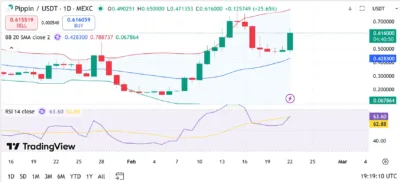
Pippin (PIPPIN) Price Prediction 2026–2030: Can PIPPIN Hit $0.70 Soon?

PIPPIN has surged sharply on the daily timeframe, printing a powerful bullish candle with over 25% gains. RSI is holding above 60, signaling strengthening momentum
Share
Coinstats2026/02/23 04:29
‘Love Island Games’ Season 2 Release Schedule—When Do New Episodes Come Out?

‘Love Island Games’ Season 2 Release Schedule—When Do New Episodes Come Out?

The post ‘Love Island Games’ Season 2 Release Schedule—When Do New Episodes Come Out? appeared on BitcoinEthereumNews.com. LOVE ISLAND GAMES — Episode 201 — Pictured: Ariana Madix — (Photo by: Ben Symons/PEACOCK via Getty Images) Ben Symons/PEACOCK via Getty Images We’ve got a text! It’s time for another season of Love Island Games. With fan-favorites returning in hopes of winning the $250,000 cash prize, read on to learn more about Love Island Games Season 2, including the release schedule so you don’t miss a second of drama. Love Island Games is a spinoff in the Love Island franchise that first premiered in 2023. The show follows a similar format to the original series, but with one major twist: all contestants are returning Islanders from previous seasons of Love Island from around the world, including the USA, UK, Australia and more. Another big difference is that games take on much more importance in Love Island Games than the mothership version, with the results “determining advantages, risks, and even who stays and who goes,” according to Peacock. Vanderpump Rules star Ariana Madix is taking over hosting duties for Love Island Games Season 2, replacing Love Island UK star Maya Jama who hosted the first season. Iain Stirling returns as the show’s narrator, while UK alum Maura Higgins will continue to host the Saturday show Love Island: Aftersun. ForbesWho’s In The ‘Love Island Games’ Season 2 Cast? Meet The IslandersBy Monica Mercuri Jack Fowler and Justine Ndiba were named the first-ever winners of Love Island Games in 2023. Justine had previously won Love Island USA Season 2 with Caleb Corprew, while Jack was a contestant on Love Island UK Season 4. In March 2024, Fowler announced on his Instagram story that he and Justine decided to remain “just friends.” The Season 2 premiere revealed the first couples of the season: Andrea Carmona and Charlie Georgios, Andreina Santos-Marte and Tyrique Hyde,…
Share
BitcoinEthereumNews2025/09/18 04:50