Jefferies dropped a bomb in front of its investors. Rich Handler, the bank’s CEO, came out swinging on Thursday, saying loud and clear: “We believe we were defrauded, OK?” That statement hit as the firm scrambled to explain why it had so much exposure to First Brands Group, the now-bankrupt auto parts supplier. This wasn’t some minor position. Jefferies had helped the company raise billions in debt while also having its own cash tied up through Point Bonita Capital, one of its investment arms. Over the past month, Jefferies’ shares have dropped 25%, a straight punch to the gut. Handler made the remarks during a tense investor day, where analysts didn’t hold back on questions about how deep the First Brands mess goes. “I’ll just say, this is us personally, we believe we were defrauded,” Handler said, clearly frustrated as the pressure built. Point Bonita fund faces backlash over $715mn First Brands exposure This all comes as broader fears about credit quality hit U.S. banks hard. The KBW Regional Bank Index dropped 6% on Thursday alone, while names like Western Alliance and Zions Bank disclosed their own messy run-ins with allegedly fraudulent borrowers. At the same time, Tricolor, a separate auto lender, is also being scrutinized for loan issues. That’s thrown more fuel on the fire, making some investors say this isn’t just a one-off. One investor flat-out called it a “risk management 101 failure,” referring to the fact that Point Bonita had $715 million worth of exposure tied to First Brands. Ian Lapey from Gabelli said this whole thing was getting harder to spin as some random, isolated event, especially since Jefferies’ own hedge fund recently took a hit from an alleged Ponzi scheme too. Handler had to sit through all of it. Jefferies’ president Brian Friedman pushed back, saying the exposure was mostly to First Brands’ “investment-grade-rated customers,” and tried to frame that as a positive. He argued that Jefferies itself didn’t have as much skin in the game, since it only owned a small part of the equity in the fund. But no one in that room was buying easy answers. Jefferies leveraged finance linked to $6bn deal with First Brands It wasn’t just about Point Bonita. Jefferies’ leveraged finance unit also helped First Brands raise cash multiple times. One big deal, a $6 billion loan, got pulled in August after red flags started popping up. That alone raised questions about what Jefferies really knew, and when. Handler insisted Jefferies wasn’t helping First Brands acquire companies behind the scenes. In his words: “We were actually helping clients sell their companies and they were the buyer.” He even joked at one point that some of the questions were “giving my general counsel a heart attack.” But this isn’t comedy hour. The fund’s exposure and the fact that Jefferies played middleman in debt deals have created a serious credibility issue. Friedman added: “If this was fraud — and we don’t know — there’s going to be a knockdown process in bankruptcy court and we’re going to see what’s learned.” He didn’t offer anything more concrete. Handler also said Jefferies is still doing fine: “We’re basically having a good; can I say we’re having a good quarter? Allowed to?” But that didn’t land well either. Damage is damage. Outside the room, the collapse of First Brands and Tricolor sparked a bigger fight. Handler didn’t sugarcoat it. He said: “There’s a fight going on right now between the banks and direct lenders… each wants to point fingers… it’s your fault, no, it’s your fault.” Jefferies, for now, is pointing right at First Brands. Claim your free seat in an exclusive crypto trading community - limited to 1,000 members.Jefferies dropped a bomb in front of its investors. Rich Handler, the bank’s CEO, came out swinging on Thursday, saying loud and clear: “We believe we were defrauded, OK?” That statement hit as the firm scrambled to explain why it had so much exposure to First Brands Group, the now-bankrupt auto parts supplier. This wasn’t some minor position. Jefferies had helped the company raise billions in debt while also having its own cash tied up through Point Bonita Capital, one of its investment arms. Over the past month, Jefferies’ shares have dropped 25%, a straight punch to the gut. Handler made the remarks during a tense investor day, where analysts didn’t hold back on questions about how deep the First Brands mess goes. “I’ll just say, this is us personally, we believe we were defrauded,” Handler said, clearly frustrated as the pressure built. Point Bonita fund faces backlash over $715mn First Brands exposure This all comes as broader fears about credit quality hit U.S. banks hard. The KBW Regional Bank Index dropped 6% on Thursday alone, while names like Western Alliance and Zions Bank disclosed their own messy run-ins with allegedly fraudulent borrowers. At the same time, Tricolor, a separate auto lender, is also being scrutinized for loan issues. That’s thrown more fuel on the fire, making some investors say this isn’t just a one-off. One investor flat-out called it a “risk management 101 failure,” referring to the fact that Point Bonita had $715 million worth of exposure tied to First Brands. Ian Lapey from Gabelli said this whole thing was getting harder to spin as some random, isolated event, especially since Jefferies’ own hedge fund recently took a hit from an alleged Ponzi scheme too. Handler had to sit through all of it. Jefferies’ president Brian Friedman pushed back, saying the exposure was mostly to First Brands’ “investment-grade-rated customers,” and tried to frame that as a positive. He argued that Jefferies itself didn’t have as much skin in the game, since it only owned a small part of the equity in the fund. But no one in that room was buying easy answers. Jefferies leveraged finance linked to $6bn deal with First Brands It wasn’t just about Point Bonita. Jefferies’ leveraged finance unit also helped First Brands raise cash multiple times. One big deal, a $6 billion loan, got pulled in August after red flags started popping up. That alone raised questions about what Jefferies really knew, and when. Handler insisted Jefferies wasn’t helping First Brands acquire companies behind the scenes. In his words: “We were actually helping clients sell their companies and they were the buyer.” He even joked at one point that some of the questions were “giving my general counsel a heart attack.” But this isn’t comedy hour. The fund’s exposure and the fact that Jefferies played middleman in debt deals have created a serious credibility issue. Friedman added: “If this was fraud — and we don’t know — there’s going to be a knockdown process in bankruptcy court and we’re going to see what’s learned.” He didn’t offer anything more concrete. Handler also said Jefferies is still doing fine: “We’re basically having a good; can I say we’re having a good quarter? Allowed to?” But that didn’t land well either. Damage is damage. Outside the room, the collapse of First Brands and Tricolor sparked a bigger fight. Handler didn’t sugarcoat it. He said: “There’s a fight going on right now between the banks and direct lenders… each wants to point fingers… it’s your fault, no, it’s your fault.” Jefferies, for now, is pointing right at First Brands. Claim your free seat in an exclusive crypto trading community - limited to 1,000 members.

Jefferies shares tumble as CEO alleges fraud tied to First Brands exposure

2025/10/18 01:20
4 min read

Jefferies dropped a bomb in front of its investors. Rich Handler, the bank’s CEO, came out swinging on Thursday, saying loud and clear: “We believe we were defrauded, OK?”

That statement hit as the firm scrambled to explain why it had so much exposure to First Brands Group, the now-bankrupt auto parts supplier. This wasn’t some minor position. Jefferies had helped the company raise billions in debt while also having its own cash tied up through Point Bonita Capital, one of its investment arms.

Over the past month, Jefferies’ shares have dropped 25%, a straight punch to the gut. Handler made the remarks during a tense investor day, where analysts didn’t hold back on questions about how deep the First Brands mess goes. “I’ll just say, this is us personally, we believe we were defrauded,” Handler said, clearly frustrated as the pressure built.

Point Bonita fund faces backlash over $715mn First Brands exposure

This all comes as broader fears about credit quality hit U.S. banks hard. The KBW Regional Bank Index dropped 6% on Thursday alone, while names like Western Alliance and Zions Bank disclosed their own messy run-ins with allegedly fraudulent borrowers.

At the same time, Tricolor, a separate auto lender, is also being scrutinized for loan issues. That’s thrown more fuel on the fire, making some investors say this isn’t just a one-off.

One investor flat-out called it a “risk management 101 failure,” referring to the fact that Point Bonita had $715 million worth of exposure tied to First Brands. Ian Lapey from Gabelli said this whole thing was getting harder to spin as some random, isolated event, especially since Jefferies’ own hedge fund recently took a hit from an alleged Ponzi scheme too. Handler had to sit through all of it.

Jefferies’ president Brian Friedman pushed back, saying the exposure was mostly to First Brands’ “investment-grade-rated customers,” and tried to frame that as a positive. He argued that Jefferies itself didn’t have as much skin in the game, since it only owned a small part of the equity in the fund. But no one in that room was buying easy answers.

Jefferies leveraged finance linked to $6bn deal with First Brands

It wasn’t just about Point Bonita. Jefferies’ leveraged finance unit also helped First Brands raise cash multiple times. One big deal, a $6 billion loan, got pulled in August after red flags started popping up. That alone raised questions about what Jefferies really knew, and when.

Handler insisted Jefferies wasn’t helping First Brands acquire companies behind the scenes. In his words: “We were actually helping clients sell their companies and they were the buyer.”

He even joked at one point that some of the questions were “giving my general counsel a heart attack.” But this isn’t comedy hour. The fund’s exposure and the fact that Jefferies played middleman in debt deals have created a serious credibility issue.

Friedman added: “If this was fraud — and we don’t know — there’s going to be a knockdown process in bankruptcy court and we’re going to see what’s learned.” He didn’t offer anything more concrete.

Handler also said Jefferies is still doing fine: “We’re basically having a good; can I say we’re having a good quarter? Allowed to?” But that didn’t land well either. Damage is damage.

Outside the room, the collapse of First Brands and Tricolor sparked a bigger fight. Handler didn’t sugarcoat it. He said: “There’s a fight going on right now between the banks and direct lenders… each wants to point fingers… it’s your fault, no, it’s your fault.” Jefferies, for now, is pointing right at First Brands.

Claim your free seat in an exclusive crypto trading community - limited to 1,000 members.

Disclaimer: The articles reposted on this site are sourced from public platforms and are provided for informational purposes only. They do not necessarily reflect the views of MEXC. All rights remain with the original authors. If you believe any content infringes on third-party rights, please contact service@support.mexc.com for removal. MEXC makes no guarantees regarding the accuracy, completeness, or timeliness of the content and is not responsible for any actions taken based on the information provided. The content does not constitute financial, legal, or other professional advice, nor should it be considered a recommendation or endorsement by MEXC.

You May Also Like

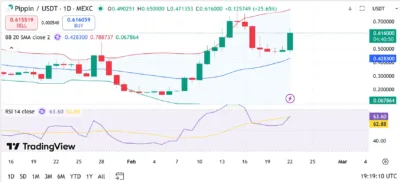
Pippin (PIPPIN) Price Prediction 2026–2030: Can PIPPIN Hit $0.70 Soon?

Pippin (PIPPIN) Price Prediction 2026–2030: Can PIPPIN Hit $0.70 Soon?

PIPPIN has surged sharply on the daily timeframe, printing a powerful bullish candle with over 25% gains. RSI is holding above 60, signaling strengthening momentum
Share
Coinstats2026/02/23 04:29
Will Cardano Reach $10 by 2030? Analysts Break Down ADA’s Growth Cycles

Will Cardano Reach $10 by 2030? Analysts Break Down ADA’s Growth Cycles

The post Will Cardano Reach $10 by 2030? Analysts Break Down ADA’s Growth Cycles appeared first on Coinpedia Fintech News Cardano (ADA) is trading at $0.9024 with a market cap of $32.91 billion. Experts say ADA has the potential to climb much higher, with some placing long-term targets as high as $10. The token continues to benefit from stronger visibility, rising liquidity, and increasing inflows from both institutional and retail markets. Can Cardano Hit $10 …
Share
CoinPedia2025/09/18 17:19
Crypto whale loses $6M to sneaky phishing scheme targeting staked Ethereum

Crypto whale loses $6M to sneaky phishing scheme targeting staked Ethereum

The post Crypto whale loses $6M to sneaky phishing scheme targeting staked Ethereum appeared on BitcoinEthereumNews.com. A crypto whale lost more than $6 million in staked Ethereum (stETH) and Aave-wrapped Bitcoin (aEthWBTC) after approving malicious signatures in a phishing scheme on Sept. 18, according to blockchain security firm Scam Sniffer. According to the firm, the attackers disguised their move as a routine wallet confirmation through “Permit” signatures, which tricked the victim into authorizing fund transfers without triggering obvious red flags. Yu Xian, founder of blockchain security company SlowMist, noted that the victim did not recognize the danger because the transaction required no gas fees. He wrote: “From the victim’s perspective, he just clicked a few times to confirm the wallet’s pop-up signature requests, didn’t spend a single penny of gas, and $6.28 million was gone.” How Permit exploits work Permit approvals were originally designed to simplify token transfers. Instead of submitting an on-chain approval and paying fees, a user can sign an off-chain message authorizing a spender. That efficiency, however, has created a new attack surface for malicious players. Once a user signs such a permit, attackers can combine two functions—Permit and TransferFrom—to drain assets directly. Because the authorization takes place off-chain, wallet dashboards show no unusual activity until the funds move. As a result, the assets are gone when the approval executes on-chain, and tokens are redirected to the attacker’s wallet. This loophole has made permit exploits increasingly attractive for malicious actors, who can siphon millions without needing complex hacks or high-cost gas wars. Phishing losses The latest theft highlights a wider trend of escalating phishing campaigns. Scam Sniffer reported that in August alone, attackers stole $12.17 million from more than 15,200 victims. That figure represented a 72% jump in losses compared with July. According to the firm, the most significant share of August’s damages came from three large accounts that accounted for nearly half…
Share
BitcoinEthereumNews2025/09/19 02:31