Pakistani regulators are actively exploring the development of a sovereign-backed digital currency amid growing recognition of the transformative potential of cryptocurrencies and blockchain technology. Experts warn that delays in establishing clear regulations could result in significant economic losses, possibly up to $25 billion, by missing out on the global boom in stablecoins and digital assets. [...]Pakistani regulators are actively exploring the development of a sovereign-backed digital currency amid growing recognition of the transformative potential of cryptocurrencies and blockchain technology. Experts warn that delays in establishing clear regulations could result in significant economic losses, possibly up to $25 billion, by missing out on the global boom in stablecoins and digital assets. [...]

Pakistan Considers Rupee-Backed Stablecoin Amid $25B Loss Warnings

Pakistan Considers Rupee-Backed Stablecoin Amid $25b Loss Warnings

Pakistani regulators are actively exploring the development of a sovereign-backed digital currency amid growing recognition of the transformative potential of cryptocurrencies and blockchain technology. Experts warn that delays in establishing clear regulations could result in significant economic losses, possibly up to $25 billion, by missing out on the global boom in stablecoins and digital assets.

  • Pakistan considers launching a rupee-backed stablecoin to unlock billions in crypto-driven growth.
  • The central bank is developing a CBDC, supported by the World Bank and IMF, with a pilot phase imminent.
  • Fintech startup ZAR raises nearly $13 million to expand stablecoin access among Pakistan’s unbanked population.
  • Pakistan’s crypto market ranks third globally, highlighting rapid adoption and market potential.
  • The country invites international crypto firms to obtain licenses under new regulatory frameworks.

Pakistan is making strides toward integrating digital currencies into its financial system, aiming to harness the benefits of blockchain technology for economic growth. The country’s financial regulators are strongly considering the launch of a rupee-backed stablecoin, a move that could tap into an estimated $20–$25 billion in digital asset opportunities. This initiative comes as local industry leaders emphasize the need for robust regulation to prevent missing out on the booming global stablecoin and DeFi markets.

At a recent conference organized by the Sustainable Development Policy Institute (SDPI), Zafar Masud, President of the Pakistan Banks Association, highlighted that the global stablecoin ecosystem is rapidly expanding. He said Pakistan is “seriously considering a rupee-backed stablecoin,” which could facilitate easier cross-border remittances and extend financial inclusion. Faisal Mazhar, Deputy Director of Payments at the State Bank of Pakistan, revealed that a Central Bank Digital Currency (CBDC) prototype is already underway with technical assistance from the World Bank and IMF, with a pilot planned before full deployment.

ZAR’s Stablecoin Commitments to Financial Inclusion

Pakistan’s ambition to embrace stablecoins builds on the recent success of ZAR, a fintech startup dedicated to providing dollar-backed stablecoins to unbanked and underbanked populations. Having recently raised $12.9 million in funding led by Andreessen Horowitz, ZAR aims to bridge Pakistan’s significant financial exclusion gap through accessible digital assets. With over 100 million adults in Pakistan remaining unbanked, such initiatives could significantly enhance financial inclusion and economic participation.

Cointelegraph reports that Pakistan has climbed to third place globally in the Chainalysis 2025 Global Crypto Adoption Index, reflecting the country’s rapid uptake of cryptocurrency and blockchain solutions. This momentum further underscores the market’s potential for development and investment.

Pakistan ranks third in global crypto adoption. Source: Bilal Bin Saqib

Pakistan Launches Licensing for Crypto Firms

As part of its efforts to foster a regulated digital asset environment, Pakistan opened its markets to international crypto exchanges earlier this year. The Pakistan Virtual Asset Regulatory Authority (PVARA), established under the Virtual Assets Ordinance 2025, issued invitations to global firms to apply for licenses. PVARA’s roles encompass licensing, supervising, and regulating virtual asset service providers (VASPs), signaling the country’s commitment to integrating cryptocurrency into its financial ecosystem responsibly.

This regulatory push aims to attract reputable international players and ensure that Pakistan’s crypto sector develops within a framework that emphasizes security and transparency, ultimately bolstering investor confidence and safeguarding user interests in the evolving blockchain landscape.

This article was originally published as Pakistan Considers Rupee-Backed Stablecoin Amid $25B Loss Warnings on Crypto Breaking News – your trusted source for crypto news, Bitcoin news, and blockchain updates.

Market Opportunity
Boom Logo
Boom Price(BOOM)
$0.0008678
$0.0008678$0.0008678
-0.09%
USD
Boom (BOOM) Live Price Chart
Disclaimer: The articles reposted on this site are sourced from public platforms and are provided for informational purposes only. They do not necessarily reflect the views of MEXC. All rights remain with the original authors. If you believe any content infringes on third-party rights, please contact service@support.mexc.com for removal. MEXC makes no guarantees regarding the accuracy, completeness, or timeliness of the content and is not responsible for any actions taken based on the information provided. The content does not constitute financial, legal, or other professional advice, nor should it be considered a recommendation or endorsement by MEXC.

You May Also Like

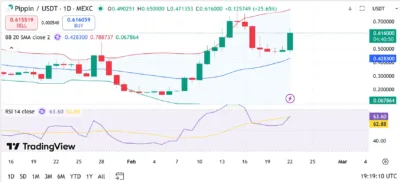
Pippin (PIPPIN) Price Prediction 2026–2030: Can PIPPIN Hit $0.70 Soon?

Pippin (PIPPIN) Price Prediction 2026–2030: Can PIPPIN Hit $0.70 Soon?

PIPPIN has surged sharply on the daily timeframe, printing a powerful bullish candle with over 25% gains. RSI is holding above 60, signaling strengthening momentum
Share
Coinstats2026/02/23 04:29
Will Cardano Reach $10 by 2030? Analysts Break Down ADA’s Growth Cycles

Will Cardano Reach $10 by 2030? Analysts Break Down ADA’s Growth Cycles

The post Will Cardano Reach $10 by 2030? Analysts Break Down ADA’s Growth Cycles appeared first on Coinpedia Fintech News Cardano (ADA) is trading at $0.9024 with a market cap of $32.91 billion. Experts say ADA has the potential to climb much higher, with some placing long-term targets as high as $10. The token continues to benefit from stronger visibility, rising liquidity, and increasing inflows from both institutional and retail markets. Can Cardano Hit $10 …
Share
CoinPedia2025/09/18 17:19
Crypto whale loses $6M to sneaky phishing scheme targeting staked Ethereum

Crypto whale loses $6M to sneaky phishing scheme targeting staked Ethereum

The post Crypto whale loses $6M to sneaky phishing scheme targeting staked Ethereum appeared on BitcoinEthereumNews.com. A crypto whale lost more than $6 million in staked Ethereum (stETH) and Aave-wrapped Bitcoin (aEthWBTC) after approving malicious signatures in a phishing scheme on Sept. 18, according to blockchain security firm Scam Sniffer. According to the firm, the attackers disguised their move as a routine wallet confirmation through “Permit” signatures, which tricked the victim into authorizing fund transfers without triggering obvious red flags. Yu Xian, founder of blockchain security company SlowMist, noted that the victim did not recognize the danger because the transaction required no gas fees. He wrote: “From the victim’s perspective, he just clicked a few times to confirm the wallet’s pop-up signature requests, didn’t spend a single penny of gas, and $6.28 million was gone.” How Permit exploits work Permit approvals were originally designed to simplify token transfers. Instead of submitting an on-chain approval and paying fees, a user can sign an off-chain message authorizing a spender. That efficiency, however, has created a new attack surface for malicious players. Once a user signs such a permit, attackers can combine two functions—Permit and TransferFrom—to drain assets directly. Because the authorization takes place off-chain, wallet dashboards show no unusual activity until the funds move. As a result, the assets are gone when the approval executes on-chain, and tokens are redirected to the attacker’s wallet. This loophole has made permit exploits increasingly attractive for malicious actors, who can siphon millions without needing complex hacks or high-cost gas wars. Phishing losses The latest theft highlights a wider trend of escalating phishing campaigns. Scam Sniffer reported that in August alone, attackers stole $12.17 million from more than 15,200 victims. That figure represented a 72% jump in losses compared with July. According to the firm, the most significant share of August’s damages came from three large accounts that accounted for nearly half…
Share
BitcoinEthereumNews2025/09/19 02:31