BitcoinWorld Revolutionary: Ava Labs Unveils Horizon for Secure RWA-Backed Loans A groundbreaking development is reshaping the intersection of traditional finance and decentralized finance (DeFi). Ava Labs, the innovative developer behind the high-performance Avalanche (AVAX) blockchain, has officially unveiled Horizon. This cutting-edge platform introduces a novel approach to lending, providing stablecoin loans that are securely collateralized by tokenized real-world assets (RWA). This move, as reported by The Block, marks a significant step towards bridging the gap between conventional financial instruments and the efficiency of blockchain technology, especially in the realm of RWA-backed loans. What Exactly Are RWA-Backed Loans and Why Do They Matter? Understanding RWA-backed loans begins with grasping what real-world assets are and how they integrate with blockchain. Simply put, RWAs are tangible or intangible assets that exist in the traditional financial world—think real estate, commodities, or even government bonds. Tokenization transforms these assets into digital tokens on a blockchain, making them programmable, divisible, and easily transferable. Horizon leverages this concept by allowing institutional borrowers to obtain stablecoin loans, such as USDC, RLUSD, and GHO. These loans are not backed by volatile cryptocurrencies, but by the stability of tokenized U.S. Treasury bonds. This mechanism introduces a new layer of security and predictability to the DeFi lending landscape, making RWA-backed loans an attractive option for sophisticated investors. How Does Ava Labs’ Horizon Platform Function for RWA-Backed Loans? Ava Labs designed Horizon specifically for institutional players, ensuring a robust and compliant environment. The platform’s operational flow is straightforward yet powerful: Collateralization: Institutional borrowers deposit tokenized U.S. Treasury bonds as collateral. These digital representations of traditional assets are held securely on the blockchain. Stablecoin Issuance: In return, Horizon issues leading stablecoins like USDC, RLUSD, and GHO. These stablecoins provide immediate liquidity to the borrowers. Institutional Focus: The platform caters exclusively to institutions, ensuring adherence to regulatory standards and managing larger transaction volumes effectively. This streamlined process facilitates efficient capital deployment and access to liquidity, all while maintaining the integrity of underlying real-world assets. The innovation here lies in the seamless integration of traditional financial stability with blockchain’s inherent advantages, driving the utility of RWA-backed loans. What Are the Key Benefits of Embracing RWA-Backed Loans? The introduction of platforms like Horizon brings several compelling advantages to the financial ecosystem. These benefits extend beyond just the borrowers and lenders, potentially reshaping broader market dynamics: Enhanced Stability: By collateralizing loans with stable, regulated assets like U.S. Treasury bonds, Horizon significantly reduces the volatility often associated with crypto lending. This stability makes RWA-backed loans more appealing to risk-averse institutions. Increased Liquidity: Tokenization unlocks illiquid assets, allowing them to be used as collateral for immediate access to stablecoin liquidity. This can free up capital that would otherwise be tied up. Transparency and Efficiency: Blockchain technology provides unparalleled transparency for collateral management and loan terms. Smart contracts automate processes, reducing manual errors and increasing transactional efficiency. Bridging TradFi and DeFi: Horizon acts as a crucial bridge, enabling traditional financial institutions to participate in the DeFi space with familiar asset classes, fostering broader adoption and innovation in RWA-backed loans. Navigating the Future: Challenges and Opportunities for RWA-Backed Loans While the potential of RWA-backed loans is immense, their widespread adoption also presents certain challenges and exciting opportunities. Understanding these aspects is vital for assessing the long-term impact of platforms like Horizon. Potential Challenges: Regulatory Clarity: The evolving regulatory landscape for tokenized securities and DeFi remains a significant hurdle. Clear guidelines are essential for institutional confidence and scalability. Legal Frameworks: Ensuring the legal enforceability of tokenized asset ownership and collateral in various jurisdictions requires robust legal frameworks. Oracles and Data Integrity: Reliable and secure oracles are necessary to bring accurate, real-time data from the real world onto the blockchain, especially for asset valuation and liquidation processes. Exciting Opportunities: New Financial Products: Horizon paves the way for a new generation of financial products that blend the best of traditional finance with blockchain’s innovation. Broader Institutional Adoption: As more traditional assets are tokenized, more institutions will likely enter the DeFi space, driving massive growth. Global Accessibility: Tokenized RWAs can make traditionally exclusive assets accessible to a wider global audience, democratizing investment opportunities. Ava Labs’ Horizon is not just a platform; it represents a significant leap forward in integrating the stability of traditional assets with the innovation of decentralized finance. By offering secure RWA-backed loans to institutional borrowers, Horizon is setting a new standard for how value is exchanged and leveraged in the digital economy. This pioneering effort by Ava Labs and Avalanche is poised to unlock vast new markets and redefine the future of lending, making finance more efficient, transparent, and accessible for a global audience. Frequently Asked Questions About Horizon and RWA-Backed Loans What is Ava Labs’ Horizon platform?Horizon is a new platform developed by Ava Labs that facilitates stablecoin loans for institutional borrowers. These loans are uniquely collateralized by tokenized real-world assets (RWAs), such as U.S. Treasury bonds. Which stablecoins are available on Horizon for RWA-backed loans?Horizon currently offers stablecoins like USDC, RLUSD, and GHO to institutional borrowers, providing them with reliable liquidity against their tokenized collateral. What types of assets are used as collateral for RWA-backed loans on Horizon?The primary collateral used on Horizon includes tokenized U.S. Treasury bonds. This approach links the stability of traditional government securities with the efficiency of blockchain technology. Who is the target audience for Horizon’s RWA-backed loans?Horizon is specifically designed to serve institutional borrowers. This focus ensures the platform meets the stringent requirements and compliance needs of large-scale financial entities. How do RWA-backed loans benefit the DeFi ecosystem?RWA-backed loans introduce greater stability, transparency, and efficiency to DeFi. They bridge traditional finance with decentralized finance, attracting institutional capital and unlocking new liquidity by tokenizing previously illiquid assets. Did you find this deep dive into Ava Labs’ Horizon platform and the future of RWA-backed loans insightful? Share this article with your network on social media to spread awareness about this pivotal development in the crypto space! Let’s discuss how this innovation could shape the financial world together. To learn more about the latest crypto market trends, explore our article on key developments shaping tokenized assets institutional adoption. This post Revolutionary: Ava Labs Unveils Horizon for Secure RWA-Backed Loans first appeared on BitcoinWorld and is written by Editorial TeamBitcoinWorld Revolutionary: Ava Labs Unveils Horizon for Secure RWA-Backed Loans A groundbreaking development is reshaping the intersection of traditional finance and decentralized finance (DeFi). Ava Labs, the innovative developer behind the high-performance Avalanche (AVAX) blockchain, has officially unveiled Horizon. This cutting-edge platform introduces a novel approach to lending, providing stablecoin loans that are securely collateralized by tokenized real-world assets (RWA). This move, as reported by The Block, marks a significant step towards bridging the gap between conventional financial instruments and the efficiency of blockchain technology, especially in the realm of RWA-backed loans. What Exactly Are RWA-Backed Loans and Why Do They Matter? Understanding RWA-backed loans begins with grasping what real-world assets are and how they integrate with blockchain. Simply put, RWAs are tangible or intangible assets that exist in the traditional financial world—think real estate, commodities, or even government bonds. Tokenization transforms these assets into digital tokens on a blockchain, making them programmable, divisible, and easily transferable. Horizon leverages this concept by allowing institutional borrowers to obtain stablecoin loans, such as USDC, RLUSD, and GHO. These loans are not backed by volatile cryptocurrencies, but by the stability of tokenized U.S. Treasury bonds. This mechanism introduces a new layer of security and predictability to the DeFi lending landscape, making RWA-backed loans an attractive option for sophisticated investors. How Does Ava Labs’ Horizon Platform Function for RWA-Backed Loans? Ava Labs designed Horizon specifically for institutional players, ensuring a robust and compliant environment. The platform’s operational flow is straightforward yet powerful: Collateralization: Institutional borrowers deposit tokenized U.S. Treasury bonds as collateral. These digital representations of traditional assets are held securely on the blockchain. Stablecoin Issuance: In return, Horizon issues leading stablecoins like USDC, RLUSD, and GHO. These stablecoins provide immediate liquidity to the borrowers. Institutional Focus: The platform caters exclusively to institutions, ensuring adherence to regulatory standards and managing larger transaction volumes effectively. This streamlined process facilitates efficient capital deployment and access to liquidity, all while maintaining the integrity of underlying real-world assets. The innovation here lies in the seamless integration of traditional financial stability with blockchain’s inherent advantages, driving the utility of RWA-backed loans. What Are the Key Benefits of Embracing RWA-Backed Loans? The introduction of platforms like Horizon brings several compelling advantages to the financial ecosystem. These benefits extend beyond just the borrowers and lenders, potentially reshaping broader market dynamics: Enhanced Stability: By collateralizing loans with stable, regulated assets like U.S. Treasury bonds, Horizon significantly reduces the volatility often associated with crypto lending. This stability makes RWA-backed loans more appealing to risk-averse institutions. Increased Liquidity: Tokenization unlocks illiquid assets, allowing them to be used as collateral for immediate access to stablecoin liquidity. This can free up capital that would otherwise be tied up. Transparency and Efficiency: Blockchain technology provides unparalleled transparency for collateral management and loan terms. Smart contracts automate processes, reducing manual errors and increasing transactional efficiency. Bridging TradFi and DeFi: Horizon acts as a crucial bridge, enabling traditional financial institutions to participate in the DeFi space with familiar asset classes, fostering broader adoption and innovation in RWA-backed loans. Navigating the Future: Challenges and Opportunities for RWA-Backed Loans While the potential of RWA-backed loans is immense, their widespread adoption also presents certain challenges and exciting opportunities. Understanding these aspects is vital for assessing the long-term impact of platforms like Horizon. Potential Challenges: Regulatory Clarity: The evolving regulatory landscape for tokenized securities and DeFi remains a significant hurdle. Clear guidelines are essential for institutional confidence and scalability. Legal Frameworks: Ensuring the legal enforceability of tokenized asset ownership and collateral in various jurisdictions requires robust legal frameworks. Oracles and Data Integrity: Reliable and secure oracles are necessary to bring accurate, real-time data from the real world onto the blockchain, especially for asset valuation and liquidation processes. Exciting Opportunities: New Financial Products: Horizon paves the way for a new generation of financial products that blend the best of traditional finance with blockchain’s innovation. Broader Institutional Adoption: As more traditional assets are tokenized, more institutions will likely enter the DeFi space, driving massive growth. Global Accessibility: Tokenized RWAs can make traditionally exclusive assets accessible to a wider global audience, democratizing investment opportunities. Ava Labs’ Horizon is not just a platform; it represents a significant leap forward in integrating the stability of traditional assets with the innovation of decentralized finance. By offering secure RWA-backed loans to institutional borrowers, Horizon is setting a new standard for how value is exchanged and leveraged in the digital economy. This pioneering effort by Ava Labs and Avalanche is poised to unlock vast new markets and redefine the future of lending, making finance more efficient, transparent, and accessible for a global audience. Frequently Asked Questions About Horizon and RWA-Backed Loans What is Ava Labs’ Horizon platform?Horizon is a new platform developed by Ava Labs that facilitates stablecoin loans for institutional borrowers. These loans are uniquely collateralized by tokenized real-world assets (RWAs), such as U.S. Treasury bonds. Which stablecoins are available on Horizon for RWA-backed loans?Horizon currently offers stablecoins like USDC, RLUSD, and GHO to institutional borrowers, providing them with reliable liquidity against their tokenized collateral. What types of assets are used as collateral for RWA-backed loans on Horizon?The primary collateral used on Horizon includes tokenized U.S. Treasury bonds. This approach links the stability of traditional government securities with the efficiency of blockchain technology. Who is the target audience for Horizon’s RWA-backed loans?Horizon is specifically designed to serve institutional borrowers. This focus ensures the platform meets the stringent requirements and compliance needs of large-scale financial entities. How do RWA-backed loans benefit the DeFi ecosystem?RWA-backed loans introduce greater stability, transparency, and efficiency to DeFi. They bridge traditional finance with decentralized finance, attracting institutional capital and unlocking new liquidity by tokenizing previously illiquid assets. Did you find this deep dive into Ava Labs’ Horizon platform and the future of RWA-backed loans insightful? Share this article with your network on social media to spread awareness about this pivotal development in the crypto space! Let’s discuss how this innovation could shape the financial world together. To learn more about the latest crypto market trends, explore our article on key developments shaping tokenized assets institutional adoption. This post Revolutionary: Ava Labs Unveils Horizon for Secure RWA-Backed Loans first appeared on BitcoinWorld and is written by Editorial Team

Revolutionary: Ava Labs Unveils Horizon for Secure RWA-Backed Loans

BitcoinWorld
Revolutionary: Ava Labs Unveils Horizon for Secure RWA-Backed Loans

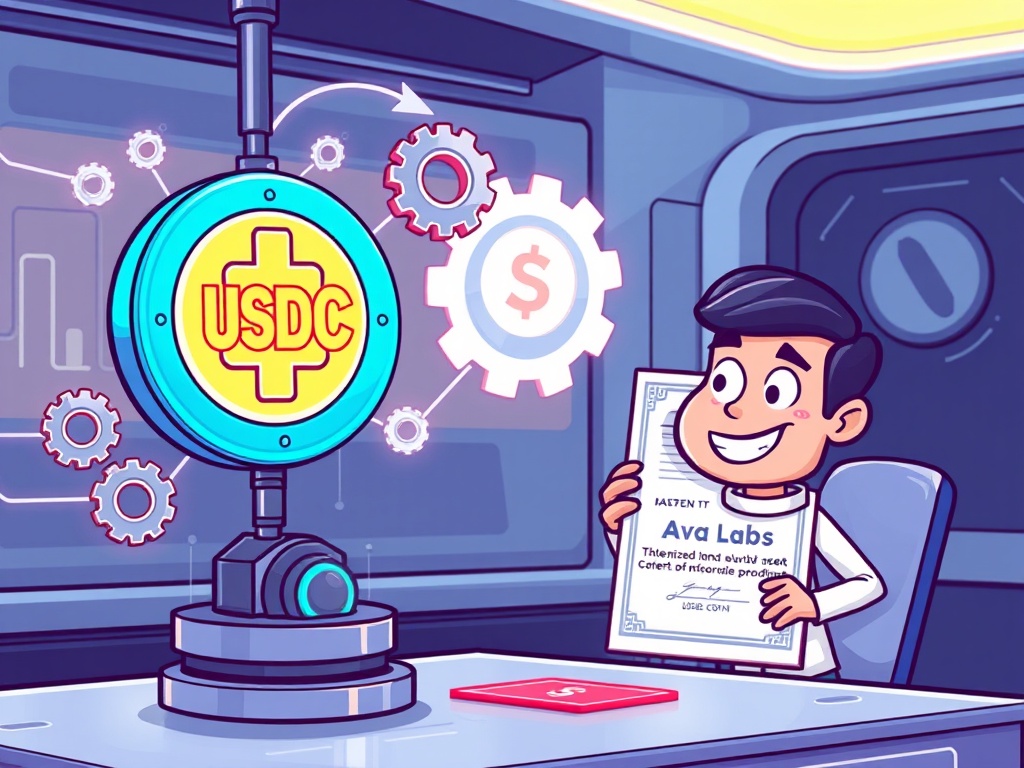
A groundbreaking development is reshaping the intersection of traditional finance and decentralized finance (DeFi). Ava Labs, the innovative developer behind the high-performance Avalanche (AVAX) blockchain, has officially unveiled Horizon. This cutting-edge platform introduces a novel approach to lending, providing stablecoin loans that are securely collateralized by tokenized real-world assets (RWA). This move, as reported by The Block, marks a significant step towards bridging the gap between conventional financial instruments and the efficiency of blockchain technology, especially in the realm of RWA-backed loans.

What Exactly Are RWA-Backed Loans and Why Do They Matter?

Understanding RWA-backed loans begins with grasping what real-world assets are and how they integrate with blockchain. Simply put, RWAs are tangible or intangible assets that exist in the traditional financial world—think real estate, commodities, or even government bonds. Tokenization transforms these assets into digital tokens on a blockchain, making them programmable, divisible, and easily transferable.

Horizon leverages this concept by allowing institutional borrowers to obtain stablecoin loans, such as USDC, RLUSD, and GHO. These loans are not backed by volatile cryptocurrencies, but by the stability of tokenized U.S. Treasury bonds. This mechanism introduces a new layer of security and predictability to the DeFi lending landscape, making RWA-backed loans an attractive option for sophisticated investors.

How Does Ava Labs’ Horizon Platform Function for RWA-Backed Loans?

Ava Labs designed Horizon specifically for institutional players, ensuring a robust and compliant environment. The platform’s operational flow is straightforward yet powerful:

  • Collateralization: Institutional borrowers deposit tokenized U.S. Treasury bonds as collateral. These digital representations of traditional assets are held securely on the blockchain.
  • Stablecoin Issuance: In return, Horizon issues leading stablecoins like USDC, RLUSD, and GHO. These stablecoins provide immediate liquidity to the borrowers.
  • Institutional Focus: The platform caters exclusively to institutions, ensuring adherence to regulatory standards and managing larger transaction volumes effectively.

This streamlined process facilitates efficient capital deployment and access to liquidity, all while maintaining the integrity of underlying real-world assets. The innovation here lies in the seamless integration of traditional financial stability with blockchain’s inherent advantages, driving the utility of RWA-backed loans.

What Are the Key Benefits of Embracing RWA-Backed Loans?

The introduction of platforms like Horizon brings several compelling advantages to the financial ecosystem. These benefits extend beyond just the borrowers and lenders, potentially reshaping broader market dynamics:

  • Enhanced Stability: By collateralizing loans with stable, regulated assets like U.S. Treasury bonds, Horizon significantly reduces the volatility often associated with crypto lending. This stability makes RWA-backed loans more appealing to risk-averse institutions.
  • Increased Liquidity: Tokenization unlocks illiquid assets, allowing them to be used as collateral for immediate access to stablecoin liquidity. This can free up capital that would otherwise be tied up.
  • Transparency and Efficiency: Blockchain technology provides unparalleled transparency for collateral management and loan terms. Smart contracts automate processes, reducing manual errors and increasing transactional efficiency.
  • Bridging TradFi and DeFi: Horizon acts as a crucial bridge, enabling traditional financial institutions to participate in the DeFi space with familiar asset classes, fostering broader adoption and innovation in RWA-backed loans.

While the potential of RWA-backed loans is immense, their widespread adoption also presents certain challenges and exciting opportunities. Understanding these aspects is vital for assessing the long-term impact of platforms like Horizon.

Potential Challenges:

  • Regulatory Clarity: The evolving regulatory landscape for tokenized securities and DeFi remains a significant hurdle. Clear guidelines are essential for institutional confidence and scalability.
  • Legal Frameworks: Ensuring the legal enforceability of tokenized asset ownership and collateral in various jurisdictions requires robust legal frameworks.
  • Oracles and Data Integrity: Reliable and secure oracles are necessary to bring accurate, real-time data from the real world onto the blockchain, especially for asset valuation and liquidation processes.

Exciting Opportunities:

  • New Financial Products: Horizon paves the way for a new generation of financial products that blend the best of traditional finance with blockchain’s innovation.
  • Broader Institutional Adoption: As more traditional assets are tokenized, more institutions will likely enter the DeFi space, driving massive growth.
  • Global Accessibility: Tokenized RWAs can make traditionally exclusive assets accessible to a wider global audience, democratizing investment opportunities.

Ava Labs’ Horizon is not just a platform; it represents a significant leap forward in integrating the stability of traditional assets with the innovation of decentralized finance. By offering secure RWA-backed loans to institutional borrowers, Horizon is setting a new standard for how value is exchanged and leveraged in the digital economy. This pioneering effort by Ava Labs and Avalanche is poised to unlock vast new markets and redefine the future of lending, making finance more efficient, transparent, and accessible for a global audience.

Frequently Asked Questions About Horizon and RWA-Backed Loans

  • What is Ava Labs’ Horizon platform?
    Horizon is a new platform developed by Ava Labs that facilitates stablecoin loans for institutional borrowers. These loans are uniquely collateralized by tokenized real-world assets (RWAs), such as U.S. Treasury bonds.
  • Which stablecoins are available on Horizon for RWA-backed loans?
    Horizon currently offers stablecoins like USDC, RLUSD, and GHO to institutional borrowers, providing them with reliable liquidity against their tokenized collateral.
  • What types of assets are used as collateral for RWA-backed loans on Horizon?
    The primary collateral used on Horizon includes tokenized U.S. Treasury bonds. This approach links the stability of traditional government securities with the efficiency of blockchain technology.
  • Who is the target audience for Horizon’s RWA-backed loans?
    Horizon is specifically designed to serve institutional borrowers. This focus ensures the platform meets the stringent requirements and compliance needs of large-scale financial entities.
  • How do RWA-backed loans benefit the DeFi ecosystem?
    RWA-backed loans introduce greater stability, transparency, and efficiency to DeFi. They bridge traditional finance with decentralized finance, attracting institutional capital and unlocking new liquidity by tokenizing previously illiquid assets.

Did you find this deep dive into Ava Labs’ Horizon platform and the future of RWA-backed loans insightful? Share this article with your network on social media to spread awareness about this pivotal development in the crypto space! Let’s discuss how this innovation could shape the financial world together.

To learn more about the latest crypto market trends, explore our article on key developments shaping tokenized assets institutional adoption.

This post Revolutionary: Ava Labs Unveils Horizon for Secure RWA-Backed Loans first appeared on BitcoinWorld and is written by Editorial Team

Market Opportunity
RealLink Logo
RealLink Price(REAL)
$0.08052
$0.08052$0.08052
+0.28%
USD
RealLink (REAL) Live Price Chart
Disclaimer: The articles reposted on this site are sourced from public platforms and are provided for informational purposes only. They do not necessarily reflect the views of MEXC. All rights remain with the original authors. If you believe any content infringes on third-party rights, please contact service@support.mexc.com for removal. MEXC makes no guarantees regarding the accuracy, completeness, or timeliness of the content and is not responsible for any actions taken based on the information provided. The content does not constitute financial, legal, or other professional advice, nor should it be considered a recommendation or endorsement by MEXC.

You May Also Like

Is Hyperliquid the new frontier for innovation?

Is Hyperliquid the new frontier for innovation?

The post Is Hyperliquid the new frontier for innovation? appeared on BitcoinEthereumNews.com. This is a segment from the 0xResearch newsletter. To read full editions, subscribe. One of the key things I like to track in crypto is a subjective criterion I call “where are new interesting developments and proposals taking place.” There are plenty of dashboards and analytics sites for this, the most popular being the Electric Capital site. The issue is that it still shows Polkadot as having a lot of developers. (At Blockworks we solved the noise problem with active users; maybe we can try the same for active developers.) Because of this noise, I prefer to track two simple observations: What is the velocity of new products launching, and how much mindshare are these products capturing? Are many people getting nerdsniped into discussing the novelties and intricacies of the chain? A related point is the caliber of people being attracted to new ecosystems. For example, over the past few years, Solana (and Ethereum) attracted the majority of talent. Talent generally goes where: It can solve interesting problems or create interesting projects. It can make a lot of money. In a podcast I did with Icebergy about a year ago, we discussed how crypto still wasn’t attracting talent at the levels AI was, despite offering faster exits and more money. AI was (and probably still is) more interesting to most talent and seen as more prestigious. After FTX, crypto lost a lot of credibility and has only recently started recovering as larger institutional players re-entered. Apart from FTX, crypto has also been criticized for being full of low-effort forks and limited utility products. This dynamic isn’t unique to crypto though. Many AI companies are also just building wrappers around GPT, which is as uninteresting as some projects in crypto. Anyway, to the point: Historically, Solana has captured the majority of…
Share
BitcoinEthereumNews2025/09/18 08:13
Stronger capital, bigger loans: Africa’s banking outlook for 2026

Stronger capital, bigger loans: Africa’s banking outlook for 2026

African banks spent 2025 consolidating, shoring up capital, tightening risk controls, and investing in digital infrastructure, following years of macroeconomic
Share
Techcabal2026/01/14 23:06
Crucial US Stock Market Update: What Wednesday’s Mixed Close Reveals

Crucial US Stock Market Update: What Wednesday’s Mixed Close Reveals

BitcoinWorld Crucial US Stock Market Update: What Wednesday’s Mixed Close Reveals The financial world often keeps us on our toes, and Wednesday was no exception. Investors watched closely as the US stock market concluded the day with a mixed performance across its major indexes. This snapshot offers a crucial glimpse into current investor sentiment and economic undercurrents, prompting many to ask: what exactly happened? Understanding the Latest US Stock Market Movements On Wednesday, the closing bell brought a varied picture for the US stock market. While some indexes celebrated gains, others registered slight declines, creating a truly mixed bag for investors. The Dow Jones Industrial Average showed resilience, climbing by a notable 0.57%. This positive movement suggests strength in some of the larger, more established companies. Conversely, the S&P 500, a broader benchmark often seen as a barometer for the overall market, experienced a modest dip of 0.1%. The technology-heavy Nasdaq Composite also saw a slight retreat, sliding by 0.33%. This particular index often reflects investor sentiment towards growth stocks and the tech sector. These divergent outcomes highlight the complex dynamics currently at play within the American economy. It’s not simply a matter of “up” or “down” for the entire US stock market; rather, it’s a nuanced landscape where different sectors and company types are responding to unique pressures and opportunities. Why Did the US Stock Market See Mixed Results? When the US stock market delivers a mixed performance, it often points to a tug-of-war between various economic factors. Several elements could have contributed to Wednesday’s varied closings. For instance, positive corporate earnings reports from certain industries might have bolstered the Dow. At the same time, concerns over inflation, interest rate policies by the Federal Reserve, or even global economic uncertainties could have pressured growth stocks, affecting the S&P 500 and Nasdaq. Key considerations often include: Economic Data: Recent reports on employment, manufacturing, or consumer spending can sway market sentiment. Corporate Announcements: Strong or weak earnings forecasts from influential companies can significantly impact their respective sectors. Interest Rate Expectations: The prospect of higher or lower interest rates directly influences borrowing costs for businesses and consumer spending, affecting future profitability. Geopolitical Events: Global tensions or trade policies can introduce uncertainty, causing investors to become more cautious. Understanding these underlying drivers is crucial for anyone trying to make sense of daily market fluctuations in the US stock market. Navigating Volatility in the US Stock Market A mixed close, while not a dramatic downturn, serves as a reminder that market volatility is a constant companion for investors. For those involved in the US stock market, particularly individuals managing their portfolios, these days underscore the importance of a well-thought-out strategy. It’s important not to react impulsively to daily movements. Instead, consider these actionable insights: Diversification: Spreading investments across different sectors and asset classes can help mitigate risk when one area underperforms. Long-Term Perspective: Focusing on long-term financial goals rather than short-term gains can help weather daily market swings. Stay Informed: Keeping abreast of economic news and company fundamentals provides context for market behavior. Consult Experts: Financial advisors can offer personalized guidance based on individual risk tolerance and objectives. Even small movements in major indexes can signal shifts that require attention, guiding future investment decisions within the dynamic US stock market. What’s Next for the US Stock Market? Looking ahead, investors will be keenly watching for further economic indicators and corporate announcements to gauge the direction of the US stock market. Upcoming inflation data, statements from the Federal Reserve, and quarterly earnings reports will likely provide more clarity. The interplay of these factors will continue to shape investor confidence and, consequently, the performance of the Dow, S&P 500, and Nasdaq. Remaining informed and adaptive will be key to understanding the market’s trajectory. Conclusion: Wednesday’s mixed close in the US stock market highlights the intricate balance of forces influencing financial markets. While the Dow showed strength, the S&P 500 and Nasdaq experienced slight declines, reflecting a nuanced economic landscape. This reminds us that understanding the ‘why’ behind these movements is as important as the movements themselves. As always, a thoughtful, informed approach remains the best strategy for navigating the complexities of the market. Frequently Asked Questions (FAQs) Q1: What does a “mixed close” mean for the US stock market? A1: A mixed close indicates that while some major stock indexes advanced, others declined. It suggests that different sectors or types of companies within the US stock market are experiencing varying influences, rather than a uniform market movement. Q2: Which major indexes were affected on Wednesday? A2: On Wednesday, the Dow Jones Industrial Average gained 0.57%, while the S&P 500 edged down 0.1%, and the Nasdaq Composite slid 0.33%, illustrating the mixed performance across the US stock market. Q3: What factors contribute to a mixed stock market performance? A3: Mixed performances in the US stock market can be influenced by various factors, including specific corporate earnings, economic data releases, shifts in interest rate expectations, and broader geopolitical events that affect different market segments uniquely. Q4: How should investors react to mixed market signals? A4: Investors are generally advised to maintain a long-term perspective, diversify their portfolios, stay informed about economic news, and avoid impulsive decisions. Consulting a financial advisor can also provide personalized guidance for navigating the US stock market. Q5: What indicators should investors watch for future US stock market trends? A5: Key indicators to watch include upcoming inflation reports, statements from the Federal Reserve regarding monetary policy, and quarterly corporate earnings reports. These will offer insights into the future direction of the US stock market. Did you find this analysis of the US stock market helpful? Share this article with your network on social media to help others understand the nuances of current financial trends! To learn more about the latest stock market trends, explore our article on key developments shaping the US stock market‘s future performance. This post Crucial US Stock Market Update: What Wednesday’s Mixed Close Reveals first appeared on BitcoinWorld.
Share
Coinstats2025/09/18 05:30