

Spacetech: A New Revolution Re-shaping the Planet
Spacetech. You’ve probably come across the word on Twitter; and chances are you associate it with whatever ==“mumbo jumbo”== Elon is trying to achieve with all that space talk.
==I mean you’re not far off.==
For a long-time, I’ve associated Spacetech with rocket ships, and astronauts floating in zero gravity; but recent research on this topic has changed my perspective.

\ Now, I picture a teacher cancelling a school trip because the weather forecast indicates a looming storm with satellites scanning the atmosphere.
I picture a dad driving late at night to a new location and having full trust that the glowing blue dot on his GPS will accurately guide him; all thanks to a network of satellites working in collaboration to ensure he doesn’t make a wrong turn.
==Fact remains, Spacetech impacts our daily lives more than you may realize==. And maybe that’s exactly how it should be. Because if anything, it’s the most significant technologies that tend to become invisible; tied into our everyday existence.
\
Satellite Internet and Global Connectivity
A space technology that’s already transforming our world real-time is the Low Earth Orbit (LEO); new generation satellite constellations. Most satellites networks orbit from afar, but these networks that include Starlink and OneWeb; tend to operate significantly closer to earth hence creating a web of connectivity intrinsically distinct from previous technologies.
Currently, Starlink network has launched in rural countries such as South-Sudan, Somalia, and Liberia. Improved connectivity in such areas play a significant role in helping marginalized groups access educational resources, markets and information.
This leads to empowerment in form of civic participation, transparency, and social awareness. At a Government capacity, services could be delivered more efficiently such as licensing, social services and taxes.
This technology goes beyond bridging the digital gap; it’s re-defining how we view ==“remote”.== Currently emergency responders can organize rescue efforts in parts of the world where terrestrial networks aren’t accessible.
==Farmers now have the opportunity to monitor crop conditions in real-time using precision agriculture tools and technology that would be inaccessible without this networks. Additionally, SMBs in isolated areas can now compete at a global scale.==
One outstanding element about these satellites is that even when natural calamities such as hurricanes knock down cell towers and interfere with fiber optic cables, the orbital networks still remain functioning.
\
Sci-Fi: The Element re-shaping Space Exploration
At the core of it, the connection between science fiction and space exploration is stronger than most people imagine. Sci-fi writers and creators didn’t just get lucky with most of their predictions. Science fiction takes on kind of a cultural permission slip, helping us visualize what could be possible before making it a reality.
For example, with Roddenberry’s Star Trek communicators; Motorola Engineer Martin Cooper created the first handheld mobile phone in 1973, drawing inspiration from Captain Kirk’s communicator. When you really think of it, the flip phone design wasn’t only functional, it was already familiar as most people had seen it in operation from the movies.

\ Ultimately, sci-fi built the belief in people that talking to someone miles away with a handheld device was not only possible, but necessary.
The same concept repeats across space exploration history. For example, Arthur C. Clarke didn’t’ just write on geostationary satellites fiction; he specifically captured heir technical requirements in academic papers.
His aim was to help readers imagine a world connected by orbital communication networks years before the technology was available to build them. And when the first communication satellites finally launched, no one was shocked or confused, it was expected.
This dynamic still plays out today with Mars colonization narratives. Kim Stanley’s Book “Mars Trilogy and films such as The Martian are not exclusively meant for entertainment; they’re thought experiments meant to work the masses through psychological challenges of living in another, probably ideal world.
==The thing about science fiction is that it goes deeper than just inspiring new technologies. It tends to shape our collective imagination showcasing the role of space exploration.==
For example, the positive outlook of Star Trek where space exploration results to a post-scarcity society essentially centered on discovery rather than conquest; continues to impact how we imagine about our cosmic future.
And even if reality come with its own set of challenges than fiction, these concepts and ideologies give us aspirational frameworks for thinking about the future in regards to humanity.
\
Elon's Mars Bet: Taking the Bull by the Horns?
==*The big question is will Elon Musk successfully build a human settlement on Mars? *==
This is a question on everyone’s mind; that relates with the concept of imaginary thinking as it does with rocket technology.
54-yr old Musk likely has 35-45 years ahead of him, and we’re talking about a Mars colony by the end of 2050s or early 2060s. On a technical perspective, this timeline isn’t impractical. If anything, SpaceX continues to demonstrate exceptional progress in significantly reducing launch costs and building remarkable rocket technology.
\ 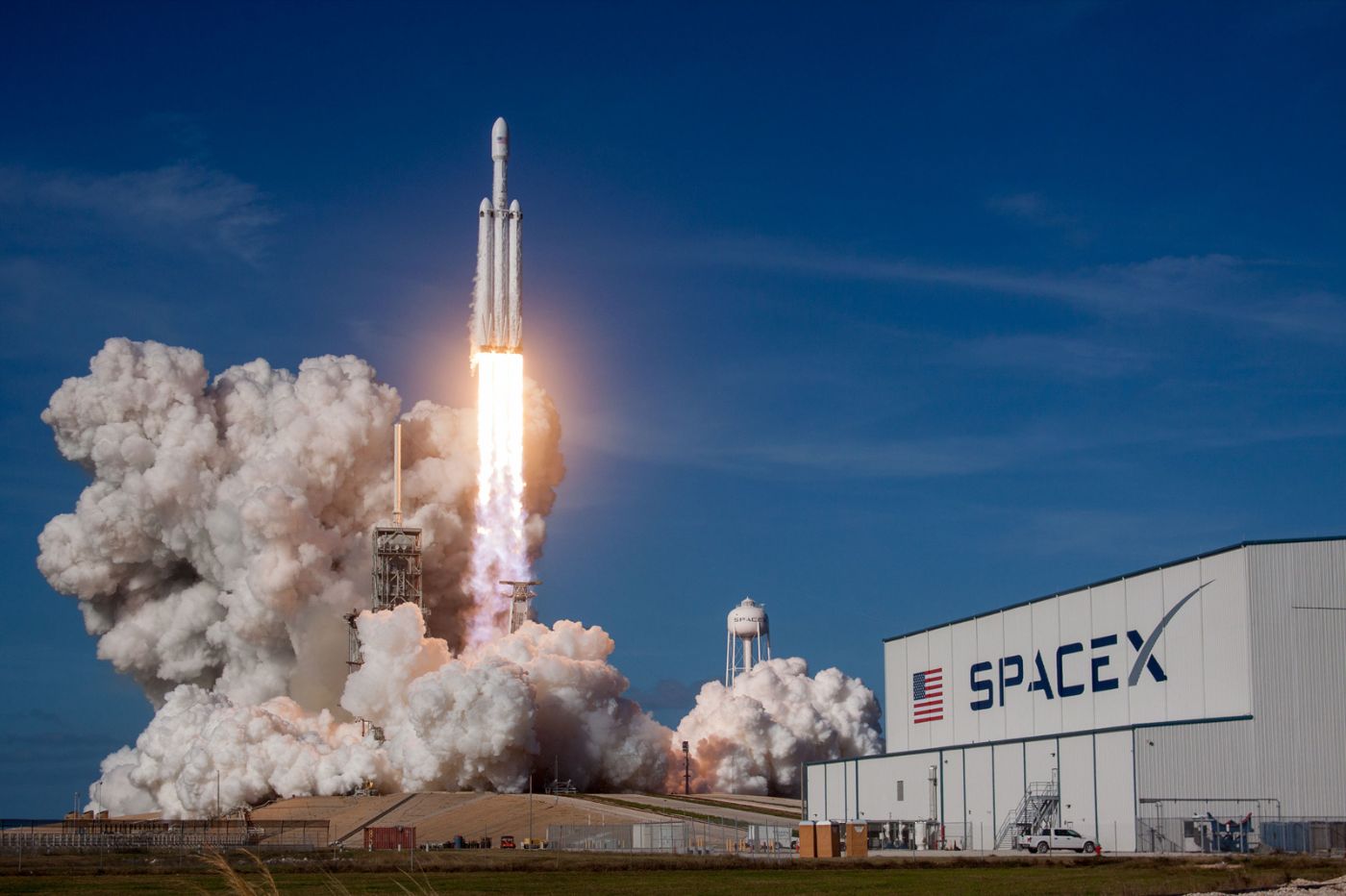
\ For example, the Raptor engines currently powering Starship are extraordinary and revolutionary; showcasing the company as a platform that can improve and iterate systems faster than any other traditional spacetech companies.
==But here’s an even bigger question; what do we really mean by “colonizing Mars”?==
If it’s a case of a couple dozens of immensely trained astronauts living in pressurized habitats and who are entirely dependent on supplies from earth, then it’s probably feasible within Elon’s lifetime. As of the writing of this, NASA and SpaceX are speaking of crewed Mars missions by the 2030s.
Nevertheless, if the concept is about a self-sustaining city of tens of thousands of people; which is Elon’s actual vision, then that’s a different ideology entirely. ==While the engineering aspects of it maybe solvable, the biological, psychological, and social challenges can’t be undermined.==
It’s like essentially asking whether we can build an entirely new form of human society, from scratch, while also sustaining the industrial needs necessary to support this advanced technology.
==*I’d say it’s too much, too soon. *==
While it may be optimistic to envision a small permanent settlement, building a whole entire and functioning society is almost impossible. One of Musk’s strength isn’t necessarily his ability to predict accurate timelines, he has always been positive on those. It’s his impressive ability to build impossible things to actual realities.
And even if he doesn’t fulfill the Mars colonization vision in his lifetime, he’s guaranteed to keep on pushing the ideology to its fullest potential.
Something about his resilience seen right from his days at PayPal.
\
Terraforming: Is it “really” possible?
I find Terraforming to represent one of the most audacious intersection of technology and hubris in human history.
==The whole concept that we could willfully change an entire planet’s (Mars) atmospheric and surface conditions to make it livable for Earth life is both fascinating and complex to imagine; if at all.==
On a technical perspective, the processes and strategies involved can be understood. For example, Mars terraforming proposals revolve on raising global temperatures and thickening the atmosphere; likely by discharging greenhouses gases from the polar ice caps, presenting engineered microorganisms and even channeling comets to provide water and atmospheric elements. This is not built on fantasy concepts; these are real engineering challenges.
However, the timelines involved are unrealistic. Even the most optimistic terraforming events speak in terms of centuries and millennia. Essentially, we’re talking of projects that would impact multiple human generations.
And herein lies the question…
==What gives us the right to make decisions that will intrinsically interfere with the environment of humans who won’t have been born for another 500 years?==
There’s also the aspect of whether terraforming is even necessary or even desirable for that matter. If anything, advanced life support systems and enclosed living environments are literally more practical than trying to rebuild a whole new world.
Why spend years terraforming Mars when we as a species could create rotating space habitats with perfectly controlled Earth-like conditions and in a fraction of the time?
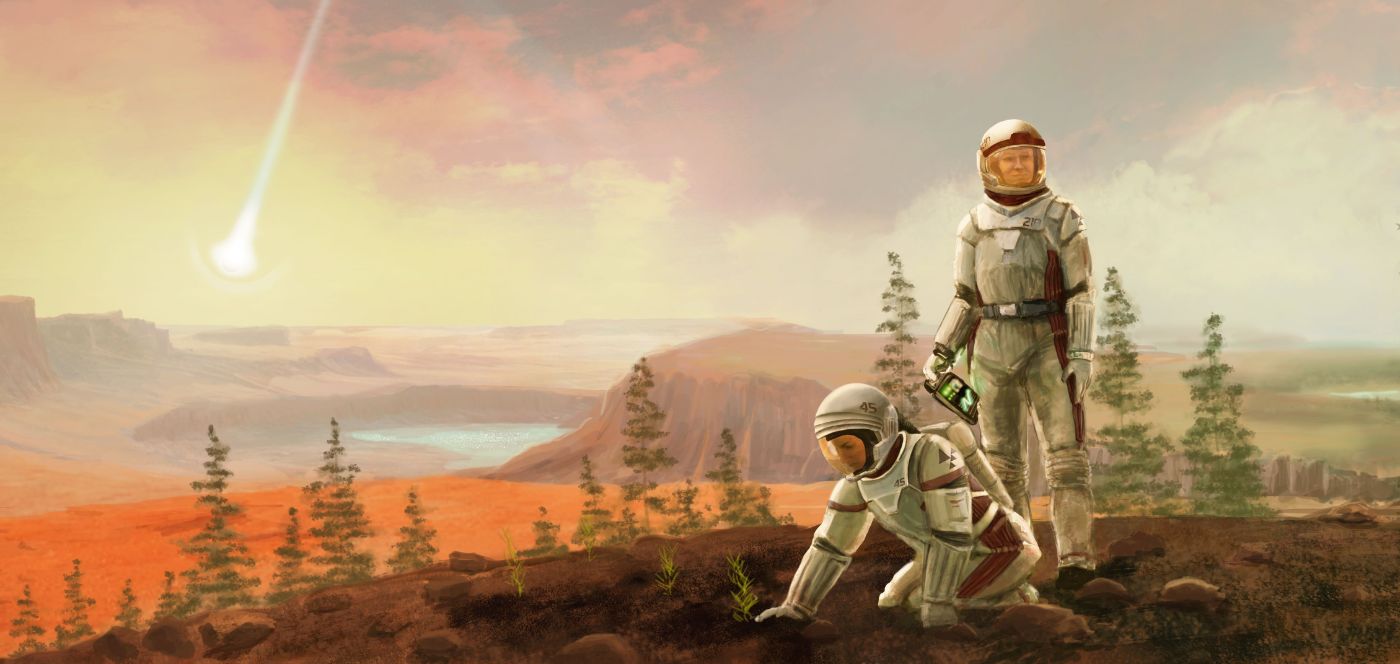
At the bottom-line of it all, I find the real value of terraforming research is not in its ultimate possibility but in what it teaches us about environmental and planetary systems.
These same technologies that come handy to warm Mars could play a part in addressing climate change on earth. Current research on closed-loop ecological systems for space colonization already reports sustainable agriculture and urban planning projects.
As of now, terraforming still falls under science-fiction; not really because the science is not feasible, but the scale and timelines required make it quite impractical coming from our current technological and social capacities.
But it remains a fact that, ==we’re likely to adapt ourselves to harsh environments via genetic engineering or even advanced life support systems than to rebuild an entire planet to suit our species.==
\
A “Space-Based” Internet
The Space technology and internet decentralization relationship makes one of the most intriguing developments in modern technology. On the first outlook, it appears counterintuitive; how can launching thousands of satellites result to a more decentralized internet? Aren’t we creating more blockage in orbit?
However, the answer lies in typically understanding exactly what we mean by ==“decentralization”==.
You see, traditional internet infrastructure depend on massive ground-based networks such as undersea cables, terrestrial data centers and fiber optic networks. And while these systems are efficient enough, they’re still geographically centered and vulnerable from a political standpoint.
==One strategic cut to undersea cables or any government pressure on certain ISPs can randomly isolate entire regions.==
Satellite constellations presents a new dynamic by building alternative pathways harder to disrupt and control.
When internet connection comes from overhead rather than terrestrial-based infrastructure, it becomes increasingly harder for a single entity to disrupt or cut you off.
And this factor has profound implications in relation to internet freedom and accessibility; and particularly in regions with restrictive governorship or inadequate terrestrial infrastructure.
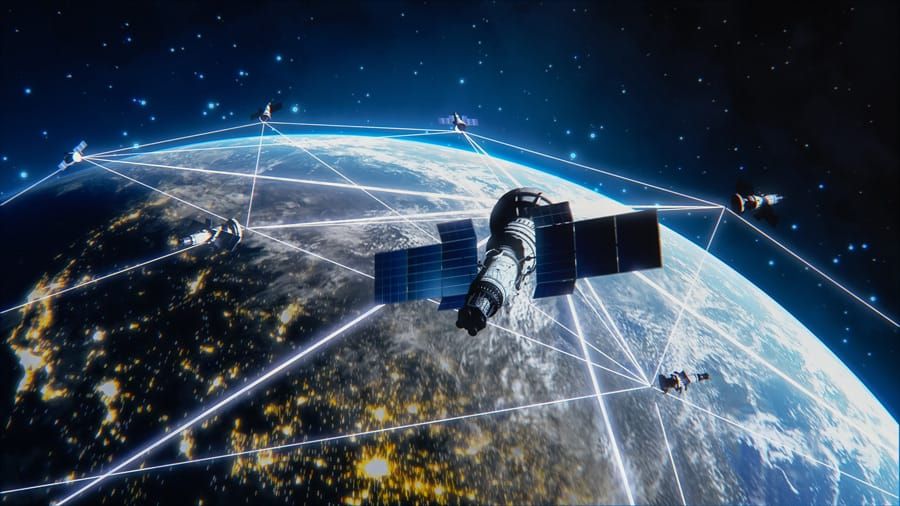
The real and impactful internet revolution might only come from mesh networking capabilities. Future satellite constellations could potentially re-direct traffic directly in between satellites, building paths that generally bypass trad-internet infrastructure entirely.
\ 
\ With this concept:
You can imagine sending online texts/messages from rural Africa to rural Asia without ever needing a single govt-controlled network mode. Data sent would be transferred from ground station to satellite, then to satellite and finally to ground station; fully independent of trad internet routing.
Additionally, there are blockchain developments and computing technologies leveraging space-based infrastructure. Satellites act as neutral nodes in distributed networks delivering necessary computing power and data storage not subjected to any nation’s laws or regulations. ==This freedom enables truly global, censorship-resistant internet platforms for everything between social channels to financial services.==
Nevertheless, the technical challenges still remain substantial; satellite internet comes with high latency than “trad” terrestrial networks. Moreover, the economics of sustaining orbital infrastructure are quite complex.
All in all, there’s tremendous progress in both areas. New satellite designs are dropping latency down to levels similar to terrestrial networks, while reusable rockets are drastically reducing launch costs.
\
Conclusion
It’s truly fascinating how space technology is transitioning the world as we know it.
==GPS was once military technology, now it guides us to shopping malls. Weather satellites were once marvels of engineering, but now forms part of the technology on how we know whether to bring extra clothing in case of weather changes.==
And this pattern only means one essential thing; that spacetech in the coming decades will remain almost unnoticeable.
It will quietly operate behind a video call with a friend ensuring the call never drops, ensure fast transactions on the fin-tech app on your phone or provide clean energy on space-based solar power system sitting in your neighborhood grid.
Essentially, these technologies not only affect our lives, they alter the human experience on earth. They’re fundamentally building a world where location continues to matter less, where access to information and opportunity is equally dispensed, and where backup systems exist beyond any single point of failure.
==The future of space technology exceeds the concept of space entirely. It revolves around creating a connected, free and equitable world here on earth.==
A future that’s well worth it…
You May Also Like

Fed forecasts only one rate cut in 2026, a more conservative outlook than expected
