TLDR T. Rowe Price has filed an S-1 with the SEC for the first U.S. Spot Shiba Inu ETF. The $1.7 trillion investment giant includes SHIB alongside Bitcoin, Ethereum, and Solana. The fund will be structured as an actively managed ETF with flexible portfolio allocation.s The filing aims to outperform the FTSE Crypto U.S. Listed [...] The post T. Rowe Price Shocks Market With $1.7T Shiba Inu ETF Filing appeared first on CoinCentral.TLDR T. Rowe Price has filed an S-1 with the SEC for the first U.S. Spot Shiba Inu ETF. The $1.7 trillion investment giant includes SHIB alongside Bitcoin, Ethereum, and Solana. The fund will be structured as an actively managed ETF with flexible portfolio allocation.s The filing aims to outperform the FTSE Crypto U.S. Listed [...] The post T. Rowe Price Shocks Market With $1.7T Shiba Inu ETF Filing appeared first on CoinCentral.

T. Rowe Price Shocks Market With $1.7T Shiba Inu ETF Filing

2025/10/31 08:07
3 min read

TLDR

  • T. Rowe Price has filed an S-1 with the SEC for the first U.S. Spot Shiba Inu ETF.
  • The $1.7 trillion investment giant includes SHIB alongside Bitcoin, Ethereum, and Solana.
  • The fund will be structured as an actively managed ETF with flexible portfolio allocation.s
  • The filing aims to outperform the FTSE Crypto U.S. Listed Index tracking top 10 cryptocurrencies.
  • Ecosystem lead LucieSHIB calls this “big news for SHIB” and institutional validation.

Rowe Price has submitted an S-1 filing to the SEC for a Spot Shiba Inu ETF. The $1.7 trillion investment giant seeks approval for this first-of-its-kind product in the United States. This filing marks a significant step for SHIB’s entry into institutional investment portfolios.

The proposed fund will track multiple digital assets, including Bitcoin, Ethereum, Solana, and Shiba Inu. T. Rowe Price becomes one of the first prominent asset managers to include SHIB in an ETF. The Shiba Inu ETF will operate as an actively managed fund, enabling portfolio adjustments in response to market conditions.

T. Rowe Price Shiba Inu ETF Filing Details

The SEC filing reveals that the fund aims to outperform the FTSE Crypto U.S. Listed Index. This index tracks the ten largest cryptocurrencies by market capitalization. The Shiba Inu ETF will provide investors with exposure to multiple top-tier digital assets through a single vehicle.

Portfolio managers will have the flexibility to adjust allocations within the fund as needed. The filing includes references to other ecosystem components, such as LEASH, BONE, and TREAT tokens. Projects such as Shibarium and ShibaSwap also appear in the documentation.

The Shiba Inu ETF structure allows T. Rowe Price to respond quickly to changing market dynamics. This active management approach differs from passive index-tracking funds. Investors will gain access to professional cryptocurrency portfolio management through the Shiba Inu ETF.

SHIB Community and Institutional Recognition

Ecosystem lead LucieSHIB described the filing as “big news for SHIB” across community channels. She emphasized that Shiba Inu now stands alongside Bitcoin, Ethereum, and Solana in SEC documentation.

The Shiba Inu ETF filing validates the meme coin’s evolution into the realm of institutional investment. Prominent asset managers now recognize SHIB as a viable investment option for regulated products. This recognition could attract new institutional capital into the Shiba Inu ecosystem.

Analysts suggest the Shiba Inu ETF approval could drive increased demand from institutional investors. Traditional finance players are expanding their cryptocurrency offerings beyond Bitcoin and Ethereum. The filing demonstrates growing appetite for alternative digital assets in mainstream portfolios.

Crypto ETF Market Expansion

Several crypto-based funds have launched recently despite the ongoing U.S. government shutdown. Bitwise Solana ETF (BSOL) and Grayscale’s GSOL both went live in recent weeks. The Shiba Inu ETF filing follows this accelerating trend of digital asset products.

Current SEC guidance allows certain ETF filings to become effective automatically after 20 days. This procedural process gives early issuers a competitive advantage in the market. Bloomberg Intelligence analysts noted that this could accelerate the rollout of new crypto funds.

Hunter Horsley, CEO of Bitwise Asset Management, shared optimistic views on regulatory developments.

Their intentions focus on opening up the asset class for broader participation.

Bitcoin and Ethereum ETFs currently oversee more than $170 billion in combined assets. Asset managers are racing to expand exposure to other high-demand digital currencies. The Shiba Inu ETF represents the next wave of specialized cryptocurrency investment products.

The post T. Rowe Price Shocks Market With $1.7T Shiba Inu ETF Filing appeared first on CoinCentral.

Market Opportunity
Threshold Logo
Threshold Price(T)
$0.006847
$0.006847$0.006847
+3.08%
USD
Threshold (T) Live Price Chart
Disclaimer: The articles reposted on this site are sourced from public platforms and are provided for informational purposes only. They do not necessarily reflect the views of MEXC. All rights remain with the original authors. If you believe any content infringes on third-party rights, please contact crypto.news@mexc.com for removal. MEXC makes no guarantees regarding the accuracy, completeness, or timeliness of the content and is not responsible for any actions taken based on the information provided. The content does not constitute financial, legal, or other professional advice, nor should it be considered a recommendation or endorsement by MEXC.

You May Also Like

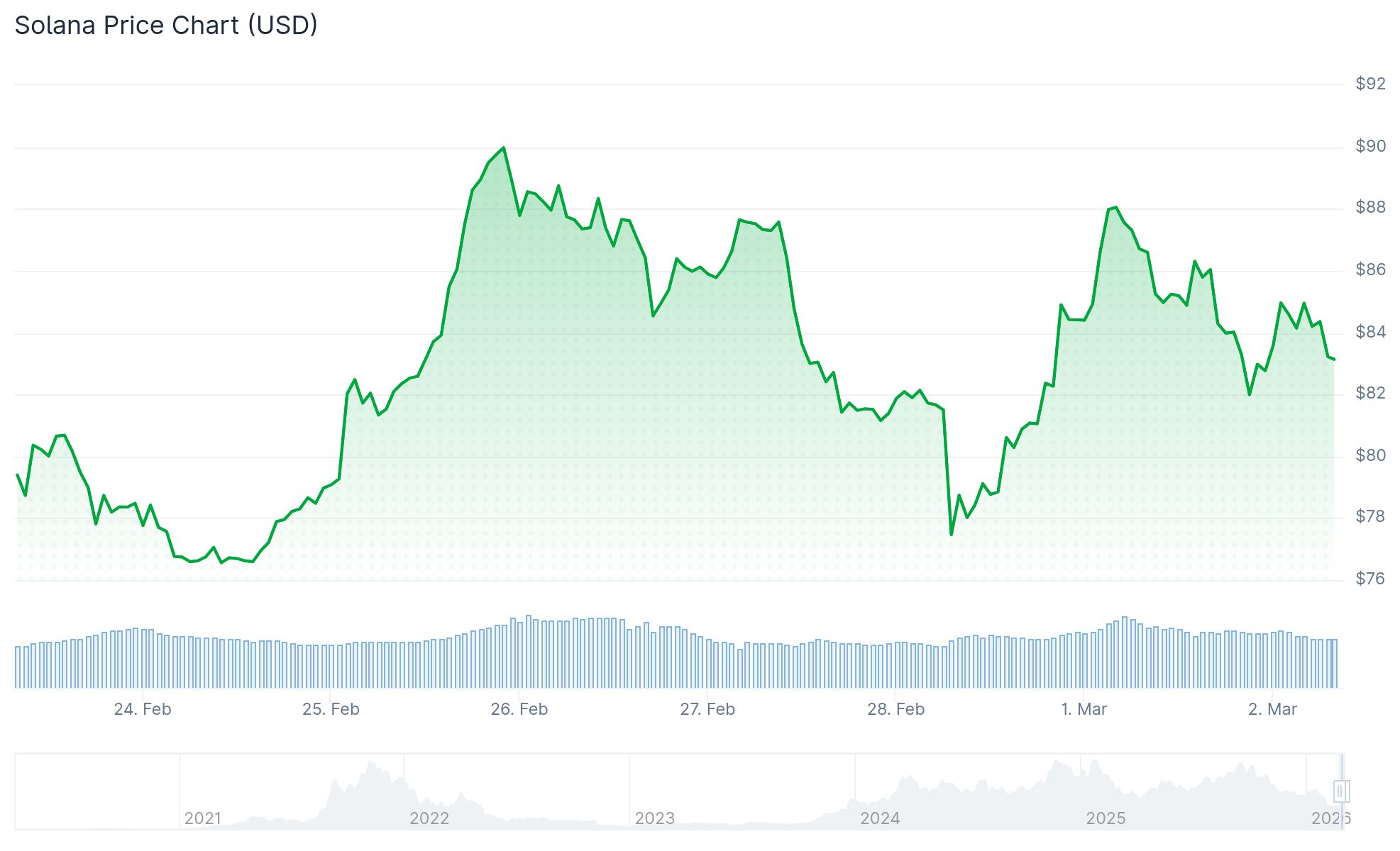
Solana (SOL) Price: Is a Breakout Coming After Four Weeks Stuck in the Same Range?

Solana (SOL) Price: Is a Breakout Coming After Four Weeks Stuck in the Same Range?

TLDR Solana (SOL) has traded in a tight $77–$88 range for nearly four weeks with no clear trend direction US spot Solana ETFs recorded over $44 million in weekly
Share
Coincentral2026/03/02 15:55
South Africa Tax Collector Deploys New Tech to Track Crypto and Offshore Assets

South Africa Tax Collector Deploys New Tech to Track Crypto and Offshore Assets

The post South Africa Tax Collector Deploys New Tech to Track Crypto and Offshore Assets appeared on BitcoinEthereumNews.com. South African crypto-asset service
Share
BitcoinEthereumNews2026/03/02 16:33
Crypto Futures Liquidation: Unpacking the Stunning $105 Million Market Shock

Crypto Futures Liquidation: Unpacking the Stunning $105 Million Market Shock

BitcoinWorld Crypto Futures Liquidation: Unpacking the Stunning $105 Million Market Shock The cryptocurrency market just experienced a sudden jolt, with a staggering $105 million worth of futures liquidated in a single hour. This dramatic event, part of a larger $311 million wipeout over the past 24 hours, has sent ripples across major exchanges. For many traders, this recent wave of crypto futures liquidation serves as a stark reminder of the inherent volatility and risks associated with leveraged trading in digital assets. What Exactly is Crypto Futures Liquidation? Understanding what happened requires a quick look at futures trading. A crypto futures contract is essentially an agreement to buy or sell a cryptocurrency at a predetermined price on a specified future date. Traders use these contracts to speculate on future price movements without owning the underlying asset. Leverage Amplifies Gains and Losses: Many traders utilize leverage, which means they borrow funds to increase their trading position beyond their initial capital. While leverage can magnify profits, it also significantly amplifies potential losses. Margin Calls and Forced Selling: When the market moves against a leveraged position, a trader’s margin (the collateral they put up) might fall below a required threshold. This triggers a “margin call,” where they need to add more funds. If they fail to do so, the exchange automatically closes their position to prevent further losses – this forced closure is known as crypto futures liquidation. The Recent $105 Million Crypto Futures Liquidation: What Triggered It? The recent surge in crypto futures liquidation, particularly the rapid $105 million in one hour, indicates a sharp and unexpected price movement. While the exact catalyst can be complex, such rapid liquidations often occur during: Sudden Price Swings: A rapid upward or downward movement in a major cryptocurrency’s price can quickly push many leveraged positions into unprofitable territory, leading to widespread liquidations. Market-Wide Sentiment Shifts: Unexpected news, regulatory announcements, or macroeconomic data can trigger a sudden shift in market sentiment, causing a cascade of selling or buying pressure. Over the past 24 hours, the total figure climbed to $311 million, highlighting a period of sustained volatility that caught many leveraged traders off guard. Why Does Leverage Play a Crucial Role in Futures Liquidation? Leverage is a double-edged sword. It allows traders to control large positions with relatively small amounts of capital. However, even a minor price fluctuation can have a significant impact on highly leveraged positions. When the market moves contrary to a trader’s bet, their equity can diminish rapidly. This is where the automatic liquidation mechanism kicks in. Exchanges implement this system to protect themselves and other traders from excessive losses. It ensures that a trader’s losses do not exceed their collateral, but it also means positions can be closed unexpectedly and quickly, contributing to the dramatic numbers seen in the recent crypto futures liquidation event. Navigating the Volatility: How Can Traders Prepare for Futures Liquidation Events? For those involved in or considering crypto futures trading, understanding and managing risk is paramount. The recent crypto futures liquidation serves as a powerful lesson. Here are some actionable insights: Use Lower Leverage: While tempting, high leverage dramatically increases risk. Opting for lower leverage significantly reduces the chance of premature liquidation. Implement Stop-Loss Orders: These orders automatically close a position if the price reaches a predetermined level, limiting potential losses before a full liquidation occurs. Manage Position Sizing: Never allocate too much of your portfolio to a single trade, especially a leveraged one. Diversification and responsible position sizing are key. Stay Informed: Keep abreast of market news, technical analysis, and global economic factors that could influence cryptocurrency prices. Beyond the Headlines: What Does This Mean for the Broader Crypto Market? While large-scale crypto futures liquidation events can be unsettling, they are a regular, albeit dramatic, feature of highly leveraged markets. Often, such events can “cleanse” the market of over-leveraged positions, potentially paving the way for more stable price action in the short term. However, they also underscore the need for caution and robust risk management practices, especially for new traders entering the volatile world of crypto futures. The recent $105 million liquidation is a stark reminder that while opportunities abound in crypto, so do significant risks. It emphasizes the importance of understanding the tools you’re using, especially leverage, and trading responsibly to protect your capital. Stay informed, manage your risks, and approach the market with a clear strategy. Frequently Asked Questions About Crypto Futures Liquidation Q1: What is the primary cause of crypto futures liquidation? A1: The primary cause is typically a sudden and significant price movement in the underlying cryptocurrency that goes against a trader’s leveraged position, causing their margin to fall below the exchange’s required maintenance level. Q2: How can traders avoid liquidation in futures trading? A2: Traders can reduce their risk of liquidation by using lower leverage, setting stop-loss orders to automatically close positions at a certain loss level, managing their position sizes responsibly, and continuously monitoring market conditions. Q3: Does liquidation only happen with leveraged positions? A3: Yes, liquidation specifically refers to the forced closure of a leveraged position when the trader’s collateral (margin) is insufficient to cover potential losses. Spot trading, where you own the asset outright, does not involve liquidation in the same manner. Q4: Is a crypto futures liquidation event bad for the entire market? A4: While immediate liquidations can cause further price volatility and negatively impact sentiment, some analysts view them as a “cleansing” event that removes excessive leverage from the market, potentially leading to a healthier, more stable environment in the long run. However, it certainly signifies a period of heightened risk. Q5: What is the difference between a margin call and liquidation? A5: A margin call is a notification from the exchange that your margin level is too low and you need to deposit more funds to maintain your position. Liquidation is what happens if you fail to meet that margin call; the exchange automatically closes your position to prevent further losses. Understanding market dynamics like crypto futures liquidation is crucial for navigating the cryptocurrency space. If you found this article insightful, please share it with your network on social media to help others better understand these significant market events and trade more responsibly. To learn more about the latest crypto market trends, explore our article on key developments shaping Bitcoin price action. This post Crypto Futures Liquidation: Unpacking the Stunning $105 Million Market Shock first appeared on BitcoinWorld.
Share
Coinstats2025/09/19 23:40