The post US SEC’s crypto ETF rules review delays 21Shares Spot SUI approval appeared on BitcoinEthereumNews.com. The US Securities and Exchange Commission (SEC) has opted to delay its verdict on the 21Shares Spot SUI ETF. Such delays often indicate that the regulator wants to examine a proposal in greater detail before issuing a ruling. On behalf of the asset manager, Nasdaq had lodged a Form 19b-4 with the SEC on May 23, requesting permission to list and trade the fund’s shares. Since then, the regulator has extended the review period on July 22 and formally launched proceedings to determine if the SUI ETF meets the requirements for approval. It even invited the public to share written feedback, including opinions, data, and concerns on the proposal. The US SEC has to decide on the 21Shares SUI ETF by December 21 Nasdaq had filed for the SUI ETF shortly after a major attack on Cetus that drained over $223 million and disrupted the Sui ecosystem. Nonetheless, the exchange’s team acted quickly, locking down $160 million in stolen funds and offering a $6 million reward for the recovery of the rest. The company noted at that time, “With the funds secured, Cetus has officially entered the next phase of the recovery process. Our team is fully mobilized and working around the clock to execute the roadmap we shared earlier — from contract upgrades and liquidity restoration to preparations for relaunch.” After that, the Sui network confirmed the hack was due to a flaw in Cetus’s math library, not its own infrastructure or programming language. It also unveiled a $10 million fund to bolster ecosystem security. The SEC’s decision to delay the approval of the SUI spot ETF, according to some analysts, could dampen short-term confidence, as it delays the institutional participation and market expansion opportunities tied to the ETF.  Nevertheless, the commission must make a final decision on the… The post US SEC’s crypto ETF rules review delays 21Shares Spot SUI approval appeared on BitcoinEthereumNews.com. The US Securities and Exchange Commission (SEC) has opted to delay its verdict on the 21Shares Spot SUI ETF. Such delays often indicate that the regulator wants to examine a proposal in greater detail before issuing a ruling. On behalf of the asset manager, Nasdaq had lodged a Form 19b-4 with the SEC on May 23, requesting permission to list and trade the fund’s shares. Since then, the regulator has extended the review period on July 22 and formally launched proceedings to determine if the SUI ETF meets the requirements for approval. It even invited the public to share written feedback, including opinions, data, and concerns on the proposal. The US SEC has to decide on the 21Shares SUI ETF by December 21 Nasdaq had filed for the SUI ETF shortly after a major attack on Cetus that drained over $223 million and disrupted the Sui ecosystem. Nonetheless, the exchange’s team acted quickly, locking down $160 million in stolen funds and offering a $6 million reward for the recovery of the rest. The company noted at that time, “With the funds secured, Cetus has officially entered the next phase of the recovery process. Our team is fully mobilized and working around the clock to execute the roadmap we shared earlier — from contract upgrades and liquidity restoration to preparations for relaunch.” After that, the Sui network confirmed the hack was due to a flaw in Cetus’s math library, not its own infrastructure or programming language. It also unveiled a $10 million fund to bolster ecosystem security. The SEC’s decision to delay the approval of the SUI spot ETF, according to some analysts, could dampen short-term confidence, as it delays the institutional participation and market expansion opportunities tied to the ETF.  Nevertheless, the commission must make a final decision on the…

US SEC’s crypto ETF rules review delays 21Shares Spot SUI approval

The US Securities and Exchange Commission (SEC) has opted to delay its verdict on the 21Shares Spot SUI ETF. Such delays often indicate that the regulator wants to examine a proposal in greater detail before issuing a ruling.

On behalf of the asset manager, Nasdaq had lodged a Form 19b-4 with the SEC on May 23, requesting permission to list and trade the fund’s shares.

Since then, the regulator has extended the review period on July 22 and formally launched proceedings to determine if the SUI ETF meets the requirements for approval. It even invited the public to share written feedback, including opinions, data, and concerns on the proposal.

The US SEC has to decide on the 21Shares SUI ETF by December 21

Nasdaq had filed for the SUI ETF shortly after a major attack on Cetus that drained over $223 million and disrupted the Sui ecosystem. Nonetheless, the exchange’s team acted quickly, locking down $160 million in stolen funds and offering a $6 million reward for the recovery of the rest.

The company noted at that time, “With the funds secured, Cetus has officially entered the next phase of the recovery process. Our team is fully mobilized and working around the clock to execute the roadmap we shared earlier — from contract upgrades and liquidity restoration to preparations for relaunch.”

After that, the Sui network confirmed the hack was due to a flaw in Cetus’s math library, not its own infrastructure or programming language. It also unveiled a $10 million fund to bolster ecosystem security.

The SEC’s decision to delay the approval of the SUI spot ETF, according to some analysts, could dampen short-term confidence, as it delays the institutional participation and market expansion opportunities tied to the ETF. 

Nevertheless, the commission must make a final decision on the 21Shares SUI ETF by December 21, but could greenlight it as early as October, potentially in tandem with other altcoin ETFs.

So far, 21Shares and Canary Capital are the only asset managers to seek approval for a Sui ETF, with CBOE filing Canary’s application last month.

Analysts believe SEC delays are part of its strategy

The SEC, in August, also postponed its verdict on Grayscale’s request to incorporate staking into its ETH fund, as well as on 21Shares’ spot Ethereum staking proposal and Grayscale’s spot Dogecoin ETF filing. Additionally, it chose to extend its review period for Bitcoin and Ethereum ETFs proposed by Truth Social, the social platform owned by Trump Media & Technology Group.

Nonetheless, Nate Geraci of NovaDius Wealth previously shared that he believes an SEC decision on ETF staking could be imminent, after the commission stated that specific liquid staking arrangements do not involve securities.

Analysts Eric Balchunas and James Seyffart of Bloomberg also suggested that the SEC’s recent delays are part of a deliberate strategy to develop a unified approval framework for digital-asset ETFs. Seyffart explained that this framework would set out common listing standards, specifying which assets are eligible for inclusion and the approval criteria, eliminating the need for a separate order for each filing.

Meanwhile, the three major exchanges, Nasdaq, NYSE, and CBOE BZX, remain in discussions over standardized rules for spot crypto ETF listings with the SEC. As part of this effort, they filed amendments recently to strike “excluded commodities” from the definition of “commodity” in their listing standards.

KEY Difference Wire helps crypto brands break through and dominate headlines fast

Source: https://www.cryptopolitan.com/us-sec-review-delays-21shares-sui-etf/
Market Opportunity
SUI Logo
SUI Price(SUI)
$0,9254
$0,9254$0,9254
+0,02%
USD
SUI (SUI) Live Price Chart
Disclaimer: The articles reposted on this site are sourced from public platforms and are provided for informational purposes only. They do not necessarily reflect the views of MEXC. All rights remain with the original authors. If you believe any content infringes on third-party rights, please contact service@support.mexc.com for removal. MEXC makes no guarantees regarding the accuracy, completeness, or timeliness of the content and is not responsible for any actions taken based on the information provided. The content does not constitute financial, legal, or other professional advice, nor should it be considered a recommendation or endorsement by MEXC.

You May Also Like

Pippin (PIPPIN) Price Prediction 2026–2030: Can PIPPIN Hit $0.70 Soon?

Pippin (PIPPIN) Price Prediction 2026–2030: Can PIPPIN Hit $0.70 Soon?

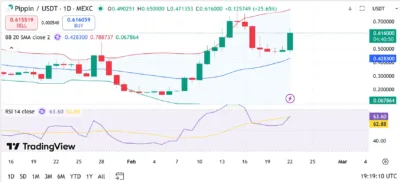
PIPPIN has surged sharply on the daily timeframe, printing a powerful bullish candle with over 25% gains. RSI is holding above 60, signaling strengthening momentum
Share
Coinstats2026/02/23 04:29
Will Cardano Reach $10 by 2030? Analysts Break Down ADA’s Growth Cycles

Will Cardano Reach $10 by 2030? Analysts Break Down ADA’s Growth Cycles

The post Will Cardano Reach $10 by 2030? Analysts Break Down ADA’s Growth Cycles appeared first on Coinpedia Fintech News Cardano (ADA) is trading at $0.9024 with a market cap of $32.91 billion. Experts say ADA has the potential to climb much higher, with some placing long-term targets as high as $10. The token continues to benefit from stronger visibility, rising liquidity, and increasing inflows from both institutional and retail markets. Can Cardano Hit $10 …
Share
CoinPedia2025/09/18 17:19
Crypto whale loses $6M to sneaky phishing scheme targeting staked Ethereum

Crypto whale loses $6M to sneaky phishing scheme targeting staked Ethereum

The post Crypto whale loses $6M to sneaky phishing scheme targeting staked Ethereum appeared on BitcoinEthereumNews.com. A crypto whale lost more than $6 million in staked Ethereum (stETH) and Aave-wrapped Bitcoin (aEthWBTC) after approving malicious signatures in a phishing scheme on Sept. 18, according to blockchain security firm Scam Sniffer. According to the firm, the attackers disguised their move as a routine wallet confirmation through “Permit” signatures, which tricked the victim into authorizing fund transfers without triggering obvious red flags. Yu Xian, founder of blockchain security company SlowMist, noted that the victim did not recognize the danger because the transaction required no gas fees. He wrote: “From the victim’s perspective, he just clicked a few times to confirm the wallet’s pop-up signature requests, didn’t spend a single penny of gas, and $6.28 million was gone.” How Permit exploits work Permit approvals were originally designed to simplify token transfers. Instead of submitting an on-chain approval and paying fees, a user can sign an off-chain message authorizing a spender. That efficiency, however, has created a new attack surface for malicious players. Once a user signs such a permit, attackers can combine two functions—Permit and TransferFrom—to drain assets directly. Because the authorization takes place off-chain, wallet dashboards show no unusual activity until the funds move. As a result, the assets are gone when the approval executes on-chain, and tokens are redirected to the attacker’s wallet. This loophole has made permit exploits increasingly attractive for malicious actors, who can siphon millions without needing complex hacks or high-cost gas wars. Phishing losses The latest theft highlights a wider trend of escalating phishing campaigns. Scam Sniffer reported that in August alone, attackers stole $12.17 million from more than 15,200 victims. That figure represented a 72% jump in losses compared with July. According to the firm, the most significant share of August’s damages came from three large accounts that accounted for nearly half…
Share
BitcoinEthereumNews2025/09/19 02:31