The article explores how governments justify invasive crypto regulations under the “harm principle,” claiming to protect users from bad actors. Using the Coinbase hack and U.S. KYC mandates as examples, the author argues that excessive data collection makes users more vulnerable, not safer. Drawing from personal experience at Paxful and NoOnes, he shows how regulatory overreach is eroding the very privacy and trust that crypto was built to ensure — and forcing entrepreneurs to choose between compliance and their customers’ freedom.The article explores how governments justify invasive crypto regulations under the “harm principle,” claiming to protect users from bad actors. Using the Coinbase hack and U.S. KYC mandates as examples, the author argues that excessive data collection makes users more vulnerable, not safer. Drawing from personal experience at Paxful and NoOnes, he shows how regulatory overreach is eroding the very privacy and trust that crypto was built to ensure — and forcing entrepreneurs to choose between compliance and their customers’ freedom.

What the Coinbase Hack Reveals About Crypto Regulation and the Harm Principle

The harm principle has been cited for hundreds of years to justify laws and big government. The idea is that your freedom ends where another’s begins. In other words, your freedom to drive your Lamborghini at 300 mph in a school zone is overshadowed by the freedom of a child to safely cross the road after school. That makes perfect sense. In crypto, governments — particularly in the U.S. — have continually asked for more and more user data, and it’s gone too far. The Coinbase hack is just another example of how vulnerable we are when we give away all of our data.

Governments say they regulate crypto to protect us from bad actors — scammers, hackers, money launderers, and drug traffickers. They want to protect us from harm. But they are really asking crypto companies to do the job the government is paid to do. We know it’s easier for the cops to find criminals if they have their fingerprints on file or a sample of their DNA. Yet, we are uncomfortable when some government comes up with a plan to register the population’s DNA. Why? Because we know mistakes are made, we know there are bad people out there, and we instinctively want to protect ourselves. It’s the reason you locked your front door when you went to bed last night. Why take a risk?

Towards the end of my time as Paxful CEO, I realized U.S. regulators were going down a road that would make it impossible for me to do business with the people for whom I built the company — the people of the Global South. Our customers’ freedom ended where the U.S. government’s started — and that KYC line was drawn so far from our users’ ability to provide the required data that it forced me to make the biggest decision of my business life. I resigned, handed back my shares, and became the CEO of NoOnes, based in the Global South. I had to move my business and my life to serve my customers.

“The flip side of the KYC line that gives regulators our data is that it takes away our privacy.”

The flip side of the KYC line that gives regulators our data is that it takes away our privacy — and let’s be clear about what privacy means. When you lose your privacy, you increase your vulnerability, and the more data you give away, the more vulnerable you become. When your curtains are left open, people can see you; when your door is unlocked, people can walk into your house; and when you give up your personal financial data, bad people can more easily steal your money — or worse. Think about the crypto entrepreneurs targeted in France recently because their personal data was accessed. The crypto companies that fell into line with the U.S. and did deals to stay in business to protect their money now have to ask themselves a question: Have the regulators gone too far?

Crypto was supposed to be trustless, but many users around the world now realize the technology that makes crypto trustless isn’t worth a damn if it’s not used as it was intended. There is no point locking your front door tonight if you leave your keys on the front door step. The security and safety of people’s money is critical, and I have always made it my number one priority in each of my start-ups — but I won’t take more user data than I need to keep them safe. You won’t last long if your customers don’t trust you, but you also won’t last if you trust the regulators more than you trust your users.

There comes a point where the level of regulatory control stops your business from being viable. The irony is that the same regulations supposedly designed to protect people are now putting them at risk.

Market Opportunity
Bad Idea AI Logo
Bad Idea AI Price(BAD)
$0.00000000137
$0.00000000137$0.00000000137
0.00%
USD
Bad Idea AI (BAD) Live Price Chart
Disclaimer: The articles reposted on this site are sourced from public platforms and are provided for informational purposes only. They do not necessarily reflect the views of MEXC. All rights remain with the original authors. If you believe any content infringes on third-party rights, please contact service@support.mexc.com for removal. MEXC makes no guarantees regarding the accuracy, completeness, or timeliness of the content and is not responsible for any actions taken based on the information provided. The content does not constitute financial, legal, or other professional advice, nor should it be considered a recommendation or endorsement by MEXC.

You May Also Like

Satoshi-Era Mt. Gox’s 1,000 Bitcoin Wallet Suddenly Reactivated
Satoshi-Era Mt. Gox’s 1,000 Bitcoin Wallet Suddenly Reactivated

The post Satoshi-Era Mt. Gox’s 1,000 Bitcoin Wallet Suddenly Reactivated appeared on BitcoinEthereumNews.com. X account @SaniExp, which belongs to the founder of the Timechain Index explorer, has published data showing that a dormant BTC wallet was activated after hibernating for six years. However, it was set up 13 years ago, according to the tweet — the time when Satoshi Nakamoto’s shadow was still casting itself around, so to speak. The X post states that the tweet belongs to infamous early Bitcoin exchange Mt. Gox, which suffered from a major hack in the early 2010s, and last year it began paying out compensation to clients who lost their crypto in that hack. The deadline was eventually extended to October 2025. Mt. Gox’s wallet with 1,000 BTC reactivated The above-mentioned data source shared a screenshot from the Timechain Index explorer, showing multiple transactions marked as confirmed and moving a total of 1,000 Bitcoins. This amount of crypto is valued at $116,195,100 at the time of the initiated transaction. Last year, Mt. Gox began to move the remains of its gargantuan funds to pay out compensations to its creditors. Earlier this year, it also made several massive transactions to partner exchanges to distribute funds to Mt. Gox investors. All of the compensations were promised to be paid out by Oct. 31, 2025. The aforementioned transaction is likely preparation for another payout. The exchange was hacked for several years due to multiple unnoticed security breaches, and in 2014, when the site went offline, 744,408 Bitcoins were reported stolen. Source: https://u.today/satoshi-era-mtgoxs-1000-bitcoin-wallet-suddenly-reactivated
Share
BitcoinEthereumNews2025/09/18 10:18
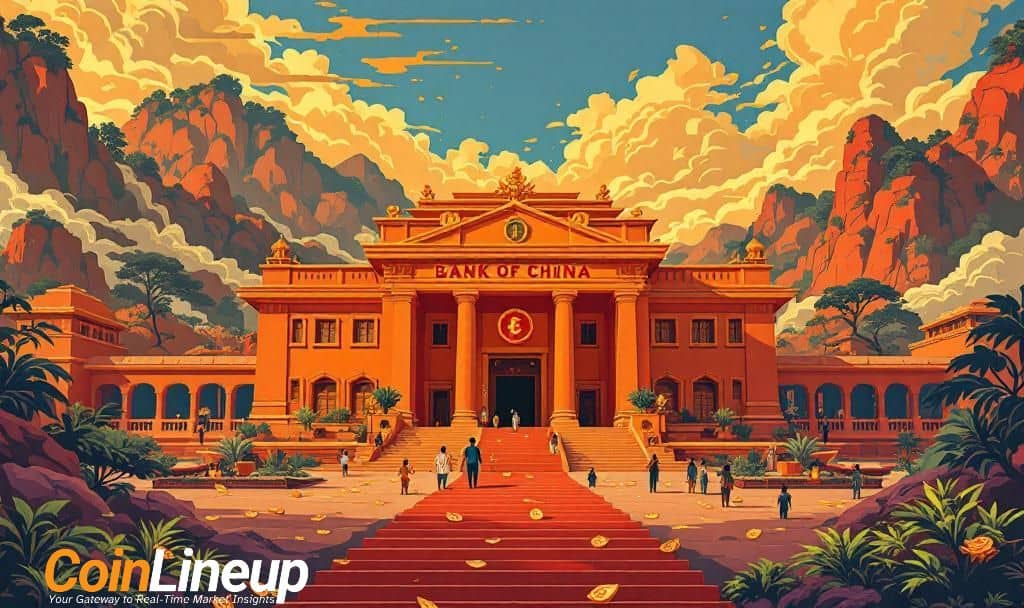
Bank of China Launches Cross-Border Digital RMB Payments in Laos

Bank of China Launches Cross-Border Digital RMB Payments in Laos

Bank of China completes first cross-border digital RMB payment in Laos, marking a key milestone in digital currency use.
Share
coinlineup2025/12/28 04:58
Crucial Fed Rate Cut: October Probability Surges to 94%

Crucial Fed Rate Cut: October Probability Surges to 94%

BitcoinWorld Crucial Fed Rate Cut: October Probability Surges to 94% The financial world is buzzing with a significant development: the probability of a Fed rate cut in October has just seen a dramatic increase. This isn’t just a minor shift; it’s a monumental change that could ripple through global markets, including the dynamic cryptocurrency space. For anyone tracking economic indicators and their impact on investments, this update from the U.S. interest rate futures market is absolutely crucial. What Just Happened? Unpacking the FOMC Statement’s Impact Following the latest Federal Open Market Committee (FOMC) statement, market sentiment has decisively shifted. Before the announcement, the U.S. interest rate futures market had priced in a 71.6% chance of an October rate cut. However, after the statement, this figure surged to an astounding 94%. This jump indicates that traders and analysts are now overwhelmingly confident that the Federal Reserve will lower interest rates next month. Such a high probability suggests a strong consensus emerging from the Fed’s latest communications and economic outlook. A Fed rate cut typically means cheaper borrowing costs for businesses and consumers, which can stimulate economic activity. But what does this really signify for investors, especially those in the digital asset realm? Why is a Fed Rate Cut So Significant for Markets? When the Federal Reserve adjusts interest rates, it sends powerful signals across the entire financial ecosystem. A rate cut generally implies a more accommodative monetary policy, often enacted to boost economic growth or combat deflationary pressures. Impact on Traditional Markets: Stocks: Lower interest rates can make borrowing cheaper for companies, potentially boosting earnings and making stocks more attractive compared to bonds. Bonds: Existing bonds with higher yields might become more valuable, but new bonds will likely offer lower returns. Dollar Strength: A rate cut can weaken the U.S. dollar, making exports cheaper and potentially benefiting multinational corporations. Potential for Cryptocurrency Markets: The cryptocurrency market, while often seen as uncorrelated, can still react significantly to macro-economic shifts. A Fed rate cut could be interpreted as: Increased Risk Appetite: With traditional investments offering lower returns, investors might seek higher-yielding or more volatile assets like cryptocurrencies. Inflation Hedge Narrative: If rate cuts are perceived as a precursor to inflation, assets like Bitcoin, often dubbed “digital gold,” could gain traction as an inflation hedge. Liquidity Influx: A more accommodative monetary environment generally means more liquidity in the financial system, some of which could flow into digital assets. Looking Ahead: What Could This Mean for Your Portfolio? While the 94% probability for a Fed rate cut in October is compelling, it’s essential to consider the nuances. Market probabilities can shift, and the Fed’s ultimate decision will depend on incoming economic data. Actionable Insights: Stay Informed: Continue to monitor economic reports, inflation data, and future Fed statements. Diversify: A diversified portfolio can help mitigate risks associated with sudden market shifts. Assess Risk Tolerance: Understand how a potential rate cut might affect your specific investments and adjust your strategy accordingly. This increased likelihood of a Fed rate cut presents both opportunities and challenges. It underscores the interconnectedness of traditional finance and the emerging digital asset space. Investors should remain vigilant and prepared for potential volatility. The financial landscape is always evolving, and the significant surge in the probability of an October Fed rate cut is a clear signal of impending change. From stimulating economic growth to potentially fueling interest in digital assets, the implications are vast. Staying informed and strategically positioned will be key as we approach this crucial decision point. The market is now almost certain of a rate cut, and understanding its potential ripple effects is paramount for every investor. Frequently Asked Questions (FAQs) Q1: What is the Federal Open Market Committee (FOMC)? A1: The FOMC is the monetary policymaking body of the Federal Reserve System. It sets the federal funds rate, which influences other interest rates and economic conditions. Q2: How does a Fed rate cut impact the U.S. dollar? A2: A rate cut typically makes the U.S. dollar less attractive to foreign investors seeking higher returns, potentially leading to a weakening of the dollar against other currencies. Q3: Why might a Fed rate cut be good for cryptocurrency? A3: Lower interest rates can reduce the appeal of traditional investments, encouraging investors to seek higher returns in alternative assets like cryptocurrencies. It can also be seen as a sign of increased liquidity or potential inflation, benefiting assets like Bitcoin. Q4: Is a 94% probability a guarantee of a rate cut? A4: While a 94% probability is very high, it is not a guarantee. Market probabilities reflect current sentiment and data, but the Federal Reserve’s final decision will depend on all available economic information leading up to their meeting. Q5: What should investors do in response to this news? A5: Investors should stay informed about economic developments, review their portfolio diversification, and assess their risk tolerance. Consider how potential changes in interest rates might affect different asset classes and adjust strategies as needed. Did you find this analysis helpful? Share this article with your network to keep others informed about the potential impact of the upcoming Fed rate cut and its implications for the financial markets! To learn more about the latest crypto market trends, explore our article on key developments shaping Bitcoin price action. This post Crucial Fed Rate Cut: October Probability Surges to 94% first appeared on BitcoinWorld.
Share
Coinstats2025/09/18 02:25