Solana stands as one of the fastest blockchains in crypto, processing over 65,000 transactions per second with average fees below $0.001. But who created Solana, and what drove them to build thisSolana stands as one of the fastest blockchains in crypto, processing over 65,000 transactions per second with average fees below $0.001. But who created Solana, and what drove them to build this
مرکز دانستنی ها/Cryptocurrency Knowledge/Hot Concepts/Who Created... Blockchain

Who Created Solana? The Founders Behind the Fast Blockchain

متوسط
Sep 21, 2026MEXC
0m
Lagrange
LA$0.07196-4.96%
ELYSIA
EL$0.001751-6.06%
PortugalNationalTeam
POR$0.07814-2.93%
Solana stands as one of the fastest blockchains in crypto, processing over 65,000 transactions per second with average fees below $0.001.
But who created Solana, and what drove them to build this high-speed network?
This article introduces you to Anatoly Yakovenko, the visionary founder who conceived Solana in 2017, along with his co-founders Raj Gokal and Greg Fitzgerald.
You'll discover their backgrounds, why they built Solana, and how their innovation challenged Ethereum's dominance in the blockchain space.


For a complete overview of Solana, see our beginner's guide.


Key Takeaways
  • Solana was created by Anatoly Yakovenko in November 2017 through his Proof of History whitepaper.
  • Co-founders Raj Gokal and Greg Fitzgerald joined to build the business strategy and engineering codebase.
  • The blockchain launched in March 2020, solving scalability issues that limited Bitcoin and Ethereum.
  • Proof of History enables Solana to process 65,000+ transactions per second with minimal fees.
  • Despite challenges like network outages and the FTX collapse, Solana remains a leading blockchain platform.

Anatoly Yakovenko: Who Created Solana and Why

Anatoly Yakovenko is the engineer who created Solana in 2017, bringing over a decade of experience from Qualcomm where he specialized in distributed systems and compression algorithms.
Born in Ukraine and raised in the United States, Yakovenko earned his computer science degree from the University of Illinois before joining Qualcomm in 2003.
During his 12 years there, he rose to Senior Staff Engineer Manager, developing expertise in high-performance operating systems that would later shape the Solana blockchain.
The breakthrough came in November 2017 when Yakovenkopublished a whitepaper introducing Proof of History, a novel consensus mechanism that uses cryptographic timestamps to order transactions.
This innovation solved blockchain's biggest bottleneck: the time wasted when nodes communicate to agree on transaction order.
His vision was ambitious yet clear—create a blockchain as fast as the internet itself, capable of supporting mainstream applications without the congestion plaguing Bitcoin and Ethereum.


The Co-Founders Who Helped Build Solana Blockchain

Raj Gokal: The Business Strategist

Raj Gokal joined Anatoly Yakovenko as co-founder and Chief Operating Officer, bringing his background in venture capital and healthcare startups to Solana Labs.
While Yakovenko focused on technical architecture, Gokal shaped Solana's business strategy, ecosystem partnerships, and go-to-market approach.
His expertise in scaling companies proved crucial during the 2018-2019 crypto bear market when fundraising was challenging.
Gokal's work building relationships with developers, investors, and projects helped transform Solana from an engineering concept into a thriving blockchain ecosystem.

Greg Fitzgerald: The Principal Engineer

Greg Fitzgerald, another former Qualcomm colleague, became Solana's third co-founder and principal engineer after Yakovenko shared his Proof of History concept.
In February 2018, Fitzgerald released the first prototype, initially called "Loom," demonstrating that 10,000 transactions could be processed in half a second.
He wrote much of Solana's early codebase in Rust, a programming language known for speed and security.
Fitzgerald's engineering work transformed Yakovenko's theoretical whitepaper into functioning blockchain technology that developers could actually build on.

Stephen Akridge: The Optimization Specialist

Stephen Akridge, also from Qualcomm, contributed a critical breakthrough that made Solana's high transaction speed possible.
Akridge proposed using GPUs (graphics processing units) to offload signature verification, dramatically improving transaction throughput.
This optimization was essential for Solana to reach its theoretical capacity of 65,000 transactions per second.
The founding team's shared expertise in distributed systems from their Qualcomm years gave them unique insights into solving blockchain scalability challenges.


Why Was Solana Created? Solving Blockchain's Speed Problem


1. The Scalability Crisis Facing Crypto


When Anatoly Yakovenko conceived Solana in 2017, Bitcoin could process only 7 transactions per second while Ethereum managed 15-30 transactions per second.
These speeds made both networks impractical for mainstream adoption, especially during periods of high demand when transaction fees skyrocketed.
Yakovenko recognized that without solving scalability, blockchain technology would remain a niche experiment rather than infrastructure for global applications.
His goal was clear: build a blockchain that could compete with traditional payment processors like Visa without sacrificing decentralization or security.


2. Proof of History: The Innovation That Changed Everything


Solana's breakthrough came through Proof of History, a consensus mechanism that timestamps transactions before they enter the validation process.
Unlike Bitcoin's Proof of Work or Ethereum's Proof of Stake, Proof of History creates a cryptographic clock that proves when events occurred without nodes needing constant communication.
This innovation allows validators to process transactions in parallel rather than sequentially, dramatically increasing throughput.
Combined with Proof of Stake for network security, Solana achieved processing speeds of over 65,000 transactions per second with average fees below $0.001.


When Was Solana Created? The Complete Timeline

2017-2018: The Whitepaper and First Prototype

By February 2018, Greg Fitzgerald had built the first working prototype, initially named "Loom" after the weaving tool that creates fabric from individual threads.
The project was quickly rebranded to Solana, named after Solana Beach in Southern California where Yakovenko, Fitzgerald, and Akridge had lived and surfed.
Solana Labs was officially founded in 2018, bringing together the core team of former Qualcomm engineers to turn the vision into reality.

2019-2020: Fundraising and Mainnet Launch

During 2019, Solana Labs raised capital through multiple funding rounds despite the challenging crypto bear market that followed 2018's downturn.
The team completed several testnet phases, including the Tour de SOL incentivized testnet that allowed validators to test the network before mainnet launch.
In March 2020, Solana's mainnet beta officially went live, marking the blockchain's public debut with smart contract capabilities and transaction processing.
The network launched with its native cryptocurrency SOL, which users could stake to help secure the blockchain and earn rewards.

2021-Present: Growth, Challenges, and Recovery

Solana exploded in popularity during 2021's NFT boom, with its SOL token price surging nearly 12,000% and market capitalization reaching over $70 billion.
The network faced significant challenges including multiple outages in 2021-2022 andthe FTX collapse in November 2022, which heavily impacted SOL's price.
Despite these setbacks, Solana proved resilient, with its developer community continuing to build and expand the ecosystem.
By 2024-2025, Solana had launched innovative projects including the Solana Saga smartphone, Solana Pay for merchant transactions, and expanded DeFi and NFT platforms.


Frequently Asked Questions About Solana's Creation

When was Solana created?
Solana was created in 2017 when Anatoly Yakovenko published the Proof of History whitepaper, with the mainnet launching in March 2020.


Who owns Solana?
No single person owns Solana; it's maintained by Solana Labs (development company), Solana Foundation (non-profit), independent validators, and SOL token holders.


Where was Solana founded?
Solana was founded in San Francisco, California by Solana Labs in 2018.


Is Solana better than Ethereum?
Solana processes 65,000+ TPS compared to Ethereum's 15-30 TPS, with lower transaction fees but a smaller ecosystem.


Conclusion

Anatoly Yakovenko created Solana in 2017, driven by his vision to build a blockchain as fast as the internet itself.
Together with co-founders Raj Gokal and Greg Fitzgerald, plus engineer Stephen Akridge, this team of former Qualcomm experts solved blockchain's scalability problem through Proof of History.
Their innovation transformed crypto by enabling 65,000 transactions per second with minimal fees, making Solana a leading platform for DeFi, NFTs, and Web3 applications.
Today, Solana continues evolving under the guidance of Solana Labs and the Solana Foundation, with thousands of projects building on the network.
Ready to explore Solana? Trade SOL on MEXC and join one of crypto's fastest-growing ecosystems.
فرصت‌ های بازار
لوگو Lagrange
قیمت لحظه ای Lagrange(LA)
$0.07196
$0.07196$0.07196
-2.06%
USD
نمودار قیمت لحظه ای Lagrange (LA)

مقالات پرطرفدار

بیشتر ببینید
گزارش هفتگی تحقیقات معامله‌ گر آلفای MEXC | واگرایی نادر NFP و ADP کشمکش بازار را تشدید کرد: افزایش نرخ بهره یا توقف؟

گزارش هفتگی تحقیقات معامله‌ گر آلفای MEXC | واگرایی نادر NFP و ADP کشمکش بازار را تشدید کرد: افزایش نرخ بهره یا توقف؟

هفته نخست سپتامبر 2026 دوره آماری: 2 سپتامبر 2026 تا 8 سپتامبر زمان نهایی جمعآوری دادهها: 8 سپتامبر 2026 روایت اصلی بازار ارزهای دیجیتال طی هفته گذشته تحتتأثیر دادههای اقتصاد کلان و تنشهای ژئوپلی
کارمزدهای معاملاتی و نرخ‌ های تأمین مالی (Funding Rates) در MEXC: راهنمای جامع و به‌ روز برای نرخ‌ های اسپات و فیوچرز

کارمزدهای معاملاتی و نرخ‌ های تأمین مالی (Funding Rates) در MEXC: راهنمای جامع و به‌ روز برای نرخ‌ های اسپات و فیوچرز

چه شما یک معامله گر باتجربه در حوزه رمزارز باشید و چه به تازگی وارد این بازار شده باشید، درک سازوکار کارمزدها نقش کلیدی در مدیریت هزینه ها و بهبود تجربه معاملاتی دارد. صرافی بین المللی MEXC به عنوان ی
گزارش پژوهشی هفتگی معامله‌گر آلفای MEXC | اظهارات انقباضی واشنگتن انتظارات بازار را تغییر داد؛ احتمال افزایش نرخ بهره به 56% جهش کرد و دارایی‌های پرریسک تحت فشار قرار گرفتند

گزارش پژوهشی هفتگی معامله‌گر آلفای MEXC | اظهارات انقباضی واشنگتن انتظارات بازار را تغییر داد؛ احتمال افزایش نرخ بهره به 56% جهش کرد و دارایی‌های پرریسک تحت فشار قرار گرفتند

هفته چهارم اوت 2026 دوره گزارش: 26 اوت 2026 تا 1 سپتامبر 2026 زمان نهایی گردآوری دادهها: 1 سپتامبر 2026 روایت اصلی بازار ارزهای دیجیتال طی هفته گذشته با چرخشی شدید مواجه شد و فضای آن بهسرعت از هیجان
MEXC گزارش هفتگی پژوهش سرمایه‌گذاری معامله‌گر آلفا | "معامله کاهش ارزش دلار آمریکا" بازار را شعله‌ور می‌کند، BTC و طلا هم‌زمان از سطح عبور می‌کنند—پارادایمی جدید یا تب‌وتابی کوتاه‌مدت?

MEXC گزارش هفتگی پژوهش سرمایه‌گذاری معامله‌گر آلفا | "معامله کاهش ارزش دلار آمریکا" بازار را شعله‌ور می‌کند، BTC و طلا هم‌زمان از سطح عبور می‌کنند—پارادایمی جدید یا تب‌وتابی کوتاه‌مدت?

هفته سوم آگوست 2026 دوره آماری: 19 آگوست 2026 – 25 آگوست 2026 زمان قطع داده: 25 آگوست 2026 روایت اصلی در هفته گذشته، بازار ارز دیجیتال یک جهش یکطرفه کمسابقه را تجربه کرد. بیتکوین هفته را در حدود 64

اخبار پرطرفدار

بیشتر ببینید
هشدار Coldcard Mk3 پس از جابجایی ۳۸ میلیون دلاری Bitcoin، اما علت همچنان تأیید نشده است

هشدار Coldcard Mk3 پس از جابجایی ۳۸ میلیون دلاری Bitcoin، اما علت همچنان تأیید نشده است

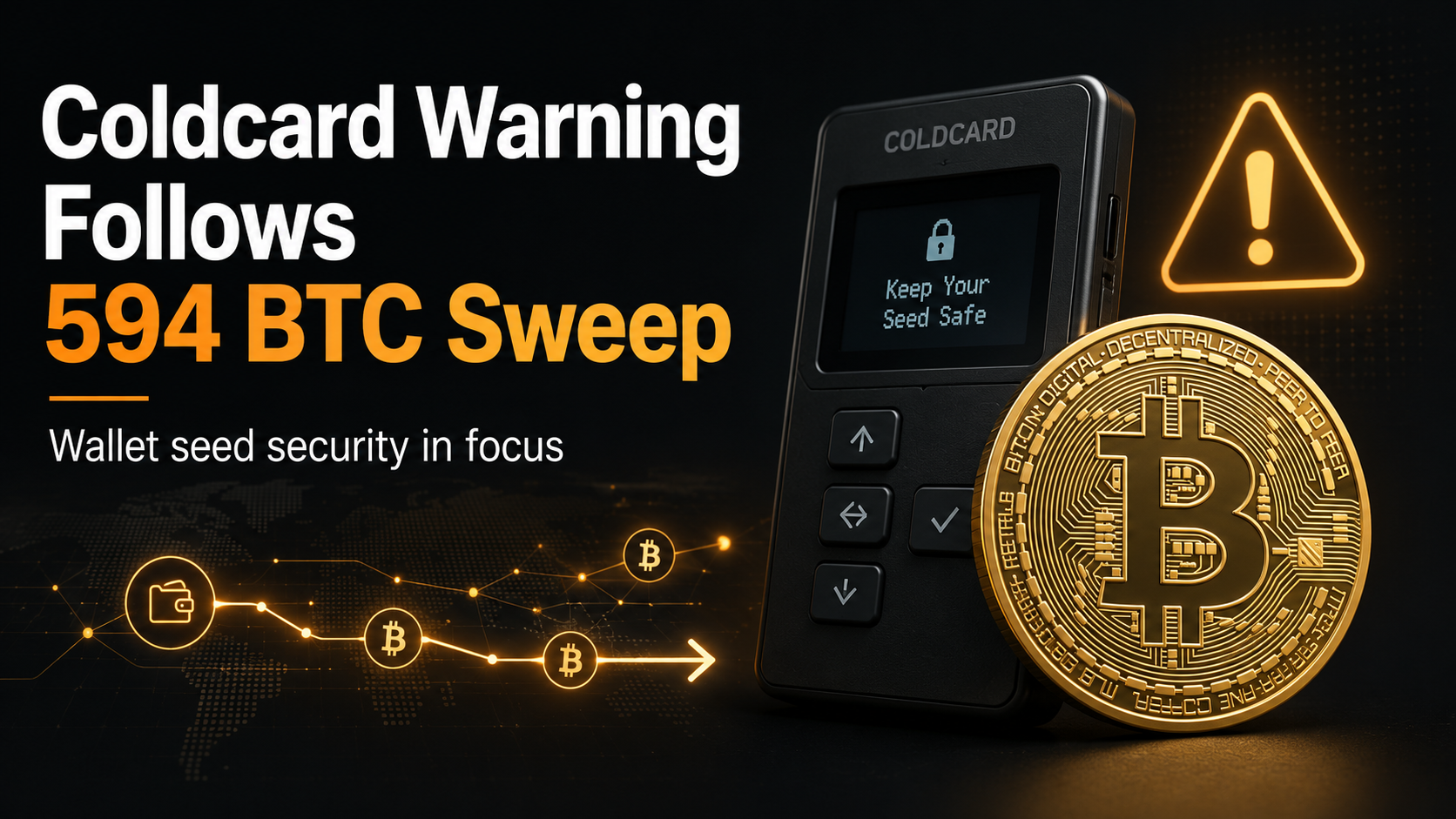
سازنده کیف پول سختافزاری بیت کوین، Coinkite، به کاربران درباره مشکلی در تولید عبارت بازیابی (Seed) که دستگاههای Coldcard را تحت تأثیر قرار میدهد، هشدار داده است؛ این مشکل شامل تمام نسخههای فریمور Mk3
خروج بیت‌گت از ژاپن: خدمات برای ساکنان ژاپن در تاریخ ۱۴۰۵/۱۰/۱۰ به پایان می‌رسد

خروج بیت‌گت از ژاپن: خدمات برای ساکنان ژاپن در تاریخ ۱۴۰۵/۱۰/۱۰ به پایان می‌رسد

بیتگت خدمات خود را برای کاربران در ژاپن در تاریخ ۱۴۰۵/۱۰/۱۱ به پایان میرساند. کاربران تحت تأثیر باید قبل از مهلت مقرر، موقعیتهای باز را بسته و داراییهای خود را برداشت کنند.

مسترکارت خرید BVNK را تا مبلغ ۱.۸ میلیارد دلار تکمیل کرد—استیبل‌کوین‌ها وارد هسته پرداخت‌های جهانی می‌شوند

مسترکارت خرید BVNK را تا مبلغ ۱.۸ میلیارد دلار تکمیل کرد—استیبل‌کوین‌ها وارد هسته پرداخت‌های جهانی می‌شوند

مستر کارت در ۱۲ مرداد ۱۴۰۵، پس از اعلام این معامله در مارس، خرید ارائهدهنده زیرساخت استیبل کوین BVNK را تکمیل کرد.

نسبت حجم معاملات اسپات DEX به CEX به ۲۴٪ می‌رسد، در حالی که فعالیت صرافی‌های متمرکز کاهش می‌یابد

نسبت حجم معاملات اسپات DEX به CEX به ۲۴٪ می‌رسد، در حالی که فعالیت صرافی‌های متمرکز کاهش می‌یابد

نسبت حجم معاملات اسپات صرافیهای غیرمتمرکز به حجم معاملات اسپات صرافیهای متمرکز در ژوئیه ۲۰۲۶ به ۲۴.۱۴٪ رسید، بر اساس سری دادههای فعلی The Block. این رقم به این معنا نیست که صرافیهای غیرمتمرکز (DEX) ۲۴

مقالات مرتبط

بیشتر ببینید
لری فینک و بیت‌کوین: از «شاخص پول‌شویی» تا پیش‌بینی BTC 700K$

لری فینک و بیت‌کوین: از «شاخص پول‌شویی» تا پیش‌بینی BTC 700K$

کمتر تغییر نظری در امور مالی به اندازه مسیر لری فینک با Bitcoin اهمیت دارد.مدیرعامل BlackRock از اینکه BTC را ابزار یک مجرم مینامید به راهاندازی بزرگترین صندوق Bitcoin جهان رسید — و این داستان همهچیز
بیت‌کوین مالزی: قیمت BTC به رینگیت، وضعیت قانونی و نحوه شروع کار

بیت‌کوین مالزی: قیمت BTC به رینگیت، وضعیت قانونی و نحوه شروع کار

مالزی یکی از کنجکاوترین بازارهای آسیای جنوبشرقی نسبت به ارز دیجیتال است و بیتکوین در مرکز این گفتگو قرار داردچه بهدنبال جدیدترین قیمت بیتکوین در مالزی باشید، چه کنجکاو باشید که آیا داشتن BTC قانونی اس
ذخیره بیت‌کوین تگزاس چیست؟ SB 21، ماینینگ و معنای آن

ذخیره بیت‌کوین تگزاس چیست؟ SB 21، ماینینگ و معنای آن

تگزاس دیگر فقط نظارهگر بازار بیتکوین نیست — بلکه بهطور فعال در حال شکلدادن به آن استاز قانونگذاری تاریخی برای ذخیره بیتکوین تا یکی از بزرگترین صنایع استخراج بیتکوین در کشور، ایالت لون استار در عمل تعر

دفتر سفارش بیت‌کوین توضیح داده شد: عمق BTC، اسپرد و تحلیل هیت‌مپ

دفتر سفارش بیت‌کوین توضیح داده شد: عمق BTC، اسپرد و تحلیل هیت‌مپ

بیشتر معاملهگران بیتکوین تمام وقت خود را روی نمودارهای قیمت میگذرانند — اما دفتر سفارش BTC داستان متفاوتی را نشان میدهد.این به شما نشان میدهد پول واقعی کجا نشسته و منتظر خرید یا فروش است، قبل از اینکه

در MEXC ثبت نام کنید
ثبت نام کنید و تا 10,000 USDT پاداش دریافت کنید
ژن DNA وال‌استریت شما چیست؟
ژن DNA وال‌استریت شما چیست؟ژن DNA وال‌استریت شما چیست؟
6 شخصیت. همه سهمی از 30K$ در NVDAX دریافت می‌کنند.

محبوب ترین ها

محبوب ترین ارزهای دیجیتالی که در حال حاضر توجه بازار را به خود جلب کرده اند