

USO Price Outlook 2026–2030: WTI, Futures Curves, Roll Yield and OIL(USOON) Scenarios
Summary
A responsible USO price outlook for 2026–2030 should not begin by assigning one precise 2030 dollar target.
USO is a futures-based commodity pool.
Its long-term performance depends on:
WTI price
futures-curve structure
roll effects
collateral income
−
expenses
+/−
tracking differences
USCF also carried out a 1-for-8 reverse share split in 2020, illustrating another reason why long-horizon per-share price comparisons can be misleading if corporate actions occur.
A better forecasting approach is to use scenarios.
Illustrative Scenario Index
Assume USO = 100 at the starting point solely for modeling purposes:
| Period | Bear Case | Base Case | Bull Case |
|---|---|---|---|
| End-2026 | 75–90 | 95–115 | 120–145 |
| End-2027 | 55–80 | 85–120 | 125–170 |
| End-2028 | 50–85 | 85–130 | 130–190 |
| 2030 | 40–90 | 80–145 | 140–230+ |
These are illustrative index values, not actual USO price targets.
Why Not Give a Fixed $100 or $150 USO Target?
Because USO does not represent a company whose future share price can be modeled mainly from earnings per share.
Its future per-share price is path dependent.
Two oil-price paths can end with WTI at exactly the same level and still produce different USO outcomes because the futures curves were different along the way.
USO's Valuation Formula Is Different
A simplified conceptual model is:
Change in WTI futures
Roll return
Collateral yield
−
Expenses
=
Approximate USO NAV return
Then:
NAV
+/−
Market premium/discount
=
USO market price
Variable 1: WTI
WTI remains the largest directional driver.
Higher oil prices can support USO.
Lower oil prices can pressure it.
But the percentage relationship is not permanently one-to-one.
Variable 2: The Futures Curve
The most important long-term structural variable may be whether WTI spends more time in:
contango
or:
backwardation.
Persistent Contango
can reduce returns relative to a spot-oil comparison.
Persistent Backwardation
can create more supportive roll dynamics.
This makes the path of oil markets important.
Variable 3: The 2026 Roll Method
USO now transitions its relevant near-month exposure across a five-day roll period rather than concentrating the transition in a single session.
The roll method changes execution mechanics.
It does not eliminate the economic difference between contract months.
Variable 4: Middle East Supply
2026 has demonstrated how powerful supply disruption can be.
Hormuz flows collapsed from 21.6 million b/d in Q4 2025 to an estimated 4.9 million b/d in Q2 2026.
The pace of recovery is therefore central to near-term forecasts.
Variable 5: Inventories
Low inventories support near-term scarcity.
EIA expects U.S. commercial crude inventories to remain below the five-year low through year-end 2026.
But if production and trade normalize, inventories could rebuild and reduce the scarcity premium.
What Does EIA Currently Expect?
The August 11 STEO forecasts:
Q3 2026 Brent: about $85/b
and:
2027 Brent average: about $69/b.
EIA's central narrative is that most disrupted Middle East production gradually returns toward pre-conflict averages in early 2027.
That is one credible base-case framework, but it is not guaranteed.
Why the Forecast Already Has Uncertainty
The EIA forecast was completed on August 6.
By August 23–24, Reuters was reporting Brent above $93 and WTI around $85.70 amid renewed sanctions risk and continuing Hormuz disruption.
That demonstrates how quickly geopolitical assumptions can become outdated.
End-2026 Bear Scenario: Index 75–90
Possible conditions:
- Diplomatic breakthrough;
- Hormuz traffic recovers rapidly;
- Middle East production returns;
- Inventories begin rebuilding;
- WTI falls;
- curve shifts toward contango.
In this scenario, both directional oil prices and roll economics could pressure USO.
End-2026 Base Scenario: Index 95–115
Possible assumptions:
- Partial transit recovery;
- supply remains constrained but improves;
- WTI remains relatively elevated;
- curve is near neutral or modestly backwardated.
USO could remain broadly around its starting economic level with significant volatility.
End-2026 Bull Scenario: Index 120–145
Possible conditions:
- Hormuz disruption worsens;
- further production is lost;
- inventories fall;
- near-term crude becomes scarce;
- WTI rises;
- backwardation strengthens.
This represents a supply-shock case.
2027 Bear Scenario: Index 55–80
This broadly aligns with a world where:
- EIA-style supply recovery occurs;
- demand remains soft;
- inventories rebuild;
- WTI falls materially;
- contango emerges.
USO could suffer from both declining crude prices and unfavorable roll conditions.
2027 Base Scenario: Index 85–120
Possible assumptions:
- Oil normalizes;
- geopolitical premium declines;
- WTI settles into a mid-cycle range;
- futures curve oscillates between mild contango and backwardation.
This would produce a more moderate USO outcome.
2027 Bull Scenario: Index 125–170
Would likely require:
- Prolonged Middle East disruption;
- continued low inventories;
- resilient demand;
- strong backwardation.
This scenario would diverge substantially from EIA's current central recovery forecast.
Why 2028–2030 Becomes Harder to Predict
By 2030, today's Hormuz conflict may no longer be the dominant variable.
Longer-term factors include:
- Global oil-demand growth;
- EV adoption;
- aviation demand;
- petrochemicals;
- OPEC+ capacity;
- U.S. shale productivity;
- upstream investment;
- climate policy;
- geopolitics.
More importantly, USO's cumulative return depends on every futures roll between now and then.
2030 Bear Scenario: Index 40–90
Potential environment:
- Structural oil oversupply;
- slower demand;
- prolonged contango;
- repeated negative roll effects.
Even if WTI occasionally rallies, the cumulative product return could remain weak.
2030 Base Scenario: Index 80–145
Possible assumptions:
- WTI remains economically important;
- global supply and demand remain broadly balanced;
- no permanent extreme contango or backwardation;
- USO continues to function near its intended short-dated futures exposure.
This produces a very wide range because path dependence remains significant.
2030 Bull Scenario: Index 140–230+
Potential drivers:
- Persistent underinvestment in supply;
- resilient emerging-market demand;
- recurring geopolitical disruption;
- sustained backwardation;
- high nominal oil prices.
Several positive variables would likely need to occur together.
Why WTI at $100 Does Not Tell You the USO Price
Suppose WTI reaches $100 in 2030.
That single number cannot tell us what USO will be worth.
We would also need to know:
- USO's starting NAV;
- every monthly futures roll;
- futures-curve shape;
- expenses;
- collateral returns;
- any reverse splits or other share actions.
Therefore:
A WTI target cannot simply be multiplied into a USO price target.
What Does This Mean for OIL(USOON)?
OIL(USOON) adds one more layer.
The correct model is:
WTI scenario
↓
USO scenario
↓
Ondo token mechanics
↓
OIL(USOON)/USDT
Therefore, a long-term OIL(USOON) forecast must also consider:
- Token tracking;
- USDT;
- liquidity;
- product structure.
It would be misleading to state:
“WTI $100 means OIL(USOON) must trade at 100 USDT.”
What Should Investors Monitor Through 2030?
The most useful checklist is:
- WTI front-month price.
- Brent price.
- WTI-Brent spread.
- WTI futures curve.
- Contango/backwardation.
- USO monthly roll schedule.
- USO actual holdings.
- Global inventories.
- OPEC+ production.
- U.S. shale output.
- Hormuz and other chokepoints.
- Global demand.
- OIL(USOON) premium/discount.
FAQ
Can USO rise significantly by 2030?
Yes, particularly if crude prices remain high and futures-roll conditions are favorable, but it is not guaranteed.
Can USO fall even if WTI eventually recovers?
Yes. The path of futures rolls matters.
What is the biggest long-term risk?
A combination of lower oil prices and persistent unfavorable futures-curve conditions.
What is the biggest upside scenario?
High oil prices combined with prolonged backwardation and tight inventories.
Does EIA forecast oil through 2030 in the current STEO?
The Short-Term Energy Outlook is designed for a shorter horizon; its August 2026 outlook currently provides a much more useful near-term benchmark for 2026–2027 than for a precise 2030 price target.
Can I directly apply these scenario numbers to OIL(USOON)?
No. They are normalized USO scenario indexes, not OIL(USOON) token-price targets.
Risk Disclaimer
All scenario ranges in this article are hypothetical educational models, not analyst consensus forecasts, investment advice or guaranteed future values.
Oil-market conditions can move outside every scenario presented. USO is exposed to commodity prices, futures curves, roll mechanics, collateral, liquidity and regulatory risks. OIL(USOON) adds token issuer, backing, tracking, blockchain, USDT, exchange-custody and jurisdictional risks.
लोकप्रिय लेख
और देखें
LITEON की कीमत को क्या प्रेरित करता है? AI डेटा सेंटर, ऑप्टिकल नेटवर्किंग और Lumentum स्टॉक की व्याख्या
सारांश LITEON की कीमत मूल रूप से Lumentum Holdings स्टॉक, LITE से जुड़ी हुई है। इसका मतलब है कि LITEON का विश्लेषण करने का सबसे उपयोगी तरीका पारंपरिक क्रिप्टो टोकन का अर्थशास्त्र नहीं है, बल्कि Lument

LITEON जोखिम समझाए गए: AI CapEx, मूल्यांकन, ग्राहक एकाग्रता और ऑप्टिकल प्रौद्योगिकी जोखिम
सारांश LITEON, Lumentum की अंतर्निहित इक्विटी जोखिमों को एक अतिरिक्त टोकनयुक्त-बाजार परत के साथ जोड़ता है। सबसे बड़े कंपनी-स्तरीय जोखिमों में शामिल हैं: AI CapEx में मंदी; अत्यधिक उच्च विकास अपेक्षाएं


ट्रेंडिंग न्यूज़
और देखें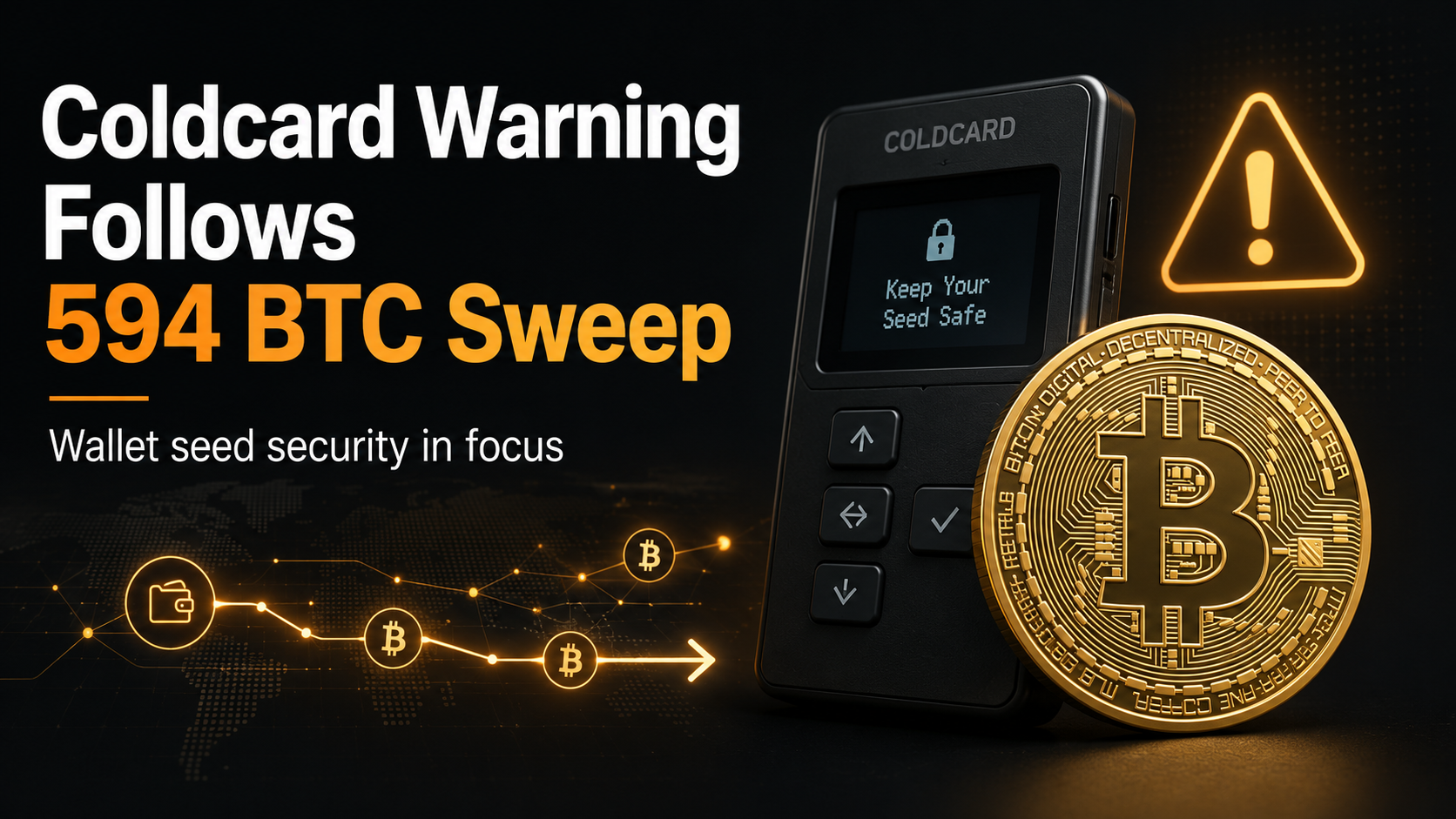
कोल्डकार्ड Mk3 चेतावनी $38M बिटकॉइन स्वीप के बाद आई, लेकिन कारण अभी भी अनिश्चित है
बिटकॉइन हार्डवेयर वॉलेट निर्माता Coinkite ने उपयोगकर्ताओं को Coldcard डिवाइसों को प्रभावित करने वाली सीड-जनरेशन समस्या के बारे में चेतावनी दी है, जिसमें 4.0.1 और उसके बाद के सभी Mk3 फर्मवेयर संस्करण श
बिटगेट जापान से बाहर निकलेगा: जापानी निवासियों के लिए सेवाएं 31 दिसंबर, 2026 को समाप्त होंगी
Bitget 31 दिसंबर, 2026 को जापान के उपयोगकर्ताओं के लिए सेवाएं समाप्त कर देगा। प्रभावित उपयोगकर्ताओं को समय सीमा से पहले खुली पोजीशन बंद करनी होगी और संपत्ति वापस लेनी होगी।


संबंधित लेख
और देखेंLITEON की कीमत को क्या प्रेरित करता है? AI डेटा सेंटर, ऑप्टिकल नेटवर्किंग और Lumentum स्टॉक की व्याख्या
सारांशLITEON की कीमत मूल रूप से Lumentum Holdings स्टॉक, LITE से जुड़ी हुई है।इसका मतलब है कि LITEON का विश्लेषण करने का सबसे उपयोगी तरीका पारंपरिक क्रिप्टो टोकन का अर्थशास्त्र नहीं है, बल्कि Lumentum

Lumentum और NVIDIA साझेदारी की व्याख्या: AI ऑप्टिक्स, $2 बिलियन निवेश और LITEON के लिए इसका क्या अर्थ है
सारांशNVIDIA और Lumentum ने 2 मार्च 2026 को अगली पीढ़ी के AI इंफ्रास्ट्रक्चर के लिए उन्नत ऑप्टिकल तकनीकों पर केंद्रित एक बहु-वर्षीय रणनीतिक समझौते की घोषणा की।समझौते में शामिल हैं:Lumentum में NVIDIA


