Understanding MEXC TradFi Futures Trading HoursUnderstanding MEXC TradFi Futures Trading Hours
कैटेगरी की लिस्ट
कैंसिल करें

Understanding MEXC TradFi Futures Trading Hours

Key Takeaways:

1) MEXC TradFi Futures support 24/7 trading. However, liquidity may vary depending on whether the underlying market is open and can generally be classified into high, medium, and low liquidity periods.
2) When the underlying market is closed, such as during weekends or public holidays, TradFi Futures may experience low liquidity. During this time, the index price and fair price may show limited movement, while liquidity in the futures market may decline.
3) During medium and low liquidity periods, stricter order price limits may apply. Certain trading pairs may also be subject to position controls or close-only restrictions, while the maximum available leverage may be reduced. Leverage adjustments only apply to new orders.
4) Medium and low liquidity periods are generally associated with thinner order books and higher slippage risk. When the underlying market reopens, accumulated market information may also result in price gaps or significant volatility.
5) During low liquidity periods, users are advised to reduce individual order sizes, prioritize limit orders, prepare for potential price gaps, and maintain sufficient margin. Users should also monitor official MEXC announcements for temporary trading measures.

1. Trading Hours and Liquidity Levels


MEXC TradFi Futures support 24/7 trading. However, liquidity is not constant and may change depending on the trading hours of the market on which the underlying asset is listed.
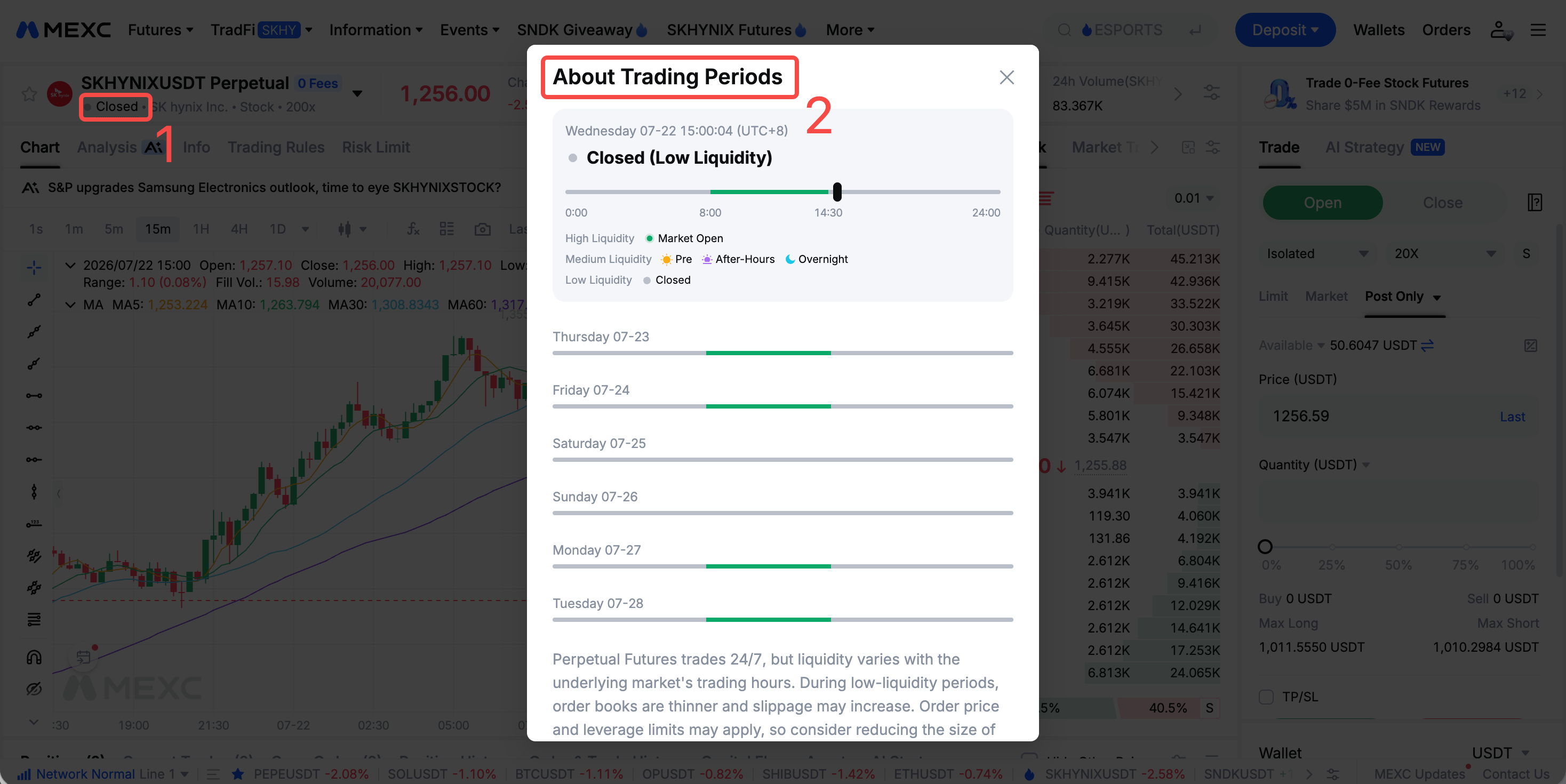
Based on the operating status of the underlying market, trading hours can generally be divided into three liquidity levels:

  • Regular trading hours of the underlying market are considered high liquidity periods.
  • Pre-market, after-hours, and overnight sessions are considered medium liquidity periods.
  • Periods when the underlying market is closed are considered low liquidity periods.

During periods of lower liquidity, order book depth may decrease and slippage may increase. Order prices and available leverage may also be subject to additional restrictions. To reduce execution risk, users are advised to lower their individual order sizes when trading during these periods.

2. What Are Medium and Low Liquidity Periods?


Medium or low liquidity periods occur when the underlying market or benchmark market is trading outside regular hours or is closed. For example, U.S. stock-related TradFi Futures may experience low liquidity during weekends or U.S. public holidays.

During medium and low liquidity periods, the underlying market provides fewer real-time transactions as price references. As a result, movements in the index price and fair price may be limited, while liquidity in the futures market may decline.

3. Main Effects of Medium and Low Liquidity Periods


In terms of order prices, stricter price limits may apply during medium and low liquidity periods. Orders submitted outside the permitted price range may remain unfilled or be rejected by the system. Certain trading pairs may also be subject to position controls. Under exceptional market conditions, individual trading pairs may be placed in close-only mode, meaning that users may close or reduce existing positions but cannot open new positions.

In terms of leverage, the maximum available leverage for certain trading pairs may be reduced during medium and low liquidity periods. Such adjustments only apply to newly submitted orders and will not affect existing orders or open positions placed before the adjustment. Existing positions will not be automatically modified as a result.

In terms of price movements, when the underlying market reopens, news and market information accumulated during the closure may cause prices to adjust rapidly upon reopening. This may result in price gaps or significant volatility. Users holding open positions should evaluate these risks in advance and manage their position size and margin accordingly.

In terms of order execution, reduced order book depth during medium and low liquidity periods may increase slippage risk. Large market orders may be executed at prices that differ significantly from the expected price.

4. How to Check the Trading Periods of an Asset on MEXC


Web: Go to the MEXC official website → FuturesStock FuturesMarket Open/ClosedAbout Trading Periods


App: Go to MEXC App → FuturesTradFiMarket Open/ClosedAbout Trading Periods


5. Trading Tips for Medium and Low Liquidity Periods


Given the market conditions during medium and low liquidity periods, users are advised to consider the following measures:

1) Reduce the size of individual orders, or split a large order into several smaller orders to limit the impact of slippage.
2) Prioritize limit orders over market orders to maintain greater control over the execution price.
3) Before the underlying market reopens, prepare for potential price gaps by reducing leverage where appropriate and maintaining sufficient available margin.
4) Monitor official MEXC announcements for temporary measures involving leverage adjustments, position controls, close-only restrictions, or other changes to trading conditions.

Risk Warning: Cryptocurrency and derivatives trading involves a high level of risk and may result in significant losses. Market conditions during low liquidity periods may differ substantially from those during regular trading hours. Users should fully understand the applicable trading rules and carefully assess their financial situation, trading experience, and risk tolerance before trading. This article is provided for informational purposes only and does not constitute financial or investment advice. Specific trading rules and risk-control measures are subject to the MEXC's latest announcements.


Understanding MEXC TradFi Futures Trading Hours

Key Takeaways:

1) MEXC TradFi Futures support 24/7 trading. However, liquidity may vary depending on whether the underlying market is open and can generally be classified into high, medium, and low liquidity periods.
2) When the underlying market is closed, such as during weekends or public holidays, TradFi Futures may experience low liquidity. During this time, the index price and fair price may show limited movement, while liquidity in the futures market may decline.
3) During medium and low liquidity periods, stricter order price limits may apply. Certain trading pairs may also be subject to position controls or close-only restrictions, while the maximum available leverage may be reduced. Leverage adjustments only apply to new orders.
4) Medium and low liquidity periods are generally associated with thinner order books and higher slippage risk. When the underlying market reopens, accumulated market information may also result in price gaps or significant volatility.
5) During low liquidity periods, users are advised to reduce individual order sizes, prioritize limit orders, prepare for potential price gaps, and maintain sufficient margin. Users should also monitor official MEXC announcements for temporary trading measures.

1. Trading Hours and Liquidity Levels


MEXC TradFi Futures support 24/7 trading. However, liquidity is not constant and may change depending on the trading hours of the market on which the underlying asset is listed.
Based on the operating status of the underlying market, trading hours can generally be divided into three liquidity levels:

  • Regular trading hours of the underlying market are considered high liquidity periods.
  • Pre-market, after-hours, and overnight sessions are considered medium liquidity periods.
  • Periods when the underlying market is closed are considered low liquidity periods.

During periods of lower liquidity, order book depth may decrease and slippage may increase. Order prices and available leverage may also be subject to additional restrictions. To reduce execution risk, users are advised to lower their individual order sizes when trading during these periods.

2. What Are Medium and Low Liquidity Periods?


Medium or low liquidity periods occur when the underlying market or benchmark market is trading outside regular hours or is closed. For example, U.S. stock-related TradFi Futures may experience low liquidity during weekends or U.S. public holidays.

During medium and low liquidity periods, the underlying market provides fewer real-time transactions as price references. As a result, movements in the index price and fair price may be limited, while liquidity in the futures market may decline.

3. Main Effects of Medium and Low Liquidity Periods


In terms of order prices, stricter price limits may apply during medium and low liquidity periods. Orders submitted outside the permitted price range may remain unfilled or be rejected by the system. Certain trading pairs may also be subject to position controls. Under exceptional market conditions, individual trading pairs may be placed in close-only mode, meaning that users may close or reduce existing positions but cannot open new positions.

In terms of leverage, the maximum available leverage for certain trading pairs may be reduced during medium and low liquidity periods. Such adjustments only apply to newly submitted orders and will not affect existing orders or open positions placed before the adjustment. Existing positions will not be automatically modified as a result.

In terms of price movements, when the underlying market reopens, news and market information accumulated during the closure may cause prices to adjust rapidly upon reopening. This may result in price gaps or significant volatility. Users holding open positions should evaluate these risks in advance and manage their position size and margin accordingly.

In terms of order execution, reduced order book depth during medium and low liquidity periods may increase slippage risk. Large market orders may be executed at prices that differ significantly from the expected price.

4. How to Check the Trading Periods of an Asset on MEXC


Web: Go to the MEXC official website → FuturesStock FuturesMarket Open/ClosedAbout Trading Periods


App: Go to MEXC App → FuturesTradFiMarket Open/ClosedAbout Trading Periods


5. Trading Tips for Medium and Low Liquidity Periods


Given the market conditions during medium and low liquidity periods, users are advised to consider the following measures:

1) Reduce the size of individual orders, or split a large order into several smaller orders to limit the impact of slippage.
2) Prioritize limit orders over market orders to maintain greater control over the execution price.
3) Before the underlying market reopens, prepare for potential price gaps by reducing leverage where appropriate and maintaining sufficient available margin.
4) Monitor official MEXC announcements for temporary measures involving leverage adjustments, position controls, close-only restrictions, or other changes to trading conditions.

Risk Warning: Cryptocurrency and derivatives trading involves a high level of risk and may result in significant losses. Market conditions during low liquidity periods may differ substantially from those during regular trading hours. Users should fully understand the applicable trading rules and carefully assess their financial situation, trading experience, and risk tolerance before trading. This article is provided for informational purposes only and does not constitute financial or investment advice. Specific trading rules and risk-control measures are subject to the MEXC's latest announcements.