Stablecoins dominated crypto trading in Q1 as investors sought safety, while rising bot usage and declining retail flows pointed to shifting market dynamics, accordingStablecoins dominated crypto trading in Q1 as investors sought safety, while rising bot usage and declining retail flows pointed to shifting market dynamics, according

Stablecoin supply reaches $315B in Q1 as USDC rises, USDT declines

For feedback or concerns regarding this content, please contact us at crypto.news@mexc.com

Stablecoins were a rare bright spot in an otherwise subdued crypto market in the first quarter, with supply growth and transaction activity pointing to sustained demand even as broader market conditions weakened.

Total stablecoin supply increased by roughly $8 billion to a record $315 billion in Q1, according to data from CEX.IO. Although this marked the slowest pace of expansion since Q4 of 2023, it still represented growth during a period when the wider crypto market contracted.

The data suggests investors rotated into stablecoins as a defensive strategy, boosting their share of overall market activity. Stablecoins accounted for 75% of total crypto trading volume during the quarter — the highest level on record.

Stablecoins’ share of total digital asset trading volume exceeded its 2022 peak. Source: CEX.io

At the same time, total stablecoin transaction volume topped $28 trillion, underscoring their growing role as the primary liquidity layer of the digital asset market. The figure extends a multi-year surge in activity, with stablecoin volumes in recent years exceeding those of major payment networks like Visa and Mastercard combined.

However, data on underlying activity painted a more nuanced picture.

Retail-sized transfers — typically associated with individual users — declined by 16% in the first quarter, the steepest drop on record. In contrast, automated activity surged, with bots accounting for approximately 76% of all stablecoin transaction volume.

The shift toward bot-driven flows suggests that a growing share of stablecoin usage is tied to algorithmic trading, arbitrage and liquidity provisioning, rather than retail demand. While elevated automation can reflect more sophisticated or institutional participation, it may also signal weaker organic demand during bearish market conditions. 

Related: Circle shares surge as Bernstein sees upside from stablecoin adoption

Divergence between major stablecoin issuers

One of the CEX.io report’s key takeaways was a widening divergence between major stablecoin issuers. The supply of Circle’s USDC (USDC) grew by roughly $2 billion in the first quarter, while Tether’s USDt (USDT) declined by about $3 billion, marking the first notable split between the two since Q2 of 2022 amid the bear market.

The trend aligns with earlier Cointelegraph reporting, which highlighted a surge in USDC transfer activity in February, pointing to increased usage across trading and onchain transactions.

USDC is now more widely used for “financial operations,” which include trading and onchain transactions. Source: CEX.io

Beyond USDC, much of the growth in stablecoin issuance was driven by yield-bearing products — a segment that has drawn increasing scrutiny in the US. Ongoing discussions around a crypto market structure bill in Congress have placed yield at the center of debate, with traditional banks pushing back against stablecoins that offer interest-like returns.

The market for yield-bearing stablecoins is currently valued at around $3.7 billion, with daily trading volumes exceeding $100 million, according to data from CoinGecko.

Related: Crypto Biz: Stablecoin jitters meet institutional momentum

Cointelegraph is committed to independent, transparent journalism. This news article is produced in accordance with Cointelegraph’s Editorial Policy and aims to provide accurate and timely information. Readers are encouraged to verify information independently. Read our Editorial Policy https://cointelegraph.com/editorial-policy
  • #Cex.io
  • #Research
  • #Circle
  • #Tether
  • #Stablecoin
  • #Industry
Market Opportunity
USDCoin Logo
USDCoin Price(USDC)
$1.0013
$1.0013$1.0013
+0.01%
USD
USDCoin (USDC) Live Price Chart
Disclaimer: The articles reposted on this site are sourced from public platforms and are provided for informational purposes only. They do not necessarily reflect the views of MEXC. All rights remain with the original authors. If you believe any content infringes on third-party rights, please contact crypto.news@mexc.com for removal. MEXC makes no guarantees regarding the accuracy, completeness, or timeliness of the content and is not responsible for any actions taken based on the information provided. The content does not constitute financial, legal, or other professional advice, nor should it be considered a recommendation or endorsement by MEXC.

You May Also Like

UK crypto holders brace for FCA’s expanded regulatory reach

UK crypto holders brace for FCA’s expanded regulatory reach

The post UK crypto holders brace for FCA’s expanded regulatory reach appeared on BitcoinEthereumNews.com. British crypto holders may soon face a very different landscape as the Financial Conduct Authority (FCA) moves to expand its regulatory reach in the industry. A new consultation paper outlines how the watchdog intends to apply its rulebook to crypto firms, shaping everything from asset safeguarding to trading platform operation. According to the financial regulator, these proposals would translate into clearer protections for retail investors and stricter oversight of crypto firms. UK FCA plans Until now, UK crypto users mostly encountered the FCA through rules on promotions and anti-money laundering checks. The consultation paper goes much further. It proposes direct oversight of stablecoin issuers, custodians, and crypto-asset trading platforms (CATPs). For investors, that means the wallets, exchanges, and coins they rely on could soon be subject to the same governance and resilience standards as traditional financial institutions. The regulator has also clarified that firms need official authorization before serving customers. This condition should, in theory, reduce the risk of sudden platform failures or unclear accountability. David Geale, the FCA’s executive director of payments and digital finance, said the proposals are designed to strike a balance between innovation and protection. He explained: “We want to develop a sustainable and competitive crypto sector – balancing innovation, market integrity and trust.” Geale noted that while the rules will not eliminate investment risks, they will create consistent standards, helping consumers understand what to expect from registered firms. Why does this matter for crypto holders? The UK regulatory framework shift would provide safer custody of assets, better disclosure of risks, and clearer recourse if something goes wrong. However, the regulator was also frank in its submission, arguing that no rulebook can eliminate the volatility or inherent risks of holding digital assets. Instead, the focus is on ensuring that when consumers choose to invest, they do…
Share
BitcoinEthereumNews2025/09/17 23:52
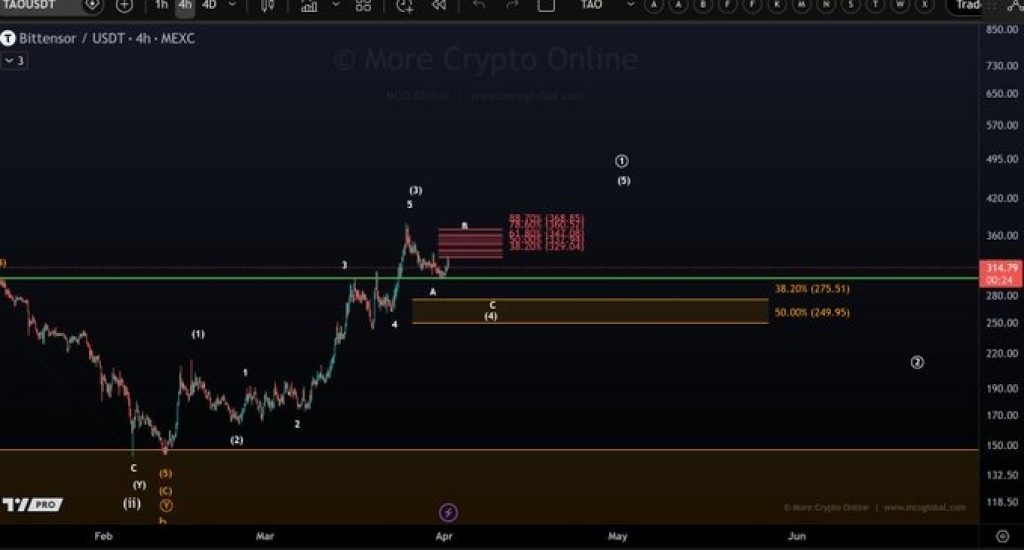
Thinking of Buying Bittensor? Watch These TAO Price Correction Levels First

Thinking of Buying Bittensor? Watch These TAO Price Correction Levels First

Bittensor (TAO) is navigating a rough patch as broader market conditions turn shaky. TAO just took a hit along with the rest of the AI token crowd, but if you look
Share
Captainaltcoin2026/04/03 00:30
China Nabs Another Huione Group Core Member in Cambodia Extradition

China Nabs Another Huione Group Core Member in Cambodia Extradition

The post China Nabs Another Huione Group Core Member in Cambodia Extradition appeared on BitcoinEthereumNews.com. Li Xiong, a senior figure at Huione Group, an
Share
BitcoinEthereumNews2026/04/02 17:54

Newbies:Deposit $100, Get $1,000

Newbies:Deposit $100, Get $1,000Newbies:Deposit $100, Get $1,000

Plus Up to a $50 Referral Bonus