Critical Warning: U.S. Joint Chiefs Chair Says Iran Military Action Can Resume Instantly, Hormuz Blockade Total
BitcoinWorld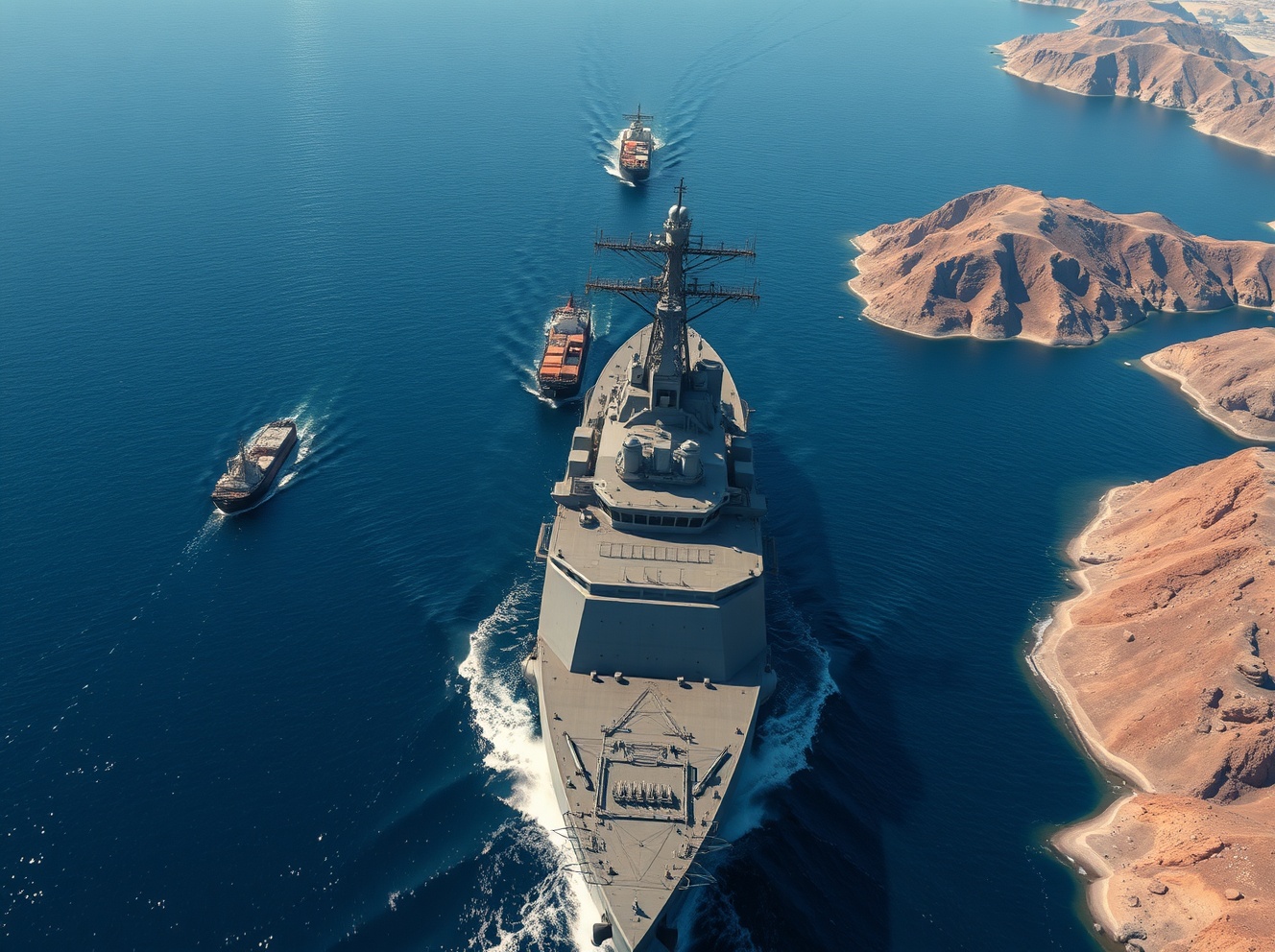
Critical Warning: U.S. Joint Chiefs Chair Says Iran Military Action Can Resume Instantly, Hormuz Blockade Total
WASHINGTON, D.C., March 2025 – In a stark declaration underscoring heightened global tensions, the Chairman of the U.S. Joint Chiefs of Staff, General Cain, has issued a critical warning that U.S. military action against Iran could resume instantly. Furthermore, he emphasized that any joint forces blockade of the vital Strait of Hormuz would be total, applying to all vessels entering or leaving Iranian ports regardless of their national flag. This statement, from the successor to General Charles Brown Jr., marks a significant and public hardening of the U.S. military posture and directly addresses one of the world’s most crucial maritime chokepoints.
U.S. Military Posture: Readiness for Instant Iran Action
General Cain’s remarks represent a clear articulation of the Pentagon’s current operational stance. The phrase “at a moment’s notice” indicates forces in the U.S. Central Command (CENTCOM) area of operations are likely at a heightened state of readiness. This posture involves prepositioned assets, updated contingency plans, and streamlined command-and-control protocols. Consequently, the logistical and strategic framework for potential engagement is already in place, reducing decision-to-action timelines dramatically.
Military analysts note this readiness is not an isolated development. Instead, it follows years of intermittent friction with Iranian-aligned forces across the Middle East. For instance, incidents involving drones, missiles, and maritime harassment have tested U.S. responses repeatedly. Therefore, Cain’s statement serves as both a strategic message to Tehran and a reassurance to regional allies of U.S. commitment. The U.S. maintains a substantial force presence in the region, including:
- Naval Task Forces: Carrier strike groups and expeditionary units in the Arabian Gulf.
- Air Power: Fifth-generation fighter squadrons and strategic bombers at bases in Qatar, UAE, and Saudi Arabia.
- Missile Defense: Aegis-equipped destroyers and land-based Patriot and THAAD batteries.
The Strait of Hormuz: Anatomy of a Total Blockade
The second part of General Cain’s warning carries profound implications for global energy security and trade. The Strait of Hormuz, a narrow passage between Oman and Iran, is arguably the world’s most important oil transit corridor. Approximately 21 million barrels of oil—nearly 21% of global petroleum liquid consumption—pass through it daily. A “total blockade” as described would represent an unprecedented escalation in modern maritime history.
Critically, Cain specified the blockade would apply to “all ships,” irrespective of nationality. This declaration removes potential ambiguity and signals a willingness to enforce a comprehensive quarantine. Such an action would rely on a multi-layered naval strategy. Initially, it would involve surveillance and interdiction by aircraft and satellites. Subsequently, surface combatants would conduct hailings and, if necessary, boarding operations. The legal basis would likely cite United Nations Charter provisions on self-defense or specific U.N. Security Council resolutions, though such a move would be intensely debated internationally.
| Metric | Data | Global Share |
|---|---|---|
| Oil Flow (Daily) | ~21 million barrels | ~21% |
| LNG Flow (Daily) | ~20% of global trade | ~20% |
| Width at Narrowest | 21 nautical miles | N/A |
| Navigable Channel Width | 2 miles (inbound/outbound) | N/A |
Historical Context and Precedent
This is not the first time the specter of a Hormuz closure has arisen. Iran has repeatedly threatened to block the strait in response to severe economic sanctions or military threats. However, a U.S.-led enforcement blockade is a different proposition. Historically, similar actions include the “Tanker War” of the 1980s during the Iran-Iraq conflict, where both nations attacked neutral shipping. More recently, the U.S. has led multinational maritime coalitions, like the International Maritime Security Construct (IMSC), to ensure freedom of navigation amid attacks on commercial vessels. Cain’s statement suggests a shift from protective escort missions to active, comprehensive interdiction—a significant escalation in scope and intent.
Global Economic and Diplomatic Repercussions
The immediate effect of even the threat of a total blockade is market volatility. Oil prices would likely experience a sharp spike, triggering inflationary pressures worldwide. Major importers like China, India, Japan, and South Korea would face severe energy security challenges, potentially forcing diplomatic interventions. Meanwhile, global supply chains, already strained, would face new disruptions from rerouted shipping and increased insurance costs.
Diplomatically, the U.S. stance would create deep fissures. European allies, heavily reliant on stable energy markets, might urge extreme caution. Regional partners like Saudi Arabia and the UAE would have mixed reactions, supporting pressure on Iran but fearing regional conflagration. Conversely, nations like Russia and China would vehemently oppose the action as a violation of sovereignty and international law, potentially using it to rally diplomatic opposition against Washington. The situation tests the very foundations of the U.S.-led international order.
Military and Strategic Calculus for the United States
Executing a sustained blockade is a complex military undertaking. Iran possesses significant asymmetric capabilities designed to counter U.S. naval superiority. These include large inventories of anti-ship missiles, swarms of fast attack craft, submarines, and naval mines. A blockade would require constant vigilance and robust defensive measures to protect allied warships. Furthermore, it would tie down substantial U.S. naval assets, potentially affecting force posture in other critical regions like the Indo-Pacific or Europe.
General Cain’s comments, therefore, also serve a deterrent function. By publicly outlining the severity of the potential response, the U.S. aims to shape Iranian decision-making and deter further escalation. The message is clear: any major provocation, such as an attack on U.S. personnel or a move toward nuclear weapons capability, could trigger not just a targeted strike but a comprehensive campaign with severe economic strangulation at its core. This represents a clear evolution in U.S. strategic signaling toward Iran.
Conclusion
General Cain’s dual warning—of instant military readiness and a total Strait of Hormuz blockade—marks a pivotal moment in U.S.-Iran relations. It translates long-standing regional tensions into explicit, actionable military doctrine. The statement underscores the precarious state of global security, where a single miscalculation at a vital maritime chokepoint could trigger widespread economic shock and military conflict. As the international community assesses these stark pronouncements, the focus will be on diplomatic channels to de-escalate tensions. However, the underlying message from the Pentagon is unambiguous: the United States is prepared for instant Iran military action and is willing to enforce a comprehensive economic quarantine if necessary, with global consequences.
FAQs
Q1: What did the U.S. Joint Chiefs Chair actually say about Iran?
General Cain stated the U.S. is prepared to resume military operations against Iran “at a moment’s notice” and that any blockade of the Strait of Hormuz would be total, applying to all ships of any nationality entering or leaving Iranian ports.
Q2: Why is the Strait of Hormuz so important?
The Strait of Hormuz is the world’s most critical oil transit chokepoint. Approximately 21 million barrels of oil, representing about 21% of global petroleum consumption, pass through it daily. A blockade would severely disrupt global energy supplies and trade.
Q3: Has Iran blocked the Strait of Hormuz before?
Iran has threatened closure many times but has never successfully executed a prolonged blockade. During the 1980s “Tanker War,” both Iran and Iraq attacked shipping, but the strait remained open to international traffic.
Q4: What would a “total blockade” legally mean for neutral ships?
General Cain’s statement suggests the U.S. would seek to intercept and inspect all maritime traffic to and from Iranian ports, regardless of the ship’s flag. This would be a highly contentious act under international maritime law, likely justified by the U.S. under self-defense provisions.
Q5: How might other countries react to a U.S.-led Hormuz blockade?
Reactions would be deeply divided. U.S. allies in the region might support it, while major energy importers like China and India would oppose it strongly. European nations would likely express grave concern due to potential economic fallout, creating a significant diplomatic crisis.
This post Critical Warning: U.S. Joint Chiefs Chair Says Iran Military Action Can Resume Instantly, Hormuz Blockade Total first appeared on BitcoinWorld.


You May Also Like

Using silence in executive headhunting
Veteran diplomats stick a knife in Kushner and Witkoff negotiations: 'They get an F'