Solana vs Cardano: Complete Blockchain Comparison Guide for 2026
Solana vs Cardano represents the classic blockchain trade-off between high-speed performance and academic rigor. Solana emphasizes throughput with up to 65,000 TPS capability, while Cardano prioritizes security through peer-reviewed research and formal verification methods.
Solana processes an average of 2,000 transactions per second in real-world conditions (blockchain analytics data, 2025), making it one of the fastest operational blockchains today. Yet this speed comparison only scratches the surface of what separates these two prominent proof-of-stake networks.
Both platforms emerged from different philosophical approaches to blockchain development. Solana launched in 2020 with a focus on solving the blockchain trilemma through innovative consensus mechanisms. Cardano began development in 2017, taking a methodical research-first approach that prioritizes long-term sustainability over rapid deployment.
The choice between these platforms often depends on your specific use case, risk tolerance, and performance requirements. Understanding their fundamental differences helps you make an informed decision for development, investment, or adoption purposes.
Key Takeaways
- Solana achieves higher throughput (2,000 average TPS) but has experienced 7+ network outages between 2021-2022
- Cardano offers lower current throughput (250 TPS) but maintains stronger decentralization with 3,000+ stake pools
- Transaction costs favor Solana significantly at $0.00025 average versus Cardano’s $0.17 per transaction
- Solana’s TVL of $9.5B vastly exceeds Cardano’s $320M as of Q1 2025
- Cardano’s Chang hard fork and Hydra scaling solution target 1M TPS by late 2026
- Solana’s Firedancer upgrade promises improved reliability and potential 1M+ TPS capability
- Developer ecosystems differ substantially: Solana focuses on DeFi and consumer apps, Cardano on identity and governance solutions
- Both platforms use proof-of-stake consensus but employ different mechanisms for achieving network security
What’s New in 2026
Both blockchain platforms are undergoing significant technical upgrades this year. Cardano’s Chang hard fork introduces enhanced on-chain governance capabilities, allowing ADA holders to participate directly in protocol decisions. This represents the final phase of Cardano’s roadmap toward complete decentralization.
Solana’s Firedancer client, developed by Jump Crypto, entered testing phases in early 2026. Initial benchmarks suggest potential throughput improvements to over 1 million TPS under optimal conditions. The upgrade also addresses network stability concerns that plagued earlier versions.
Institutional adoption patterns have shifted notably. Traditional finance firms increasingly evaluate both platforms for different use cases: Solana for high-frequency trading infrastructure and Cardano for compliance-heavy applications requiring audit trails.
Technical Architecture Comparison
Both platforms employ proof-of-stake consensus but achieve it through distinctly different approaches. Understanding these technical foundations helps explain their performance characteristics and trade-offs.
1. Consensus Mechanisms
Solana combines Proof-of-History (PoH) with Tower BFT consensus to achieve high throughput. PoH creates a historical record of events before consensus, allowing validators to process transactions without waiting for network-wide communication. This approach reduces latency but requires higher hardware specifications for validator nodes.
Cardano uses the Ouroboros protocol, a provably secure proof-of-stake algorithm backed by peer-reviewed research. The protocol divides time into epochs and slots, with validators selected through a verifiable random function. This method prioritizes security and decentralization over raw speed.
2. Smart Contract Capabilities
Solana supports smart contracts through its runtime environment, which processes parallel transactions across multiple cores. Developers primarily use Rust and C for contract development, though JavaScript SDK support has expanded significantly.
Cardano introduced smart contract functionality through the Alonzo upgrade in 2021. The platform uses Plutus, a purpose-built functional programming language based on Haskell. This approach enables formal verification of contract behavior but requires specialized developer knowledge.
3. Network Architecture
Solana’s architecture emphasizes vertical scaling through high-performance hardware requirements. Validator nodes typically require 256GB RAM and 2TB+ SSD storage, creating barriers to entry but enabling higher throughput.
Cardano focuses on horizontal scaling through its layered architecture. The settlement layer handles ADA transfers, while the computation layer manages smart contracts. The upcoming Hydra scaling solution will enable state channels for near-instant transactions.
Performance and Scalability Analysis
Performance metrics reveal significant differences between these platforms across multiple dimensions. Raw throughput represents just one aspect of overall network performance.
1. Transaction Throughput
Solana’s theoretical maximum reaches 65,000 TPS under laboratory conditions, though real-world performance averages around 2,000 TPS during normal operation. Network congestion during high-demand periods can reduce throughput substantially.
Cardano currently processes approximately 250 TPS on its main chain. The platform’s deliberate approach to scaling prioritizes stability over speed. However, the planned Hydra implementation could theoretically support up to 1 million TPS through layer-2 channels.
2. Transaction Costs
Transaction fees present a stark contrast between platforms. Solana’s average fee of $0.00025 makes it extremely cost-effective for frequent transactions and micro-payments. This pricing model supports high-volume applications like decentralized exchanges and gaming platforms.
Cardano’s average fee of approximately $0.17 per transaction reflects its different design priorities. The higher cost includes built-in protection against spam attacks and ensures sustainable validator rewards without relying solely on block subsidies.
3. Finality and Confirmation Times
Solana achieves transaction finality in 400-800 milliseconds under normal conditions. This speed enables real-time applications but comes with occasional network instability during extreme load periods.
Cardano confirms transactions within 20 seconds on average, with full finality achieved after one epoch (approximately 5 days). While slower than Solana, this approach provides stronger guarantees against chain reorganization attacks.
Decentralization and Security Metrics
Decentralization measures extend beyond simple validator counts to include geographic distribution, hardware requirements, and economic concentration. Both platforms approach decentralization differently.
1. Validator Distribution
Solana operates approximately 1,500 validator nodes as of 2025, with geographic concentration primarily in North America and Europe. High hardware requirements limit validator participation to well-funded operators, creating potential centralization risks.
Bitcoin vs the Ethereum networks demonstrate different decentralization approaches, similar to how Cardano maintains over 3,000 active stake pools with lower hardware barriers to entry. This broader participation enhances censorship resistance but may impact performance.
2. Economic Decentralization
Stake distribution analysis reveals important differences. Solana’s top 10 validators control approximately 35% of total stake, while Cardano’s top 10 pools control roughly 25%. However, Cardano’s delegation system allows users to stake without running nodes, increasing participation.
3. Network Security
Both platforms have demonstrated strong security records regarding consensus-level attacks. Solana’s security challenges have primarily involved network availability rather than fund security. Seven major outages occurred between 2021-2022, though network stability has improved significantly.
Cardano has maintained consistent uptime since its mainnet launch, with no major outages or consensus failures. The platform’s formal verification approach helps prevent smart contract vulnerabilities, though this comes at the cost of development speed.
Ecosystem Development and Use Cases
Real-world adoption patterns reveal distinct ecosystem characteristics shaped by each platform’s technical design and community focus.
1. DeFi Applications
Solana’s DeFi ecosystem has reached significant scale with over $9.5B in total value locked. Jupiter DEX processes approximately $2B in monthly volume, demonstrating the platform’s capacity for high-frequency trading applications. Serum, Raydium, and Orca represent major decentralized exchanges built on Solana’s infrastructure.
Cardano’s DeFi ecosystem remains smaller with $320M TVL, primarily concentrated in platforms like Minswap and SundaeSwap. The slower development pace reflects Cardano’s emphasis on formal verification and security over rapid deployment.
2. NFT and Gaming Platforms
Solana emerged as a major NFT platform during 2021-2022, with collections like Solana Monkey Business and DeGods achieving significant trading volumes. Low transaction costs make Solana particularly suitable for gaming applications requiring frequent micro-transactions.
Cardano’s NFT ecosystem focuses on utility-based projects and community-driven initiatives. CNFT.io and JPG Store serve as primary marketplaces, though trading volumes remain substantially lower than Solana’s major platforms.
3. Enterprise and Government Applications
Cardano has secured several large-scale enterprise partnerships, particularly in developing markets. The platform powers identity solutions in Africa through Atala PRISM, managing educational credentials for millions of students in Ethiopia.
Solana’s enterprise adoption focuses on payment processing and financial infrastructure. Delta Exchange or Deribit or BitMEX and similar platforms increasingly consider Solana for settlement infrastructure due to its speed and cost advantages.
Comparison Table: Key Features
A direct comparison highlights the fundamental trade-offs between these blockchain platforms across critical performance metrics.
| Feature | Solana | Cardano |
|---|---|---|
| Consensus Mechanism | Proof-of-History + Tower BFT | Ouroboros Proof-of-Stake |
| Average TPS | 2,000 | 250 |
| Transaction Cost | $0.00025 | $0.17 |
| Block Time | 400ms | 20 seconds |
| Total Value Locked | $9.5B | $320M |
| Active Validators | 1,500 | 3,000+ |
| Smart Contract Language | Rust, C | Plutus (Haskell) |
| Network Outages (2021-2025) | 7+ major | 0 |
| Staking Yield | 6-8% | 4-6% |
| Market Cap Rank | Top 10 | Top 15 |
Step-by-Step: Choosing Between Solana and Cardano
Selecting the appropriate blockchain depends on your specific requirements, technical constraints, and risk tolerance. Follow this systematic evaluation process.
Step 1: Define Performance Requirements
Determine your minimum acceptable transaction throughput and maximum acceptable latency. Applications requiring real-time responsiveness favor Solana, while those prioritizing consistency may prefer Cardano’s more predictable performance.
Step 2: Evaluate Cost Constraints
Calculate total transaction costs based on expected usage patterns. High-volume applications benefit significantly from Solana’s sub-cent fees, while occasional-use applications may find Cardano’s higher fees acceptable.
Step 3: Assess Technical Resources
Consider your development team’s programming language expertise. Solana’s Rust-based development requires different skills than Cardano’s Haskell-based Plutus platform.
Step 4: Analyze Risk Tolerance
Evaluate your tolerance for potential network outages versus acceptance of slower transaction processing. Mission-critical applications may prefer Cardano’s proven stability record.
Step 5: Consider Long-term Strategy
Assess planned network upgrades and roadmap alignment. Both platforms have significant technical improvements planned through 2026-2027 that may affect your decision.
Step 6: Evaluate Ecosystem Fit
Review existing applications and partnerships within each ecosystem. Network effects and existing integrations can significantly impact development timelines and user acquisition.
Real-World Use Cases
Practical applications demonstrate how different organizations leverage each platform’s unique strengths for specific business requirements.
1. High-Frequency Trading Infrastructure
Crypto trading platforms increasingly utilize Solana for order book management and settlement processing. The platform’s sub-second finality enables market makers to provide competitive spreads without excessive capital requirements. Several derivatives platforms have migrated from Ethereum to Solana specifically for performance advantages.
2. Identity and Credential Management
Cardano’s formal verification capabilities make it suitable for identity systems requiring regulatory compliance. Educational institutions in developing countries use Cardano-based systems to issue verifiable credentials that prevent fraud while maintaining privacy. The platform’s stability record proves crucial for long-term credential validity.
3. Payment Processing Networks
Solana’s low fees enable micropayment systems that wouldn’t be economically viable on higher-cost networks. Content creators use Solana-based platforms for per-article payments, subscription services, and tip-based revenue models. Transaction costs represent less than 0.01% of typical payment amounts.
4. Supply Chain Tracking
Cardano’s emphasis on formal verification and audit trails appeals to enterprises requiring regulatory compliance. Pharmaceutical companies explore Cardano-based systems for drug authenticity verification, where transaction immutability and formal proofs provide legal certainty.
5. Decentralized Autonomous Organizations
Both platforms support DAO infrastructure with different characteristics. Solana-based DAOs benefit from low voting costs and rapid execution, while Cardano’s upcoming governance features enable more complex decision-making processes with formal verification of proposal outcomes.
Pros and Cons Analysis
Both blockchain platforms present distinct advantages and limitations that affect their suitability for different applications and use cases.
Solana Pros:
- Exceptional transaction speed (2,000+ TPS average) enables real-time applications
- Extremely low fees ($0.00025) support high-volume use cases
- Large and active DeFi ecosystem with $9.5B TVL
- Strong developer tooling and documentation
- Parallel transaction processing improves efficiency
- Growing institutional adoption for payment infrastructure
Solana Cons:
- Network outages (7+ major incidents 2021-2022) raise reliability concerns
- High validator hardware requirements may increase centralization risk
- Relatively new platform with shorter operational history
- Complex architecture may introduce unforeseen technical challenges
- Limited formal verification capabilities for critical applications
Cardano Pros:
- Proven network stability with zero major outages since launch
- Strong decentralization with 3,000+ active stake pools
- Peer-reviewed research foundation provides academic rigor
- Formal verification capabilities enhance smart contract security
- Lower hardware requirements enable broader validator participation
- Strong focus on regulatory compliance and governance
Cardano Cons:
- Lower current throughput (250 TPS) limits high-volume applications
- Higher transaction fees ($0.17 average) may deter frequent usage
- Smaller ecosystem with limited DeFi options
- Slower development cycle due to research-first approach
- Specialized programming language (Plutus) has steeper learning curve
- Lower total value locked indicates less institutional adoption
Future Roadmap and Upgrades
Both platforms have ambitious technical roadmaps that may significantly alter their competitive positioning over the next 2-3 years.
1. Cardano’s Scaling Solutions
The Hydra scaling solution represents Cardano’s primary answer to throughput limitations. Hydra state channels will enable parallel processing of transactions off the main chain, with theoretical throughput reaching 1 million TPS. Initial implementations target specific use cases like micropayments and gaming applications.
Cardano’s Chang hard fork introduces comprehensive governance features, allowing ADA holders to vote directly on protocol upgrades and treasury spending. This marks the completion of Cardano’s roadmap toward full decentralization.
2. Solana’s Reliability Improvements
The Firedancer client upgrade addresses Solana’s primary weakness: network stability. Developed by Jump Crypto using C++ instead of Rust, Firedancer aims to eliminate the software bugs that caused previous outages while potentially improving performance to over 1 million TPS.
Solana’s upcoming fee market improvements will implement more sophisticated transaction prioritization during network congestion, ensuring critical transactions can pay higher fees for guaranteed inclusion.
3. Interoperability Development
Both platforms are developing improved bridge infrastructure for cross-chain asset transfers. Cardano’s partnership with Milkomeda enables EVM compatibility, while Solana’s Wormhole bridge connects to multiple blockchain networks.
Investment and Market Analysis
Market performance and institutional adoption provide additional context for evaluating these blockchain platforms beyond pure technical metrics.
1. Market Capitalization Trends
Solana typically maintains a higher market capitalization than Cardano, reflecting greater institutional confidence and speculative interest. However, both tokens experience significant volatility correlated with broader cryptocurrency market cycles.
2. Institutional Adoption Patterns
Solana has attracted notable institutional investment from firms like Andreessen Horowitz and Jump Crypto. These investors often contribute directly to ecosystem development through grants and technical improvements.
Cardano’s institutional focus centers on enterprise partnerships and government contracts, particularly in developing markets. While generating less speculative interest, these partnerships may provide more stable long-term value.
3. Developer Activity Metrics
GitHub activity and developer surveys indicate healthy development communities for both platforms. Solana shows higher activity in DeFi-related repositories, while Cardano development focuses more on infrastructure and governance tools.
Conclusion
The solana vs cardano comparison ultimately depends on prioritizing speed versus security, innovation versus stability, and current capabilities versus future potential. Solana excels in high-performance applications requiring low fees and rapid execution, making it ideal for DeFi, gaming, and payment processing.
Cardano appeals to users prioritizing network stability, formal verification, and regulatory compliance. Its methodical development approach and strong decentralization make it suitable for enterprise applications and long-term value storage.
Neither platform represents a universally superior choice. Solana’s technical innovations come with reliability trade-offs, while Cardano’s security focus sacrifices current performance for future scalability. The 2026 upgrades from both platforms may significantly alter this dynamic.
For developers and enterprises, consider your specific use case requirements, risk tolerance, and timeline. High-frequency applications with acceptable downtime risk may favor Solana, while mission-critical systems requiring guaranteed uptime may prefer Cardano’s proven stability.
FAQ
1. Which is better, Cardano or Solana?
No definitive ‘better’ blockchain exists as each serves different use cases. Solana offers higher throughput (up to 65,000 TPS) but has experienced network outages, while Cardano prioritizes security through peer-reviewed research with lower current TPS (around 250). Choose Solana for speed-critical applications and Cardano for stability-critical systems.
2. Can Cardano overtake Solana in market adoption?
Cardano faces significant challenges overtaking Solana’s current ecosystem advantage, with Solana’s TVL of $9.5B vastly exceeding Cardano’s $320M as of 2025. However, Cardano’s upcoming Hydra scaling solution and Chang governance upgrades could improve competitiveness if successfully implemented.
3. Is Solana better than ADA for developers?
Solana generally offers better developer experience for DeFi applications due to higher speed, lower fees (sub-cent vs $0.17), and larger ecosystem. However, Cardano provides superior formal verification tools and has experienced zero major outages, making it preferable for security-critical applications.
4. How much will Solana and Cardano be worth in 2030?
Price predictions vary widely with analysts forecasting $500-$2000 per SOL and $2-$10 per ADA by 2030, but cryptocurrency valuations remain highly speculative with extreme volatility. Investment decisions should focus on technological fundamentals and adoption metrics rather than price speculation.
5. Which platform has better long-term sustainability?
Both platforms demonstrate strong long-term viability through different approaches. Cardano’s formal verification, proven stability, and methodical development suggest sustainable growth, while Solana’s rapid innovation and large ecosystem provide competitive advantages. Sustainability depends on successfully executing planned technical upgrades and maintaining developer interest.
The post Solana vs Cardano: Complete Blockchain Comparison Guide for 2026 appeared first on TheCryptoUpdates.


You May Also Like
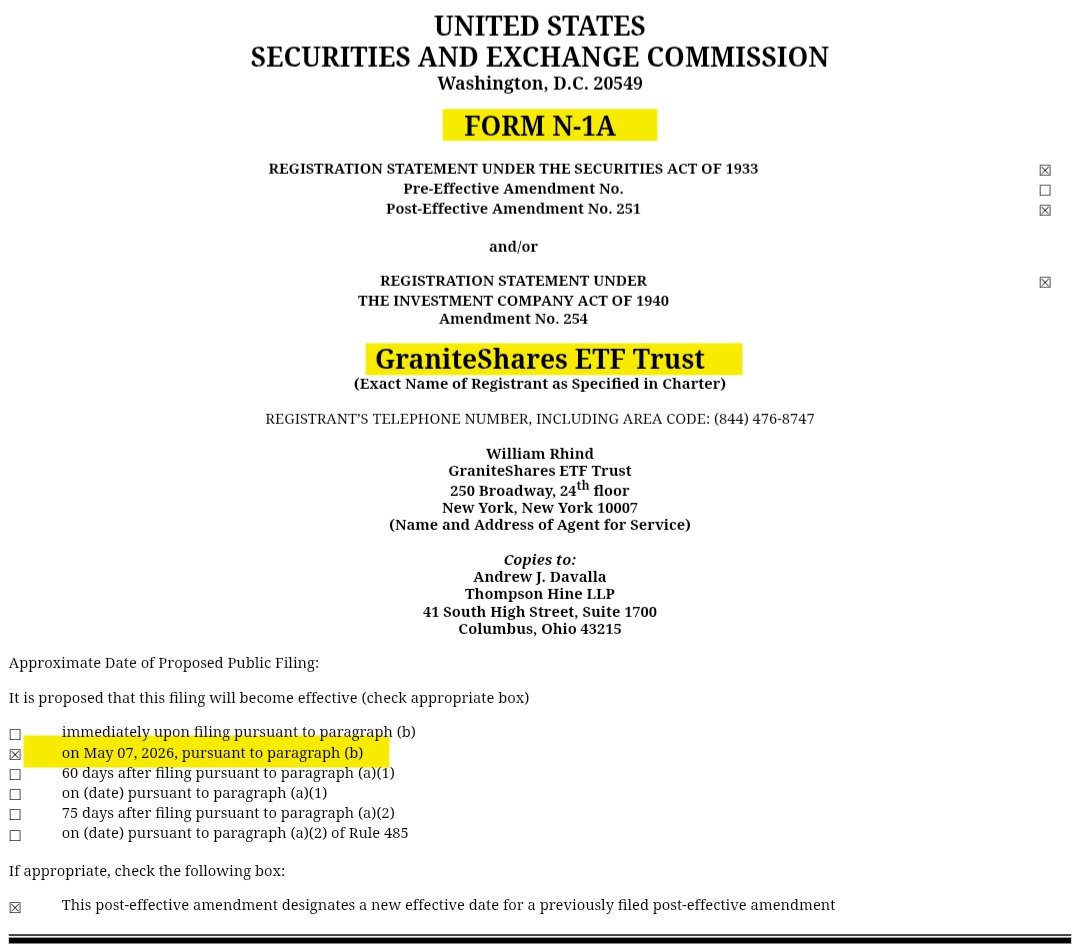
GraniteShares Delays 3x XRP ETF Launch But Accumulation Continues

XRP Sends Bullish On-Chain Signal Despite Weak Price Action