The Philippines’ renewable energy drive: Growth, gaps, and a pipeline reset
By Jomarc Angelo M. Corpuz, Special Features and Content Writer
The Philippines is becoming an attractive destination for the renewable energy industry, largely due to its market policies and structure that have led to sizeable investments. So much so, in fact, that the country has placed no lower than fourth in the research firm Bloomberg NEF’s Climatescope rankings over the past three years. According to the firm, the Philippines ranks fourth among emerging markets and second in the Asia-Pacific region with a power score of 2.64.
Central to the market policies and structure that has led to the achievement is the Department of Energy’s (DoE) Philippine Energy Plan (PEP) 2023-2050, which “outlines the straightforward path for the energy sector to realize the envisioned Clean Energy Scenario.” The plan aims to achieve over 40% renewable energy in the total energy mix by 2030 and surpass 50% by 2040, while also incorporating nuclear energy and gradually reducing reliance on fossil fuels.
Currently, the country’s power mix is dominated by coal, which is responsible for nearly 60% of the energy generated in the Philippines, followed by natural gas at 18%, geothermal at 10%, hydro at 8%, and other energy sources making up the rest of the mix.
Against this policy backdrop, energy developers are recalibrating their portfolios to align with the country’s transition goals.
Meralco PowerGen Corp. (MGEN), for its part, is positioning itself as a diversified player across both conventional and renewable energy sources.
“MGEN is not approaching the energy transition as a shift away from one fuel type to another. It is positioning itself as a diversified, future-ready energy power generator that can support the country’s evolving energy needs across multiple technologies. Its portfolio of 5,069.7 MW reflects that balance,” the company said.
To move from targets to tangible outcomes, the government has introduced a range of policy mechanisms designed to attract investment while ensuring system stability. Chief among these is the Green Energy Auction Program (GEAP), which provides a transparent and competitive framework for procuring renewable capacity.
While these mechanisms have helped unlock investments, industry players note that the effectiveness of such policies ultimately hinges on how consistently and transparently they are implemented.
“Recent policy reforms and stricter enforcement mechanisms have both positive and challenging implications for investor confidence,” MGEN added. “On the positive side, stronger enforcement improves market discipline by ensuring that only viable and committed projects proceed, which benefits developers like us at MGEN.”
GEAP’s Next Round
After the GEAP’s successful first round of auction in 2022, the program is now in its fifth edition, with the DoE gearing up for the competitive auction of large-scale offshore wind projects in August. The program is currently undergoing pre-bid evaluations, pre-bid conferences, and other pre-auction activities until Aug. 26, ahead of the auction proper on Aug. 27.
For this edition, the DoE is offering up to 3,300 megawatts of fixed-bottom offshore wind capacity, targeted for delivery between 2028 and 2030. Winning bidders are expected to be announced by Sept. 23, while certificates of award are set to be issued in February 2027.
The gradual lean towards the use of offshore wind development is mirrored by increasing activity across what the DoE has in their renewable energy pipeline. Recent developments show five renewable energy projects with a combined capacity of more than 500 megawatts (MW) have been cleared to proceed to the next stage of technical evaluation.
According to the DoE, these projects have been granted endorsements to undergo a system impact study (SIS) with the National Grid Corp. of the Philippines (NGCP). The SIS is a necessary step for every renewable energy project in development, as it determines whether the existing grid infrastructure can accommodate additional capacity without compromising the system or leading to more red and yellow grid alerts.
Among the projects endorsed is the 200-MW Abra-Kalinga wind power project of JBD Water Power, Inc., which goes to show the continued investor interest in onshore wind development.
Freya Renewables Inc. has also proposed a 160-MW wind farm in Negros Occidental, while Amihan Power, Inc. is planning an 80-MW wind project in Camarines Sur, which further signals the archipelagic spread of wind investments across the country.
Despite the abundance of it, the pipeline is not limited to wind energy. Energy Development Corp. is advancing the 30-MW Botong-Rangas geothermal project in Sorsogon, potentially adding to the country’s largest resource of renewable energy. Meanwhile, PAVI Green Camsur Renewable Energy, Inc. is developing a 50-MW solar project in Camarines Sur, showing the continued expansion of solar capacity driven by better funding and shorter construction timelines.
Integrating New Generation
However, as more renewable projects move forward, attention is increasingly turning to the grid’s capacity to support and efficiently integrate new generation.
“The country’s power grid is one of the most important enabling factors — and at the same time one of the most practical constraints — on the accelerated growth of renewable energy in the Philippines. Continued investment in transmission infrastructure and the integration of technologies such as energy storage systems will play key roles in strengthening system resilience,” MGEN said.
An example that the company cited is its very own MTerra Solar, which has recently been energized with up to 250 MW of solar generation capacity and 450 MWh of battery energy storage system (BESS) — the largest integrated installations of its kind in the country to date.
More Selective Approach
At the same time, the government has taken a firmer stance on ensuring that only viable and compliant projects remain in the pipeline. In 2025 alone, the DoE revoked 84 renewable energy service contracts, equivalent to an estimated 5,372.209 MW of potential capacity that had previously been factored into national energy plans.
The move follows a comprehensive technical and legal review that found multiple projects in violation of their contractual obligations. These violations ranged from failure to deliver on committed work programs to noncompliance with the terms of reference under the GEAP, as well as broader breaches of DoE standards.
The termination of an additional eight contracts this year underscores the agency’s intensified efforts to weed out inactive or underperforming developers.
While the revocations may appear to reduce the headline capacity in the short term, they also serve a strategic purpose as the DoE is effectively making room for more capable developers to step in and potentially accelerate the realization of power capacity.
The government’s stricter stance reflects a broader shift toward prioritizing project viability, though it also raises questions about how to balance efficiency with inclusive growth.
“A more selective approach can help improve system outcomes by prioritizing well-structured, bankable, and execution-ready. It also helps ensure that projects moving forward are aligned with grid readiness, demand growth, and long-term system requirements,” MGEN said.
As the country pushes forward, ensuring that regulatory processes and developer performance keep pace with policy ambition will be key to sustaining momentum. If these elements align, the Philippines stands a strong chance of translating its renewable energy targets into a tagline as one of the region’s most dynamic clean energy markets.
“Continued investment in grid expansion, modernization, and energy storage will also be critical to enabling higher renewable energy penetration. In this regard, MGEN – through its diversified portfolio of thermal, LNG, and renewable assets — is well positioned to help accelerate the country’s transition toward a more sustainable energy future,” MGEN concluded.


You May Also Like
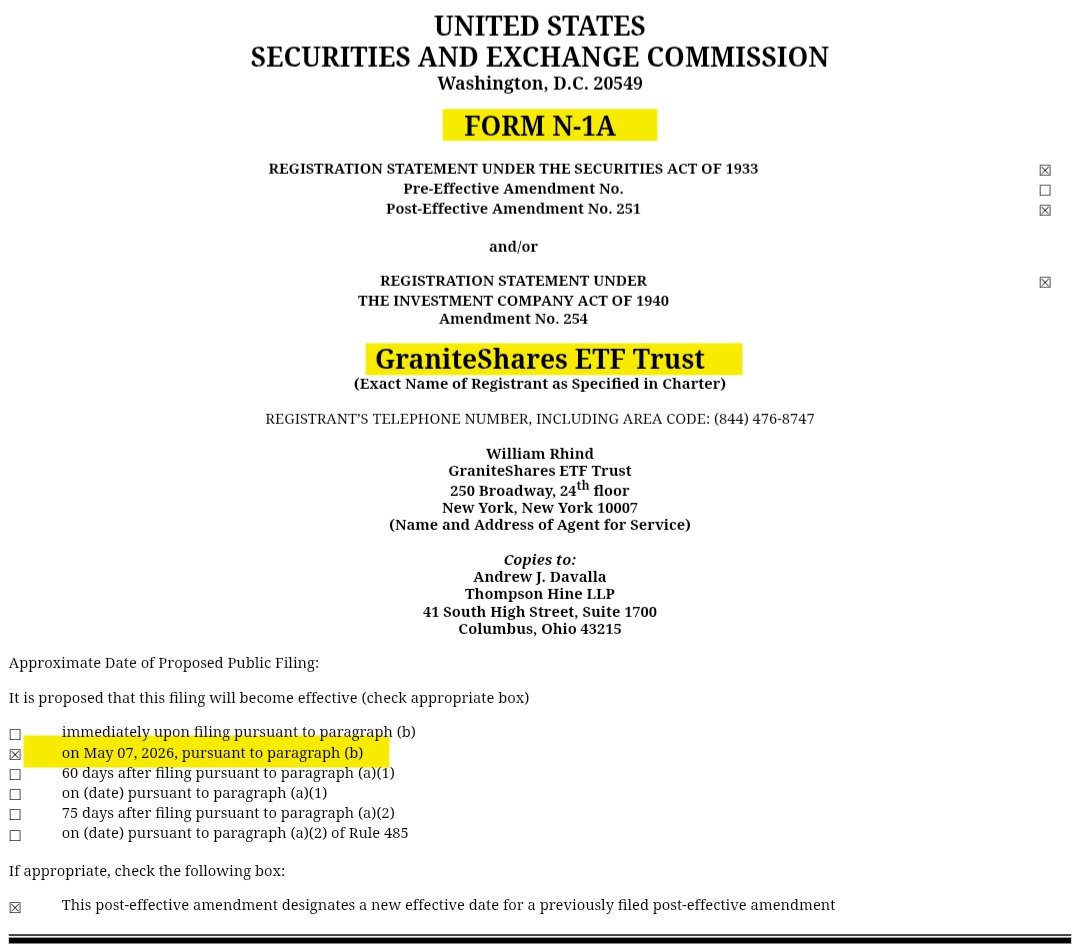
GraniteShares Delays 3x XRP ETF Launch But Accumulation Continues

XRP Sends Bullish On-Chain Signal Despite Weak Price Action