Ethereum Vs Nvidia Returns Shock Investors Over Five Years
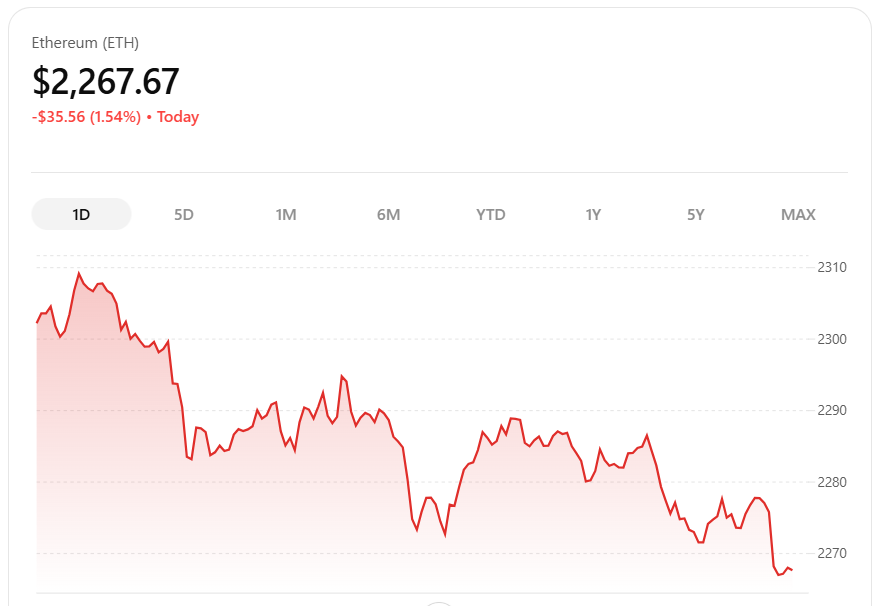
The debate around Ethereum vs Nvidia performance has taken over investor conversations recently. The numbers feel shocking, even for seasoned market participants. A $100,000 investment in Ethereum five years ago now sits around $85,000. Meanwhile, the same investment in Nvidia skyrocketed to nearly $1.4 million. This gap forces investors to rethink long-held assumptions about crypto dominance.
For years, many believed Ethereum would lead the future of finance. It powered DeFi, NFTs, and smart contracts. It attracted developers and institutions alike. Yet, price performance tells a very different story. Investors who expected exponential gains now face a sobering reality. Markets reward execution, not just potential.
At the same time, Nvidia quietly built one of the strongest growth stories in modern markets. It capitalized on artificial intelligence demand and dominated GPU infrastructure. It turned itself into the backbone of AI innovation. This contrast between hype and execution sits at the center of the Ethereum vs Nvidia performance debate.
Why Ethereum Fell Behind Despite Strong Fundamentals
Ethereum did not fail as a technology. It evolved significantly over the past five years and shifted to proof of stake and also improved scalability through upgrades. It maintained its position as the leading smart contract platform.
However, price action tells another story. The crypto market experienced extreme volatility. Regulatory uncertainty slowed institutional adoption. Many retail investors entered at peak hype cycles. These factors heavily impacted returns.
The crypto vs stocks comparison highlights a key issue. Crypto markets rely heavily on sentiment. Stocks like Nvidia rely on revenue, earnings, and real-world demand. Ethereum struggled to translate innovation into consistent price growth.
Nvidia Stock Growth Shows The Power Of Real Demand
Nvidia’s rise did not happen overnight. It built its dominance through years of strategic positioning. The company focused on GPUs long before AI became mainstream. When AI demand exploded, Nvidia stood ready. The surge in Nvidia stock growth came from real business fundamentals. Revenue increased rapidly. Profit margins expanded. Demand for AI chips created supply shortages. Every major tech company relied on Nvidia hardware.
This created a powerful feedback loop. Strong earnings attracted investors. Rising stock prices boosted confidence. Institutional capital flowed aggressively into Nvidia. Unlike crypto, Nvidia operates in a regulated environment. Investors feel safer allocating large capital. This stability played a huge role in the Ethereum vs Nvidia performance gap.
What Could Change In The Next Five Years
The next phase of Ethereum vs Nvidia performance depends on several key factors. Ethereum must prove it can scale efficiently. It must reduce transaction costs. It must maintain developer dominance. At the same time, Nvidia must sustain its growth. AI demand must remain strong. Competition must not erode margins. Any slowdown could impact stock performance significantly.
The Ethereum investment outlook also depends on macro conditions. Interest rates, regulations, and institutional adoption will shape future returns. A favorable environment could push crypto higher. Meanwhile, the crypto vs stocks narrative may evolve. Investors could diversify across both asset classes. Instead of choosing one, they may allocate strategically.
Can Ethereum Catch Up Or Will Nvidia Keep Leading
Ethereum still holds massive potential. It remains the backbone of decentralized applications. It continues to innovate. But potential alone does not guarantee returns.
Nvidia has already proven its ability to generate value. Its dominance in AI infrastructure gives it a strong advantage. This makes it difficult for Ethereum to match its performance quickly.
However, crypto markets move differently. They can deliver rapid gains in short periods. If Ethereum enters a strong bull cycle, it could close the gap faster than expected.
The Ethereum vs Nvidia performance debate ultimately highlights one truth. Markets reward timing, execution, and patience. Investors must adapt rather than rely on past narratives.
The post Ethereum Vs Nvidia Returns Shock Investors Over Five Years appeared first on Coinfomania.


You May Also Like

Crypto Hack: Drift Protocol Drained Over $200M in Private Key Breach

USD/CAD firms near 1.3670 ahead of Fed-BoC rate calls