US Treasury Seizes Nearly $500 Million in Iranian Crypto Assets Under Operation Economic Fury
BitcoinWorld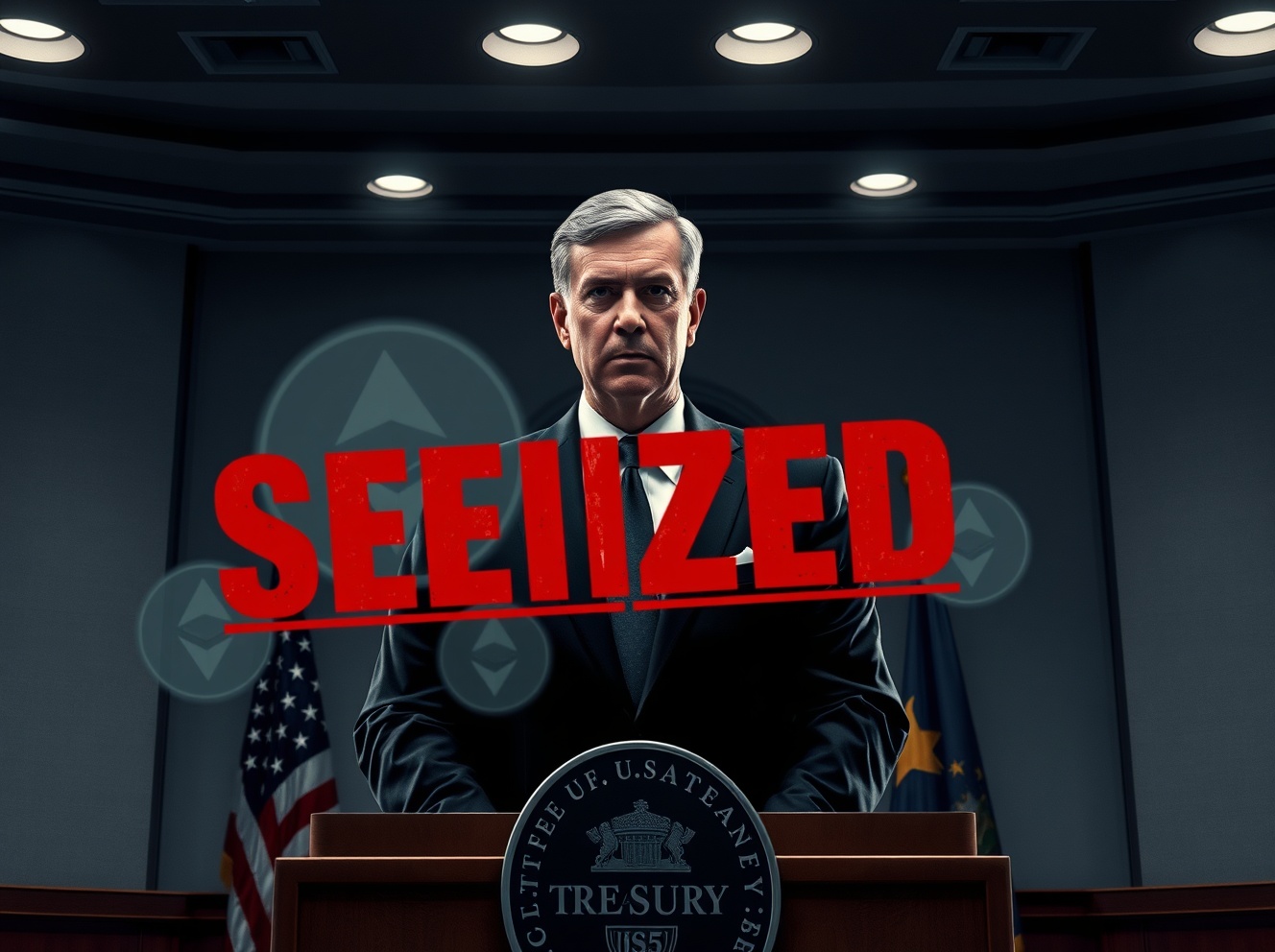
US Treasury Seizes Nearly $500 Million in Iranian Crypto Assets Under Operation Economic Fury
Washington, D.C. – April 30, 2025 – The United States Treasury Department has announced the seizure of nearly $500 million in Iranian crypto assets. Treasury Secretary Scott Bessent revealed the figure during a Fox Business interview on April 29. This action forms a key part of “Operation Economic Fury,” a pressure campaign ordered by President Donald Trump in March 2025. The seizure marks a significant escalation in the U.S. government’s financial war against the Iranian regime.
Operation Economic Fury Targets Iranian Crypto Assets
Secretary Bessent outlined the operation’s broad scope. He stated that the U.S. is freezing bank accounts globally. The goal is to discourage any willingness to transact with the Iranian regime. The sanctions extend beyond digital currencies. They also cover the retirement pensions and overseas real estate holdings of Iranian officials. This comprehensive approach aims to cut off all financial lifelines to Tehran.
The $500 million figure represents a substantial increase from previously disclosed amounts. Last week, stablecoin issuer Tether froze over $344 million in USDT. This action followed sanctions on Iran-linked crypto wallets by the Treasury’s Office of Foreign Assets Control (OFAC). The coordinated effort highlights the government’s growing capability to track and seize digital assets.
Background: The Evolution of Crypto Sanctions Against Iran
This is not the first time the U.S. has targeted Iranian crypto holdings. However, the scale of this seizure is unprecedented. Previous actions involved smaller amounts and focused on specific exchanges or wallet addresses. Operation Economic Fury represents a systemic shift. It leverages advanced blockchain analytics to identify and freeze assets across multiple jurisdictions.
Iran has increasingly turned to cryptocurrency to bypass traditional financial sanctions. The country uses digital assets to import goods and pay for services. This workaround threatens the effectiveness of the U.S. sanctions regime. The Treasury’s latest move sends a clear message: no financial channel is safe from American oversight.
Key Details of the Seizure
- Total amount seized: Nearly $500 million in various cryptocurrencies.
- Primary target: Iranian government-linked wallets and exchanges.
- Key partners: OFAC, Tether (USDT issuer), and international financial intelligence units.
- Timeline: Operation began in March 2025; seizure announced April 29, 2025.
- Scope: Global freeze on bank accounts, crypto wallets, and real estate assets.
Impact on Iran’s Economy and Crypto Markets
The seizure deals a severe blow to Iran’s ability to finance its operations. The Iranian rial has already weakened against foreign currencies. This action will likely accelerate its decline. For the crypto market, the seizure creates uncertainty. Investors may worry about the safety of their assets on exchanges that do not comply with U.S. sanctions.
However, the market reaction has been muted so far. Bitcoin and Ethereum prices remain stable. This suggests that the seizure is seen as a targeted action, not a broad crackdown on crypto. Analysts note that the U.S. is using crypto’s own transparency against its users. Blockchain’s public ledger makes it easier to trace illicit transactions.
Expert Analysis: A New Era of Financial Enforcement
“This is a watershed moment for financial enforcement,” says Dr. Elena Marchetti, a sanctions law expert at Georgetown University. “The Treasury is demonstrating that crypto is not a safe haven for rogue states. They are using the same tools that made crypto popular—transparency and immutability—to dismantle illicit networks.”
Dr. Marchetti adds that the cooperation with Tether is crucial. Tether’s decision to freeze USDT wallets shows that stablecoin issuers are willing to comply with U.S. law. This precedent could force other issuers to follow suit. It also raises questions about decentralization. If a single company can freeze tokens, how decentralized is the ecosystem?
Timeline of Key Events
| Date | Event |
|---|---|
| March 2025 | President Trump orders Operation Economic Fury |
| April 22, 2025 | Tether freezes $344 million in USDT linked to Iran |
| April 29, 2025 | Treasury Secretary Bessent announces $500 million seizure |
How the U.S. Tracks and Seizes Iranian Crypto Assets
The Treasury uses advanced blockchain analytics tools. These tools map transactions across multiple blockchains. They identify patterns that link wallets to Iranian entities. Once identified, OFAC issues sanctions designations. These designations require U.S.-based companies to freeze assets. The Treasury also works with foreign regulators to enforce seizures abroad.
The process is not automatic. It requires significant intelligence gathering. The Treasury likely used classified information to pinpoint the wallets. This operation demonstrates a high level of interagency cooperation. The FBI, CIA, and Department of Justice all played roles.
Global Reactions and Diplomatic Fallout
Iran has condemned the seizure. The Iranian Foreign Ministry called it “economic terrorism.” They vowed to find new ways to circumvent sanctions. Meanwhile, European allies have expressed support. The EU has its own sanctions regime against Iran. However, some European officials worry about the precedent of freezing assets without a court order.
Russia and China have criticized the action. They argue that it undermines the global financial system. Both countries are exploring alternatives to the U.S. dollar. This includes developing their own digital currencies. The seizure may accelerate those efforts.
Conclusion
The U.S. Treasury’s seizure of nearly $500 million in Iranian crypto assets marks a historic moment in financial enforcement. Operation Economic Fury demonstrates the government’s ability to target digital currencies with precision. The action sends a strong signal to rogue states and illicit actors. No financial channel, whether traditional or digital, is beyond the reach of U.S. sanctions. As the world moves toward a digital economy, this operation sets a critical precedent for the future of financial warfare.
FAQs
Q1: What is Operation Economic Fury?
A: It is a U.S. pressure campaign ordered by President Trump in March 2025. It targets Iran’s financial networks, including crypto assets, bank accounts, and real estate.
Q2: How did the U.S. seize the Iranian crypto assets?
A: The Treasury used blockchain analytics to identify Iran-linked wallets. OFAC then sanctioned these wallets, forcing companies like Tether to freeze the assets.
Q3: What role did Tether play in the seizure?
A: Tether, the issuer of USDT, froze over $344 million in stablecoins linked to Iran. This action followed OFAC sanctions and was part of the larger seizure.
Q4: Can Iran still use cryptocurrency after this seizure?
A: Yes, but it will be more difficult. Iran may use decentralized exchanges or privacy coins to avoid detection. However, the U.S. is likely to adapt its tracking methods.
Q5: What does this mean for ordinary crypto investors?
A: The seizure is targeted and does not affect most investors. However, it highlights the importance of using compliant exchanges. Investors should avoid platforms that facilitate sanctions evasion.
This post US Treasury Seizes Nearly $500 Million in Iranian Crypto Assets Under Operation Economic Fury first appeared on BitcoinWorld.


You May Also Like

SPARC AI Releases Updated Investor Presentation Outlining Growth Strategy for GPS-Denied Navigation Technology

Zaldy Co detained, but Czech and French envoys could offer no other info to Marcos