

Nigerians spent N3.3 trillion to buy data between January and March 2026
Industry data from the Nigeria Communications Commission (NCC) reveal that Nigerians spent N3.33 trillion on data in the first three months of 2026.
According to the report, an average Nigerian internet subscriber used 28 gigabytes (GB) over three months, equivalent to 14,000 high-quality songs streamed or 5,600 Zoom video calls. For movie lovers, it translates to 56 hours of Netflix in standard HD or say 28,000 average web pages; all between January and March.
This presents a picture of Nigerians’ growing data usage pattern.
For Amaka, a 200-level student who sells clothes and other accessories, her marketing mix will be powered by posting her goods on her social media page. The Internet is powerful here. And this is a society where we have hundreds of Amakas across over 150 Nigerian Universities.
Across the formal and informal sectors, a dispatch rider or e-hailing driver needs an online presence to take orders and perform daily activities; a POS agent’s terminal needs an active internet connection; small and medium businesses mostly rely on digital payment.
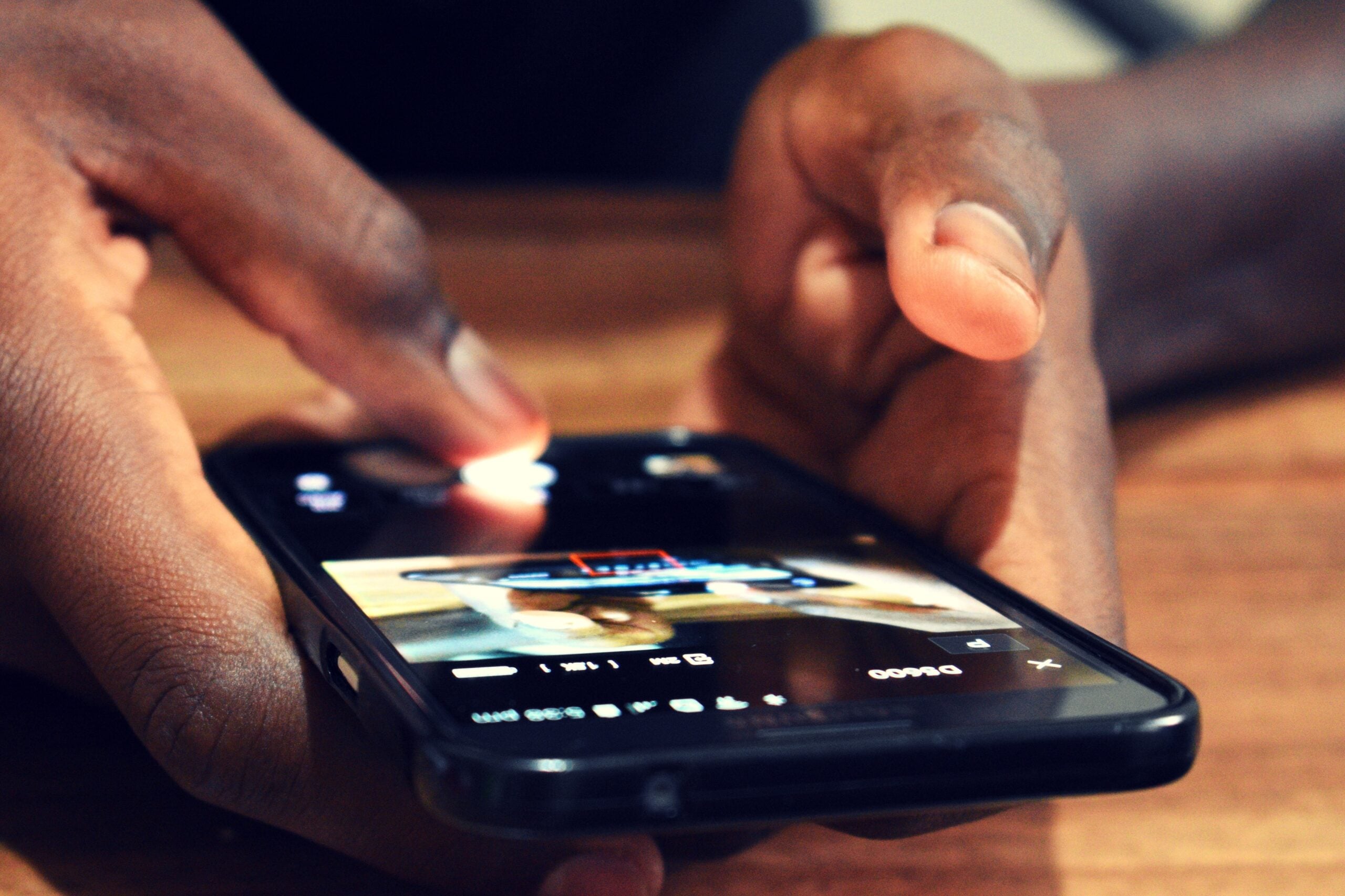 An internet user
As remote and hybrid jobs increase, the internet has become the new office for teams. Importantly, individuals now spend more time online and use more data owing to the growing trend of video streaming, quality of pictures, advanced application software and increased file sizes.
The internet is the new language, and whoever is unable to understand this language is, at large, cut off from trends and important conversations.
How N3.3 trillion was spent in three months
Coming from December’s festive season and holidays, Nigerian internet users continued the sprint using 1.385 million terabytes of data in January 2026, a bit short of the 1.386 million in December 2025.
About N1.13 trillion (at 1GB = N800) was spent on data. On average, 9.6 GB of data, or say N7,680, was expended by each of January’s 151.56 million internet subscribers.
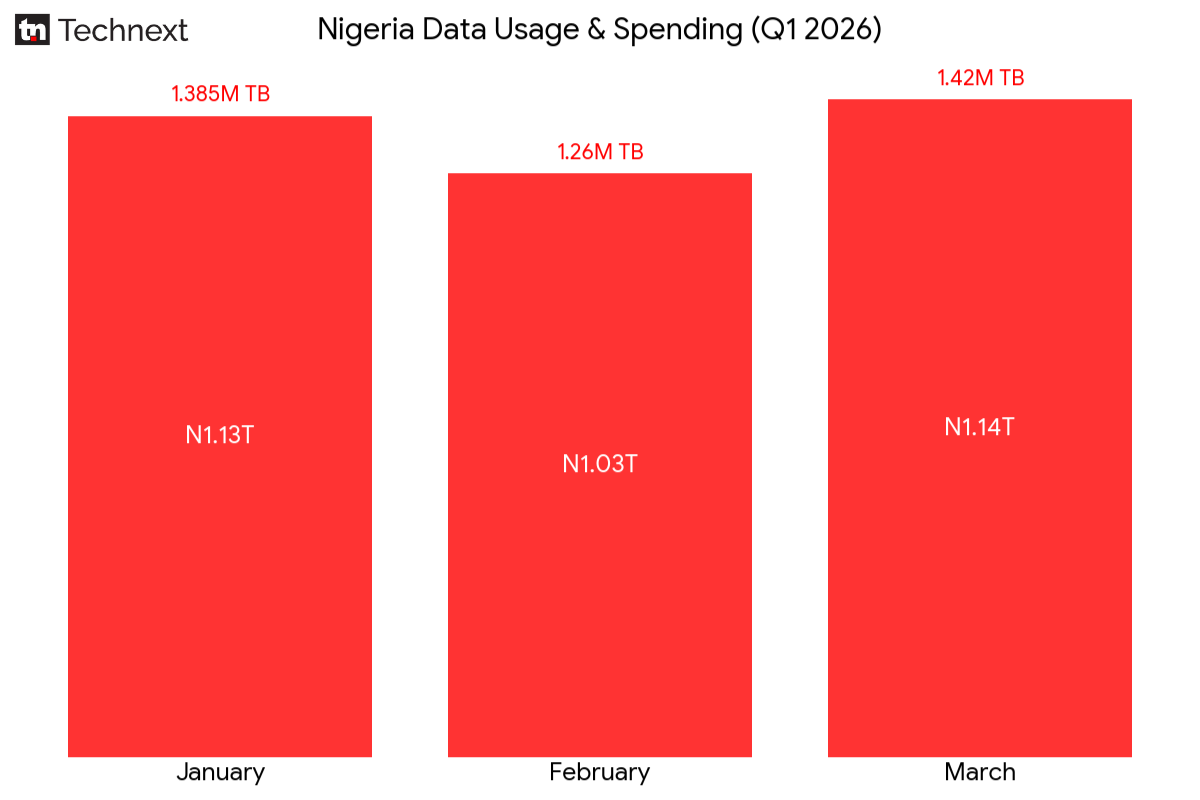 Nigeria Data Usage and Spending
The pattern hit a low in February, attributed to a shift from the new year’s bounce.
While internet users rose to 153.13 million in February, the same wasn’t the case with data usage, as 1.26 million terabytes were used. This translates to 8.6 GB (N6,880) of data used per head. For the entire month, N1.03 trillion was spent on data.
The story changed in March, surpassing all other months since the monthly data usage count by the NCC started.
March saw 1.42 million terabytes of usage distributed among 153.82 million Nigerians on the internet. Individual count shows 9.7 GB (N7,760) of data usage or N1.14 trillion for all subscribers, a notable increase from the previous month.
Overall, the first three months saw an accumulation of 27.9 GB (N22,400) of data usage per head and 4.06 million terabytes (N3.33 trillion).
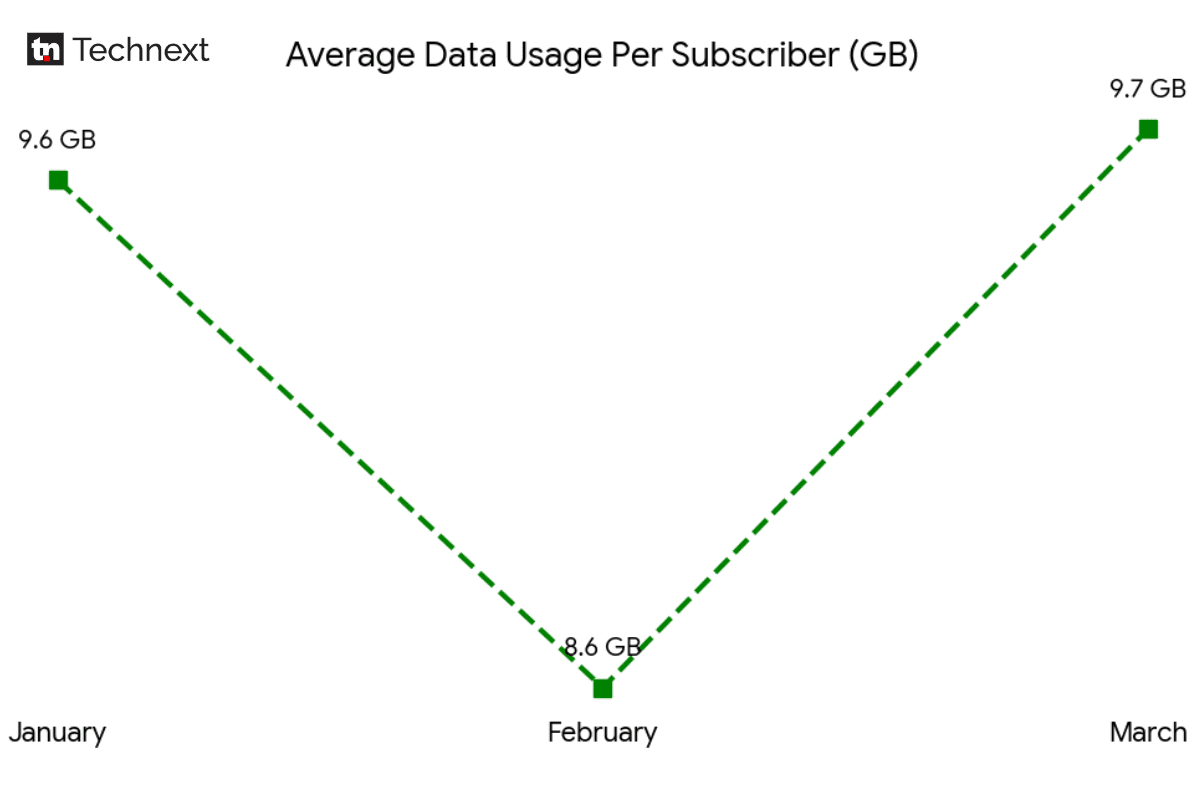 Average Data Usage
Also Read: Nigeria added 650,000 new internet users in March, driven by mobile data subscriptions.
The mixed bag
The average performance of data usage reveals a striking indirect relationship: despite the continuous drop in network quality, viral complaints on epileptic internet experience and alleged data depletion, internet users keep increasing.
In one sentence. A drop in network quality doesn’t equate to a drop in internet users.
In reality, the data can be misleading at first glance.
On second look, the data isn’t saying Nigerians are comfortable with the current situation of inconsistent network quality. In fact, telecom users are cut in a wedge where switching from MTN to Airtel or from Globacom to T2mobile doesn’t yield a positive result.

A recent NCC’s quality of experience report revealed that fibre cut incidents were rampant in the fourth quarter of 2025, with an average of 1,100 fibre cut cases recorded every week.
Likewise, a recent data analysis for the first three months of 2026 shows that 577 different cases of major network outages were recorded by telecom players, revealing the number of disruptions experienced during voice and data engagement.
Then, why is internet usage increasing despite a drop in network experience?
The answer is obvious. Nigerians are caught in a basket of “no choice”. While every operator is accustomed to poor network quality, the space becomes a monopoly for users: no alternative, since an internet connection is indispensable. This occurs when porting between a network provider yields no result, or when the choice of using one of MTN, Globacom, Airtel or T2mobile is dependent on your location at a point in time.
For a student, remote worker, tech bro/sis, POS operator, business or corporate organisations, accessing the internet is no debate, regardless of the provider’s efficiency.
Protecting subscribers’ utility
If both telecom and internet subscribers’ numbers keep increasing despite the drop in network quality, it only means Nigerians aren’t getting what they’re paying for.
In striking a balance between payment for service and satisfaction in the industry, telecom stakeholders recently forced the industry to adopt a Dig-Once policy.
The initiative advocates for a situation where operators install fibre ducts alongside road and rail line construction or rehabilitation, and other public infrastructure. This prevents frequent fibre cuts, repeated digging, and vandalism of fibre ducts by construction companies.
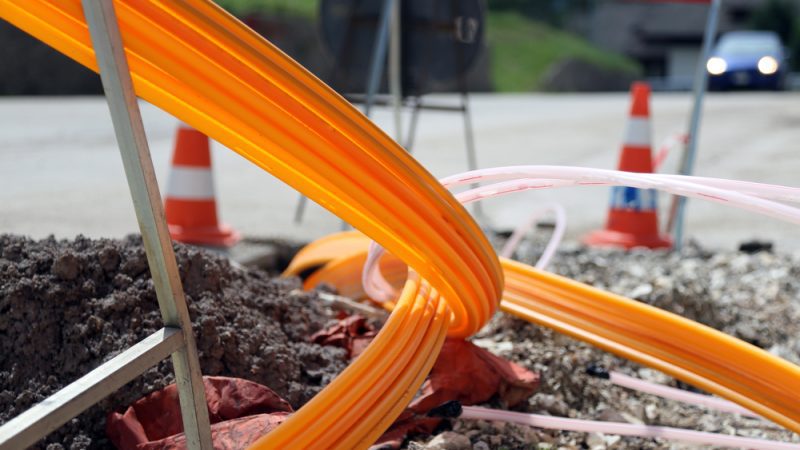 Deploying Fibre
The Dig-Once policy was also identified as the key to the federal government achieving the 90,000km nationwide fibre deployment target.
Read More: Fibre Cuts: Nigerian telecom stakeholders push “Dig-Once” policy for quality network.


You May Also Like

The yoghurt fight thickens as Danone sues Chobani over protein labels
Upbit Halts TAIKO Deposits and Withdrawals Amid Network Issue
Bithumb Temporarily Halts TAIKO Deposits and Withdrawals Due to Mainnet Issue



