

Gold Prices Rise 2.3% as U.S.-Iran Ceasefire Talks Progress
TLDR
- Spot gold rose 2.3% to $4,662.70 an ounce on Wednesday as ceasefire signals between the U.S. and Iran boosted sentiment.
- President Trump paused a plan to guide commercial ships through the Strait of Hormuz, citing “great progress” toward an Iran deal.
- A weaker U.S. dollar, down 0.5%, made gold cheaper for foreign buyers and added upward pressure to prices.
- Bond traders are increasing bets on a Federal Reserve rate hike rather than a cut, as inflation concerns grow.
- Gold has fallen more than 12% since the U.S.-Iran conflict began in late February.
Gold futures climbed sharply in Wednesday trading, with spot gold rising 2.3% to $4,662.70 per ounce in New York, while gold futures hit $4,668.80 a troy ounce — up 2.2% on the day. Silver also posted gains, rising 4.2% to $75.91. Platinum and palladium moved higher as well.
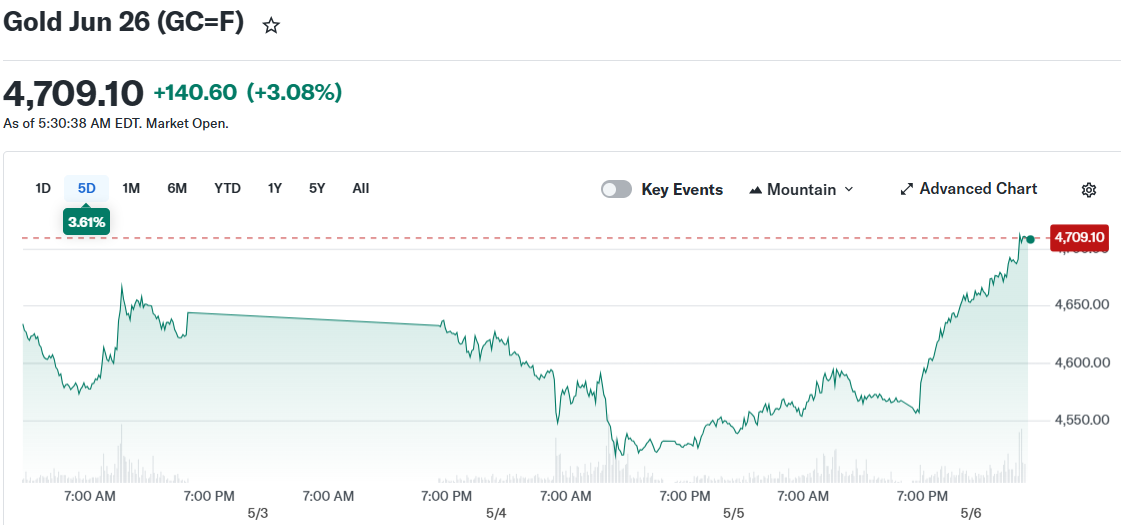 Gold Jun 26 (GC=F)
The move came after President Donald Trump posted on social media that “great progress” had been made in talks with Iran, and that he was pausing a U.S.-led effort to guide stranded ships through the Strait of Hormuz while a deal is pursued.
U.S. Defense Secretary Pete Hegseth confirmed the ceasefire that began roughly a month ago was holding. Secretary of State Marco Rubio added that offensive operations are over, with Washington now focused on protecting commercial shipping in the strait. Iran’s Foreign Minister Abbas Araghchi said talks were “making progress.”
Despite the upbeat tone from officials, a cargo vessel was reportedly struck by an unknown projectile the day after clashes near the Strait of Hormuz — a reminder that tensions haven’t fully cooled.
Dollar Drop Adds Fuel
A 0.5% drop in the U.S. dollar index helped push gold higher, as a weaker dollar makes the metal cheaper for buyers using other currencies. ING strategists Warren Patterson and Ewa Manthey noted that fears of further conflict are keeping gold’s safe-haven appeal alive.
They added that a more lasting ceasefire could lower inflation risk and reduce the chance of Federal Reserve rate hikes — which would, on balance, support gold. Non-yielding assets like gold tend to benefit when interest rate expectations fall.
Rate Hike Fears Loom Over Market
The path forward for gold is not straightforward. Bond traders are increasingly pricing in the possibility that the Fed’s next move is a rate hike rather than a cut. That shift is putting a ceiling on how far gold can rally in the near term.
Investors are now closely watching the upcoming U.S. employment report, which could show stabilizing labor market conditions — and in turn give inflation concerns more weight in the Fed’s decision-making.
Gold has fallen more than 12% since the conflict with Iran began in late February, and strategists say positioning in the metal remains complicated. Nicky Shiels, head of research and metals strategy at MKS PAMP SA, described precious metals as entering summer in a “structural positioning paradox.”
She pointed out that seasonal patterns and what she called “exhausted retail” investors are unlikely to drive the next leg higher on their own.
The next major driver for gold, according to ING, will be the outlook for interest rates — shaped by U.S. Treasury borrowing plans and key economic data releases in the weeks ahead.
The post Gold Prices Rise 2.3% as U.S.-Iran Ceasefire Talks Progress appeared first on CoinCentral.


You May Also Like

Ex-Trump lawyer panics when confronted on Epstein ties: 'Let me get a pic so I can sue!'

IFX Launches the First Market for AI Token Futures
Futures Rebound From "Chip-Wreck" Ahead Of Critical Micron Earnings



