

Aurora’s Chris Urmson explains why self-driving trucks are finally ready to scale commercially

BitcoinWorld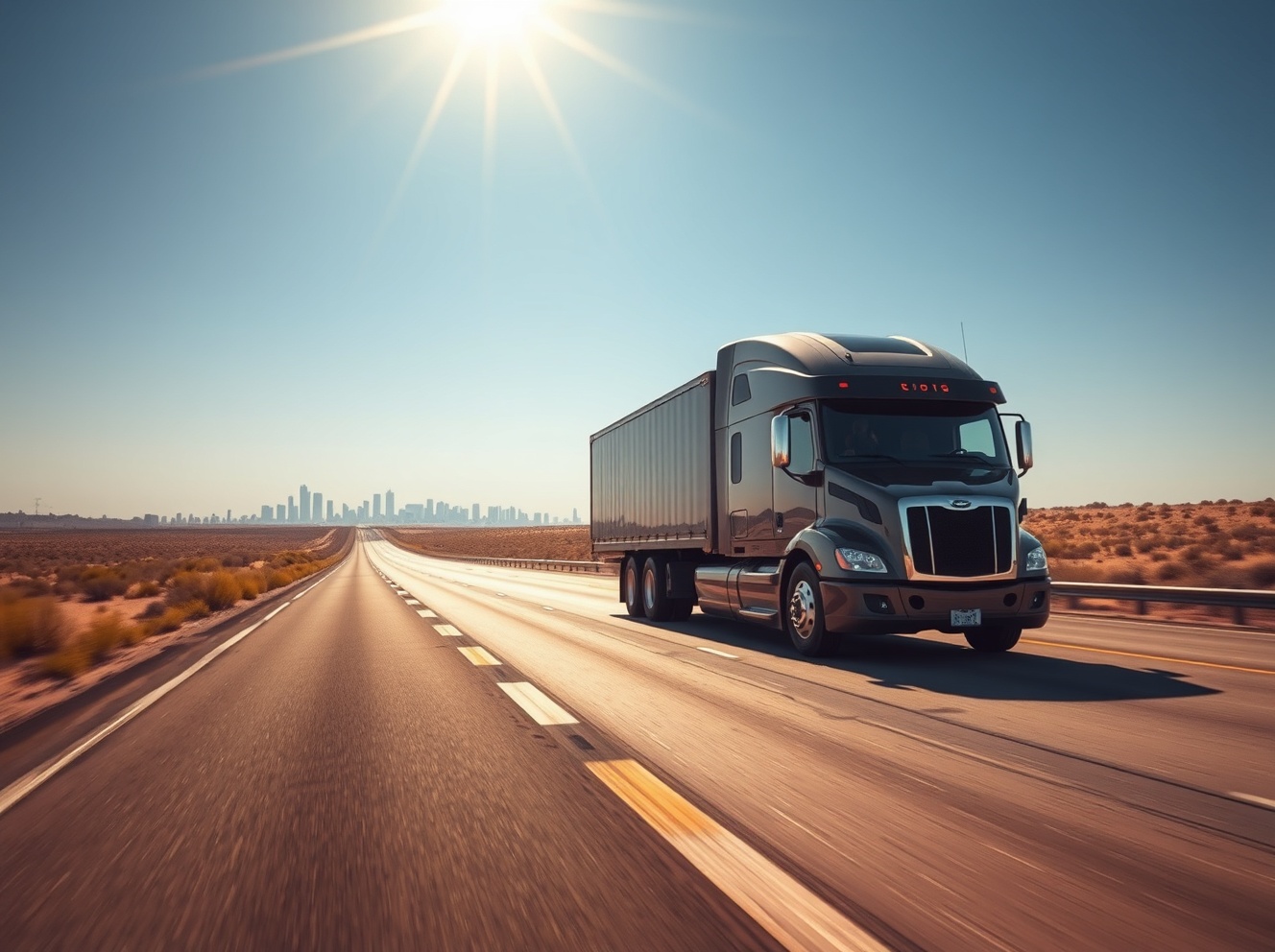
Aurora’s Chris Urmson explains why self-driving trucks are finally ready to scale commercially
Self-driving technology has been described as “almost here” for more than a decade. But Aurora co-founder and CEO Chris Urmson believes that moment has finally arrived — at least for long-haul trucking. In a recent interview at the HumanX conference in San Francisco, Urmson told Bitcoin World’s Rebecca Bellan that the company’s commercial driverless operations, which began in April 2025, are now moving from a handful of trucks to hundreds by the end of 2026.
Why trucking leads the autonomy race
Urmson, a veteran of the DARPA Grand Challenges and a former leader of Google’s self-driving car project, has long argued that autonomous freight offers a clearer business case than robotaxis. The economics of long-haul trucking — where labor costs are high, driver shortages are persistent, and routes are predictable — make it a natural early market for self-driving technology. Aurora’s current operations run between Dallas and Houston, a corridor that offers relatively simple highway driving conditions and high freight demand.
Unlike urban robotaxi services, which must navigate pedestrians, cyclists, and unpredictable city traffic, highway trucking involves more structured environments. Aurora’s approach focuses on what Urmson calls “verifiable AI” — systems that can be rigorously tested and validated for safety, rather than relying on end-to-end machine learning models that may behave unpredictably in edge cases.
Physical AI versus large language models
Urmson drew a sharp distinction between the current boom in generative AI and the challenges of physical AI. While large language models have captured public imagination and venture capital, he noted that deploying autonomous vehicles requires solving fundamentally different problems: real-time perception, motion planning, and fail-safe operations in a world where mistakes can have lethal consequences.
“End-to-end systems are a liability when lives are on the line,” Urmson said, emphasizing that Aurora’s technology uses a modular architecture with separate subsystems for perception, prediction, and planning. This design allows each component to be independently tested and validated, a critical requirement for regulatory approval and public trust.
The safety triangle and a practical solution
One of the persistent challenges in autonomous trucking has been the “safety triangle” problem: ensuring that a driverless truck can safely pull over in the event of a system failure or road hazard. Urmson described a surprisingly common-sense solution — equipping trucks with a minimal set of backup controls that allow a remote operator to guide the vehicle to a safe stop, rather than requiring full teleoperation capability.
This approach balances safety with operational practicality, keeping costs manageable while still addressing the most critical failure scenarios. It also aligns with emerging regulatory frameworks that require autonomous trucks to demonstrate a “minimum risk condition” capability.
Beyond trucking: Aurora’s roadmap
While trucking is Aurora’s immediate focus, Urmson acknowledged that the underlying technology could eventually extend to other domains. He expressed genuine excitement about companies working on autonomous logistics in constrained environments, such as warehouse robotics and last-mile delivery. However, he cautioned against overhyping timelines, noting that each new application requires its own validation cycle and regulatory approval.
Aurora’s partnership with major truck manufacturers and logistics providers has been key to its progress. The company’s driver-out operations have already accumulated millions of miles of testing data, and Urmson believes that the combination of regulatory clarity, technological maturity, and market demand has created a window that won’t close.
Why this matters
The scaling of autonomous trucking has significant implications for the freight industry, supply chains, and the broader economy. If Aurora and its competitors succeed, the cost of moving goods could decrease, delivery times could shorten, and the chronic driver shortage — which has strained logistics networks for years — could be alleviated. However, the transition also raises questions about job displacement, infrastructure readiness, and public acceptance of driverless vehicles on public roads.
Urmson’s interview suggests that the industry is finally moving from proof-of-concept to commercial reality, but the path remains incremental. For now, the focus is on proving that autonomous trucks can operate safely and reliably at scale on a few well-defined routes — before expanding to the rest of the country.
FAQs
Q1: When did Aurora start commercial driverless trucking operations?
Aurora began commercial driverless operations in April 2025, initially running a small fleet between Dallas and Houston.
Q2: How is Aurora’s approach different from end-to-end AI systems?
Aurora uses a modular architecture with separate, independently validated subsystems for perception, prediction, and planning, rather than a single end-to-end neural network. Urmson argues this is safer for life-critical applications.
Q3: What is the “safety triangle” problem in autonomous trucking?
The safety triangle refers to the challenge of ensuring a driverless truck can safely pull over if a system failure or hazard occurs. Aurora’s solution involves equipping trucks with minimal backup controls that allow a remote operator to guide the vehicle to a safe stop.
This post Aurora’s Chris Urmson explains why self-driving trucks are finally ready to scale commercially first appeared on BitcoinWorld.


You May Also Like

Pump.fun Traders See 70% Profitability Surge in 2026
Qualcomm (QCOM) Stock Hits 52-Week High on OpenAI Chip Deal




