Tech Trivia with Aghama Jesurobo, Founder of MumsWhoCode
Across Africa, technology has become deeply woven into how women navigate everyday life, especially mothers balancing work, business, caregiving, health, and family. From managing finances and shopping online to accessing healthcare, learning opportunities, and flexible jobs, digital tools are helping mums do more with less stress.
In commemoration of International Mother’s Day, today’s spotlight is on Aghama Moriah Jesurobo, an award-winning social impact leader, application developer and founder of MumsWhoCode.
MumsWhoCode is an online platform that supports African mothers to launch and grow tech careers and businesses. It provides a community of support, technical training, and mentorship sessions that bridge the gaps for mothers, equipping them with the people, opportunities, tools, and technologies required to launch and/or sustain growth in their dream tech careers.
As Founder, Aghama has built a high-impact community that has empowered over 4,000 women across 18 countries. Her leadership has bridged the gap for mothers and women in tech by providing essential technical skills, mentorship, and a pathway into the digital economy.
Her professional foundation is rooted in nearly two decades of technical excellence. Having served as a Principal Technologist at Bell’s University of Technology until 2025, she specialised in the strategic application of software to enhance institutional research, teaching, and administration.
Today, she continues to serve as an accomplished IT professional who develops and manages software applications, while acting as an edtech consultant and champion for tech inclusion and equity.
Read also: Tech Trivia with Joy Evboifo, Brand Manager at SoftAlliance
 Aghama
1. Summarise your mornings in one sentence
My weekday morning routine entails intentional personal time and family care, followed by a transition into my development work. While weekend mornings are reserved for well-deserved rest.
2. Describe your gadget setup
My setup consists of my main PC, a sub and a mobile phone. I am also a big pen-on-paper girlie. This tactile approach allows me to map out complex logic and ‘think on paper’ before I ever touch a keyboard.
3. What tech tools/ applications do you use the most for work?
My daily workflow is powered by a strategic mix of development and management tools. I rely on SQL Server Management Studio and Visual Studio Code, amongst others, for application development.
Odoo, Canva, WhatsApp and the Microsoft Admin Centre serve as my infrastructure for MumsWhoCode operations. Microsoft Teams and Gemini are essential for collaboration and AI-driven insights.
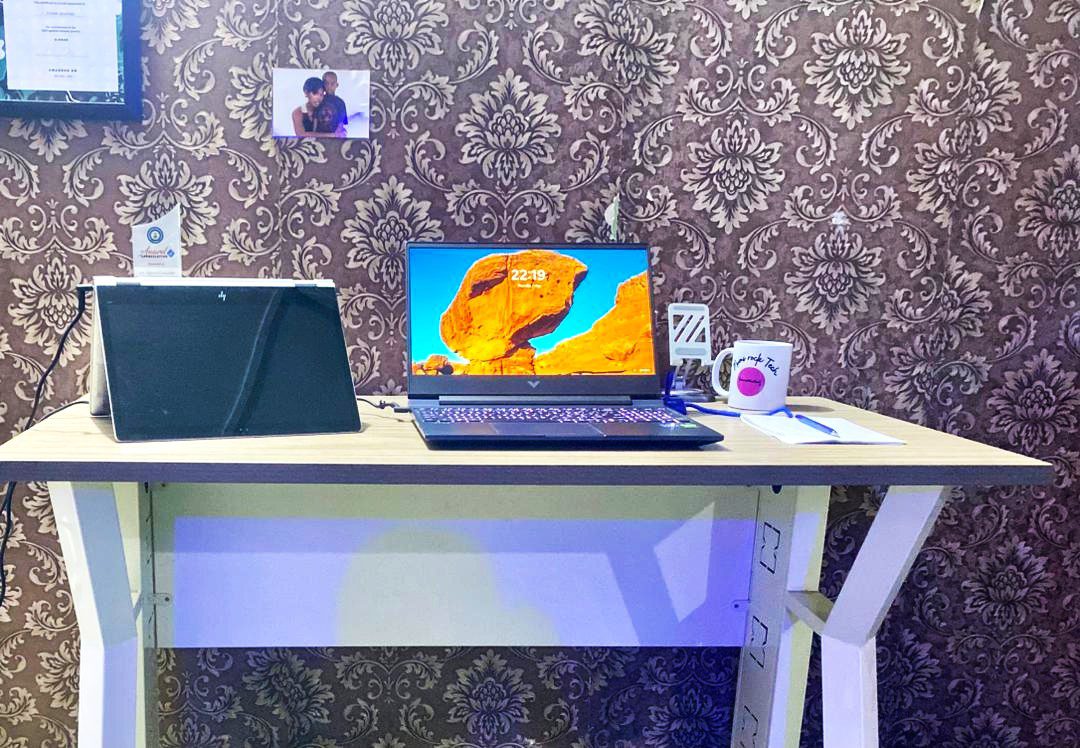 Aghama’s gadget setup
4. What do you do when you need inspiration?
When I need inspiration, I intentionally detach from the task at hand to rest and reflect; this allows me to evaluate my process and progress objectively. Based on the outcome of my evaluation, I either return to the task with a fresh perspective or source further external documentation.
I may even connect with a senior or peer to bridge the gap between vision and execution, ensuring that my technical output remains aligned with my strategic goals.
5. What mobile application can you not do without daily?
The ‘Settings’ app is the essential control centre of my mobile device; it is vital for managing how my phone serves me. While I could easily disconnect from all apps during a vacation, my daily routine requires this level of system control to optimise my environment and manage my focus during work hours as well as rest/leisure hours.
6. What tech solution do you wish someone had created?
I would love for someone to create a dedicated platform focused on supporting the developmental needs of teenagers, helping young people navigate the complexities of adolescence with digital guidance.
This app would provide resources for emotional intelligence, academic growth, and healthy social habits, ensuring that the next generation has the foundational support required to thrive in an increasingly digital world.
 Aghama
7. If you have unlimited time and money, what problem would you solve?
If granted unlimited time and money, I would dedicate my resources to the ultimate preservation of human potential. I would invest in educational interventions that foster global equity, ensuring knowledge is accessible to all regardless of economic status.
Simultaneously, I would fund clinical research and innovations to eradicate devastating diseases like cancer, stroke, and dementia. Knowledge is a gift for a lifetime, and I would love for it to be as long, vibrant, and enjoyable as possible.
8. Which woman in tech inspires you the most?
Funke Opeke is a national pride, and I am deeply inspired by her courage and brilliance. Her transition from a global corporate career to founding MainOne demonstrates a profound commitment to building the infrastructure necessary for a digital economy and a more prosperous region.
I have always been fascinated by the evolution of the internet and its transformative power; Funke’s work is the literal engine driving this evolution in Nigeria.
By laying the foundational connectivity for hubs such as the Yabatech ecosystem, among others, she has enabled a generation of innovators to build, scale, and compete globally. It is on that foundation that founders like us continue to innovate and scale solutions.
 Funke Opeke
9. Which profound statement inspires you the most?
I often say that “while financial assets are transient, intellectual capital is permanent. What you know is the only thing that can never be taken from you”. This conviction forms the foundational basis of my work with women and children.
Unlike physical gifts, which can be lost or depleted, the gift of knowledge is a portable, enduring asset. It empowers an individual wherever they go and, most remarkably, it is a resource that multiplies; one can share it with the world and still possess it entirely.
10. Whose women in tech trivia would you love to read?
Funke Opeke: As the founder of MainOne, she built the physical infrastructure of the West African digital economy, proving that visionary leadership can literally connect a continent.
Nkem Okocha: Through Mamamoni, she empowers women in underserved communities with fintech solutions and vocational skills, transforming “maternal status” into a position of economic power.
Ivy Ikpeme-Mbakwem: As the Program Director of i-Academy, she architects human capability pipelines, ensuring that technical talent is paired with the professional readiness required for global leadership.
Flora Uwadiegwu: A co-founder of Wetech, she has created a vital ecosystem for women to access resources and community, ensuring that the “intellectual capital” of women is recognised and amplified across the industry.
Read also: 8 ways community shapes how women in tech build publicly


You May Also Like

Bitcoin & Ethereum Inflows Hit 1-Year Low as Crypto Investors Brace for Fed Decision – BTC Eyes $120K

Best Music AI Websites For Songs And Soundtracks