

Nvidia China chip exports flare as Jensen Huang is left off Trump’s 2026 China trip
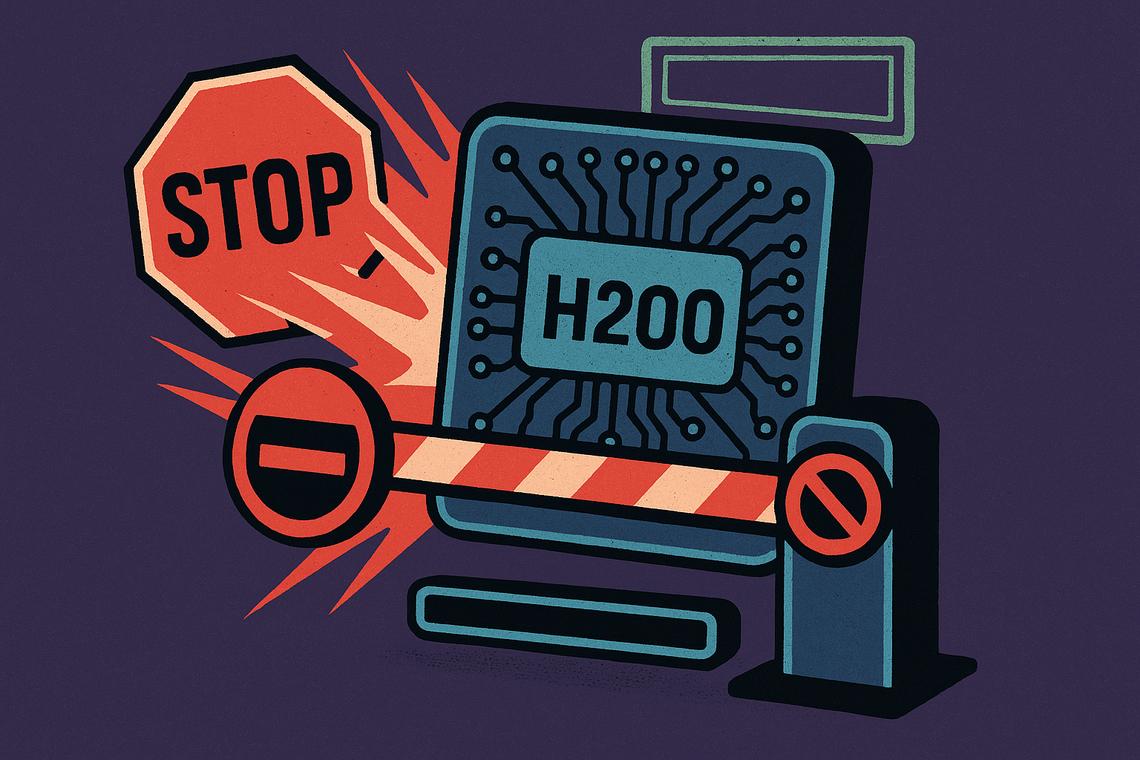
Nvidia China chip exports are back at the center of U.S.-China politics after Jensen Huang was left off President Donald Trump’s delegation for a China state visit scheduled for May 13 to 15, 2026. The omission stood out because Huang has often been close to Washington’s top economic and tech conversations, yet this time the guest list included Apple CEO Tim Cook and Tesla CEO Elon Musk, not the Nvidia chief.
That absence lands at a sensitive moment. Nvidia has spent months caught between U.S. export controls, Chinese border restrictions, and a wider fight over who gets access to the most powerful AI hardware. In that context, Huang’s exclusion looks less like a minor guest-list detail and more like a telling sign of where semiconductor policy sits in the broader trade relationship.
It also adds a human flashpoint to a technical dispute. For years, Huang has been one of the most visible faces of the AI boom. However, when the issue shifts from market growth to national strategy, even the head of the world’s biggest chip company can find himself outside the room.
Huang is left off Trump’s China trip roster
Jensen Huang was not included in Trump’s China state visit delegation, according to the reported guest roster for the trip. The visit is set for May 13 to 15, 2026.
The names that did make the list sharpened the contrast. Apple’s Tim Cook and Tesla’s Elon Musk were included, putting two of the best-known U.S. business leaders with major China exposure on the trip while the Nvidia CEO was left behind.
That matters because Huang has previously been part of Trump’s overseas entourages, including visits to the Middle East and the UK. His absence from this delegation therefore stands out as a break from pattern, especially given how central Nvidia has become to the global AI economy.
Why Nvidia remains at the center of Nvidia China chip exports
The bigger story is Nvidia China chip exports and the political pressure wrapped around them. Trump had previously approved Nvidia H200 exports to China in late 2025, a move that suggested some room for tightly managed sales.
But that came after years of restrictions. The U.S. blocked Nvidia’s most advanced chips over concerns that dual-use technology could support China’s military programs. Nvidia responded by creating modified products for the Chinese market, including the H20, in an effort to keep some access alive.
That workaround did not hold. The H20 was disallowed in April 2025, cutting off another route for Chinese buyers and deepening the split between U.S. policy goals and Nvidia’s commercial interests.
For that reason, Huang’s absence has attracted attention. It suggests that even when licenses or partial approvals exist, Washington’s larger position on advanced AI chips remains hard-edged. For investors, companies, and policymakers, that is a reminder that the chip trade is no longer just about product compliance. It is now part of a broader strategic contest.
China’s market response and the H200 exports to China stalemate
The commercial fallout has been severe. Nvidia’s China market share reportedly dropped from 95% to nearly zero after the restrictions escalated.
That collapse created room for domestic players including Huawei, Cambricon, Alibaba, and Baidu to gain ground. In practical terms, U.S. controls did not just limit Nvidia’s sales. They also helped accelerate a shift toward homegrown alternatives inside China’s AI industry.
Even after the late-2025 approval for H200 exports to China, the path into the country still did not open in any meaningful way. China reportedly instructed customs officers to stop the chips at the border, leaving the policy in limbo despite the White House’s approval.
Howard Lutnick, the U.S. commerce secretary, said Nvidia has not sold a single H200 AI GPU to China. That single detail captures the deadlock better than any talking point: approval on paper did not translate into actual shipments.
Why this matters for the AI race
The fight is not really about one model of chip. It is about access to computing power that can shape the next phase of artificial intelligence.
The article’s reported context says China still needs advanced Nvidia hardware such as Blackwell and Vera Rubin. At the same time, Beijing is also trying to build a domestic semiconductor sector strong enough to compete with U.S. suppliers. That tension helps explain why China would want cutting-edge chips while also restricting foreign dependence.
For the wider market, this means Nvidia China chip exports remain a geopolitical issue before they become a normal business issue. As long as both sides treat AI chips as strategic assets, licensing decisions and customs actions can override pure demand.
What the exclusion signals for U.S.-China AI chip tensions
The missing invitation also lands in the middle of a larger negotiation. China’s access to the latest AI chips remains tied to U.S.-China trade tensions, and semiconductor access has been a sticking point in talks between the two countries.
Ryan Fedasiuk of the American Enterprise Institute described Huang’s absence as a “strong signal” to the CCP. In that reading, the message is that Washington does not intend to soften its stance on high-end AI chips just because the issue is commercially important.
That is why this guest-list story matters beyond symbolism. Trade delegations often show which industries are being welcomed into the next round of diplomacy and which are being kept at arm’s length. Leaving out the Nvidia CEO, while including leaders from Apple and Tesla, suggests AI semiconductors occupy a more sensitive category than other major U.S.-China business interests.
For Nvidia, the implication is clear enough. The company remains vital to global AI demand, but in China it is operating inside a policy battle that neither side appears ready to resolve quickly. And for Washington, the choice to exclude Huang may be the clearest sign yet that the fight over advanced chips is still being treated as a matter of state power, not just trade.


You May Also Like
Binance XRP Scarcity Index Hits Highest Level Since 2024; 114 Billion Shiba Inu (SHIB) Flood Into Never-Seen-Before Wallet; Bitcoin Is the 'US of Money,' Strategy CEO Declares - Morning Crypto Report

U.S. Stock Market Hits Record $81T As Mega-Cap Lead Widens

FTEC vs. VGT: Same Tech Bet, So Which Fund Costs You Less?


Trending News
More24/7 Live News
MoreQuick Reads
More
