Bitcoin (BTC) Slips Under $80K Amid Inflation Surge and Trump-Xi Diplomatic Tensions
Key Takeaways
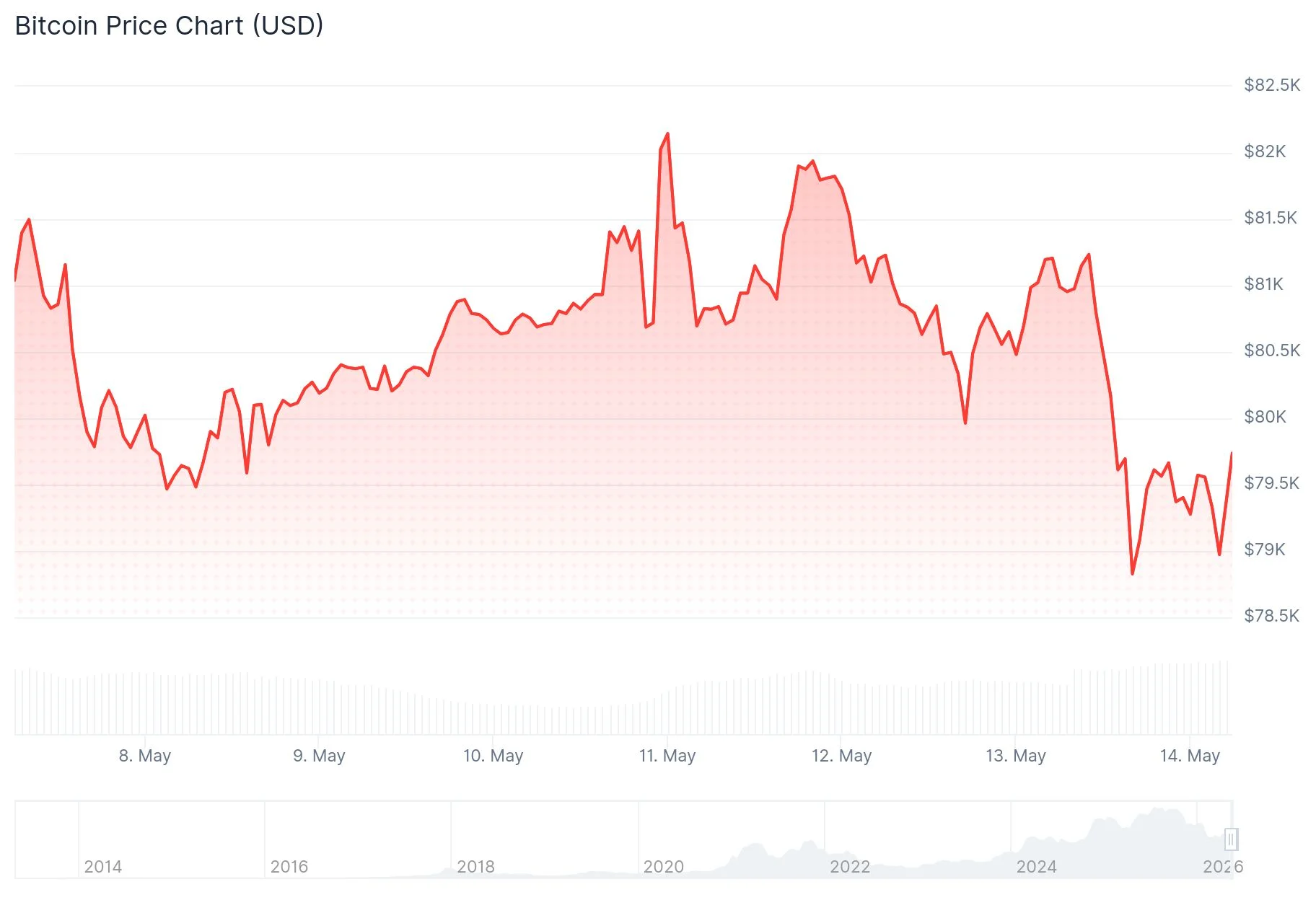
- Bitcoin declined to $79,200, marking a 2.3% decline over 24 hours following a breach of the critical $80,000 threshold.
- Solana experienced the steepest decline among leading cryptocurrencies, falling 5.6% to $90, while Dogecoin emerged as the sole gainer in the major crypto space.
- Consecutive inflation data releases — CPI registering 3.8% and PPI jumping 1.4% month-over-month — disrupted expectations for Federal Reserve interest rate reductions.
- Geopolitical uncertainty intensified as the Trump-Xi meeting in Beijing concluded with Xi issuing warnings about potential Taiwan-related confrontations.
- Bitcoin spot ETF products experienced $233 million in withdrawals on May 12, while analyst Ali Charts identified a potential decline toward the 50-day SMA positioned at $75,000.
Bitcoin experienced a significant downturn on Thursday as traders reacted to elevated inflation figures and mounting geopolitical uncertainties affecting risk-sensitive assets. During Asian trading sessions, BTC was changing hands at $79,200, representing a 2.3% decline across the previous 24-hour period.
 Bitcoin (BTC) Price
This retreat followed a period where Bitcoin had successfully maintained the $80,000 threshold as support throughout the majority of the preceding week. That crucial support zone collapsed under mounting pressure from two sequential inflation data surprises.
The Consumer Price Index released Tuesday showed an annual rate of 3.8% — representing the most elevated reading in approximately three years. Wednesday’s producer price index compounded concerns, registering 1.4% on a monthly basis against expectations of 0.5%, while the annual figure reached 6%.
These economic indicators significantly complicate the Federal Reserve’s trajectory toward implementing interest rate reductions, effectively eliminating a major catalyst that cryptocurrency markets had been anticipating.
Political Developments Amplify Market Concerns
The high-stakes meeting between Trump and Xi in Beijing, representing the first visit by an incumbent U.S. president to China in approximately a decade, introduced additional market volatility. During their discussions at the Great Hall of the People, President Xi cautioned about possible “collision or even clashes” should the Taiwan situation be improperly managed.
China’s official summary of Xi’s statements was published before the diplomatic meeting had even finished, creating turbulence throughout international markets. Asian equity markets experienced volatile trading, with mainland Chinese indices declining 1.3%.
Solana (SOL) suffered the most substantial losses among major cryptocurrencies, plummeting 5.6% to $90 and erasing the majority of its weekly advances. Ether decreased 2.1% to $2,250, extending its seven-day decline to 3%. BNB retreated 1.6% to $660, while XRP declined 1.7% to $1.43. Dogecoin stood alone among major assets with positive performance, advancing 0.9% to $0.1126.
Market analyst Ali Charts observed on X that Bitcoin seems to have encountered resistance at its 200-day simple moving average positioned at $82,500, cautioning that this development “may lead to a retest of the 50D SMA at $75,000.” Such a movement would constitute an additional decline of approximately 5% from present price levels.
Institutional Investors Reduce Exposure Through ETF Withdrawals
Blockchain analytics platform Glassnode reported that the 7-day simple moving average for U.S. spot ETF net flows declined to -$88 million daily — representing the most substantial outflow period since mid-February. Glassnode emphasized that February’s withdrawals occurred during declining prices, whereas the current wave represents “selling into strength, with BTC trading near $80k,” indicating institutional participants were capitalizing on the recent price recovery to reduce positions.
Bitcoin spot ETF products registered $233 million in aggregate withdrawals on May 12, with Fidelity’s FBTC leading outflows at $86.13 million. Ethereum spot ETF products experienced $131 million in redemptions during the identical trading session.
Critical Price Thresholds Under Surveillance
Matt Mena, senior crypto research strategist at 21Shares, emphasized that the $80,000 threshold remains pivotal for market sentiment. A sustained break below this level would probably initiate a retest of $78,000, with $75,000 representing the subsequent defensive barrier.
The $78,000 price point corresponds to the early-May trough preceding Bitcoin’s surge toward $82,000. This level represents the immediate challenge as macroeconomic releases and developments from the Trump-Xi discussions continue to unfold.
The post Bitcoin (BTC) Slips Under $80K Amid Inflation Surge and Trump-Xi Diplomatic Tensions appeared first on Blockonomi.


You May Also Like

Gold Price Forecast: Stable at $4,700 as markets await news from Trump-Xi meeting

INSTITUTIONAL | BitGo Q1 2026 Losses More Than Double Despite Over 40% Growth in Client Base