BitcoinWorld Massive Crypto Futures Liquidation: $717 Million Wiped Out in 24 Hours The cryptocurrency market is a dynamic space, often characterized by rapid price swings and significant events. Recently, traders witnessed a staggering financial tremor: a massive crypto futures liquidation event that sent ripples across major exchanges. Imagine millions of dollars vanishing in moments – that’s precisely what happened, leaving many in awe and others counting their losses. What is Crypto Futures Liquidation and Why Does It Matter? Before diving into the specifics of the recent events, it’s crucial to understand what crypto futures liquidation entails. In simple terms, futures contracts allow traders to bet on the future price of a cryptocurrency without owning the underlying asset. They often use leverage, meaning they trade with borrowed money to amplify potential gains. However, leverage also magnifies losses. Margin Calls: When the price of an asset moves against a trader’s leveraged position, their margin (the collateral they put up) starts to deplete. Automatic Closure: If the loss reaches a certain point, the exchange automatically closes the position to prevent the trader from losing more than their initial margin. This forced closure is known as liquidation. Market Impact: Large-scale liquidations can create a cascade effect, pushing prices down further as these positions are closed, which in turn triggers more liquidations. Therefore, a significant crypto futures liquidation event indicates high volatility and can signal shifts in market sentiment. Unpacking the Recent Crypto Futures Liquidation Spree The past 24 hours have been particularly turbulent for futures traders. Major exchanges reported an astonishing $137 million worth of futures contracts liquidated in just a single hour. This rapid-fire event was merely a snapshot of a larger trend, as the total figure for the past 24 hours soared to an eye-watering $717 million. This substantial amount highlights the intense price movements and leveraged trading activity that characterized the market during this period. Such massive liquidations typically occur when an unexpected price movement catches a large number of leveraged positions off guard. Traders betting on one direction find their positions underwater as the market shifts sharply in the opposite direction. This often leads to a ‘long squeeze’ (when prices fall, liquidating long positions) or a ‘short squeeze’ (when prices rise, liquidating short positions). How Does This Impact Crypto Traders? For individual traders, these liquidation events carry significant implications. The immediate consequence for those caught on the wrong side of the market is the loss of their staked capital. Moreover, the fear and uncertainty generated by such large liquidations can influence market psychology, potentially leading to further selling pressure as traders become more risk-averse. Understanding the dynamics of crypto futures liquidation is vital for anyone participating in the derivatives market. It underscores the inherent risks of leveraged trading and the importance of robust risk management strategies. While the allure of amplified gains is strong, the potential for rapid and substantial losses is equally present. Navigating Volatility: Strategies After a Crypto Futures Liquidation In a market prone to such dramatic swings, how can traders protect themselves? Adopting a disciplined approach is paramount. Here are some actionable insights: Effective Risk Management: Always define your risk tolerance before entering a trade. Never risk more capital than you can afford to lose. Utilize Stop-Loss Orders: These automated orders help limit potential losses by closing a position once it reaches a pre-defined price. This is a critical tool to prevent being entirely wiped out by a sudden market move. Manage Leverage Wisely: While leverage can be tempting, using it judiciously is key. Higher leverage means higher risk of liquidation. Diversify Your Portfolio: Do not put all your eggs in one basket. Diversifying across different assets can help mitigate risks associated with single-asset volatility. Stay Informed: Keep an eye on market news, technical indicators, and broader economic trends that can influence cryptocurrency prices. These strategies are not foolproof but can significantly reduce exposure to the severe impacts of a crypto futures liquidation event. The recent $717 million crypto futures liquidation serves as a stark reminder of the volatile nature of cryptocurrency derivatives markets. While opportunities for substantial gains exist, they are invariably accompanied by significant risks. For both seasoned traders and newcomers, a clear understanding of liquidation mechanisms, coupled with stringent risk management practices, is essential for navigating these turbulent waters successfully. Staying informed and trading responsibly will always be your best defense against unexpected market shocks. Frequently Asked Questions (FAQs) Q1: What exactly causes a crypto futures liquidation? A: A crypto futures liquidation occurs when a trader’s leveraged position loses so much value that their margin (collateral) can no longer cover potential losses. The exchange then automatically closes the position to prevent further debt. Q2: How does leverage contribute to futures liquidation? A: Leverage allows traders to control larger positions with a smaller amount of capital. While this can amplify profits, it also significantly magnifies losses, making positions more susceptible to liquidation with even small adverse price movements. Q3: Are all cryptocurrencies equally affected by futures liquidation events? A: No, the impact varies. Cryptocurrencies with higher trading volume and more active futures markets, such as Bitcoin and Ethereum, often see larger liquidation amounts during volatile periods compared to smaller, less liquid altcoins. Q4: Can I prevent my futures position from being liquidated? A: You can minimize the risk by using lower leverage, setting stop-loss orders, and adding more collateral (margin) to your position if it approaches liquidation levels. However, no method guarantees complete prevention in extreme market conditions. Q5: What’s the difference between a long squeeze and a short squeeze in the context of liquidation? A: A long squeeze happens when prices drop sharply, forcing the liquidation of ‘long’ positions (bets on rising prices). A short squeeze occurs when prices surge, forcing the liquidation of ‘short’ positions (bets on falling prices). If you found this article insightful, consider sharing it with your network! Understanding market dynamics is crucial for everyone in the crypto space. Help spread awareness by sharing this piece on your social media channels. To learn more about the latest crypto market trends, explore our article on key developments shaping Bitcoin price action. This post Massive Crypto Futures Liquidation: $717 Million Wiped Out in 24 Hours first appeared on BitcoinWorld.BitcoinWorld Massive Crypto Futures Liquidation: $717 Million Wiped Out in 24 Hours The cryptocurrency market is a dynamic space, often characterized by rapid price swings and significant events. Recently, traders witnessed a staggering financial tremor: a massive crypto futures liquidation event that sent ripples across major exchanges. Imagine millions of dollars vanishing in moments – that’s precisely what happened, leaving many in awe and others counting their losses. What is Crypto Futures Liquidation and Why Does It Matter? Before diving into the specifics of the recent events, it’s crucial to understand what crypto futures liquidation entails. In simple terms, futures contracts allow traders to bet on the future price of a cryptocurrency without owning the underlying asset. They often use leverage, meaning they trade with borrowed money to amplify potential gains. However, leverage also magnifies losses. Margin Calls: When the price of an asset moves against a trader’s leveraged position, their margin (the collateral they put up) starts to deplete. Automatic Closure: If the loss reaches a certain point, the exchange automatically closes the position to prevent the trader from losing more than their initial margin. This forced closure is known as liquidation. Market Impact: Large-scale liquidations can create a cascade effect, pushing prices down further as these positions are closed, which in turn triggers more liquidations. Therefore, a significant crypto futures liquidation event indicates high volatility and can signal shifts in market sentiment. Unpacking the Recent Crypto Futures Liquidation Spree The past 24 hours have been particularly turbulent for futures traders. Major exchanges reported an astonishing $137 million worth of futures contracts liquidated in just a single hour. This rapid-fire event was merely a snapshot of a larger trend, as the total figure for the past 24 hours soared to an eye-watering $717 million. This substantial amount highlights the intense price movements and leveraged trading activity that characterized the market during this period. Such massive liquidations typically occur when an unexpected price movement catches a large number of leveraged positions off guard. Traders betting on one direction find their positions underwater as the market shifts sharply in the opposite direction. This often leads to a ‘long squeeze’ (when prices fall, liquidating long positions) or a ‘short squeeze’ (when prices rise, liquidating short positions). How Does This Impact Crypto Traders? For individual traders, these liquidation events carry significant implications. The immediate consequence for those caught on the wrong side of the market is the loss of their staked capital. Moreover, the fear and uncertainty generated by such large liquidations can influence market psychology, potentially leading to further selling pressure as traders become more risk-averse. Understanding the dynamics of crypto futures liquidation is vital for anyone participating in the derivatives market. It underscores the inherent risks of leveraged trading and the importance of robust risk management strategies. While the allure of amplified gains is strong, the potential for rapid and substantial losses is equally present. Navigating Volatility: Strategies After a Crypto Futures Liquidation In a market prone to such dramatic swings, how can traders protect themselves? Adopting a disciplined approach is paramount. Here are some actionable insights: Effective Risk Management: Always define your risk tolerance before entering a trade. Never risk more capital than you can afford to lose. Utilize Stop-Loss Orders: These automated orders help limit potential losses by closing a position once it reaches a pre-defined price. This is a critical tool to prevent being entirely wiped out by a sudden market move. Manage Leverage Wisely: While leverage can be tempting, using it judiciously is key. Higher leverage means higher risk of liquidation. Diversify Your Portfolio: Do not put all your eggs in one basket. Diversifying across different assets can help mitigate risks associated with single-asset volatility. Stay Informed: Keep an eye on market news, technical indicators, and broader economic trends that can influence cryptocurrency prices. These strategies are not foolproof but can significantly reduce exposure to the severe impacts of a crypto futures liquidation event. The recent $717 million crypto futures liquidation serves as a stark reminder of the volatile nature of cryptocurrency derivatives markets. While opportunities for substantial gains exist, they are invariably accompanied by significant risks. For both seasoned traders and newcomers, a clear understanding of liquidation mechanisms, coupled with stringent risk management practices, is essential for navigating these turbulent waters successfully. Staying informed and trading responsibly will always be your best defense against unexpected market shocks. Frequently Asked Questions (FAQs) Q1: What exactly causes a crypto futures liquidation? A: A crypto futures liquidation occurs when a trader’s leveraged position loses so much value that their margin (collateral) can no longer cover potential losses. The exchange then automatically closes the position to prevent further debt. Q2: How does leverage contribute to futures liquidation? A: Leverage allows traders to control larger positions with a smaller amount of capital. While this can amplify profits, it also significantly magnifies losses, making positions more susceptible to liquidation with even small adverse price movements. Q3: Are all cryptocurrencies equally affected by futures liquidation events? A: No, the impact varies. Cryptocurrencies with higher trading volume and more active futures markets, such as Bitcoin and Ethereum, often see larger liquidation amounts during volatile periods compared to smaller, less liquid altcoins. Q4: Can I prevent my futures position from being liquidated? A: You can minimize the risk by using lower leverage, setting stop-loss orders, and adding more collateral (margin) to your position if it approaches liquidation levels. However, no method guarantees complete prevention in extreme market conditions. Q5: What’s the difference between a long squeeze and a short squeeze in the context of liquidation? A: A long squeeze happens when prices drop sharply, forcing the liquidation of ‘long’ positions (bets on rising prices). A short squeeze occurs when prices surge, forcing the liquidation of ‘short’ positions (bets on falling prices). If you found this article insightful, consider sharing it with your network! Understanding market dynamics is crucial for everyone in the crypto space. Help spread awareness by sharing this piece on your social media channels. To learn more about the latest crypto market trends, explore our article on key developments shaping Bitcoin price action. This post Massive Crypto Futures Liquidation: $717 Million Wiped Out in 24 Hours first appeared on BitcoinWorld.

Massive Crypto Futures Liquidation: $717 Million Wiped Out in 24 Hours

2025/09/26 01:40
6 min read
For feedback or concerns regarding this content, please contact us at crypto.news@mexc.com

BitcoinWorld

Massive Crypto Futures Liquidation: $717 Million Wiped Out in 24 Hours

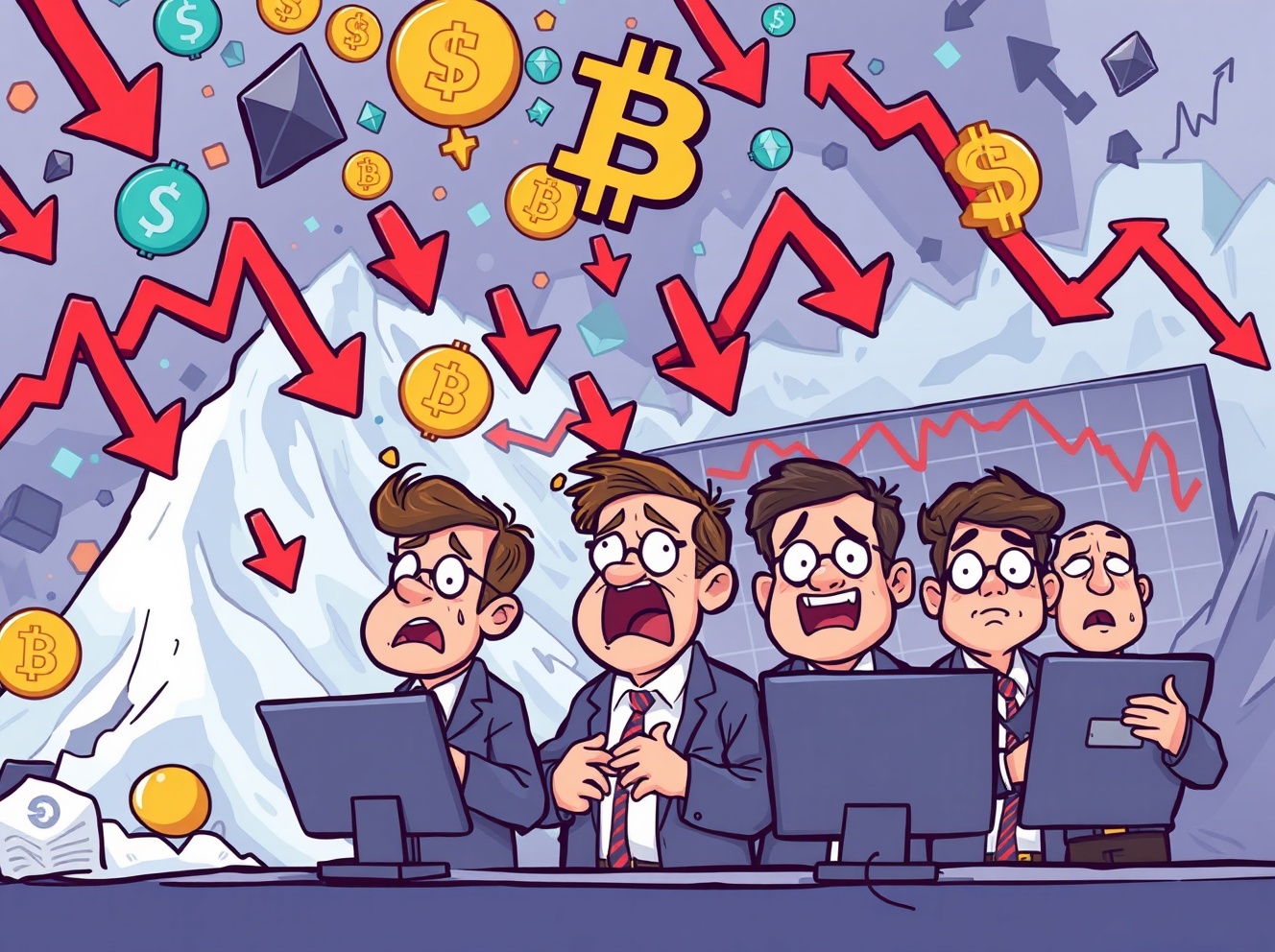
The cryptocurrency market is a dynamic space, often characterized by rapid price swings and significant events. Recently, traders witnessed a staggering financial tremor: a massive crypto futures liquidation event that sent ripples across major exchanges. Imagine millions of dollars vanishing in moments – that’s precisely what happened, leaving many in awe and others counting their losses.

What is Crypto Futures Liquidation and Why Does It Matter?

Before diving into the specifics of the recent events, it’s crucial to understand what crypto futures liquidation entails. In simple terms, futures contracts allow traders to bet on the future price of a cryptocurrency without owning the underlying asset. They often use leverage, meaning they trade with borrowed money to amplify potential gains. However, leverage also magnifies losses.

  • Margin Calls: When the price of an asset moves against a trader’s leveraged position, their margin (the collateral they put up) starts to deplete.
  • Automatic Closure: If the loss reaches a certain point, the exchange automatically closes the position to prevent the trader from losing more than their initial margin. This forced closure is known as liquidation.
  • Market Impact: Large-scale liquidations can create a cascade effect, pushing prices down further as these positions are closed, which in turn triggers more liquidations.

Therefore, a significant crypto futures liquidation event indicates high volatility and can signal shifts in market sentiment.

Unpacking the Recent Crypto Futures Liquidation Spree

The past 24 hours have been particularly turbulent for futures traders. Major exchanges reported an astonishing $137 million worth of futures contracts liquidated in just a single hour. This rapid-fire event was merely a snapshot of a larger trend, as the total figure for the past 24 hours soared to an eye-watering $717 million. This substantial amount highlights the intense price movements and leveraged trading activity that characterized the market during this period.

Such massive liquidations typically occur when an unexpected price movement catches a large number of leveraged positions off guard. Traders betting on one direction find their positions underwater as the market shifts sharply in the opposite direction. This often leads to a ‘long squeeze’ (when prices fall, liquidating long positions) or a ‘short squeeze’ (when prices rise, liquidating short positions).

How Does This Impact Crypto Traders?

For individual traders, these liquidation events carry significant implications. The immediate consequence for those caught on the wrong side of the market is the loss of their staked capital. Moreover, the fear and uncertainty generated by such large liquidations can influence market psychology, potentially leading to further selling pressure as traders become more risk-averse.

Understanding the dynamics of crypto futures liquidation is vital for anyone participating in the derivatives market. It underscores the inherent risks of leveraged trading and the importance of robust risk management strategies. While the allure of amplified gains is strong, the potential for rapid and substantial losses is equally present.

Navigating Volatility: Strategies After a Crypto Futures Liquidation

In a market prone to such dramatic swings, how can traders protect themselves? Adopting a disciplined approach is paramount. Here are some actionable insights:

  • Effective Risk Management: Always define your risk tolerance before entering a trade. Never risk more capital than you can afford to lose.
  • Utilize Stop-Loss Orders: These automated orders help limit potential losses by closing a position once it reaches a pre-defined price. This is a critical tool to prevent being entirely wiped out by a sudden market move.
  • Manage Leverage Wisely: While leverage can be tempting, using it judiciously is key. Higher leverage means higher risk of liquidation.
  • Diversify Your Portfolio: Do not put all your eggs in one basket. Diversifying across different assets can help mitigate risks associated with single-asset volatility.
  • Stay Informed: Keep an eye on market news, technical indicators, and broader economic trends that can influence cryptocurrency prices.

These strategies are not foolproof but can significantly reduce exposure to the severe impacts of a crypto futures liquidation event.

The recent $717 million crypto futures liquidation serves as a stark reminder of the volatile nature of cryptocurrency derivatives markets. While opportunities for substantial gains exist, they are invariably accompanied by significant risks. For both seasoned traders and newcomers, a clear understanding of liquidation mechanisms, coupled with stringent risk management practices, is essential for navigating these turbulent waters successfully. Staying informed and trading responsibly will always be your best defense against unexpected market shocks.

Frequently Asked Questions (FAQs)

Q1: What exactly causes a crypto futures liquidation?
A: A crypto futures liquidation occurs when a trader’s leveraged position loses so much value that their margin (collateral) can no longer cover potential losses. The exchange then automatically closes the position to prevent further debt.

Q2: How does leverage contribute to futures liquidation?
A: Leverage allows traders to control larger positions with a smaller amount of capital. While this can amplify profits, it also significantly magnifies losses, making positions more susceptible to liquidation with even small adverse price movements.

Q3: Are all cryptocurrencies equally affected by futures liquidation events?
A: No, the impact varies. Cryptocurrencies with higher trading volume and more active futures markets, such as Bitcoin and Ethereum, often see larger liquidation amounts during volatile periods compared to smaller, less liquid altcoins.

Q4: Can I prevent my futures position from being liquidated?
A: You can minimize the risk by using lower leverage, setting stop-loss orders, and adding more collateral (margin) to your position if it approaches liquidation levels. However, no method guarantees complete prevention in extreme market conditions.

Q5: What’s the difference between a long squeeze and a short squeeze in the context of liquidation?
A: A long squeeze happens when prices drop sharply, forcing the liquidation of ‘long’ positions (bets on rising prices). A short squeeze occurs when prices surge, forcing the liquidation of ‘short’ positions (bets on falling prices).

If you found this article insightful, consider sharing it with your network! Understanding market dynamics is crucial for everyone in the crypto space. Help spread awareness by sharing this piece on your social media channels.

To learn more about the latest crypto market trends, explore our article on key developments shaping Bitcoin price action.

This post Massive Crypto Futures Liquidation: $717 Million Wiped Out in 24 Hours first appeared on BitcoinWorld.

Market Opportunity
Spacecoin Logo
Spacecoin Price(SPACE)
$0.007034
$0.007034$0.007034
-2.25%
USD
Spacecoin (SPACE) Live Price Chart
Disclaimer: The articles reposted on this site are sourced from public platforms and are provided for informational purposes only. They do not necessarily reflect the views of MEXC. All rights remain with the original authors. If you believe any content infringes on third-party rights, please contact crypto.news@mexc.com for removal. MEXC makes no guarantees regarding the accuracy, completeness, or timeliness of the content and is not responsible for any actions taken based on the information provided. The content does not constitute financial, legal, or other professional advice, nor should it be considered a recommendation or endorsement by MEXC.

You May Also Like

Trump's allegation against Noem would constitute a federal crime: analyst

Trump's allegation against Noem would constitute a federal crime: analyst

President Donald Trump caught everyone off guard by suddenly firing Homeland Security Secretary Kristi Noem — but being out of a job could just be the start of
Share
Rawstory2026/03/06 04:49
Whales Dump 200 Million XRP in Just 2 Weeks – Is XRP’s Price on the Verge of Collapse?

Whales Dump 200 Million XRP in Just 2 Weeks – Is XRP’s Price on the Verge of Collapse?

Whales offload 200 million XRP leaving market uncertainty behind. XRP faces potential collapse as whales drive major price shifts. Is XRP’s future in danger after massive sell-off by whales? XRP’s price has been under intense pressure recently as whales reportedly offloaded a staggering 200 million XRP over the past two weeks. This massive sell-off has raised alarms across the cryptocurrency community, as many wonder if the market is on the brink of collapse or just undergoing a temporary correction. According to crypto analyst Ali (@ali_charts), this surge in whale activity correlates directly with the price fluctuations seen in the past few weeks. XRP experienced a sharp spike in late July and early August, but the price quickly reversed as whales began to sell their holdings in large quantities. The increased volume during this period highlights the intensity of the sell-off, leaving many traders to question the future of XRP’s value. Whales have offloaded around 200 million $XRP in the last two weeks! pic.twitter.com/MiSQPpDwZM — Ali (@ali_charts) September 17, 2025 Also Read: Shiba Inu’s Price Is at a Tipping Point: Will It Break or Crash Soon? Can XRP Recover or Is a Bigger Decline Ahead? As the market absorbs the effects of the whale offload, technical indicators suggest that XRP may be facing a period of consolidation. The Relative Strength Index (RSI), currently sitting at 53.05, signals a neutral market stance, indicating that XRP could move in either direction. This leaves traders uncertain whether the XRP will break above its current resistance levels or continue to fall as more whales sell off their holdings. Source: Tradingview Additionally, the Bollinger Bands, suggest that XRP is nearing the upper limits of its range. This often points to a potential slowdown or pullback in price, further raising concerns about the future direction of the XRP. With the price currently around $3.02, many are questioning whether XRP can regain its footing or if it will continue to decline. The Aftermath of Whale Activity: Is XRP’s Future in Danger? Despite the large sell-off, XRP is not yet showing signs of total collapse. However, the market remains fragile, and the price is likely to remain volatile in the coming days. With whales continuing to influence price movements, many investors are watching closely to see if this trend will reverse or intensify. The coming weeks will be critical for determining whether XRP can stabilize or face further declines. The combination of whale offloading and technical indicators suggest that XRP’s price is at a crossroads. Traders and investors alike are waiting for clear signals to determine if the XRP will bounce back or continue its downward trajectory. Also Read: Metaplanet’s Bold Move: $15M U.S. Subsidiary to Supercharge Bitcoin Strategy The post Whales Dump 200 Million XRP in Just 2 Weeks – Is XRP’s Price on the Verge of Collapse? appeared first on 36Crypto.
Share
Coinstats2025/09/17 23:42
XRP ETFs Stalls Despite Price Rally, But Canary Breaks Silence

XRP ETFs Stalls Despite Price Rally, But Canary Breaks Silence

The post XRP ETFs Stalls Despite Price Rally, But Canary Breaks Silence appeared on BitcoinEthereumNews.com. Canary Capital leads XRP ETFs Institutions still bearish
Share
BitcoinEthereumNews2026/03/06 04:28