

Estonia Suspends Zondacrypto License, Signals Tightening Oversight
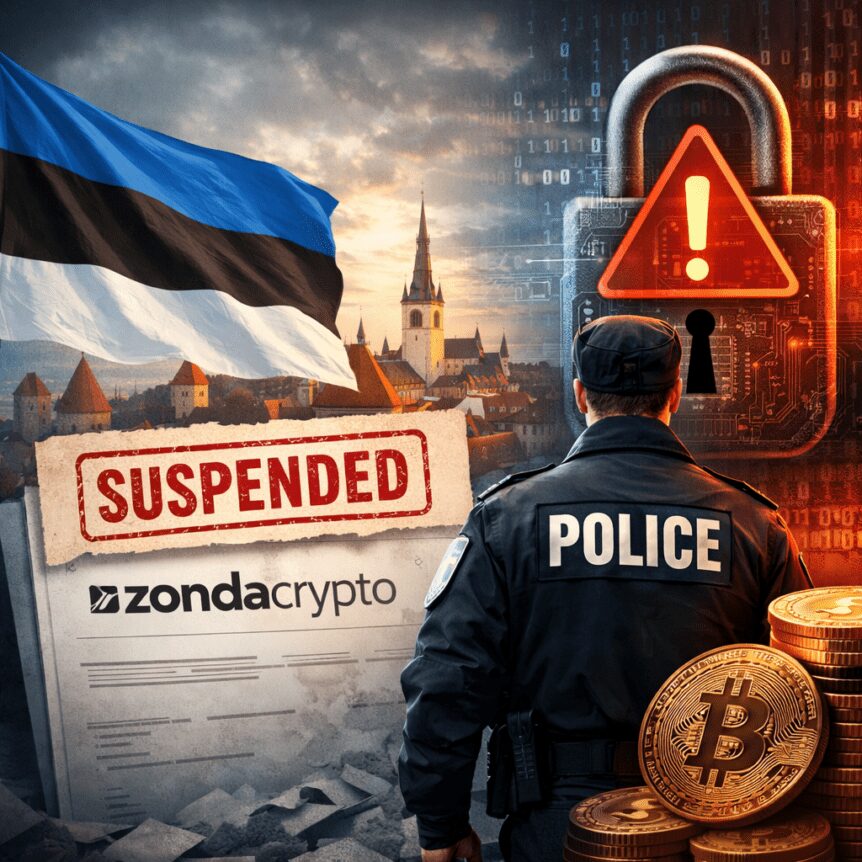
The Financial Intelligence Unit (FIU) of Estonia has partially suspended the operating license of BB Trade Estonia OÜ, the entity behind the Zondacrypto cryptocurrency platform. In its formal statement, the FIU said the company is now barred from accepting deposits and onboarding new clients, while existing users may still withdraw funds. The move signals intensified regulatory scrutiny of Zondacrypto across Europe as authorities scrutinize compliance practices and consumer protections within the crypto exchanges that have migrated or registered in the Baltic state.
The regulator’s notice also sets a 30-day window for BB Trade Estonia OÜ to bring its operations into alignment with applicable legal requirements. “If it fails to do so, the law obliges the FIU to revoke the operating license,” the FIU stated. The authority did not disclose the specific compliance breaches that prompted the suspension, and Cointelegraph contacted the FIU for comment but did not receive a response at the time of publication.
Key takeaways
- The Estonian FIU partially suspends BB Trade Estonia OÜ’s operating license, barring deposits and new onboarding while allowing withdrawals for existing users.
- A 30-day window is imposed to reach full compliance, with potential license revocation if requirements are not satisfied.
- The regulator did not specify the breaches; authorities and media outlets will be watching for concrete remediation steps and enforcement actions.
- The development compounds existing regulatory scrutiny of Zondacrypto in Europe, including MiCA-related concerns raised by Estonian authorities earlier in 2024.
- BB Trade Estonia OÜ has ties to Zondacrypto’s broader cross-border presence, with the company registered in Estonia since 2019, according to InfoRegister data.
Regulatory action in Estonia and implications for BB Trade Estonia OÜ
Estonia’s FIU has invoked supervisory powers to curb certain activities by BB Trade Estonia OÜ as part of a broader effort to tighten oversight over crypto service providers within the EU’s MiCA framework. By blocking new deposits and client onboarding, the regulator aims to curb potential consumer risk while evaluating whether the firm meets ongoing licensing requirements. The 30-day compliance deadline places the onus on the operator to demonstrate robust AML/KYC controls, proper governance, and other regulatory obligations demanded under Estonian law and EU standards.
Officials did not detail the underlying deficiencies in public statements, and the absence of a publicly disclosed breach list creates uncertainty for stakeholders. The move comes amid a wider debate about how EU crypto licensing is implemented in member states and how cross-border entities adapt to MiCA’s harmonized standards. Estonia’s authorities have emphasized a path toward formal compliance rather than immediate sanctions, but the possibility of license revocation remains a material risk for BB Trade Estonia OÜ and its Zondacrypto platform.
BB Trade Estonia OÜ’s status is also notable in light of its corporate history. The Estonia-based entity has been listed as the operating arm of Zondacrypto, a platform with roots in Poland as BitBay, established in 2014. Its registration in Estonia since September 2019—well before the full rollout of MiCA—positions the business squarely within EU regulatory reach, as authorities seek consistent supervision across borders.
Zondacrypto at the center of regulatory debate in Europe
The partial suspension in Estonia adds to a broader web of regulatory considerations surrounding Zondacrypto in Europe. Reports surrounding withdrawal difficulties at Zondacrypto have drawn scrutiny from policymakers and regulators, including public commentary by Polish officials referencing potential losses and the scale of exposure in crypto-related incidents. In parallel, Zondacrypto has faced MiCA-related warnings from Estonia’s Financial Supervision and Resolution Authority (FSA) over the listing of the exchange’s “TeamPL” token without a white paper, which the authorities flagged as a MiCA compliance issue.
Market activity around Zondacrypto has appeared subdued in recent data, with CoinGecko noting limited trading activity on the exchange around the time of the regulatory action. Media coverage and regulatory filings continue to shape the narrative around the exchange’s operational viability and governance.
As part of the wider regulatory discourse, Zondacrypto’s governance and its cross-border footprint have become points of focus for enforcement and policy analysis. The Polish dimension—where discussions of potential links to Russian capital and political influence have surfaced—highlights how national risk perceptions can intersect with EU-wide licensing and oversight. In parallel, Estonia has taken steps to operationalize MiCA within its financial sector, as evidenced by other notable regulatory actions like the licensing of LHV Pank under the EU crypto framework. Estonia’s FSA granted LHV Pank a MiCA license, marking a milestone for one of the country’s largest banks and signaling the incremental integration of traditional financial institutions into the EU’s crypto regulatory regime.
BB Trade Estonia OÜ’s MiCA-related challenges and the ongoing Zondacrypto narrative illustrate how cross-border entities navigate diverse regulatory expectations. The Estonian and Polish regimes reflect a broader European push toward standardized oversight to bolster consumer protections, licensing discipline, and AML/KYC compliance in the crypto ecosystem. Regulators are balancing market access with risk mitigation, a dynamic that will shape licensing decisions, enforcement priorities, and the pace of institutional participation in European crypto markets.
Cross-border licensing and institutional implications
The Estonian regulatory action arrives amid a wider transition in the EU where MiCA is increasingly interpreted and implemented by member states. The 30-day compliance window underscores the immediacy with which regulators seek to impose corrective measures on crypto service providers, emphasizing governance reforms, disclosures, and risk management practices aligned with EU standards. For crypto exchanges, the message is clear: licensing continuity hinges on demonstrable compliance with cross-border rules, consumer protections, and anti-money laundering controls that align with MiCA’s framework.
From an institutional perspective, the development adds to the cost and complexity of maintaining cross-border crypto operations. For banks and payment providers operating within or adjacent to the crypto space, the Estonian example reinforces the importance of robust onboarding controls, transparent token disclosures, and clear operational compliance to preserve access to regulated financial rails. The licensing milestone achieved by LHV Pank in Estonia—under MiCA—illustrates that traditional financial institutions can gain regulatory clearance to participate in crypto services, provided they meet the necessary standards. Such developments may influence other banks and financial firms to pursue MiCA-compliant licensing as a prerequisite for borderless crypto activities.
Finally, the case highlights the practical uncertainties that still surround enforcement scope and interpretation of MiCA in various jurisdictions. While the FIU has outlined a path to remediation, it has not publicly enumerated the exact breaches. This ambiguity can complicate remediation planning for firms facing similar regulatory actions and underscores the need for clarity in how authorities assess and certify ongoing compliance in a rapidly evolving policy environment.
In summary, the Estonian FIU’s partial license suspension of BB Trade Estonia OÜ, paired with ongoing MiCA-related concerns and cross-border regulatory developments, reinforces the imperative for crypto firms to maintain rigorous compliance programs, transparent governance, and resilient operational controls as they navigate Europe’s unified but heterogeneous regulatory landscape.
Closing perspective: While the immediate impact centers on BB Trade Estonia OÜ and Zondacrypto, the action reflects broader regulatory intent to standardize oversight and heighten enforcement in the European crypto ecosystem. The next steps—whether BB Trade Estonia OÜ rectifies gaps or faces revocation—will shape future licensing discourse and the regulatory calculus for cross-border crypto activity in the region.
This article was originally published as Estonia Suspends Zondacrypto License, Signals Tightening Oversight on Crypto Breaking News – your trusted source for crypto news, Bitcoin news, and blockchain updates.


You May Also Like

The changing face of elder care in Malaysia — Sayed Mohammad Reza Yamani Sayed Umar

Not a loophole: Singapore AI export controls let China tap US AI legally

Exclusive interview with Smokey The Bera, co-founder of Berachain: How the innovative PoL public chain solves the liquidity problem and may be launched in a few months



