

Ethereum’s CROPS Mandate: Why Privacy Is Becoming DeFi’s Next Test
You open a DeFi app to move funds and a pop-up warns that deposits from certain addresses may be blocked by counterparties. Minutes later, a friend messages: their transfer was delayed after a compliance screen flagged earlier interactions with a mixer. None of this was in the brochure for “open finance.”
Privacy—long treated as optional UX—has become DeFi’s next test. Ethereum is now being asked to reconcile transparency with confidentiality, censorship-resistance with compliance, and global access with jurisdictional rules. The industry is coining new language for this tension. In this article we use “CROPS” as a shorthand to describe that emerging mandate.
There is no formal CROPS standard from the Ethereum Foundation or a regulator. Instead, think of it as the pressure to balance five imperatives that keep the ecosystem viable: censorship-resistance, regulatory compliance, openness, privacy, and security.
The Big Picture
Why now? Three currents converged: enforcement on privacy tooling, institutional interest in on-chain finance, and maturing zero-knowledge (ZK) tech that makes selective disclosure feasible. The result: DeFi can no longer punt on privacy; it must redesign it.
On the enforcement front, the U.S. Treasury’s Office of Foreign Assets Control (OFAC) sanctioned Tornado Cash smart contracts in 2022, a milestone that reset expectations around mixer usage (U.S. Treasury). In the EU, the Markets in Crypto-Assets regulation (MiCA) and the companion Transfer of Funds Regulation extend the “travel rule” to crypto-asset service providers, forcing stronger identity controls on fiat–crypto perimeters (MiCA, TFR). In late 2023, FinCEN proposed special measures on “mixing” activity, signaling sustained scrutiny of obfuscation tools (FinCEN).
Meanwhile, Ethereum advanced scalability with EIP-4844’s data-availability milestone and account abstraction via EIP-4337, enabling richer wallet logic and new privacy patterns (EIP-4844, EIP-4337). Institutions exploring tokenized assets expect confidentiality for order flow and counterparties. Retail users want protection from on-chain surveillance. Both cohorts are pushing for usable, auditable privacy.
What Is the CROPS Mandate?
Again, CROPS is an editorial mnemonic—an implicit mandate Ethereum faces, not a codified rule:
- Censorship-resistance: Transactions should be includable on a neutral network, regardless of off-chain politics.
- Regulatory compliance: Front ends, service providers, and enterprises must meet AML, sanctions, and reporting obligations in their jurisdictions.
- Openness: Protocols remain permissionless and composable; anyone can build and interact at the base layer.
- Privacy: Users need confidentiality for balances, counterparties, and strategies—ideally with selective disclosure.
- Security: Cryptography, smart contracts, and infrastructure must resist exploits and data leakage.
These forces often pull in different directions. DeFi teams feel it most acutely at three touchpoints: wallet onboarding (identity and screening), transaction submission (mempool and MEV exposure), and settlement (auditability, provenance, and disclosures).
How Ethereum Privacy Works Now
Privacy on Ethereum is not a single tool; it is a menu of approaches with different threat models, trade-offs, and regulatory profiles.
Zero-knowledge rollups and private L2s
ZK rollups publish validity proofs that a batch of transactions followed the rules without revealing all underlying data. Some projects are exploring encrypted state and selective disclosure to provide application-level privacy while maintaining on-chain proofs (Aztec). ZK systems can natively support compliance flows—think “prove you’re allowed to interact” without doxxing an identity attribute.
Selective-disclosure identity
Verifiable Credentials (VCs) let issuers (exchanges, banks, KYC providers) attest to facts about a user, which can be proven in zero-knowledge to a smart contract or front end. Emerging stacks include W3C VCs, Polygon ID, and the Ethereum Attestation Service. This unlocks “ZK-KYC”: proving sanctions-screened, jurisdiction-eligible, or accredited status without exposing PII on-chain.
Application-layer privacy
Privacy-preserving DEXs and lending markets use techniques like homomorphic encryption, secure enclaves, or ZK proofs to hide order flow and positions while preserving auditable state transitions. Some EVM-compatible environments incorporate trusted execution environments for confidential computation, with trade-offs around trust in hardware (Oasis Sapphire).
Sender/receiver privacy
Proposals such as stealth addresses and one-time destination keys aim to shield recipients without complex mixers; view keys allow auditors or tax authorities to see activity by consent (stealth addresses overview).
Legacy mixers and coinjoin-style tools
Mixers pool funds to break deterministic linkages. They provide strong privacy but attract regulatory scrutiny due to non-selective obfuscation. Their use has become riskier for users interacting with regulated entities, especially after high-profile sanctions actions.
Approach What it hides Trust assumptions Compliance fit Developer effort ZK rollup with encrypted state State, balances, counterparties (selective) Cryptographic soundness; DA on L1 High (supports ZK-KYC, proofs) High VC + ZK-KYC gating PII off-chain; on-chain proves eligibility Issuer honesty; wallet custody of creds High (policy-expressive) Medium TEE-based confidential EVM Computation and mempool payloads Hardware enclave trust; remote attestation Medium (auditable logs possible) Medium Stealth addresses/view keys Recipient linkages Key management; wallet UX Medium (opt-in disclosure) Low–Medium Mixers/coinjoin Tx graph linkages Pool size; relayer integrity Low (non-selective obfuscation) Low
Where Compliance Bites in DeFi
Unlike custodial exchanges, most DeFi protocols are non-custodial and run as autonomous software. Still, compliance pressure surfaces at multiple layers:
Front ends and geofencing
User interfaces operated by identifiable entities often implement IP blocks, wallet screens, or credential checks to avoid serving restricted users. This raises questions about equal access and pushes power to interface operators rather than the protocol itself.
Counterparty risk for liquidity
Liquidity providers (LPs) and market makers using regulated banking rails face exposure if their on-chain flows are tainted by sanctioned addresses. Many now use analytics to pre-screen pools and counterparties (Chainalysis, TRM Labs), which can lead to de facto blacklisting, sometimes with false positives.
Travel rule at the perimeter
CASPs must share originator/beneficiary information for cross-platform transfers under the EU travel rule. Travel-rule messaging utilities help exchanges comply, but DeFi wallets and permissionless protocols are not straightforward counterparts (Notabene). Expect bridges between custodial perimeters and self-custody to be compliance-heavy, pushing selective-disclosure credentials into mainstream wallets.
Mempool visibility and MEV
Public mempools leak intent before inclusion. Searchers exploit this for MEV, but it also means compliance tools can observe flows. Private orderflow and encrypted mempools are being developed to reduce harmful MEV and improve privacy, including research into PBS and off-chain builders (PBS overview) and privacy-preserving orderflow like SUAVE (Flashbots SUAVE).
Building Compliant Privacy: A Practical Path
If you are designing a DeFi protocol or wallet today, you can integrate privacy without excluding users or inviting unacceptable risk. A practical sequence looks like this:
- Define your threat model: Decide whether you are protecting user identity, counterparties, strategies, or all three. Clarify who must be able to audit (users, counterparties, regulators, or the public).
- Choose a disclosure policy: Express rules as on-chain verifications (e.g., “user holds a credential signed by issuer X proving not on sanctions list and is jurisdiction-eligible”). Avoid hardcoding PII or lists; verify signatures and revocation status.
- Pick a credential stack: Use W3C VCs, a ZK-friendly schema, and a wallet that can safely hold credentials. Consider Polygon ID or EAS for attestations.
- Implement ZK proofs: Integrate a circuit that proves compliance attributes without revealing raw data. Keep circuits upgradable via governance, with transparent audits.
- Segment flows: Separate “public” pools from “credential-gated” pools to avoid cross-contamination of compliance assumptions. Document bridging rules clearly.
- Offer view-key or consented audit: Let users generate viewing keys or grant decrypt permissions for tax filings, disputes, or regulated counterparties.
- Harden your mempool strategy: Use private RPCs or encrypted orderflow where feasible; be transparent about builder relationships and inclusion guarantees.
- Plan for revocation and recovery: Credentials expire; users lose keys. Add processes to re-verify and to rotate attestations without deanonymizing prior activity.
Teams should publish a clear privacy policy for smart contracts: what is hidden, what can be proven, who can decrypt, and how disputes are resolved. This is not just legal hygiene; it is core product documentation for power users.
Collateral Effects: MEV, Censorship, and L2 Trade-offs
Privacy choices ripple across Ethereum’s fee markets and decentralization guarantees.
Inclusion, liveness, and CR
After OFAC’s Tornado Cash action, some block builders and relays avoided transactions interacting with sanctioned contracts, sparking a debate over censorship at the protocol’s edge. Research into enshrined PBS and techniques like inclusion lists aims to keep proposers honest and reduce reliance on centralized infrastructure. Progress here supports the “C” in CROPS—ensuring censorship-resistance even when application-layer privacy grows.
MEV and private orderflow
Encrypted orderflow and private mempools can reduce front-running and sandwiching, improving user outcomes. But they can also concentrate power if a few orderflow brokers dominate. SUAVE and similar designs try to keep orderflow markets open while preserving privacy. DeFi teams should treat orderflow routing as a first-class product choice and publish their policies.
L2 sovereignty vs. shared security
Private L2s promise confidentiality but introduce new governance and trust assumptions (sequencer neutrality, data-availability choices, emergency controls). Builders must weigh the benefits of privacy against the risks of central control or opaque upgrades, and disclose those choices to users.
Outlook: What Tips Adoption
Privacy will move from “nice-to-have” to table stakes if three things happen: credible compliance integrations, smooth wallet UX, and battle-tested cryptography.
- Institutional bridges: Tokenized assets and RWAs will prefer venues where counterparties can privately attest to eligibility and risk limits. Expect ZK-KYC pools and permissioned privacy rails to grow alongside permissionless venues.
- Retail safeguards: View keys and selective disclosure built into mainstream wallets could normalize privacy while keeping off-ramps comfortable with provenance.
- Better standards: Interoperable schemas for attestations and revocation will prevent fragmenting users across incompatible privacy silos.
None of this guarantees regulatory alignment. But if Ethereum can show that privacy reduces consumer harm (e.g., by preventing exploitation and data leaks) while preserving auditability under due process, the CROPS balance becomes more plausible.
Risks & What Could Go Wrong
- Over-centralized privacy rails: If a few issuers or brokers dominate credential verification or private orderflow, DeFi inherits Web2-style gatekeepers.
- False positives and exclusion: Imperfect analytics or revocation lists may block innocent users; appeals and redress are hard on-chain.
- Smart-contract and crypto failures: ZK circuits, TEEs, or key-management bugs could leak data or freeze funds. Security audits and formal verification remain essential.
- Regulatory divergence: Jurisdictions may set incompatible rules, fracturing liquidity and user experiences across regions.
- Chilling effects on builders: Legal uncertainty around privacy tooling can deter open-source contributors and push development offshore.
- Complacency about censorship: Relying on benevolent builders or relays without protocol-level guarantees leaves inclusion fragile.
For ongoing coverage of Ethereum’s evolving privacy stack, protocol governance, and compliance shifts, readers can follow analyses from Crypto Daily at cryptodaily.co.uk.
Frequently Asked Questions
Is there an official Ethereum “CROPS mandate”?
No. CROPS in this article is a shorthand for balancing censorship-resistance, regulatory compliance, openness, privacy, and security. It is not an official Ethereum policy or standard.
How can DeFi apps comply without KYC-ing everyone?
Selective-disclosure credentials and ZK proofs allow users to prove they meet policy requirements (e.g., not on a sanctions list, country-eligible) without revealing identity. Front ends can verify proofs; smart contracts can enforce them on sensitive pools.
Are mixers illegal?
Legality varies by jurisdiction and use. Certain mixer contracts and related services have been sanctioned or targeted by regulators in the U.S., increasing user and counterparty risk. Users should understand local laws and service-provider policies before interacting.
What’s the difference between ZK privacy and TEE privacy?
ZK systems prove correct computation without revealing inputs and rely on cryptographic soundness. TEEs keep data secret inside hardware enclaves and rely on hardware trust and attestation. ZK offers stronger trust minimization; TEEs can be more performant but add hardware assumptions.
Will privacy features make Ethereum less transparent for auditors?
Not necessarily. Well-designed systems enable authorized audit via view keys, selective disclosure, or proofs of compliance, preserving public verifiability of rules while limiting unnecessary data exposure.
What changes with EIP-4337 (account abstraction)?
It enables smart wallets with programmable policies—spending limits, social recovery, and integrated credential checks. That makes it easier to embed ZK proofs and consented disclosures directly in wallets.
How does MEV intersect with privacy?
Public mempools expose intent, enabling MEV and privacy leakage. Private orderflow, encrypted mempools, and PBS research aim to reduce harmful MEV and give users more control, but design choices affect decentralization and inclusion.
Disclaimer: This article is provided for informational purposes only. It is not offered or intended to be used as legal, tax, investment, financial, or other advice.


You May Also Like

Interoperability, AI Digitization, and the Evolution of Specialized Lending

Ferrari (RACE) Shares Plunge Nearly 8% Following Luce EV Debut
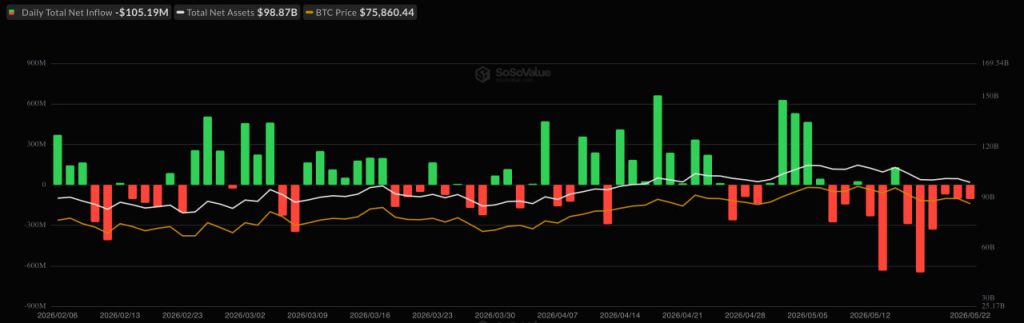
Institutional Exit News: Bitcoin Enters High-Risk Zone as ETF Outflows Drive Volatility



