

KOSPI Surges 4%, Triggering Buy-Side Sidecar for First Time in Months
BitcoinWorld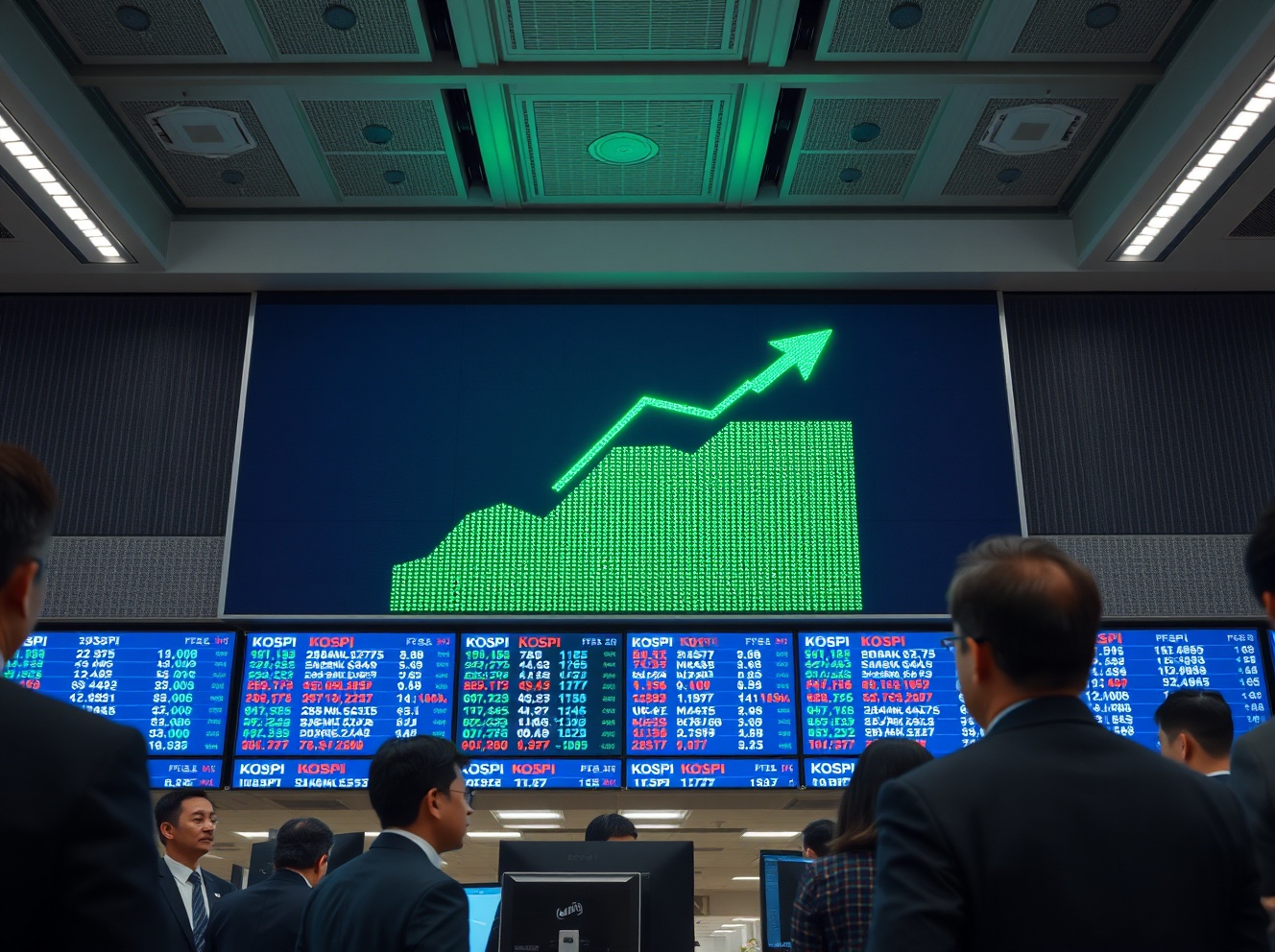
KOSPI Surges 4%, Triggering Buy-Side Sidecar for First Time in Months
South Korea’s benchmark KOSPI index surged more than 4% in early trading today, triggering a buy-side sidecar — a temporary trading halt mechanism designed to cool rapid upward movements. The move marks a notable moment of volatility in the Korean stock market, which has seen relatively subdued trading conditions in recent months.
What Is a Buy-Side Sidecar?
A sidecar is a circuit breaker mechanism used by the Korea Exchange (KRX) to temporarily suspend program trading when the KOSPI or KOSDAQ index moves sharply in a single direction. The buy-side version is triggered when the index rises more than 4% from the previous day’s close. Once activated, program trading orders are halted for five minutes, though manual trading by individual investors continues uninterrupted.
This mechanism is distinct from a full market-wide circuit breaker, which halts all trading for 20 minutes when the index falls 8% or more. Sidecars are specifically designed to curb the influence of algorithmic and program trading during periods of extreme momentum, giving the market a brief cooling-off period.
Context and Market Implications
The trigger comes amid a broader rally in Asian equities, driven by optimism over potential interest rate cuts by major central banks and stronger-than-expected export data from South Korea. The KOSPI’s 4% jump pushed it above the 2,700-point level, a psychological resistance point that traders have been watching closely.
For retail investors, the sidecar provides a moment of stability, preventing runaway buying from automated systems. However, it also signals that market sentiment has become unusually one-sided, which can sometimes precede a reversal. Institutional traders and analysts will be watching for follow-through volume in the afternoon session to gauge whether the rally has legs.
Why This Matters to Investors
The activation of a buy-side sidecar is relatively rare. According to KRX data, such events occur only a handful of times per year, typically during periods of strong global risk appetite or after major domestic policy announcements. For active traders, the halt in program trading can create brief liquidity gaps, potentially widening bid-ask spreads. Long-term investors, however, should view the sidecar as a routine market operation rather than a signal of underlying instability.
It is also worth noting that the KOSPI’s move today follows a period of relative calm. The index had been trading in a narrow range for several weeks, making today’s surge stand out as a potential breakout or a sign of overheating.
Conclusion
The triggering of a buy-side sidecar on the KOSPI underscores the power of algorithmic trading in modern markets and the importance of circuit breaker mechanisms in maintaining orderly trading. While the 4% surge is eye-catching, investors should focus on the fundamental drivers behind the move — including global monetary policy expectations and South Korea’s export momentum — rather than the technical halt itself. The afternoon session will provide clearer direction on whether this rally is sustainable or a short-lived spike.
FAQs
Q1: What exactly happens when a sidecar is triggered?
A: When a buy-side sidecar is triggered, all program trading orders (including algorithmic and basket trades) on the KOSPI are suspended for five minutes. Manual trading by individual investors continues as normal. After five minutes, program trading resumes automatically.
Q2: How does a sidecar differ from a circuit breaker?
A: A sidecar only halts program trading, not all trading. A full market-wide circuit breaker, which halts all trading for 20 minutes, is triggered by an 8% drop in the KOSPI. Sidecars are designed to address rapid price moves driven by automated systems, while circuit breakers address broader market panic.
Q3: Is a buy-side sidecar a bullish or bearish signal?
A: It is neither inherently bullish nor bearish. It is a technical mechanism to manage order flow. However, it often occurs during strong upward momentum, which may indicate market optimism. Investors should look at underlying fundamentals and volume patterns rather than the sidecar itself to make trading decisions.
This post KOSPI Surges 4%, Triggering Buy-Side Sidecar for First Time in Months first appeared on BitcoinWorld.


You May Also Like

Coinbase Launches in India with Rupee Rails & Perps

Berkshire Hathaway (BRK.B) Strikes $6.8B Deal for Taylor Morrison in Abel’s First Mega-Acquisition

Euro wavers amid mixed Eurozone data, rising geopolitical tensions


Trending News
More24/7 Live News
MoreQuick Reads
More
