

Oil Prices Jump 3% as U.S.-Iran Military Strikes Reignite Supply Fears
TLDR
- Brent crude rose over 3% to around $94 a barrel after fresh U.S.-Iran strikes over the weekend
- WTI futures climbed roughly 3.5% to $90.40 a barrel following sharp weekly losses
- The U.S. struck Iranian military sites; Iran responded by attacking a U.S.-used air base
- A ceasefire framework is being discussed, but key issues remain unresolved after seven weeks of talks
- The Strait of Hormuz handles about a fifth of global oil shipments and remains disrupted
Oil prices jumped more than 3% on Monday after the United States and Iran exchanged military strikes over the weekend, raising fresh concerns about supply disruptions in the Middle East.
Brent crude climbed to around $93.95 a barrel, while West Texas Intermediate futures rose to roughly $90.40. Both contracts had fallen about 10% the previous week — their sharpest weekly drops in several weeks.
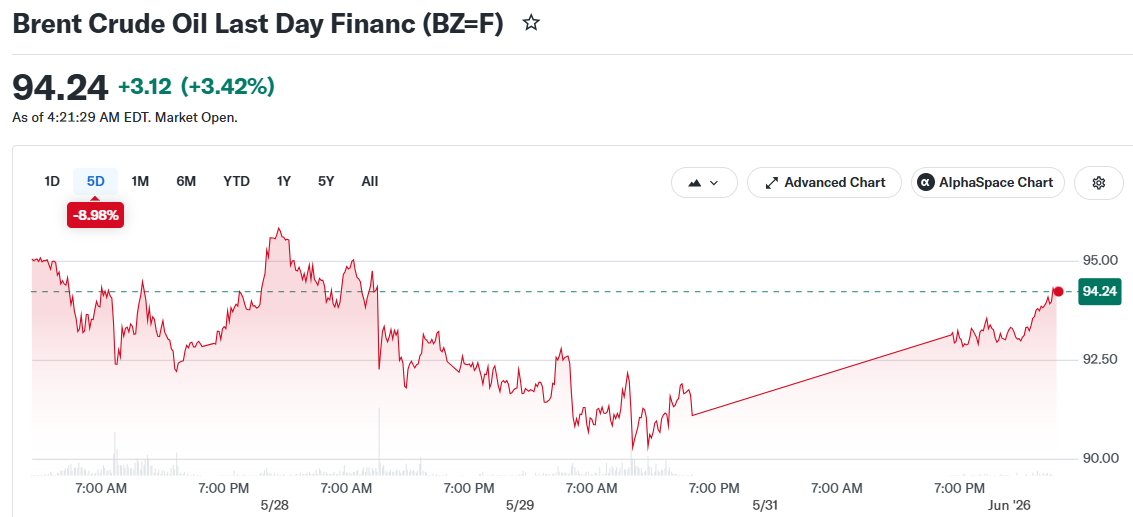 Brent Crude Oil Last Day Financ (BZ=F)
The sell-off last week came after reports that Washington and Tehran were making progress on a ceasefire framework. But those hopes faded quickly after the weekend’s fighting.
What Happened Over the Weekend
The U.S. military said it struck Iranian air defenses, drone command facilities, and related infrastructure. The action came after Iran allegedly shot down a U.S. drone flying over international waters.
Iran’s Revolutionary Guards responded by striking an air base used by U.S. forces. Kuwaiti air defenses also intercepted missile and drone attacks, highlighting how unstable the region has become.
Israel added to the tension by ordering troops to push deeper into southern Lebanon, escalating its campaign against Hezbollah. That move raised fears of a wider regional conflict.
Strait of Hormuz Remains a Flashpoint
The Strait of Hormuz is the world’s most important oil shipping chokepoint. About one-fifth of global oil supplies pass through it.
Shipping through the strait is still below normal levels. Analysts say markets have not yet priced in a full or extended closure, which leaves room for prices to rise further if the situation worsens.
Ipek Ozkardeskaya, senior analyst at Swissquote, said global oil reserves are falling fast and that the upside risks to oil prices remain real if the strait stays disrupted.
Deal Talks Continue but Progress Is Slow
The two sides are discussing a memorandum of understanding. The framework would remove blockages in the Strait of Hormuz and set up a 60-day window to work through disputes over Iran’s nuclear program and sanctions relief.
Amarpreet Singh, commodities analyst at Barclays, said markets are eager to price in a resolution, but that a deal remains elusive after seven weeks of negotiations.
Key sticking points include regional security arrangements, sanctions relief, and maritime access through the strait.
Oil prices have swung sharply in recent weeks as traders reacted to shifting headlines on both the military and diplomatic fronts.
As of early Monday trading, both Brent and WTI held onto their gains, though analysts cautioned that the situation could change quickly depending on whether talks advance or fighting escalates further.
The post Oil Prices Jump 3% as U.S.-Iran Military Strikes Reignite Supply Fears appeared first on CoinCentral.


You May Also Like

Bitcoin Is Still Following This Descending Channel Pattern And The Endgame Shows The Bottom

Japan’s LDP Calls For Crypto ETF Framework, Yen Stablecoin Push In New Proposal

The Chemistry of UV Resistance: How Titanium Dioxide Protects Against the California Sun



