

AI Data Center Memory Disaggregation Infrastructure Shapes Next-Generation AI Scale as Microchip Expands Connectivity Portfolio
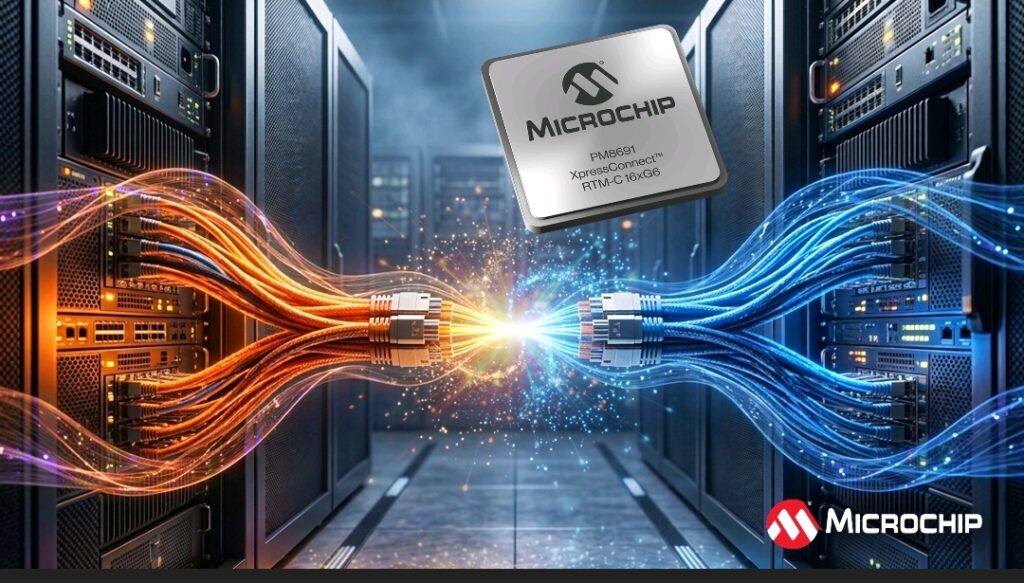
AI data center memory disaggregation infrastructure increasingly determines whether enterprises can scale AI workloads efficiently or struggle with growing latency and utilization bottlenecks. Against this backdrop, Microchip Technology has launched XpressConnect PCIe 6.0 and CXL 3.1 retimers aimed at solving signal reach limitations and improving connectivity across large-scale AI environments. The move reflects a broader shift in infrastructure priorities where efficient data movement increasingly matters as much as compute capacity itself.
As enterprises build larger GPU clusters, infrastructure complexity rises sharply. Therefore, technologies that reduce latency and simplify scaling increasingly influence customer experience outcomes through faster applications, stronger service continuity, and improved reliability.
Why AI Data Center Memory Disaggregation Infrastructure Matters More Than Compute Expansion
AI workloads continue to push traditional infrastructure limits. Organizations increasingly discover that compute resources alone do not guarantee performance improvements. Instead, connectivity limitations frequently create bottlenecks that reduce overall efficiency.
Microchip argues that signal integrity challenges become more severe as interconnect speeds reach 64 GT/s. Consequently, architectures designed for earlier workloads often struggle to maintain scalability.
“AI data centers are increasingly constrained not by compute, but by the ability to move data efficiently across the system. As PCIe 6.0 pushes speeds to 64 GT/s, signal reach and latency become critical design challenges,” said Brian McCarson, Corporate Vice President and General Manager of Microchip’s data center solutions business unit.
This framing highlights an industry transition where infrastructure optimization increasingly shifts toward efficient resource distribution rather than isolated hardware acceleration.
AI Data Center Memory Disaggregation Infrastructure and the Latency Challenge
Modern AI environments rely heavily on interconnected GPU clusters. However, data movement delays frequently reduce utilization efficiency.
Microchip states that its retimers deliver less than 12 nanoseconds of pin-to-pin latency, significantly below specification thresholds. Lower latency matters because AI workloads often require continuous access to distributed memory resources.
The company positions the retimers as tools for enabling:
- Expanded signal reach
- More flexible board designs
- Better support for cabled architectures
- Reduced resource bottlenecks
Notably, memory disaggregation allows organizations to share resources more dynamically. Therefore, enterprises may avoid overprovisioning infrastructure while maintaining service quality.
Building an Interoperable Infrastructure Ecosystem
Microchip’s strategy extends beyond component performance. The company integrates these retimers with its broader portfolio including PCIe switches, storage controllers, and connectivity technologies.
This ecosystem approach matters because enterprise buyers increasingly seek validated architectures rather than disconnected products.
The company emphasized interoperability through support for multiple generations of PCIe technology. Additionally, support for flexible bifurcation configurations expands deployment options.
Microchip also highlighted its diagnostic environment:
“ChipLink diagnostic tools offer comprehensive debug, diagnostics, configuration and analysis through an intuitive graphical user interface (GUI). ChipLink connects via in-band PCIe or sideband signals such as UART, TWI and EJTAG, enabling flexible, efficient monitoring and troubleshooting throughout design and deployment.”
Diagnostic ecosystems increasingly matter because infrastructure teams prioritize operational visibility and recovery speed.
Customer Experience Outcomes Depend on Infrastructure Reliability
Customer experience conversations rarely begin with retimers or signal integrity. However, infrastructure decisions strongly influence digital experiences.
AI applications increasingly support customer service, recommendations, fraud detection, personalization, and predictive workflows. Consequently, infrastructure bottlenecks can directly affect responsiveness.
Lower latency architectures may improve:
- Service availability
- AI inference consistency
- Operational continuity
- Application responsiveness
Moreover, diagnostic visibility supports faster troubleshooting. Faster recovery reduces downtime and strengthens customer trust.
As enterprises increase AI investments, infrastructure resilience increasingly becomes part of customer experience strategy rather than solely IT strategy.
Industry Implications for Hyperscalers and Enterprise Buyers
The broader industry trend points toward distributed architectures where memory resources operate more dynamically.
Microchip specifically emphasized reduced dependency risks through standards alignment and drop-in compatibility. This positioning addresses growing enterprise concerns about supplier concentration.
The company stated its retimers support enterprise-grade capabilities including hot-plug support and end-to-end data integrity while aligning with standard retimer footprints.
As a result, buyers increasingly evaluate:
- Deployment simplicity
- Interoperability
- Diagnostic maturity
- Resource efficiency
- Long-term scalability
Meanwhile, infrastructure vendors increasingly compete on ecosystem strength rather than isolated component specifications.
AI infrastructure spending continues rising. However, future winners may depend less on compute expansion and more on efficient connectivity, scalable architectures, and operational simplicity.
The launch ultimately reinforces a broader reality: AI scale increasingly depends on moving data efficiently rather than simply processing more of it.
The post AI Data Center Memory Disaggregation Infrastructure Shapes Next-Generation AI Scale as Microchip Expands Connectivity Portfolio appeared first on CX Quest.


You May Also Like

Kaspa Gained 10.02% in Last Month and is Predicted to Drop to $0.028204 By Apr 06, 2026

Solana Price Approaches $58 Support as $175 Target Remains

Fed’s Williams Says Rising Energy Prices Threaten Both Sides of Dual Mandate



