

Polymarket Users Challenge ‘No’ Outcome After Strategy Sale Decision
A Polymarket prediction contract focused on whether Strategy sold Bitcoin before May 31 ultimately settled in the negative, after disagreements emerged among traders over how the reported transaction should be classified.
A contested Polymarket market on whether Strategy sold Bitcoin by May 31 was ultimately resolved as “No” after two separate dispute rounds, even though the company later disclosed that 32 BTC had been sold during the period covered by the contract.
Holders of the UMA voted to settle the market as “No” after a second resolution round concluded at 12:34 am UTC on Thursday, according to blockchain records. Data from Betmoar shows that 98.6% of the 607 participants supported a “No” outcome, while just 1.4% cast votes in favor of “Yes.”
Polymarket said no evidence, onchain activity, or reliable reports confirmed that Strategy had sold Bitcoin within the contract’s specified period, noting that any confirmation obtained after the market deadline would not be considered valid for resolution purposes.
Strategy sold 32 BTC between May 26 and May 31, though the transaction was disclosed in a filing submitted on Monday, after the contract’s cutoff date had already passed.
The outcome has intensified concerns surrounding Polymarket’s token-weighted dispute resolution framework, under which wallets holding larger amounts of UMA are granted proportionally greater influence over voting results.
Several users challenged the outcome, arguing that the contract should have been settled based on the date the sale took place rather than the date it was disclosed. One trader claimed losses of roughly $500,000 linked to the prediction market position. More than $80 million had been staked on whether Strategy would sell Bitcoin by May 31, as previously reported by on Tuesday.
“Prediction markets should price what happens, not how the oracle will reinterpret rules after the fact,” as resolution integrity “trumps any single outcome,” said Galaxy Research in a Wednesday X post, adding:
Galaxy Digital also revealed that it had an economic stake in the market, noting that “yes” shares were purchased as part of its broader strategy to regularly hedge exposure across prediction market positions.
Polymarket’s Dispute Resolution Process Faces Growing Scrutiny
The largest voting stake in the dispute was controlled by the blockchain wallet borntoolate.eth, which held 3.11 million UMA. The second-largest voting position belonged to Kevin Chan through wallet “0xd2a,” which held approximately 1.53 million UMA tokens.
Dispute resolution can generate substantial returns for major token holders. More than $299,000 was earned by the wallet borntoolate.eth through participation in event-contract dispute voting, while over $370,000 was collected by the wallet associated with Kevin Chan.
Critics also cited previous disputed Polymarket outcomes as further evidence of wider concerns surrounding the token-weighted voting structure used by UMA holders.
A prediction market contract on whether Ukraine would approve US President Donald Trump’s minerals agreement before April 2025 was settled as “yes” in March after two dispute rounds, even though the deal was not officially signed until April 30.
Several users described the incident as a “governance attack and whale manipulation,” arguing that no action was taken by Polymarket in response, according to comments shared by Polymarket trader fr1ko.eth in a post on X on Tuesday.
The latest developments follow a request made a day earlier by nine Democratic lawmakers in the US House of Representatives, who urged the Federal Trade Commission to examine how prediction market platforms market their services to users and how they portray themselves to regulators.


You May Also Like

Bitcoin Open Interest Plunges 25% as Mass Liquidations Reset Crypto Derivatives Markets
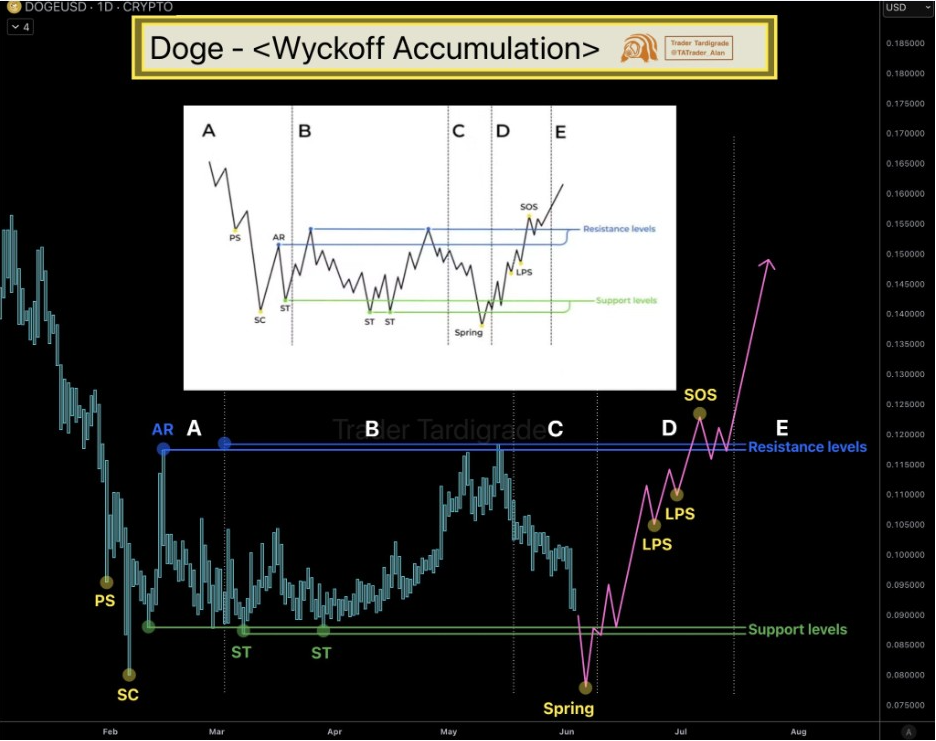
Dogecoin Price Could Rebound If Wyckoff Accumulation Holds

Ripple Partner Thunes Unveils Development That Could Strengthen XRP’s Global Payment Narrative



