The post MicroStrategy Investors Face Risks From Saylor’s Bitcoin Addiction appeared on BitcoinEthereumNews.com. MicroStrategy announced a $22 million Bitcoin purchase today, highlighting growing fears of shareholder dilution. The firm has refused to reinstate guardrails that could prevent this. MicroStrategy is caught between two bearish scenarios. If it stops buying BTC, it could collapse market confidence. However, if it dilutes shareholders to fund these buys, the firm will continue underperforming the asset it holds. Sponsored Sponsored MicroStrategy’s Dilution Crisis MicroStrategy has earned a lot of success with its Bitcoin accumulation plan, but a few cracks have been forming in recent weeks. Recently, the firm’s purchase size has been diminishing, with Chairman Michael Saylor announcing a $22 million BTC acquisition today: Compared to some of its previous buys, this sum is downright paltry. Moreover, new reports help explain an urgent dilemma for MicroStrategy: the firm is increasingly leaning on shareholder dilution to fund these buys. This pattern could bubble into an explosive crisis if it diminishes shareholder confidence. Dangerous Warning Signs Although Michael Saylor claimed in July that MicroStrategy would not dilute shareholders’ Bitcoin exposure, he took measures to change this policy last month. Specifically, he announced that the firm might sell stock for new reasons other than buying BTC, and also removed guardrails to protect investors’ positions. Sponsored Sponsored Since MicroStrategy enacted these measures, the firm diluted common shareholders by 3,278,660 shares to fund over $1.1 billion in new Bitcoin purchases. This 1.2% of shareholder float therefore directly funded around 94% of the company’s BTC acquisitions in the last month. MicroStrategy’s stock dilution is dangerous for a few reasons, but one is particularly critical: it directly undermines the motivation to invest in MSTR instead of buying BTC. Although the firm purchased around 10,000 bitcoins since August, it has significantly underperformed the token. MicroStrategy Price Performance. Source: Google Finance No Clear Way Out Even though… The post MicroStrategy Investors Face Risks From Saylor’s Bitcoin Addiction appeared on BitcoinEthereumNews.com. MicroStrategy announced a $22 million Bitcoin purchase today, highlighting growing fears of shareholder dilution. The firm has refused to reinstate guardrails that could prevent this. MicroStrategy is caught between two bearish scenarios. If it stops buying BTC, it could collapse market confidence. However, if it dilutes shareholders to fund these buys, the firm will continue underperforming the asset it holds. Sponsored Sponsored MicroStrategy’s Dilution Crisis MicroStrategy has earned a lot of success with its Bitcoin accumulation plan, but a few cracks have been forming in recent weeks. Recently, the firm’s purchase size has been diminishing, with Chairman Michael Saylor announcing a $22 million BTC acquisition today: Compared to some of its previous buys, this sum is downright paltry. Moreover, new reports help explain an urgent dilemma for MicroStrategy: the firm is increasingly leaning on shareholder dilution to fund these buys. This pattern could bubble into an explosive crisis if it diminishes shareholder confidence. Dangerous Warning Signs Although Michael Saylor claimed in July that MicroStrategy would not dilute shareholders’ Bitcoin exposure, he took measures to change this policy last month. Specifically, he announced that the firm might sell stock for new reasons other than buying BTC, and also removed guardrails to protect investors’ positions. Sponsored Sponsored Since MicroStrategy enacted these measures, the firm diluted common shareholders by 3,278,660 shares to fund over $1.1 billion in new Bitcoin purchases. This 1.2% of shareholder float therefore directly funded around 94% of the company’s BTC acquisitions in the last month. MicroStrategy’s stock dilution is dangerous for a few reasons, but one is particularly critical: it directly undermines the motivation to invest in MSTR instead of buying BTC. Although the firm purchased around 10,000 bitcoins since August, it has significantly underperformed the token. MicroStrategy Price Performance. Source: Google Finance No Clear Way Out Even though…

MicroStrategy Investors Face Risks From Saylor’s Bitcoin Addiction

For feedback or concerns regarding this content, please contact us at crypto.news@mexc.com

MicroStrategy announced a $22 million Bitcoin purchase today, highlighting growing fears of shareholder dilution. The firm has refused to reinstate guardrails that could prevent this.

MicroStrategy is caught between two bearish scenarios. If it stops buying BTC, it could collapse market confidence. However, if it dilutes shareholders to fund these buys, the firm will continue underperforming the asset it holds.

Sponsored

Sponsored

MicroStrategy’s Dilution Crisis

MicroStrategy has earned a lot of success with its Bitcoin accumulation plan, but a few cracks have been forming in recent weeks. Recently, the firm’s purchase size has been diminishing, with Chairman Michael Saylor announcing a $22 million BTC acquisition today:

Compared to some of its previous buys, this sum is downright paltry. Moreover, new reports help explain an urgent dilemma for MicroStrategy: the firm is increasingly leaning on shareholder dilution to fund these buys.

This pattern could bubble into an explosive crisis if it diminishes shareholder confidence.

Dangerous Warning Signs

Although Michael Saylor claimed in July that MicroStrategy would not dilute shareholders’ Bitcoin exposure, he took measures to change this policy last month.

Specifically, he announced that the firm might sell stock for new reasons other than buying BTC, and also removed guardrails to protect investors’ positions.

Sponsored

Sponsored

Since MicroStrategy enacted these measures, the firm diluted common shareholders by 3,278,660 shares to fund over $1.1 billion in new Bitcoin purchases. This 1.2% of shareholder float therefore directly funded around 94% of the company’s BTC acquisitions in the last month.

MicroStrategy’s stock dilution is dangerous for a few reasons, but one is particularly critical: it directly undermines the motivation to invest in MSTR instead of buying BTC. Although the firm purchased around 10,000 bitcoins since August, it has significantly underperformed the token.

MicroStrategy Price Performance. Source: Google Finance

No Clear Way Out

Even though the company recently avoided a class-action lawsuit, this is a giant warning sign. MicroStrategy’s inconsistent earnings have already cost it huge accolades, and shareholder dilution could be even worse.

The firm has a fiduciary responsibility to maximize shareholder value, which may be in conflict with its acquisition goals.

Much like the Red Queen from Alice in Wonderland, a BTC digital asset treasury has to keep running faster and faster to stay in the same place. MicroStrategy is a pillar of corporate confidence in Bitcoin; if it stops buying, the token price will drop, dilution be damned.

There isn’t an easy way out of this crisis. Michael Saylor doesn’t have to only keep making money; he has to outperform Bitcoin. Shareholder dilution might be the only way to keep MicroStrategy on top for now. Nonetheless, it could trigger an even bigger implosion.

Source: https://beincrypto.com/microstrategy-shareholders-risk-saylor-bitcoin-buys/

Disclaimer: The articles reposted on this site are sourced from public platforms and are provided for informational purposes only. They do not necessarily reflect the views of MEXC. All rights remain with the original authors. If you believe any content infringes on third-party rights, please contact crypto.news@mexc.com for removal. MEXC makes no guarantees regarding the accuracy, completeness, or timeliness of the content and is not responsible for any actions taken based on the information provided. The content does not constitute financial, legal, or other professional advice, nor should it be considered a recommendation or endorsement by MEXC.

You May Also Like

Aave DAO to Shut Down 50% of L2s While Doubling Down on GHO

Aave DAO to Shut Down 50% of L2s While Doubling Down on GHO

The post Aave DAO to Shut Down 50% of L2s While Doubling Down on GHO appeared on BitcoinEthereumNews.com. Aave DAO is gearing up for a significant overhaul by shutting down over 50% of underperforming L2 instances. It is also restructuring its governance framework and deploying over $100 million to boost GHO. This could be a pivotal moment that propels Aave back to the forefront of on-chain lending or sparks unprecedented controversy within the DeFi community. Sponsored Sponsored ACI Proposes Shutting Down 50% of L2s The “State of the Union” report by the Aave Chan Initiative (ACI) paints a candid picture. After a turbulent period in the DeFi market and internal challenges, Aave (AAVE) now leads in key metrics: TVL, revenue, market share, and borrowing volume. Aave’s annual revenue of $130 million surpasses the combined cash reserves of its competitors. Tokenomics improvements and the AAVE token buyback program have also contributed to the ecosystem’s growth. Aave global metrics. Source: Aave However, the ACI’s report also highlights several pain points. First, regarding the Layer-2 (L2) strategy. While Aave’s L2 strategy was once a key driver of success, it is no longer fit for purpose. Over half of Aave’s instances on L2s and alt-L1s are not economically viable. Based on year-to-date data, over 86.6% of Aave’s revenue comes from the mainnet, indicating that everything else is a side quest. On this basis, ACI proposes closing underperforming networks. The DAO should invest in key networks with significant differentiators. Second, ACI is pushing for a complete overhaul of the “friendly fork” framework, as most have been unimpressive regarding TVL and revenue. In some cases, attackers have exploited them to Aave’s detriment, as seen with Spark. Sponsored Sponsored “The friendly fork model had a good intention but bad execution where the DAO was too friendly towards these forks, allowing the DAO only little upside,” the report states. Third, the instance model, once a smart…
Share
BitcoinEthereumNews2025/09/18 02:28
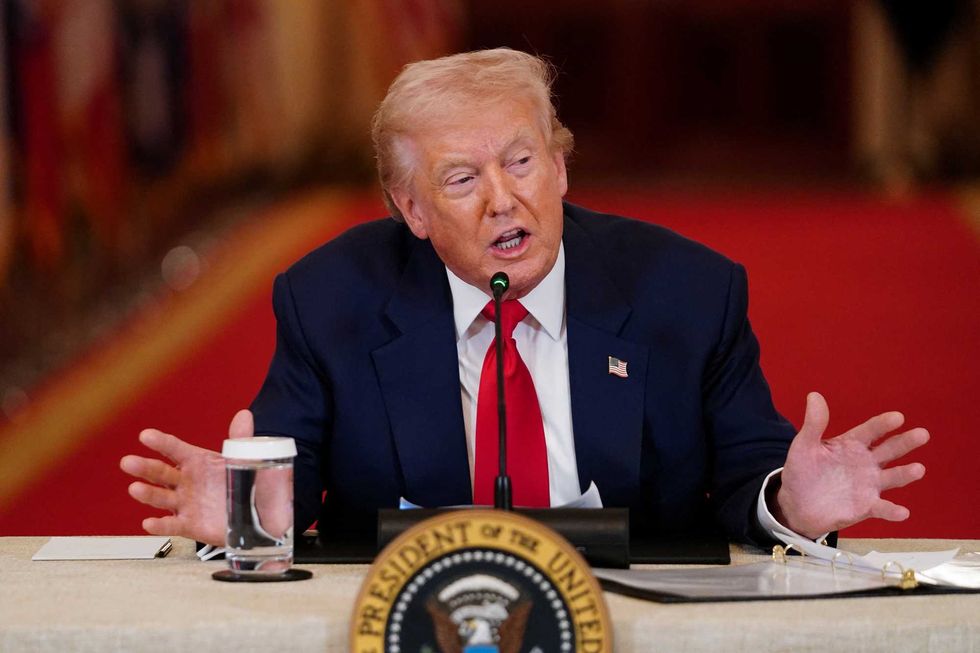
Trump erupts at Fox News reporter during  roundtable: 'What a stupid question'

Trump erupts at Fox News reporter during  roundtable: 'What a stupid question'

An agitated President Donald Trump lashed out at two reporters during his White House “Saving College Sports” roundtable, complaining that the journalists failed
Share
Rawstory2026/03/07 07:19
Lyn Alden Tips Bitcoin Outperforming Gold Through to 2029

Lyn Alden Tips Bitcoin Outperforming Gold Through to 2029

The post Lyn Alden Tips Bitcoin Outperforming Gold Through to 2029 appeared on BitcoinEthereumNews.com. Bitcoin is likely to outperform gold on price performance
Share
BitcoinEthereumNews2026/03/07 07:22