The post Turkey Proposes Expanded Powers for Financial Crime Agency appeared on BitcoinEthereumNews.com. Key Points: Turkey moves to strengthen Masak’s authority in combating financial crime. Turkey’s Masak targets suspicious crypto activity. Exchange compliance increases as legislation progresses. Turkey’s Financial Crimes Investigation Agency, Masak, is set to receive expanded powers to freeze bank and cryptocurrency accounts, targeting illegal activities and meeting FATF standards. This move could impact cryptocurrency exchanges’ operations in Turkey and drive a shift towards decentralized platforms, reflecting ongoing regulatory efforts to curtail financial crime. Turkey’s Strategic Push in Anti-Money Laundering Measures Understanding Turkey’s Fintech Laws and Regulations, Bloomberg News reported that Turkey plans to enhance Masak’s powers, aiming to combat illegal activities by freezing accounts and monitoring suspicious crypto transactions. These proposals are in line with anti-money laundering standards set by the Financial Action Task Force (FATF). The bill introduces measures to blacklist crypto addresses related to crimes and impose trading limits to control financial fraud and illegal gambling. “These measures are part of broader efforts to strengthen oversight of the crypto sector,” said Mehmet Şimşek, Treasury and Finance Minister. These measures may lead to increased operational costs. Masak’s proposed actions mainly focus on tackling rented accounts used in illegal operations. The bill, expected to be submitted in the upcoming legislative term, may undergo modifications before final approval. Despite the absence of official statements from top Turkish exchanges, the community remains vigilant. If implemented, the draft legislation may prompt certain exchanges to update their procedures, potentially impacting trading volumes and prompting a shift towards decentralized exchanges. Market Reactions and Potential Long-Term Outcomes Did you know? Turkey’s regulatory landscape for cryptocurrency is evolving rapidly, reflecting global trends in financial oversight. Bitcoin (BTC), as reported by CoinMarketCap, recently stood at $114,167.84 with a significant market cap of $2.28 trillion, reflecting a 58.03% dominance. The cryptocurrency experienced a 1.76% increase over the last 24… The post Turkey Proposes Expanded Powers for Financial Crime Agency appeared on BitcoinEthereumNews.com. Key Points: Turkey moves to strengthen Masak’s authority in combating financial crime. Turkey’s Masak targets suspicious crypto activity. Exchange compliance increases as legislation progresses. Turkey’s Financial Crimes Investigation Agency, Masak, is set to receive expanded powers to freeze bank and cryptocurrency accounts, targeting illegal activities and meeting FATF standards. This move could impact cryptocurrency exchanges’ operations in Turkey and drive a shift towards decentralized platforms, reflecting ongoing regulatory efforts to curtail financial crime. Turkey’s Strategic Push in Anti-Money Laundering Measures Understanding Turkey’s Fintech Laws and Regulations, Bloomberg News reported that Turkey plans to enhance Masak’s powers, aiming to combat illegal activities by freezing accounts and monitoring suspicious crypto transactions. These proposals are in line with anti-money laundering standards set by the Financial Action Task Force (FATF). The bill introduces measures to blacklist crypto addresses related to crimes and impose trading limits to control financial fraud and illegal gambling. “These measures are part of broader efforts to strengthen oversight of the crypto sector,” said Mehmet Şimşek, Treasury and Finance Minister. These measures may lead to increased operational costs. Masak’s proposed actions mainly focus on tackling rented accounts used in illegal operations. The bill, expected to be submitted in the upcoming legislative term, may undergo modifications before final approval. Despite the absence of official statements from top Turkish exchanges, the community remains vigilant. If implemented, the draft legislation may prompt certain exchanges to update their procedures, potentially impacting trading volumes and prompting a shift towards decentralized exchanges. Market Reactions and Potential Long-Term Outcomes Did you know? Turkey’s regulatory landscape for cryptocurrency is evolving rapidly, reflecting global trends in financial oversight. Bitcoin (BTC), as reported by CoinMarketCap, recently stood at $114,167.84 with a significant market cap of $2.28 trillion, reflecting a 58.03% dominance. The cryptocurrency experienced a 1.76% increase over the last 24…

Turkey Proposes Expanded Powers for Financial Crime Agency

For feedback or concerns regarding this content, please contact us at crypto.news@mexc.com
Key Points:
  • Turkey moves to strengthen Masak’s authority in combating financial crime.
  • Turkey’s Masak targets suspicious crypto activity.
  • Exchange compliance increases as legislation progresses.

Turkey’s Financial Crimes Investigation Agency, Masak, is set to receive expanded powers to freeze bank and cryptocurrency accounts, targeting illegal activities and meeting FATF standards.

This move could impact cryptocurrency exchanges’ operations in Turkey and drive a shift towards decentralized platforms, reflecting ongoing regulatory efforts to curtail financial crime.

Turkey’s Strategic Push in Anti-Money Laundering Measures

Understanding Turkey’s Fintech Laws and Regulations, Bloomberg News reported that Turkey plans to enhance Masak’s powers, aiming to combat illegal activities by freezing accounts and monitoring suspicious crypto transactions. These proposals are in line with anti-money laundering standards set by the Financial Action Task Force (FATF). The bill introduces measures to blacklist crypto addresses related to crimes and impose trading limits to control financial fraud and illegal gambling.

“These measures are part of broader efforts to strengthen oversight of the crypto sector,” said Mehmet Şimşek, Treasury and Finance Minister. These measures may lead to increased operational costs. Masak’s proposed actions mainly focus on tackling rented accounts used in illegal operations. The bill, expected to be submitted in the upcoming legislative term, may undergo modifications before final approval.

Despite the absence of official statements from top Turkish exchanges, the community remains vigilant. If implemented, the draft legislation may prompt certain exchanges to update their procedures, potentially impacting trading volumes and prompting a shift towards decentralized exchanges.

Market Reactions and Potential Long-Term Outcomes

Did you know? Turkey’s regulatory landscape for cryptocurrency is evolving rapidly, reflecting global trends in financial oversight.

Bitcoin (BTC), as reported by CoinMarketCap, recently stood at $114,167.84 with a significant market cap of $2.28 trillion, reflecting a 58.03% dominance. The cryptocurrency experienced a 1.76% increase over the last 24 hours, although it saw a 1.48% decline in 60 days.

Bitcoin(BTC), daily chart, screenshot on CoinMarketCap at 00:24 UTC on September 30, 2025. Source: CoinMarketCap

CoinCu’s research indicates that these regulatory trends may encourage larger exchanges to persist in their operations, while smaller entities might consolidate or exit the market. This shift parallels historical moves towards strict compliance and heightened fiscal scrutiny, reflecting broader global regulatory patterns.

Source: https://coincu.com/news/turkey-expands-financial-crime-powers/

Market Opportunity
Lorenzo Protocol Logo
Lorenzo Protocol Price(BANK)
$0.04015
$0.04015$0.04015
-2.43%
USD
Lorenzo Protocol (BANK) Live Price Chart
Disclaimer: The articles reposted on this site are sourced from public platforms and are provided for informational purposes only. They do not necessarily reflect the views of MEXC. All rights remain with the original authors. If you believe any content infringes on third-party rights, please contact crypto.news@mexc.com for removal. MEXC makes no guarantees regarding the accuracy, completeness, or timeliness of the content and is not responsible for any actions taken based on the information provided. The content does not constitute financial, legal, or other professional advice, nor should it be considered a recommendation or endorsement by MEXC.

You May Also Like

Aave DAO to Shut Down 50% of L2s While Doubling Down on GHO

Aave DAO to Shut Down 50% of L2s While Doubling Down on GHO

The post Aave DAO to Shut Down 50% of L2s While Doubling Down on GHO appeared on BitcoinEthereumNews.com. Aave DAO is gearing up for a significant overhaul by shutting down over 50% of underperforming L2 instances. It is also restructuring its governance framework and deploying over $100 million to boost GHO. This could be a pivotal moment that propels Aave back to the forefront of on-chain lending or sparks unprecedented controversy within the DeFi community. Sponsored Sponsored ACI Proposes Shutting Down 50% of L2s The “State of the Union” report by the Aave Chan Initiative (ACI) paints a candid picture. After a turbulent period in the DeFi market and internal challenges, Aave (AAVE) now leads in key metrics: TVL, revenue, market share, and borrowing volume. Aave’s annual revenue of $130 million surpasses the combined cash reserves of its competitors. Tokenomics improvements and the AAVE token buyback program have also contributed to the ecosystem’s growth. Aave global metrics. Source: Aave However, the ACI’s report also highlights several pain points. First, regarding the Layer-2 (L2) strategy. While Aave’s L2 strategy was once a key driver of success, it is no longer fit for purpose. Over half of Aave’s instances on L2s and alt-L1s are not economically viable. Based on year-to-date data, over 86.6% of Aave’s revenue comes from the mainnet, indicating that everything else is a side quest. On this basis, ACI proposes closing underperforming networks. The DAO should invest in key networks with significant differentiators. Second, ACI is pushing for a complete overhaul of the “friendly fork” framework, as most have been unimpressive regarding TVL and revenue. In some cases, attackers have exploited them to Aave’s detriment, as seen with Spark. Sponsored Sponsored “The friendly fork model had a good intention but bad execution where the DAO was too friendly towards these forks, allowing the DAO only little upside,” the report states. Third, the instance model, once a smart…
Share
BitcoinEthereumNews2025/09/18 02:28
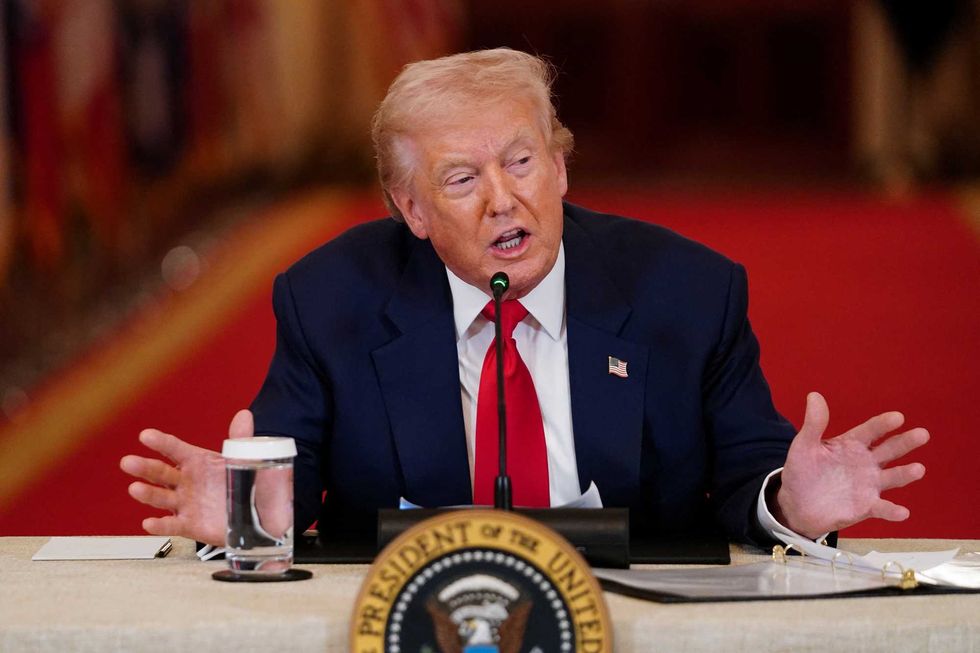
Trump erupts at Fox News reporter during  roundtable: 'What a stupid question'

Trump erupts at Fox News reporter during  roundtable: 'What a stupid question'

An agitated President Donald Trump lashed out at two reporters during his White House “Saving College Sports” roundtable, complaining that the journalists failed
Share
Rawstory2026/03/07 07:19
Lyn Alden Tips Bitcoin Outperforming Gold Through to 2029

Lyn Alden Tips Bitcoin Outperforming Gold Through to 2029

The post Lyn Alden Tips Bitcoin Outperforming Gold Through to 2029 appeared on BitcoinEthereumNews.com. Bitcoin is likely to outperform gold on price performance
Share
BitcoinEthereumNews2026/03/07 07:22