

Exclusive: Voice AI startup Bland raises $50 million after being rejected by 180 investors
Isaiah Granet was rejected by 180 investors in three weeks during Y Combinator. Their reason: phone calls won’t exist in a year. He’s raised more than $100 million to prove them wrong.
Bland, the San Francisco voice AI company Granet co-founded in 2023 with Sobhan Nejad, closed a $50 million Series C led by Dell Technologies Capital, Fortune learned exclusively. HubSpot Ventures, Archerman, and Tribeca joined the round; existing backers Emergence Capital, Upfront Ventures, Scale Venture Partners, Y Combinator, Affirm co-founder Max Levchin, ElevenLabs CTO Piotr Dąbkowski, and Twilio founder Jeff Lawson also participated.
The company raised a $16 million Series A in August 2024 and a $40 million Series B led by Emergence in January 2025. New capital will go toward expanding research, growing the engineering team, and scaling into more regulated industries.
Bland’s origin story is personal: Nejad’s aunt, unable to get through to her insurance company by phone, was denied access to medical treatment. The two founders—both engineers—set out to build a phone agent that could stay on the line long enough to actually fix the problem.
Many voice AI tools today wrap around third-party models and handle short, scripted calls: appointment reminders, basic routing, password resets. Bland’s platform runs exclusively on its own proprietary, in-house-built voice models, and won’t let customers integrate models from OpenAI or Anthropic into the tech—even if they wanted to.
“We are one of one in that sense,” Granet told Fortune. “When you come to use Bland, we say, here’s what you’re gonna use, you’re gonna like it, we hope—and we’re gonna deliver a better phone call, and we’re ready to own that.”
A typical Bland call runs 30–45 minutes—in healthcare, that might mean walking an elderly patient through a blood pressure reading, troubleshooting errors, and deciding in real-time whether to escalate to emergency services. The company now handles more than 3.5 million calls per week, processed over 175 million AI phone calls last year, and counts 250-plus enterprise customers including Samsara, Kin Insurance, and CNO Financial Group
The call center AI market is worth roughly $3 billion today and is projected to reach $13.5 billion by 2034.
Granet frames Bland’s long-game accordingly. “If you look at just the telephony market—Twilio, Genesys, 8×8, NICE inContact—they make about $15 billion a year on a commodity product,” he claimed (My math puts this closer to $12 billion, but nevertheless.). “We have the ability to go do something really special. This space will support multiple hundred-billion-dollar winners.”
Dell Technologies Capital partner Elana Lian, who led the round, called voice “one of the hardest problems in AI” and pointed to Bland’s model ownership as the differentiator.
Bland’s competition is stiffening. PolyAI, a Cambridge University spinout serving FedEx, Marriott, and Caesars, raised $86 million at a $750 million valuation in December. Replicant, Observe.ai, Retell AI, and Cognigy are all chasing the same enterprise budgets, and most sit deeply embedded inside existing call center stacks. Granet’s read on the field is pointed: “When you pull back the hood on most of the people talking about voice AI, they don’t have a cohesive product, they’re not doing that many calls at scale. The calls they do are usually short, transfer calls,” he argued.
But there’s a harder hurdle than the competition. “People underestimate how much resistance there is right now to AI,” Granet said, describing meetings with major New York call centers that he said had never explored voice AI at all and were still running phone trees and legacy systems. On top of adoption friction, Bland’s core verticals—healthcare and financial services—carry strict rules around HIPAA, AI disclosures, and data retention. The company offers self-hosted deployment for data-sensitive customers, but HIPAA compliance is gated to enterprise contracts
Granet is candid about the knife’s edge he’s walking. “There’s a chance that we’re wrong, and we die on that hill,” he said. “There’s also a chance that we’re right, and it turns out to be a $100 billion thesis.”
This story was originally featured on Fortune.com


You May Also Like

BitGo Launches Stablecoin Minting and Redemption Service for Institutions
Hedera Price Prediction Holds Bullish as Iran Peace Deal Pushes Bitcoin Above $65,000 and Pepeto Presale Passes $10 Million
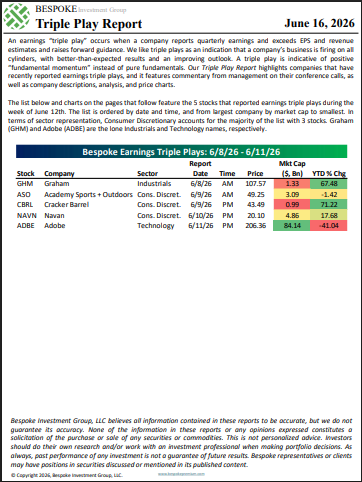
The Triple Play Report: 6/16/26



