

Bitcoin Holds $65K: Gold Chart, Bear Cycle Signal Bottom as Fed Meets
$BTC is fighting to hold $65,000 on the same day the Federal Reserve sits down to decide interest rates.
The price is at $65,786. Every major moving average sits above it. The RSI is below 50. The daily chart is still in a bearish structure.
But there is one chart that does not get nearly enough attention right now. The Bitcoin vs Gold ratio has appeared at every major cycle bottom in Bitcoin's history. It is appearing again.
Why Is Bitcoin Stuck at $65,000 and Not Moving Higher?
Earlier this month, $BTC collapsed from around $78,000 down to near $59,000 in a matter of days. The sell-off was fast and sharp.
After news of the Iran peace deal, the recovery since then has been slow. Price is climbing inside a small rising channel, but nothing has broken out convincingly above key resistance.
The EMA 20 is at $66,523. The EMA 50 is at $70,304. The EMA 100 sits at $73,005. The EMA 200 is at $78,430. The coin is trading below all four. That is a full bearish stack on the daily timeframe, and it is hard to argue otherwise.
What Does the Bitcoin vs Gold Chart Show About the Current Bear Market?
The Bitcoin to Gold ratio is one of the clearest macro reads available to any crypto trader.
When $BTC sells off, and gold holds steady or climbs, the ratio drops sharply. That divergence has consistently marked the most fearful moments in every major Bitcoin bear market on record.
At the 2018 bottom and again at the 2022 bottom, this ratio hit its lowest readings right before Bitcoin reversed and began its next bull cycle. Watching this ratio today gives a cleaner read on true cycle positioning than the BTC price chart does alone.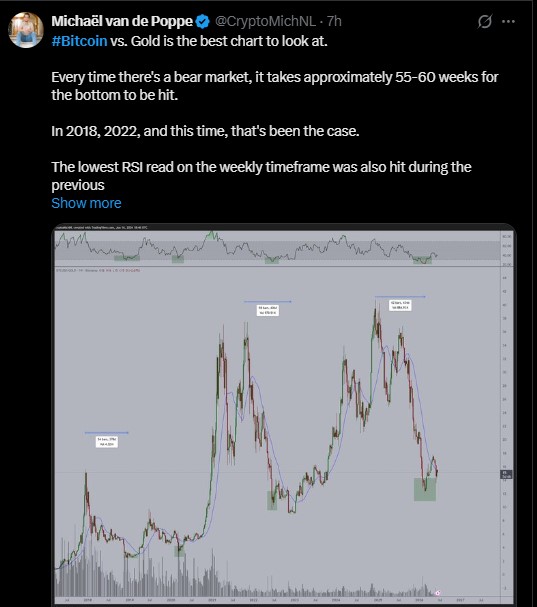
How Long Do Bitcoin Bear Markets Last? History Points to 55 to 60 Weeks
Two prior cycles give a clear framework for the current setup.
BTC topped near $19,800 in December 2017 and bottomed near $3,100 in December 2018. That was roughly 52 weeks.
In the 2022 cycle, BTC peaked near $69,000 in November 2021 and bottomed around $15,500 in November 2022. Another 52 to 54 weeks.
The pattern has held across both major bear markets: approximately 55 to 60 weeks from a cycle high to a cycle low.
If the top for this cycle was in early 2025, that timing window places a potential bottom zone in the first half of 2026. Right about where it is sitting today.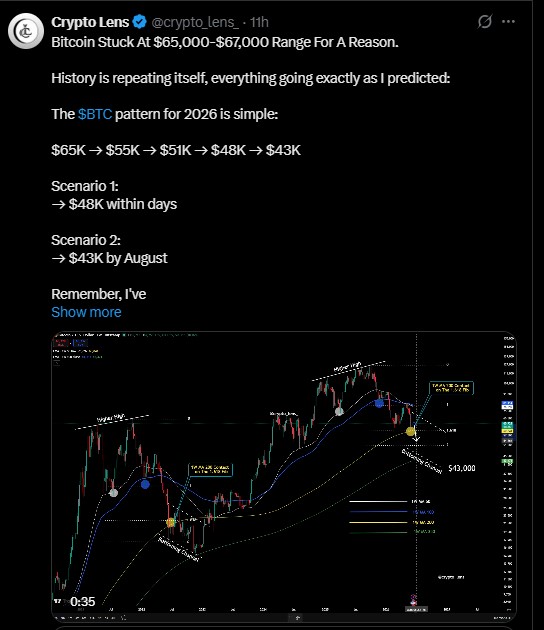
What Did the Bitcoin Weekly RSI Do at the 2018 and 2022 Bear Market Bottoms?
The weekly RSI matters far more than the daily when it comes to spotting a genuine cycle bottom.
In both 2018 and 2022, the weekly RSI dropped to some of its most extreme oversold readings in Bitcoin's entire trading history. Those deep lows on the weekly chart came right before Bitcoin reversed course each time.
The daily RSI currently reads 42.71. The weekly RSI has been trending lower over recent months as well. Whether it reaches the same extreme territory seen at prior bottoms before reversing is still an open question.
If it does, that would be the most significant bottom signal of this entire cycle.
What Does the Bitcoin RSI Signal on the Daily Chart Right Now?
At 42.71, the daily RSI is below the neutral 50 level. That puts momentum squarely in bearish territory.
The RSI is not deeply oversold yet. That means room still exists for further downside before the indicator would flash a classic capitulation signal.
The bounce from $59,000 could hold. But the daily RSI alone is not yet signaling a confident reversal of any kind.
Why Does Bitcoin Keep Falling Around Federal Reserve Meetings?
Five FOMC meetings. Five sell-offs. The pattern has been one of the most consistent macro signals in crypto over the past eight months.
Here is exactly what happened to BTC around each meeting:
-
October 2025: -30%
-
December 2025: -10%
-
January 2026: -33%
-
March 2026: -14%
-
April 2026: -28%
That averages out to roughly 23% per event. Five for five. Even when the Fed decision was fully priced in and widely expected, BTC still dropped hard each time.
What Is the Fed Expected to Decide at the June 17 FOMC Meeting?
Markets are pricing in a 99.6% chance of no rate change today.
The Fed is expected to hold rates steady at 3.50 to 3.75%. The probability of a cut stands at 0.0%. A hike is priced at just 0.4%.
A hold is essentially locked in by the data. But that has not saved $BTC before. Markets have sold off on tone, language, and press conference comments even when the rate decision landed exactly as expected.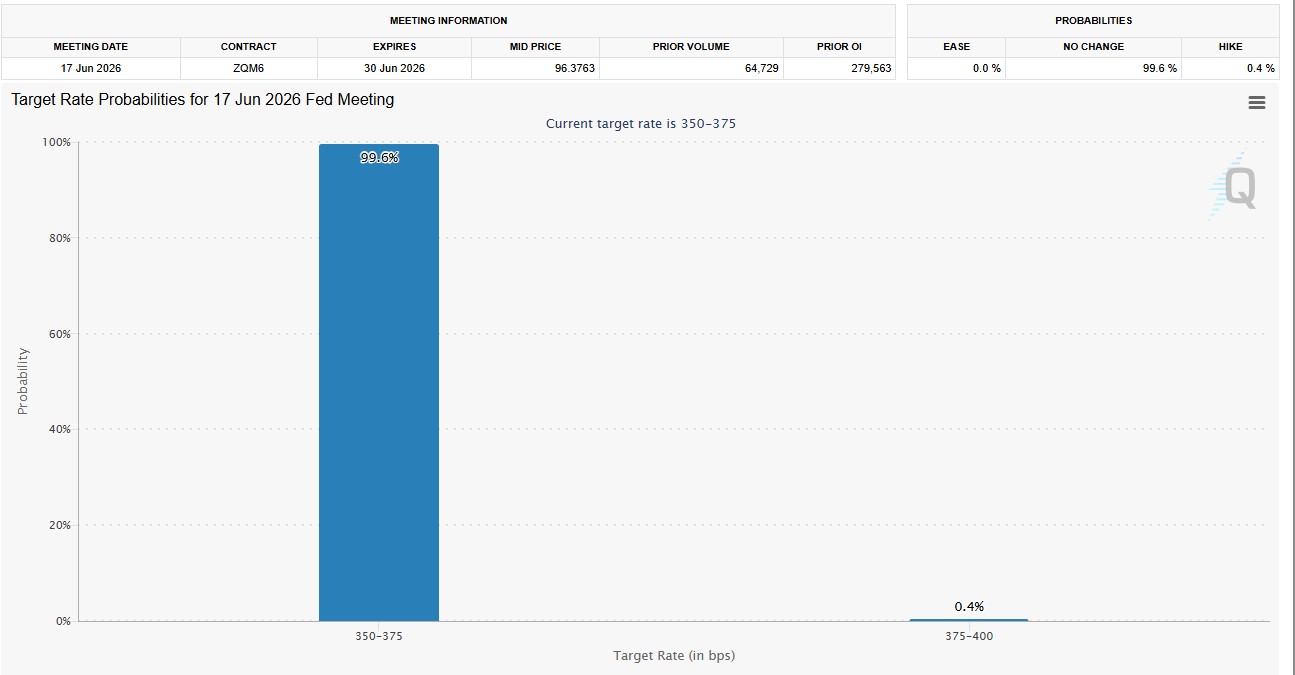
How Many Traders Were Liquidated in the Crypto Market This Week?
The volatility this week was not kind to anyone using leverage.
According to CoinGlass data, 87,067 traders were liquidated in the past 24 hours alone. Total liquidations across the entire crypto market came to roughly $301.56 million.
The single largest liquidation order was an ETH/USDT position on Binance worth approximately $9.08 million.
Both Bitcoin and Ethereum long and short positions took significant damage. That kind of two-sided wipeout is a sign of sharp directional swings with no clear conviction from either bulls or bears.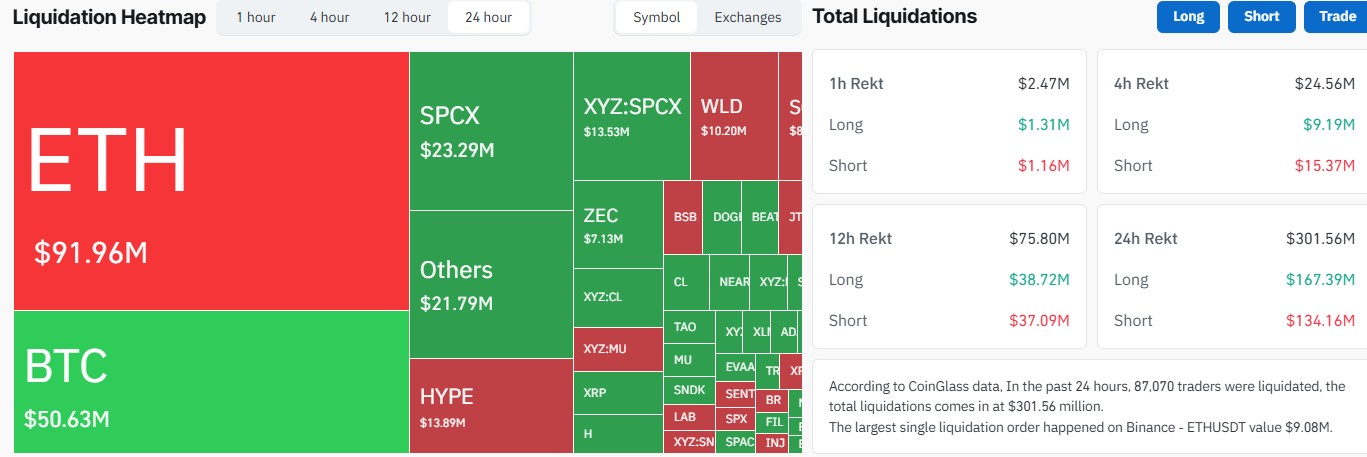
What Are the Key Bitcoin Price Levels Traders Are Watching This Week?
If Bitcoin holds $65,000 through the Fed decision today, the first real test is the EMA 20 at $66,523.
Above that, $70,000 aligns with the EMA 50 and would mark a meaningful step toward recovery if reached.
On the downside, $62,500 is the first cushion. Below that, the recent swing low near $59,000 becomes the most critical level on the chart. A confirmed break below that level opens the path toward $55,000.
What Could Send Bitcoin Down to $48,000 or Lower in 2026?
Two risk scenarios are being tracked by analysts right now based on chart structure and FOMC history.
Scenario one places Bitcoin at $48,000 within days if today's Fed meeting triggers another sharp risk-off move. That would follow the same pattern that played out five times in a row since October 2025.
Scenario two is slower: a grind lower toward $43,000 by August 2026 if macro conditions stay weak and buyers refuse to step in. The full path some analysts are watching runs: $65K, then $55K, then $51K, then $48K, and potentially $43K. These are risk-based scenarios grounded in the current price structure and historical Fed reactions. Nothing here is a guarantee.
Is Buying Bitcoin Near $65,000 Worth the Risk of a Drop to $43,000 First?
This is where the market is genuinely split right now.
The bearish case is straightforward. The FOMC sell-off pattern holds, the 4-year cycle plays out in full, and tests $48,000 or lower before any real reversal takes hold. Lower prices remain entirely possible.
The bullish case rests on three data points stacking at the same time. The 55-week bear market clock aligns with the current price range.
The Bitcoin vs Gold ratio is approaching the fear levels seen at prior cycle bottoms. And the weekly RSI is trending toward the same extreme oversold territory that flagged the 2018 and 2022 lows.
Accumulating near a historically timed cycle bottom, even with downside risk still on the table, has delivered the strongest long-term returns across every cycle that came before this one.
Short-term pain is not off the table. But the confluence of signals is hard to ignore.
Financial Disclaimer
This article is for informational and educational purposes only. It does not constitute financial, investment, or trading advice. Cryptocurrency markets are highly volatile and unpredictable. Always conduct your own research and consult a qualified financial advisor before making any investment decisions.


You May Also Like
Hyperliquid open interest hits $10B as crypto exchange expands into stocks and commodities

World Cup Lifts Prediction Market Weekly Spot Volume to $8.7 Billion Record

The Louvre’s latest exhibit: A growing repair bill



