

Goldman Sachs spots stock market’s next winners
Goldman Sachs is telling stock market investors that the old winning formula is breaking.
For years, investors have been following the same playbook: falling rates, capital-light technology, higher valuations, and a narrow group of stocks doing most of the heavy lifting.
The call lands with the S&P 500 trading near 7,550, according to Reuters, up from roughly 5,970 a year ago and up about 10% year to date.
Now the bank argues in a note shared with me that the cycle has turned.
AI spending, defense budgets, power demand, supply-chain rebuilding, and higher real rates are pushing markets into a capex-heavy era in which earnings growth matters much more than multiple expansion.
Wall Street spent years rewarding businesses that avoided heavy spending, but Goldman now believes the next winners may be those tied directly to it.
That also means that the stock market leadership shifts away from the post-2009 growth trade and toward semiconductors, infrastructure, power, defense, industrials, and real assets.
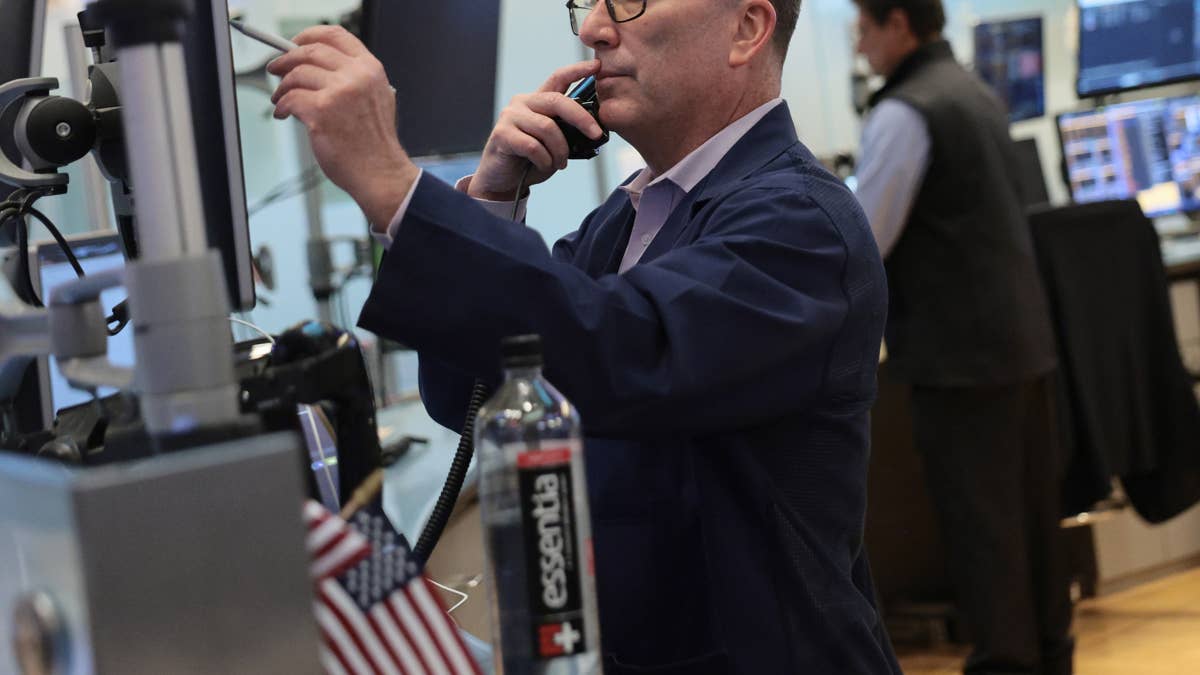 Goldman says the stock market’s next winners may come from capex.
Michael M&period Santiago &sol Staff
What Goldman Sachs said about the stock market’s next winners
Investors were used to working with a market playbook built around falling rates, low inflation, and capital-light growth.
In that regime, Goldman Sachs says valuation expansion became one of the biggest drivers of returns, and businesses that could grow without tremendous investment, especially in technology and software, commanded the premium.
However, Goldman says that the setup is changing.
The bank argues that the post-pandemic cycle is moving toward higher real rates, more state intervention, regionalized supply chains, and a capex supercycle driven by AI, energy security, defense spending, and infrastructure demand.
Additionally, Goldman says a higher cost of capital caps stock market valuations, making earnings growth much more important and widening the gap between stronger and weaker companies.
The shift also broadens the opportunity set.
Instead of a market led by long-duration growth stocks, Goldman sees more room for capex beneficiaries, semiconductors, power, defense, industrials, real assets, and other businesses tied to physical investment.
More AI:
- Goldman Sachs has blunt message for AI stock investors
- Microsoft CEO sends a warning on AI and the tech ecosystem
- The next AI infrastructure race has nothing to do with chips
The key numbers behind Goldman’s capex boom call
- Goldman’s capex call starts with a split: S&P 500 companies posted 38% year-over-year capex growth so far in Q1 2026, while buybacks rose just 1%, suggesting cash is moving from financial engineering toward expansion.
- AI remains the biggest driver, with Goldman expecting 2026 capex for the top 5 hyperscalers to have jumped about $80 billion to roughly $755 billion, nearly 80% higher than a year ago.
- The trade is working, where Goldman says its broad universe of capex beneficiaries is up about 25% year-to-date.
- Earnings also support the call, where consensus earnings for capex-linked companies are up roughly 25% year over year, reinforcing Goldman’s view that EPS growth may drive the next winners.
Why AI capex and higher rates make earnings matter now
AI isn’t just a software or chip-stock story.
Goldman Sachs argues that the private sector is continuing to ramp up capex and infrastructure spending to support the AI revolution efficiently, as governments spend more on defense and critical infrastructure.
That links the AI trade to power, data centers, industrial equipment, construction, energy, and supply chains.
For perspective, Morgan Stanley argued that major global tech businesses announced $740 billion in capex for 2026, a 69% increase from 2025.
Moreover, it’s important to note that the buildout is physical, not just digital, with BNEF reporting that more than 23 GW of data-center IT capacity is already under construction globally.
On top of that, the spending boom is coming at a time when investors are getting much less help from lower rates.
Goldman Sachs Research expects no Fed cuts until 2027, while UBS also expects no easing this year.
That makes earnings even more pivotal.
FactSet estimates S&P 500 earnings growth of 21.9% for Q2 2026, marking the second straight quarter above 20% and the seventh straight quarter of double-digit growth.
It also sees 23.2% earnings growth for calendar 2026.
For investors, it’s imperative to understand that if rates stay higher and valuations are capped, the market will need to prove the AI capex boom can convert into real sales, margins, and EPS growth beyond the usual tech leaders.
Related: Cathie Wood buys $529.7 million of popular new stock


You May Also Like
Morgan Stanley changes its oil forecast for the rest of 2026

GOP in disarray as Senate seat pick-up slips away: 'It's a mess'
The season for political theatre has begun



