

House Republicans Investigate Missing Texts from Gary Gensler
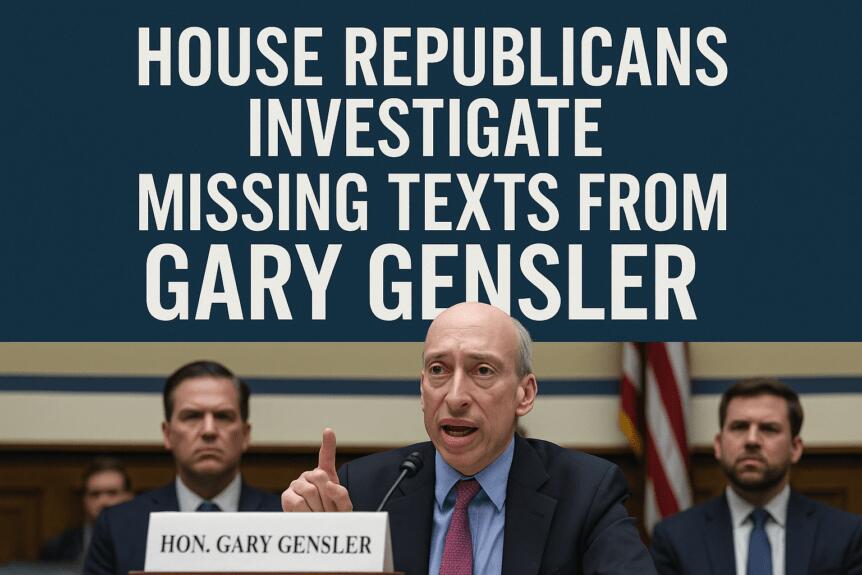
- U.S. House Republicans are probing the loss of Gensler’s text messages from his tenure as SEC Chair.
- The SEC’s Inspector General report highlighted technical failures and poor data management leading to message deletion.
- Deleted texts involve key enforcement actions against crypto firms, raising concerns over transparency.
- Some argue Gensler’s SEC applied double standards, citing contrasting enforcement practices.
- The controversy feeds into broader concerns over crypto regulation and transparency within U.S. financial agencies.
Congressional Investigation Unfolds
U.S. House Republicans have formally raised concerns with SEC Chair Paul Atkins over the unexplained loss of text messages from former SEC Chair Gary Gensler, dating back to his leadership of the agency between 2021 and 2025. These messages, now missing due to what the SEC’s Inspector General described as a flawed automated data wipe, have become a focal point in ongoing investigations into regulatory transparency. The House Financial Services Committee is actively engaging with the IG’s findings, seeking clarity on the circumstances surrounding the data loss and oversight over the agency’s data management practices.
Many in the crypto industry have accused Gensler of being a key architect behind efforts by the Biden administration to impose stricter controls over fintech and crypto sectors, citing actions such as lawsuits that many believe hinder industry growth. Critics argue that this opacity and enforcement pattern could be part of a broader strategy to limit crypto innovation.
Senators Highlight Discrepancies
The investigative letter, signed by House Ranking Members Ann Wagner, Dan Meuser, and Bryan Steil, points out that Gensler’s SEC filed multiple lawsuits against crypto firms for allegedly widespread record-keeping failures, resulting in hefty fines. Meanwhile, the deletion of Gensler’s own communications suggests a double standard, many lawmakers argue.
IT Department Under Scrutiny
The SEC’s Inspector General revealed that an automated policy—poorly understood and poorly managed—led to the deletion of Gensler’s mobile device data, including texts exchanged between October 2022 and September 2023. These shortcomings were compounded by deficient backup procedures and overlooked system alerts, worsening the impact of data loss on transparency and oversight.
Implications for Crypto Enforcement
Alarmingly, some of the missing messages pertain to SEC enforcement actions against cryptocurrency operations, such as investigations into digital asset firms. The absence of such records raises concerns over whether the SEC’s enforcement decisions and communications are fully accessible or scrutinizable by the public and Congress.
In a separate security breach, the SEC’s Twitter account was compromised in January 2024, leading to false claims about Bitcoin ETF approvals. The breach was attributed to the agency’s failure to enable two-factor authentication, exposing systemic vulnerabilities in its digital defenses.
The accumulating questions about transparency, regulatory consistency, and data security are likely to influence ongoing debates over how best to regulate digital assets within the U.S. financial framework.
This article was originally published as House Republicans Investigate Missing Texts from Gary Gensler on Crypto Breaking News – your trusted source for crypto news, Bitcoin news, and blockchain updates.


You May Also Like

Justice Department has 'gone off the rails' for Trump's 'pretzel logic': analysis
Legal scholar reveals how to get Supreme Court back in line using 'fear'

EUR/GBP Exchange Rate Surges as Bank of England Rate Hike Expectations Intensify – Market Analysis


Trending News
More24/7 Live News
MoreQuick Reads
More
