

Are Stablecoins a True Financial Revolution or Just a Modern Twist on an Old Concept?
Every few months, a new headline declares that stablecoins are transforming money.
Banks are experimenting with them. Payment companies are integrating them. Governments are scrambling to regulate them. Some commentators even argue that stablecoins could become the foundation of a new global financial system.
However, before we accept that narrative, it’s worth inquiring:
The answer to this inquiry is rooted in financial history and not only in blockchain technology.
Money Has Always Been About Abstraction
For most of human history, value was exchanged through physical assets.
Gold and silver coins circulated because they were the asset. There was no intermediary standing between you and your wealth – you held the thing itself.
However, carrying precious metals was inconvenient, risky, and eventually impractical as economies grew. So financial institutions stepped in with a solution: deposit your gold with a trusted custodian, and receive a paper certificate representing your claim to it.
Those certificates evolved into paper money and there’s a fundamental shift. People stopped moving the reserve asset and started moving claims on the reserve asset.
Gold stayed in vaults. Paper circulated in the economy and trust gradually moved away from physical possession toward confidence that the reserves existed and could be redeemed on demand.
Stablecoins Follow a Surprisingly Similar Logic
Stablecoins were designed to solve a specific crypto problem: volatility.
Traditional cryptocurrencies like Bitcoin can swing dramatically in price, making them unreliable for everyday transactions. Stablecoins fixed this by maintaining a steady value – typically pegged to the US dollar.
The most widely used examples, USDT (Tether) and USDC (USD Coin), aim to hold a value of exactly $1 per token at all times.
To achieve that stability, issuers hold reserves – cash, Treasury bills, and other liquid assets – backing every token in circulation.
In practice, this means that instead of holding a dollar in a bank account, a user holds a digital token representing a claim on reserves held elsewhere.
The reserve asset sits in one place.
The transferable representation of that asset circulates somewhere else entirely.
A Historical Comparison Worth Making
Laid out plainly, the pattern across monetary history looks something like this:
Gold Standard era: Gold sat in vaults. Paper notes circulated.
Modern banking era: Central bank and deposit money sat in accounts. Electronic balances moved between them.
Stablecoin era: Fiat-backed reserves sit with issuers. Blockchain tokens circulate on digital networks.
Each stage moved society one step further from transferring the underlying reserve itself – and one step further toward transferring increasingly efficient representations of that reserve.
Seen this way, stablecoins look less like a financial revolution and more like a new entry in a very old progression.
The Real Innovation Isn’t the Reserve
This is where most stablecoin coverage goes wrong.
The reserve backing major stablecoins is not innovative. It’s largely conventional – cash deposits, US Treasury securities, money-market instruments. The same kinds of assets that have underpinned monetary systems for generations.
What has changed is how claims on those reserves move.
Blockchain technology allows transfers to happen around the clock, without weekends or bank holidays. Cross-border payments can settle without routing through multiple correspondent banks. Smart contracts can embed conditions directly into a payment.
The infrastructure is genuinely new.
The underlying monetary logic – hold reserves, issue transferable claims – is not.
Trust Didn’t Vanish; It Just Shifted.
One of the founding promises of cryptocurrency was eliminating dependence on centralised intermediaries. No banks, no middlemen, no need to trust anyone.
Stablecoins reveal a more complicated reality.
Trust hasn’t disappeared – it’s simply relocated.
Users must trust that reserves actually exist in the quantities claimed. That those reserves are properly managed. That redemption works as advertised. That the issuer is meeting regulatory requirements.
This is structurally similar to what earlier monetary systems required.
The technology changes. The trust requirement doesn’t.
Not Every Stablecoin Fits This Picture
It’s worth being precise here. The historical comparison fits fiat-backed stablecoins – USDT, USDC, and similar models – most cleanly. These rely on real-world assets held off-chain to support their value, which is exactly the dynamic that gold-standard paper money relied on. Other stablecoin models are structurally different.
Crypto-collateralized stablecoins use digital assets as reserves and rely on over-collateralisation and smart contracts to manage stability – no traditional financial institution required.
Algorithmic stablecoins attempt to maintain their peg through automated supply mechanisms rather than holding reserves at all.
These models introduce different economic risks and legal questions. They don’t fit the historical analogy as neatly, and some – as the collapse of TerraUSD demonstrated in 2022 – have failed catastrophically when market confidence broke down.
So What Are Stablecoins, Really?
The dominant narrative frames stablecoins as a break from the traditional financial system.
The reality is complex.
Stablecoins are genuinely changing how value moves – introducing efficiencies in cross-border payments, remittances, treasury management, and decentralised finance that existing infrastructure struggles to match.
However, they may not be changing one of the oldest principles in monetary history:
Viewed that way, stablecoins look less like a radical departure from the financial system and more like its most recent evolution.
The Long View
Financial innovation almost always looks revolutionary in the moment. It becomes easier to understand in retrospect.
Gold-backed notes allowed people to stop carrying gold. Electronic banking allowed people to stop carrying paper. Stablecoins may simply allow people to stop relying exclusively on traditional account balances for digital transfers. The technology has changed. The networks have changed. The speed has changed.
The underlying principle may however be older than anyone involved in crypto is comfortable admitting:
If that’s true, stablecoins aren’t creating an entirely new monetary system.
They’re writing the next chapter in one of the oldest stories in finance.
If you enjoy analytical commentary on digital asset regulation, crypto markets, and emerging financial technologies, consider subscribing to my newsletter where I share additional research, commentary, and industry insights.
https://samuel-ayodeji.kit.com/profile
Are Stablecoins a True Financial Revolution or Just a Modern Twist on an Old Concept? was originally published in Coinmonks on Medium, where people are continuing the conversation by highlighting and responding to this story.


You May Also Like

The Chemistry of UV Resistance: How Titanium Dioxide Protects Against the California Sun
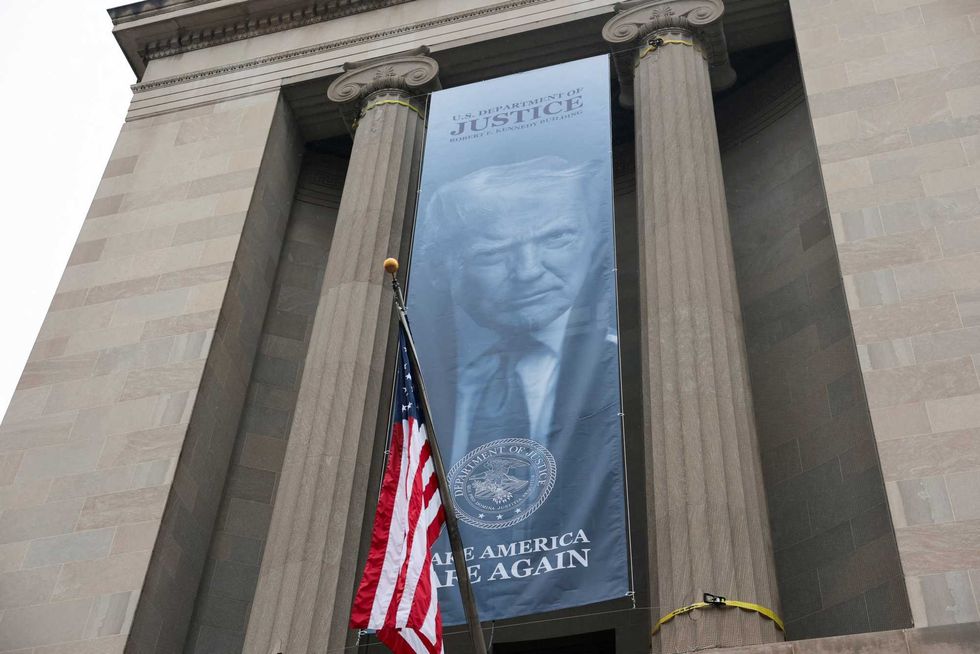
Justice Department has 'gone off the rails' for Trump's 'pretzel logic': analysis

Why Businesses Need Professional Machine Design and Development Services


Trending News
More24/7 Live News
MoreQuick Reads
More
