

UN demands RSF halt ‘imminent offensive’ in Sudan
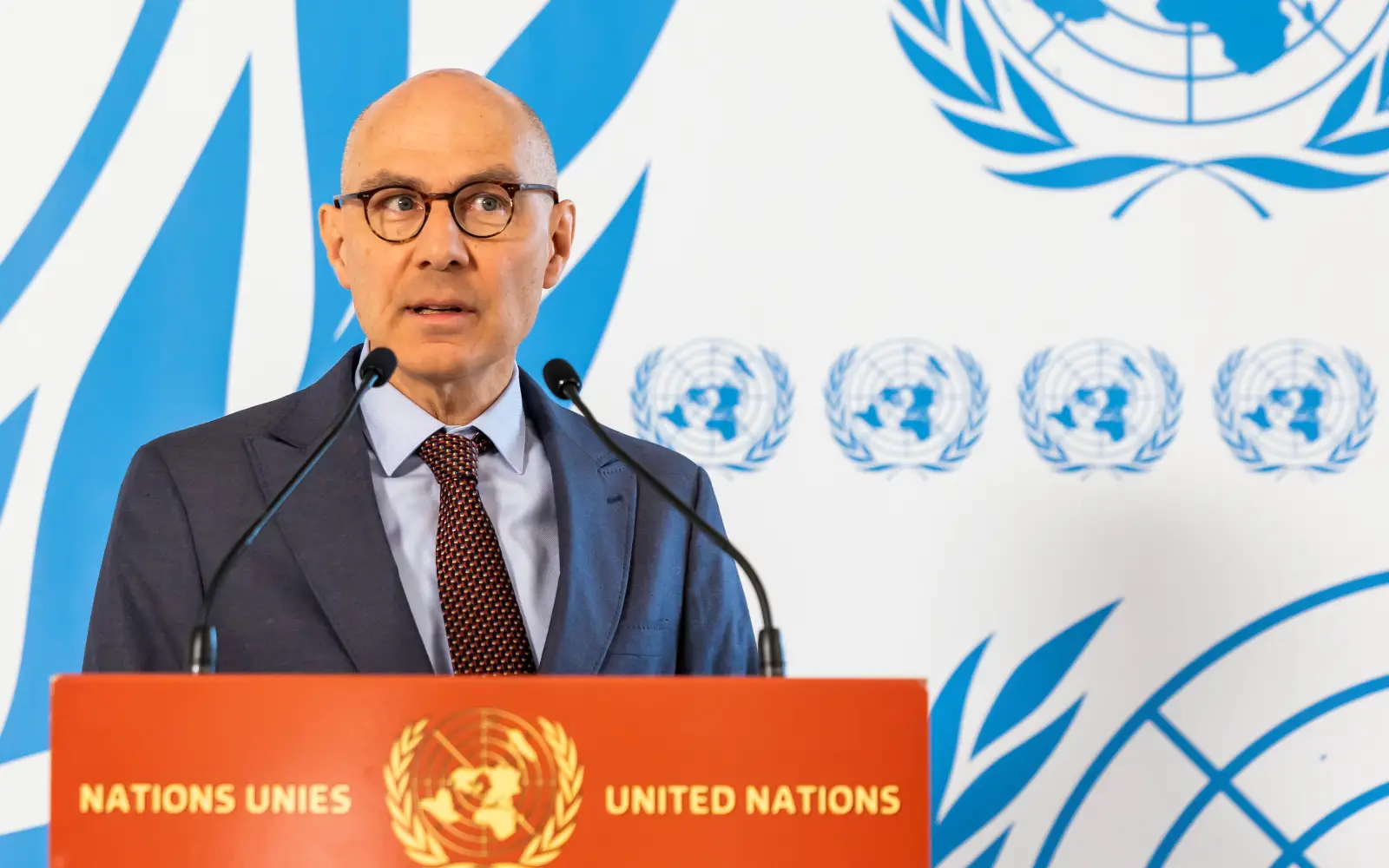 UN rights chief Volker Turk said an imminent offensive risked deepening the catastrophic impact on the civilian population. (EPA Images pic)
GENEVA: The United Nations on Thursday called on RSF paramilitaries to halt their “imminent offensive” on the strategic Sudanese city of El-Obeid, warning of catastrophic consequences for civilians.
UN Secretary-General Antonio Guterres is “alarmed” by reports of the Rapid Support Forces deploying substantial military reinforcements around El-Obeid “which may indicate an imminent ground offensive on the city”, his spokesman Stephane Dujarric said.
This is “potentially placing yet another major population centre in Sudan at grave risk of large-scale violence”, he said.
“Stop this madness,” said UN rights chief Volker Turk, following reports of the troop build-up, as well as intensified drone strikes and artillery shelling.
Sudan’s conflict erupted in April 2023 between the regular army and the RSF.
El-Obeid, the capital of North Kordofan state, sits along a key route linking RSF-held areas in the western Darfur region to army-controlled regions in the east.
For months, El-Obeid has been partially encircled by paramilitary forces, in what Turk’s office described as siege-like conditions.
Turk said an imminent offensive risked serious crimes being committed, as well as deepening the catastrophic impact on the civilian population.
“We have seen this playbook before,” Turk explained in a statement.
He said the world cannot “allow a repeat of the preventable atrocities” documented during RSF offensives on the city of El-Fasher and the Zamzam displaced persons camp in North Darfur state last year.
The UN’s independent fact-finding mission on Sudan in February concluded that the siege and capture of El-Fasher had inflicted “three days of absolute horror” and bore “the hallmarks of genocide”.
‘Stark warning to the world’
The conflict in Sudan has killed tens of thousands of people and forced more than 11 million from their homes, creating what the UN describes as the world’s largest displacement and hunger crises.
Fighting has intensified in recent months in the Kordofan region and Blue Nile state near the Ethiopian border, particularly after the RSF captured El-Fasher in October, the army’s last major stronghold in western Darfur.
Fearing a repeat of El-Fasher in El-Obeid, Guterres’ spokesman said that “far too many times in this conflict, clear warnings have failed to trigger concerted action by the international community”.
And Turk said: “Let this be a stark warning to the world of an impending human rights disaster and worsening humanitarian situation.
“The states with influence have the duty to exercise it now to stop this madness in its tracks.”
Sudanese ‘need peace’
Kordofan — home to oil deposits, arable land and the RSF’s most powerful paramilitary allies — remains a key and fiercely contested battleground.
The UN humanitarian agency OCHA depicted a “volatile and rapidly-evolving situation”, saying escalating hostilities in and around El-Obeid were severely disrupting aid operations.
“Local sources indicate that most schools, markets, shops, and humanitarian warehouses in the town have now closed,” it said.
Dujarric said civilians who wish to leave “must be allowed to do so safely”.
At the UN Human Rights Council in Geneva, 29 countries likewise said they were “gravely alarmed by the urgent risks of atrocities and deliberate killings in Sudan”, and called on the RSF to “immediately cease their assault on El-Obeid”.
“We are deeply concerned at the risk of imminent escalation on the ground, leaving approximately 500,000 civilians at risk of falling victim to large-scale atrocities,” they said in a joint statement.
The 29 countries included Australia, Britain, Canada, France, Germany, Norway and Spain.
“The people of Sudan need peace,” said Turk.
“Urgent measures must be taken to protect civilians and prevent further atrocities.
“The world is watching, and those responsible for violations must be held accountable.”


You May Also Like

BSP keeps door open to more interest rate hikes

Covéa Chooses Shift Technology as Strategic Partner for Fraud and Risk Management

Bitcoin at Crucial Pivot Point, Here's Why Fed Can Tilt Balance



