

Fed's Warsh leaves markets guessing on rate hikes
The Federal Reserve has a new playbook. We have questions.
Fed Chair Kevin Warsh vowed the U.S. central bank would battle rising inflation risk and higher prices but deliberately didn’t say how.
The vague messaging from the Federal Open Market Committee’s June 16-17 meeting dropped longstanding language signaling the Fed’s expected future moves on short-term interest rates.
The lack of forward guidance to Wall Street, Main Street, and the rest of the world has Fed watchers speculating and calculating.
“We’re going to be parsing through comments trying to figure out what the reaction function is,” Access/Macro Chief Economist Tim Mahedy told The New York Times. “It’s just like 1995 again.”
At the start of this year, investors had been betting on a resumption of Fed rate cuts by the end of 2026.
But after the June meeting, pricing in federal funds futures pointed to at least one 25-basis-point increase in short-term borrowing costs by year-end which could come as soon as September.
Warsh kicks off sweeping Fed overhaul
Warsh also unveiled a sweeping overhaul of Fed operations, including the formation of five blue-ribbon task forces of outside consultants supported by Fed staff to review and update processes with best practices of AI, data collections and communications.
Apollo’s Chief Economist Torsten Slok told CNBC the new Fed task forces would provide “very clear answers by the end of the year.”
Those recommendations and improvements would “help markets obtain consensus” on monetary policy, Slok said, by providing real-time information to the Fed’s economic models and other measures.
Slok pointed to the one-day dramatic drop in crude oil prices that took place from the Fed’s June 17 “dot plot” projections to the June 18 Iran War peace agreement as an example as to why forward guidance communications can be quickly outdated.
“It’s good that the Fed didn’t lock in forward guidance,” he said. “Things literally changed the day after.”
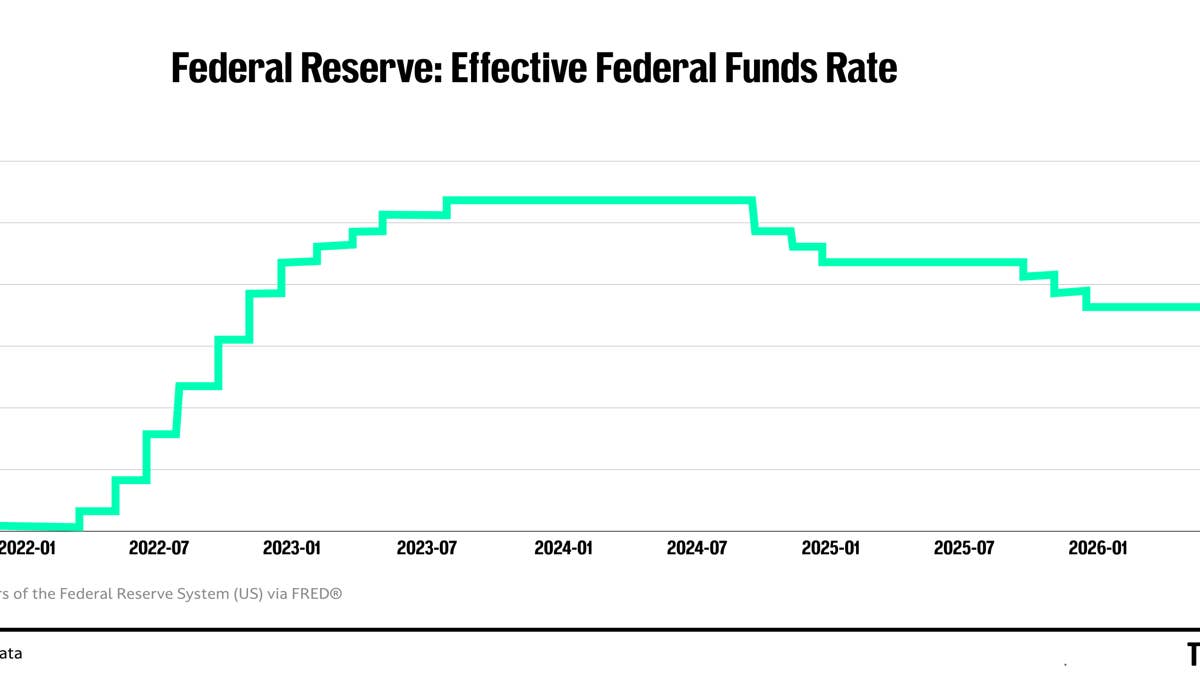
Fed keeps rates steady thus far this year
The FOMC voted 12-0 in June to hold the benchmark federal funds rate steady at 3.50% to 3.75%.
Policymakers had cut rates by 25 basis points at its last three meetings of 2025 to shore up the softening labor market.
These “insurance” cuts stopped after the majority of policymakers decided the risk from higher prices was outweighing signs that the jobs market was stabilizing.
The funds rate is the interest rate at which depository institutions lend balances at the Federal Reserve to other banks overnight.
Changes in the funds rate trigger a chain of events that affect:
- Other short-term interest rates
- Foreign-exchange rates
- Long-term interest rates
- The amount of money and credit in the economy
- And ultimately, a range of economic variables, including employment, output, and prices of goods and services
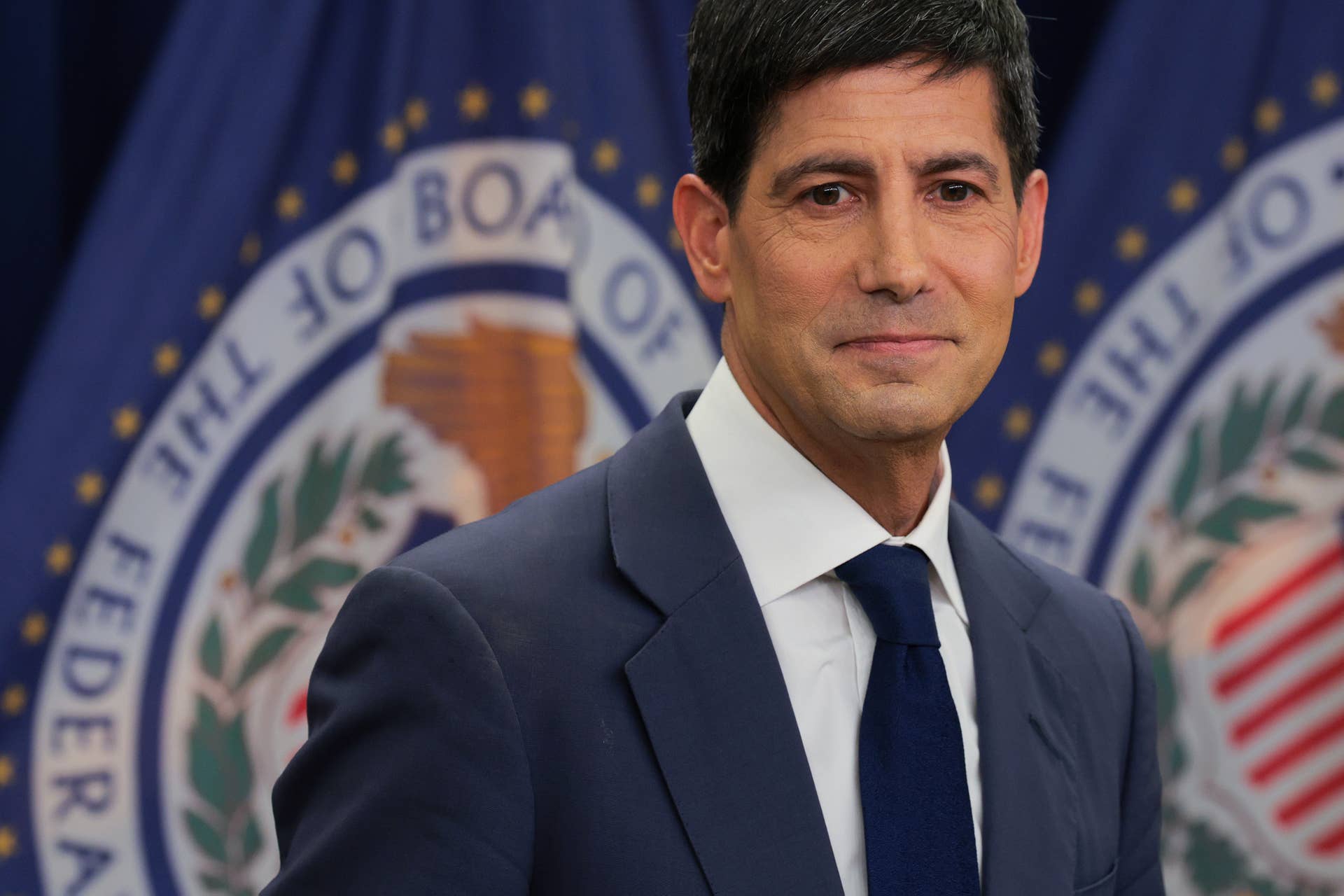 The June 16-17 FOMC meeting was Kevin Warsh's first as Chairman.
Chip Somodevilla &sol Getty Images
Fed’s dual mandate requires a tricky balance
The Fed’s dual mandate from Congress requires maximum employment and stable prices.
- Lower interest rates support hiring but can fuel inflation. This risks fueling further inflation, potentially leading to an inflationary spiral.
- Higher rates cool prices but can weaken the job market. This increases the cost of borrowing and further stifles economic activity.
Historically, the U.S. central bank has favored stable jobs over higher prices.
But not right now.
Warsh repeatedly referred to “price stability” during his comments, and highlighted how the central bank’s policies have missed its 2% inflation target for the last five years.
Related: Fed Warsh era kicks off with big surprise no one saw coming
He pledged monetary policy would “unambiguously and unanimously” reverse that dip and deliver lower prices.
“Persistently high prices are a burden for the American people. But the recent past need not be prologue.’’ Warsh said. “I am pleased to report that members of the FOMC are unambiguous and unanimous: This Committee will deliver price stability.”
Fed drops forward guidance language
Warsh refused to say whether the commitment to lower inflation would lead to an interest-rate hike.
“The good news is we’ll be meeting in six weeks,” Warsh said.
A terse 132-word post-meeting statement lacked forward guidance language, either verbal or written, to signal markets and the public about the expected future path of interest rates.
More on the June Federal Reserve meeting:
- Federal reserve has a message for Americans on inflation, economy
- Warsh’s first Fed meeting resets interest rate-cut bets
- Mortgage rate outlook shifts after Fed decision
Forward guidance states how long the central bank expects interest rates will remain low or high and what economic conditions would trigger a change in monetary policy.
Greg Gizzi is the chief investment officer of fixed income and head of municipal bonds at Nomura Asset Management International. He told TheStreet in an email that the June FOMC statement “focused solely on factual observations” while Warsh repeatedly signaled “forthcoming changes.”
Related: Kevin Warsh’s net worth: The Fed Chair's wealth & income
CME Group FedWatch Tool eyes interest-rate hike chances
The CME Group FedWatch Tool is pricing in a ~85% aggregate probability of at least one 25-basis-point-rate hike by the end of December.
The pivot point: The September FOMC meeting is marked as the more likely venue for the next move with a combined 68.8% chance that rates will be at 3.75% or higher after that decision.
Nine Fed officials submitted quarterly Summary of Economic Projections that showed at least one 25-basis-point hike this year, and eight penciled in holding rates steady.
“The temperature of the room on interest rates is clearly changing in real time as economic conditions evolve, highlighting the uncertainty of forecasting and reinforcing the case for a more data-dependent approach,’’ WEBs ETFs CEO Ben Fulton told TheStreet in an email.
Related: Iran peace deal resets gas prices


You May Also Like

Why Solana Amplified a Post on Unified Systems for Interoperability

Covéa Chooses Shift Technology as Strategic Partner for Fraud and Risk Management

One Of Frank Sinatra’s Most Famous Albums Is Back In The Spotlight



