

$8.5M Bank Run Forces Altura USDT Vault Shutdown Over Unrelated Crisis
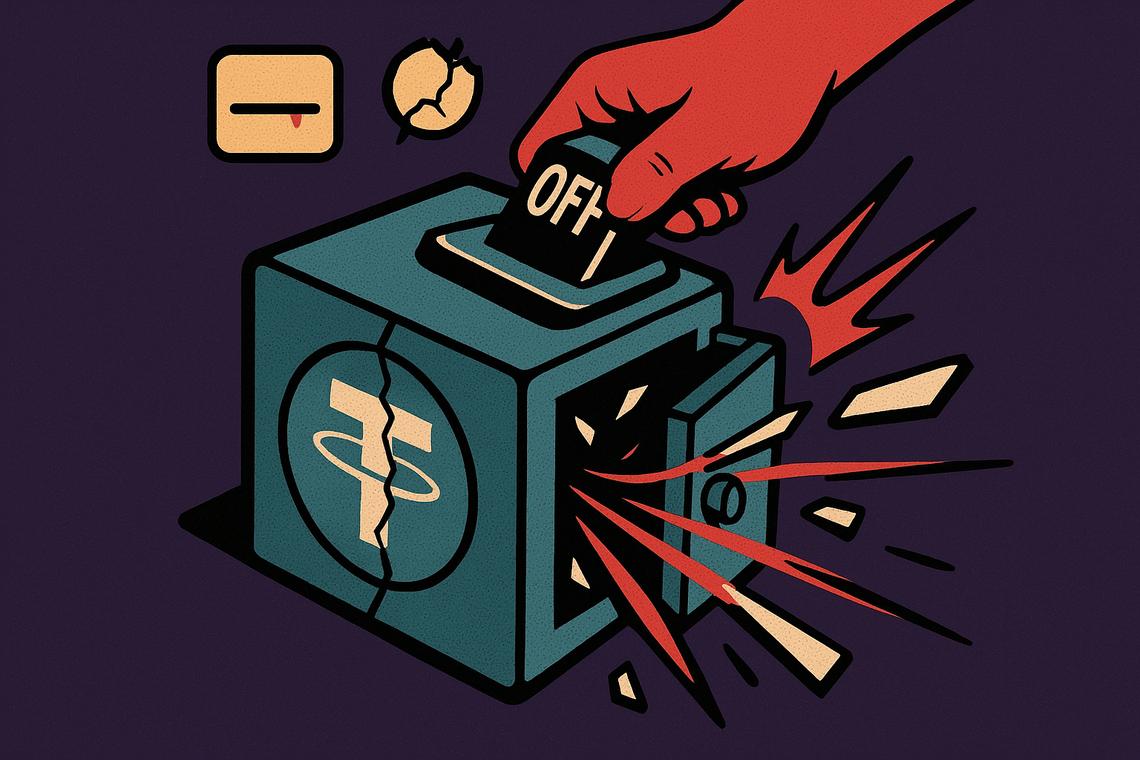
A wave of panic withdrawals over the weekend of June 20–21 forced DeFi protocol Altura to shut down its USDT stablecoin vault — not because of any financial failure, but because fear spread faster than facts. The Altura USDT vault shutdown came after depositors pulled more than $8.5 million in a single 24-hour window, rattled by a crisis that originated elsewhere entirely.
Key takeaways
- Altura shut down its USDT stablecoin vault on June 21, 2026, after more than $8.5 million in redemptions within 24 hours — roughly 22% of total value locked.
- The vault held $39 million in total value locked on HyperEVM before the mass withdrawal event.
- Main Street’s msUSD stablecoin collapsed more than 70% from its peg after Accountable terminated its proof-of-solvency verification services.
- Altura had no direct financial exposure to msUSD or Main Street, despite sharing the same verification provider.
- CEO Ranveer Arora blamed the withdrawal surge on misinformation and speculation, not on any underlying insolvency.
Altura Shuts Down USDT Vault Amid Mass Withdrawals
At its peak, Altura’s USDT vault had locked in $39 million on HyperEVM. Within one day, depositors erased nearly a quarter of that value. The $8.5 million in instant redemptions represented approximately 22% of the platform’s total locked value disappearing virtually overnight — what CEO Ranveer Arora publicly described as an “unprecedented level” of withdrawal requests.
On June 21, Arora announced via X that Altura would begin an orderly wind-down. “Our priority remains the protection of user capital and ensuring all redemptions are completed in a fair, transparent, and efficient manner,” he wrote.
How the Vault Actually Worked
The vault operated on the ERC-4626 standard, a widely-used tokenized vault architecture. Depositors contributed USDT in exchange for proportional vault shares, and Altura allocated those assets across multiple strategies — including funding-rate arbitrage, market-making, and real-world asset positions.
Withdrawal options were flexible. Depositors could choose immediate redemption with a 0.1% processing fee, or opt for epoch-based withdrawals at no charge. The structure was designed to prevent exactly the kind of chaotic exit that ultimately unfolded.
The msUSD Stablecoin Crisis That Started It All
The chain reaction began on Saturday, June 20, when Main Street’s msUSD stablecoin crashed more than 70% from its dollar peg. The trigger was blunt: Accountable, the third-party proof-of-solvency provider for msUSD, terminated its service agreement with Main Street, stating publicly that the issuer had failed to meet its verification standards.
Accountable’s Role in the Ecosystem
Accountable functions as an external solvency attestation service — essentially validating whether a protocol’s asset reserves actually match its outstanding obligations. When Accountable pulled out of its agreement with Main Street, investor confidence in msUSD evaporated immediately.
The problem for Altura: Accountable also provided proof-of-solvency services for Altura’s vault. That shared relationship was enough to trigger contagion fears across platforms, even though Altura had no financial exposure to msUSD whatsoever.
Contagion Without Contact
This is where the situation becomes instructive for the broader DeFi space. Altura’s vault had zero direct ties to Main Street or any of its investment strategies. The protocol confirmed this explicitly in an official statement before Arora’s personal announcement. Yet depositors rushed to redeem without waiting for clarification — a textbook case of how shared infrastructure can transmit panic even when financial exposure is absent.
The msUSD collapse didn’t threaten Altura’s solvency. It threatened its reputation — and in DeFi, those two things can look identical from a depositor’s perspective when false information spreads unchecked online.
Altura’s Response and Ongoing Liquidation
Arora was direct in addressing the misinformation. “I am deeply disappointed by how quickly misinformation and speculation can spread within the industry,” he said. “Altura has always operated with transparency and integrity, and it is unfortunate to see unfounded narratives contribute to market fear and withdrawal pressure.”
Altura has since notified all counterparties and business partners about the wind-down decision. The platform is actively liquidating positions across centralized exchanges, private credit arrangements, and real-world asset portfolios. Arora acknowledged that certain positions may require extended timeframes to fully redeem.
Other Products Remain Unaffected
The shutdown was contained to the USDT stablecoin vault. Altura confirmed that its HyperEVM lending vault (Alpha USDT Prime), the associated USDT/AVLT market, and its Ethereum vault all continued operating normally and were explicitly excluded from the wind-down process.
That distinction matters. It signals that the underlying protocol infrastructure remained functional — the crisis was a withdrawal event driven by external sentiment, not a systemic collapse of Altura’s operations.
What This Reveals About DeFi Infrastructure Risk
The Altura situation exposes a structural vulnerability that goes well beyond this single protocol. When multiple platforms rely on the same third-party verification provider, the failure — or even just the departure — of that provider creates a single point of contagion. Accountable’s exit from its Main Street contract didn’t just sink msUSD. It set off alarm bells across every protocol that shared the same verification relationship.
For depositors, the lesson is harder to process: legitimate, solvent protocols can face bank-run dynamics purely because of guilt by association. For protocol designers, it raises a pointed question about whether dependence on a single external attestation provider represents an acceptable systemic risk — or a design flaw waiting for the next trigger.
Altura’s orderly wind-down may ultimately protect depositors. But the speed at which $8.5 million exited a $39 million vault in 24 hours, on the back of a crisis the protocol wasn’t actually part of, suggests that in DeFi, the architecture of trust is still fragile enough that a single broken link — even one two degrees removed — can bring a stable structure down.
FAQ
Why did Altura shut down its USDT stablecoin vault?
Altura shut down the vault after more than $8.5 million was withdrawn within 24 hours, triggered by market panic stemming from the msUSD stablecoin crisis and the termination of Accountable’s verification services. CEO Ranveer Arora described the withdrawal level as unprecedented and initiated an orderly wind-down to protect depositor capital.
Did Altura have any direct financial exposure to the msUSD stablecoin collapse?
No. Altura used Accountable for third-party proof-of-solvency verification but had no direct financial exposure to msUSD or Main Street’s investment strategies. The withdrawal surge was driven by contagion fears and misinformation, not by any actual financial link between Altura and the collapsed stablecoin.
What caused depositors to withdraw funds from Altura’s USDT vault?
Depositors withdrew funds amid panic fueled by misinformation and speculation online, after Main Street’s msUSD stablecoin dropped more than 70% from its peg and Accountable — which also provided services to Altura — terminated its verification agreement with Main Street.
What impact did the crisis have on other Altura products?
Altura’s HyperEVM lending vault (Alpha USDT Prime), the USDT/AVLT market, and the Ethereum vault all remained unaffected and continued to operate normally. The shutdown applied exclusively to the USDT stablecoin vault.
Article produced with the assistance of artificial intelligence and reviewed by the editorial team.


You May Also Like

Robotics Automation Prototyping: Engineering Kinetic Agility into End-Effectors

Fed Governor Calls For Strong Stablecoin Oversight As CLARITY Act’s Final Text Gets Delayed

Why Businesses Need Professional Machine Design and Development Services



