

SGD to INR: Singapore Dollar to Indian Rupee Rate Guide 2026
Heading to India or sending money home? The SGD is at near a record high.
Whether you’re booking a Kerala backwaters trip, a Rajasthan itinerary, or quietly sending part of your pay back to family, the timing is good. The Singapore dollar is sitting near its strongest level against the Indian rupee in over a decade, so your SGD buys more rupees today than it has in years. This guide covers today’s SGD to INR rate, what common amounts are worth, why the rate is so high right now, and the smartest way to pay or transfer without losing a chunk to fees.
 TL;DR – SGD To INR At A Glance
| Highlights | Details |
|---|---|
| Current Rate | 1 SGD = 72.80 INR (25 June 2026) |
| 12-Month Change | +8.15%, so your SGD buys roughly 5.5 more rupees than a year ago |
| 5-Year Change | +31.8%, the rupee is far weaker than it was in 2021 |
| Good Rate to Aim For | Anything above 72 INR per SGD is strong |
| Best Way to Pay | A fee-free card like YouTrip: wholesale rate, 0% FX, plus free overseas ATM withdrawals |
| Best Way to Get Cash | Withdraw INR from an Indian ATM on arrival, not a money changer |
 Table of Contents
- SGD to INR Today: The Quick Answer
- SGD to INR Conversion Table (and 1 Lakh in SGD)
- SGD to INR: 1-Year and 5-Year Trends
- Why Is the Singapore Dollar So Strong Against the Rupee?
- Is Now a Good Time to Exchange SGD to INR?
- Where to Get the Best SGD to INR Rate
- Cash vs Card in India: The Smartest Way to Pay
- Sending Money from Singapore to India
- FAQ
SGD to INR Today: The Quick Answer
As of 25 June 2026, the live SGD to INR rate is 1 SGD = 72.80 INR (Google Finance). In plain terms, one Singapore dollar gets you just under 73 Indian rupees right now.
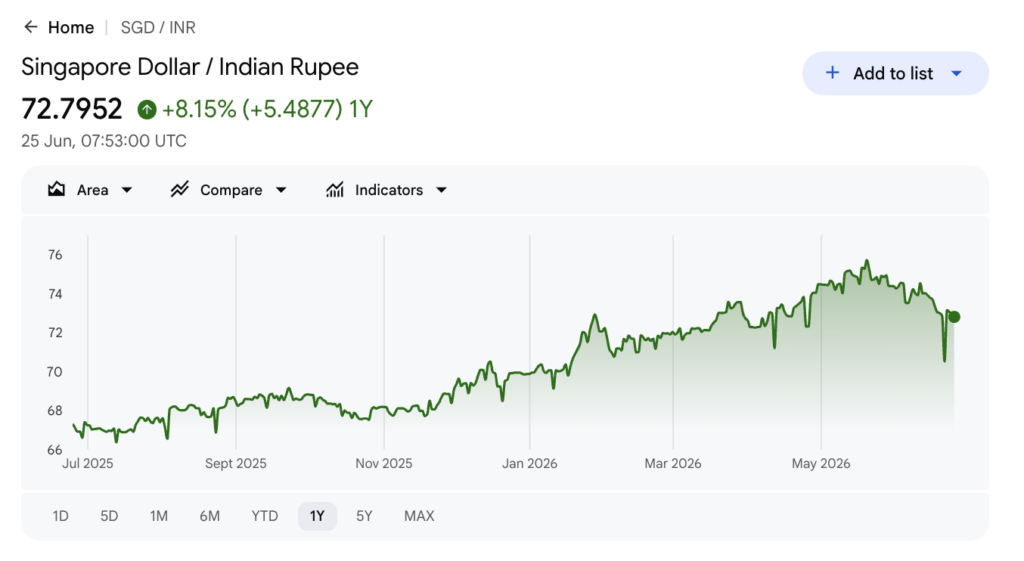
Mid-market rate as of 25 June 2026. Rates move daily, so check the YouTrip app or Google Finance for the live figure before you convert.
That’s up roughly 8.15% over the past year, so your dollar buys about 5.5 more rupees than it did this time in 2025. The rate even touched 75.55 INR on 20 May 2026, its highest in at least a decade, before settling back into the low 72s. If you’ve been weighing up an India trip or a transfer home, the maths is firmly on your side at the moment.
 Worth knowing: The “mid-market rate” is the rate banks use when trading with each other, the fairest benchmark there is. It’s what you want to measure every money changer and card against. A fee-free card like YouTrip gives you this rate with no markup; most counters quietly add a few percent on top.
 Related Guide: Want the mechanics behind getting a fair rate anywhere? Our How to Get the Best Exchange Rate in Singapore guide breaks down every option.
SGD to INR Conversion Table (and 1 Lakh in SGD)
Here’s what common Singapore dollar amounts are worth in Indian rupees at today’s rate:
| Singapore Dollar (SGD) | Indian Rupee (INR) |
|---|---|
| S$1 | 72.80 INR |
| S$10 | 728 INR |
| S$50 | 3,640 INR |
| S$100 | 7,280 INR |
| S$500 | 36,400 INR |
| S$1,000 | 72,800 INR |
| S$5,000 | 364,000 INR |
Based on the mid-market rate of 1 SGD = 72.80 INR (25 June 2026).
Going the other way is just as common, especially if you’re sending money home. 1 lakh (100,000 INR) is about S$1,374 at today’s rate, and a single rupee is worth roughly S$0.0137. A quick mental shortcut: divide any rupee price by about 73 to get a rough SGD figure, or just knock off two zeros and add a bit (10,000 INR is around S$137).
Related Guide: Want to know what’s behind these numbers? Our Wholesale Exchange Rates Explained guide breaks down the real rate banks use.
SGD to INR: 1-Year and 5-Year Trends
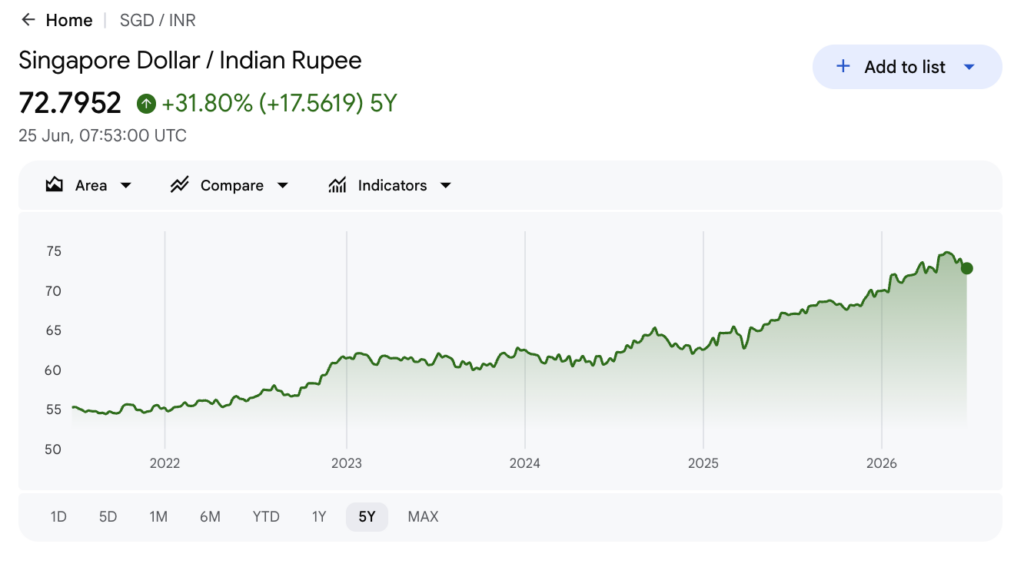
The big picture: the Indian rupee has weakened steadily for years, and 2026 has been its toughest stretch yet. That’s exactly why your SGD goes so far today. Here’s roughly how the rate has moved:
| Year | Approx. 1 SGD to INR | What was happening |
|---|---|---|
| 2021 | ~55 | Rupee relatively stable through the pandemic recovery |
| 2022 | ~57 | Rupee slipped as the US Fed hiked rates and oil prices spiked |
| 2023 | ~61.5 | Steady rupee weakness against a strong-dollar backdrop |
| 2024 | ~62.5 | Rupee grinds to fresh lows; RBI smooths the slide |
| 2025 | ~66.7 | Rupee becomes one of Asia’s weaker currencies; SGD pulls ahead |
| 2026 (YTD) | ~73 | Rupee at record lows versus the US dollar; SGD near an all-time high |
Over five years, the SGD to INR rate is up roughly 31.8%. Back in 2021, a Singapore dollar bought about 55 rupees; today it buys over 73. The shift has been one-directional, driven far more by rupee weakness than by anything dramatic on the Singapore side.
The standout moment came in 2026, when the rupee slid to record lows against the US dollar, with USD/INR pushing past 94 by June. India’s central bank, the RBI, has been managing the decline rather than fighting it outright. Because the SGD has held firm against the US dollar at the same time, the Singapore dollar has effectively ridden that rupee weakness to a fresh high. The SGD has been strong across much of Asia lately, too, not just against the rupee but against the yen, Taiwan dollar and Chinese yuan as well.
Related Guide: Wondering whether to sort out money here or once you land? Our Should You Exchange Money in Singapore or Overseas? guide settles it.
Why Is the Singapore Dollar So Strong Against the Rupee?
Most pages that rank for this rate are bare converter widgets. They show you the number but never explain it. Here’s the short version: it’s two stories meeting in the middle.
Singapore keeps its dollar deliberately strong. Unlike most central banks, which move interest rates up and down, the Monetary Authority of Singapore (MAS) manages the economy through the exchange rate itself. It guides the SGD against a basket of major trading partners’ currencies, nudging it to appreciate gradually to keep imported inflation in check. The result is one of the steadiest, strongest currencies in Asia, with far less of the wild swinging you see elsewhere.
India’s rupee, meanwhile, is having a rough run. The rupee hit record lows against the US dollar in 2026, with USD/INR climbing past 94. A few things are weighing on it: a persistent trade deficit, on-and-off tension over a US-India trade deal, and a strong global dollar that pulls money out of emerging markets. The RBI has stepped in periodically to slow the fall, but it has largely let the rupee drift lower rather than burn through reserves defending a line.
Put the two together, a currency engineered for strength on one side and a currency under real pressure on the other, and you get an SGD to INR rate near its highest in a decade. For travellers and senders from Singapore, that’s simply good news.
Is Now a Good Time to Exchange SGD to INR?

Honestly? Yes. Your SGD is near its strongest level against the rupee in years, so this is a good window. But don’t lose sleep trying to nail the exact peak. Currency moves day to day; nobody can time it perfectly, and we won’t pretend to predict it either.
The bigger lever isn’t the rate on any single day. It’s not handing 2–3% of your money to FX fees and bad counter rates. Get that part right, and you’ll save more than you’d ever gain by timing the market.
Here’s a simple rubric for judging any SGD to INR rate you’re quoted:
 Strong: 72 INR or more per SGD, close to mid-market. This is what a fee-free card gets you.
 Okay: 70–72 INR per SGD, typical of most money changers and bank counters.
 Poor: under 70 INR per SGD. Think airport counters, cards adding FX markup, or any machine that offers to “charge in SGD” (decline that, more on it below).
What to expect for the rest of 2026: The rupee has been on the back foot all year, and most forecasters expect it to stay soft unless the trade picture or the global dollar shifts sharply. That keeps the SGD strong. Treat a favourable rate as a tailwind, not a reason to wait around.
Related Guide: If you’re comparing where to change cash, our 14 Best Money Changers in Singapore guide stacks them up against a fee-free card.
Where to Get the Best SGD to INR Rate
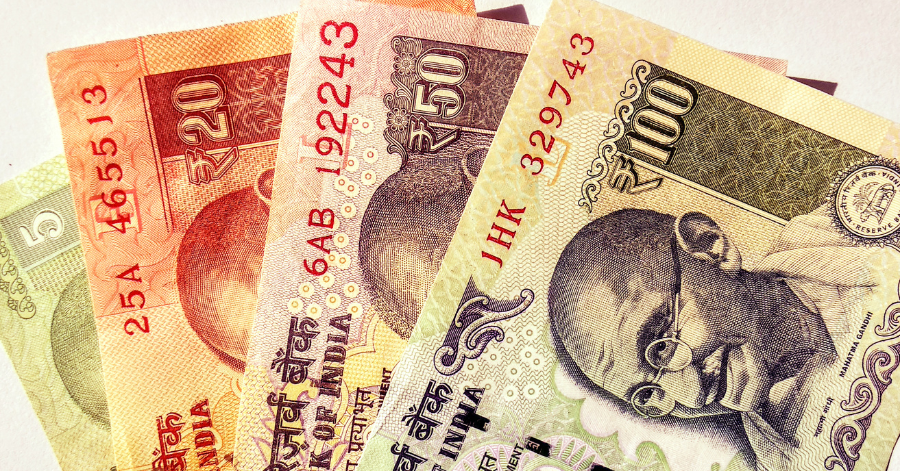
The short version: don’t load up on rupee cash in Singapore before you fly. You’ll get a better rate sorting out cash once you’re in India, and India limits how much rupee cash you can carry across the border anyway (around 25,000 INR per trip for those permitted to bring it in). Better still, just tap a fee-free card and skip most of the cash.
When you do need rupees, here’s where to get them.
1. Withdraw from an Indian ATM (the easiest win)
For most people this is the best option. Major banks like HDFC, ICICI, SBI, Axis and Kotak have ATMs everywhere, from airport arrival halls to small-town high streets, and they take international Visa and Mastercard.
A few things to know before you tap:
- Fees: Indian banks typically charge around 200–300 INR (~S$3–4) per international withdrawal, plus GST, on top of whatever your own card charges. With a fee-free card like YouTrip, your first S$400 of overseas ATM withdrawals each calendar month is free, so you’re mostly just paying that small local fee.
- Limits: Many machines cap a single international withdrawal at around 10,000 INR (~S$137), though some allow more. If you need a larger amount, expect to make a couple of withdrawals.
- Always decline conversion: If the screen offers to charge you “in SGD” or do the conversion for you, say no and choose INR. Letting the ATM convert (a trick called Dynamic Currency Conversion) gives you a rate that’s usually 3–5% worse.
ATM fees and limits are subject to change; verify on screen before withdrawal.
2. Money changers in Singapore
If you’d rather carry some rupees in, Singapore’s best rates are at the busy money-changer clusters: Mustafa Centre and the Arcade at Raffles Place are the usual go-tos, and the Change Alley counters are handy in the CBD. Compare a couple of boards before committing, and remember the 25,000 INR carry-in limit. For most trips, a small starter amount for the taxi and first meal is plenty; top up at an ATM once you land.
A note on UPI and digital payments
India runs heavily on UPI, its instant mobile-payment system, and it’s now being opened up to foreign visitors through select apps and prepaid wallets at the airport. It’s worth a look if you’ll be there a while, but for a normal trip, a contactless card plus a little ATM cash covers you almost everywhere that matters.
Related Guide: For exactly how overseas ATM withdrawals work on a fee-free card, including the free monthly allowance and the 2% after, see our YouTrip Withdrawal Guide.
Cash vs Card in India: The Smartest Way to Pay
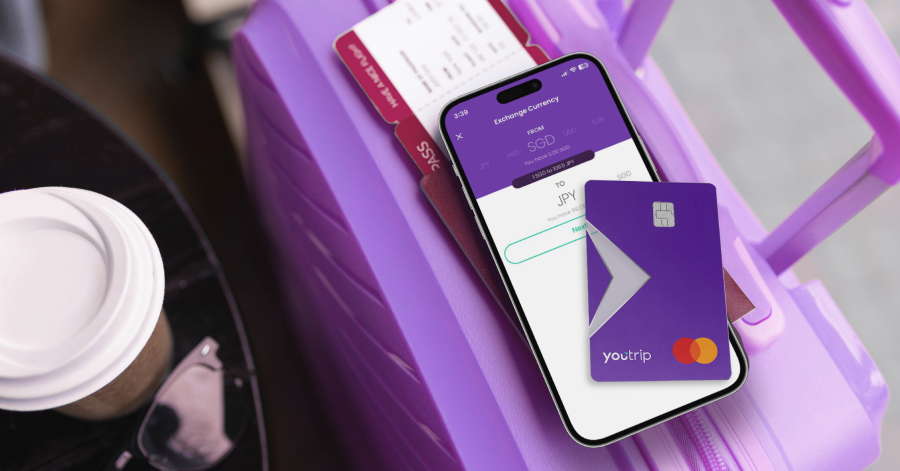
India is far more card-friendly than it used to be. Hotels, malls, chain restaurants, supermarkets, ride-hailing apps and most mid-range establishments in the cities take Visa and Mastercard. But it’s still a cash economy at the edges: auto-rickshaws, roadside chai, street food, small temple-town shops and entry fees often want rupees.
So the smart setup is simple: tap a fee-free card for everything that takes one, and carry a little cash for the rest.
Here’s why a card like YouTrip is the obvious default for the card half of that:
- 0% FX fee, every time. Every tap is converted from your SGD to rupees at the Mastercard wholesale rate, with no foreign transaction fee. Compare that to a typical bank credit card, which adds around 3.25% on every overseas spend.
- Free overseas ATM withdrawals. Your first S$400 of ATM withdrawals each calendar month is free (2% after that, resetting on the 1st), so pulling out rupees on arrival barely costs you anything beyond the small local bank fee.
- No money-changer markup. Counters don’t charge a visible “fee”; they bake a markup of a few percent into the rate. The wholesale rate skips that entirely.
Let the maths land. Say you spend S$1,500 across two weeks in India. On a bank card adding 3.25% FX, that’s about S$49 quietly lost to fees. On a fee-free card, that’s S$0, money that stays in your trip budget for one more palace stay or a better seat on the train.
| Card | FX Fee | Rate You Get | Overseas ATM |
|---|---|---|---|
YouTrip  |
None | Wholesale (mid-market) | First S$400/month free, 2% after |
| Typical bank credit card | ~3.25% | Bank rate + markup | Cash advance fees apply |
| Standard debit card | 1–3% | Bank rate + markup | Often a flat fee per withdrawal |
Pro tip: The rupee isn’t one of the currencies you can pre-hold in your wallet, so there’s nothing to “lock in” before you go. Just spend on the card and let each tap convert to rupees at the wholesale rate, then withdraw cash from an ATM when you actually need it. No carrying a thick wad of notes through the airport.
Related Guide: Want to see how the fee-free cards compare? Our 7 Best Multi-Currency Cards in Singapore ranks them all.
Sending Money from Singapore to India
If you’re remitting money home rather than travelling, the strong SGD works in your favour the same way: every dollar you send converts to more rupees than it did a year ago. And the good news is you don’t need a separate service for it. YouTrip now does overseas transfers, India included, straight from the same app you’d use abroad.
Here’s how the main options compare:
- YouTrip transfer (UPI or bank): Send straight to a recipient’s UPI ID or Indian bank account at the wholesale exchange rate, with no hidden markup and transparent fees. UPI transfers can land instantly and bank transfers are usually same-day. You can send up to around S$3,106 (about 200,000 INR) per UPI transfer, or up to S$20,000 per bank transfer and S$100,000 a year. For most people sending money home, it’s the simplest, best-value route.
- Bank telegraphic transfer: Reliable and familiar, but banks usually give a marked-up rate and add a transfer fee, so it’s often the priciest option for the amount that actually lands.
- Other licensed remittance services: Singapore has plenty of MAS-licensed money-transfer providers built for India. If you compare one, look at the all-in cost (rate plus fee) for the amount you’re sending, not just the headline fee.
Whichever route you choose, judge it on the same basis as everything else in this guide: the rate you actually get, plus every fee, for the amount that lands in India. A headline “zero fee” claim means little if the exchange rate quietly hides the cost.
Related Guide: How to Send Money to India from Singapore
FAQ
As of 25 June 2026, 1 SGD = 72.80 INR (mid-market rate, via Google Finance). That’s up about 8.15% over the past year, so your Singapore dollar buys roughly 5.5 more rupees than it did in mid-2025. Rates move daily, so check the live figure before you convert.
At today’s rate, 1 lakh (100,000 INR) is about S$1,374. For quick reference, 50,000 INR is roughly S$687 and 10,000 INR is around S$137. These shift daily with the live rate.
At today’s rate, S$100 is about 7,280 INR. For quick reference: S$50 is roughly 3,640 INR, S$500 is around 36,400 INR, and S$1,000 is about 72,800 INR.
Two things at once. Singapore’s central bank deliberately keeps the SGD strong and stable by managing it against a basket of currencies, while India’s rupee has slid to record lows against the US dollar in 2026 on the back of a wide trade deficit and a strong global dollar. The combination has pushed SGD to INR near its highest in a decade.
For cash, withdraw rupees from an ATM after you land rather than buying a lot of INR in Singapore, and decline any “charge in SGD” option at the machine. Better still, pay by a fee-free card wherever cards are accepted, and keep only a little cash for stalls, autos and small vendors. India also limits how much rupee cash you can carry in (around 25,000 INR for those permitted), so loading up beforehand isn’t ideal anyway.
Likely, for now. The rupee has been under pressure all through 2026 and most forecasters expect it to stay soft unless the trade picture or the global dollar shifts, which keeps the SGD strong against it. Currency moves are never guaranteed, so treat it as a favourable window rather than a sure thing.
Other Currency Guides
Off somewhere else after India? We’ve got live-rate guides for the most-searched pairs:
 YouTrip Exchange Rates |
  SGD To JPY |
  SGD To MYR |
  SGD to THB |
  SGD to USD |
  SGD to EUR |
  SGD to CNY |
  SGD To KRW |
  SGD to IDR |
  SGD To AUD |
  SGD To VND |
  SGD to NZD |
  SGD To TWD |
  SGD to HKD |
  SGD to GBP |
  SGD to CHF |
  SGD to INR
Your Dollar’s Never Stretched Further in India

India is one of those trips where the exchange rate is genuinely working for you right now, so the only real job is not giving that advantage back in fees. Tap a fee-free card, pull rupees from an ATM when you need them, and skip the money changers.
Not a YouTrooper yet? YouTrip lets you lock in 12 currencies and spend in 150+ countries with zero fees and no hidden charges. Sign up for your complimentary YouTrip card today with YTBLOG5 and get FREE S$5 in your account!
Then, head over to our YouTrip Perks page for exclusive offers and promotions; we promise you won’t regret it. Join our Telegram (@YouTripSG) and Community Group (@YouTripSquad) for travel tips, event invites, and more!
Safe travels!
All currency conversion rates sourced from Google Finance on 25 June 2026. Rates fluctuate in real-time. Bank card prices are calculated based on a 3.25% foreign currency transaction fee. SGD equivalents based on ~72.80 INR = S$1.


The post SGD to INR: Singapore Dollar to Indian Rupee Rate Guide 2026 appeared first on YouTrip Singapore.


You May Also Like

Top U.S. economist says Gold reversal is imminent

Bitcoin, Gold, and U.S. Stocks Dive as Trump Pledges to Hit Iran ‘Extremely Hard’

Dow Jones futures plunge as risk aversion increases after Trump’s comments



